You toss carrots and apples into the kitchen bin one evening, then decide tomorrow will be different. The next morning you pull out an Omega model, read a quick manual, and press start. Within minutes you sip bright, fresh juice that tastes like a farmer’s market in a glass. This simple ritual shows why many health fans ask, “what is a masticating juicer and how does it work?” A quality slow juicer turns raw produce into nutrient-rich beverages right in your home. Modern juicers are built to keep enzymes intact and yield more liquid from leafy greens.
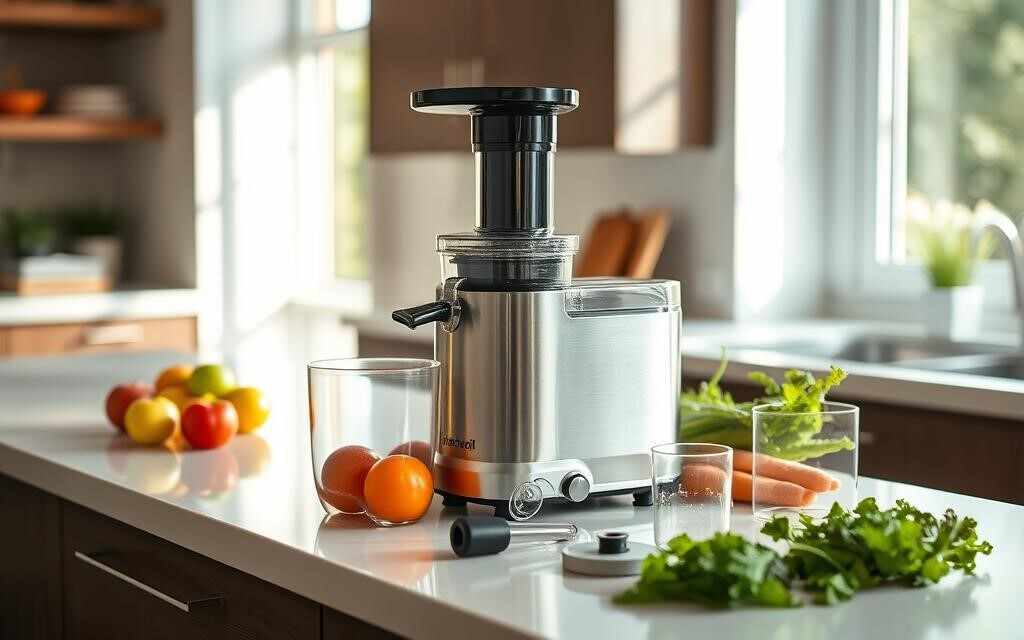
Choosing the right unit helps you enjoy juicing daily. Brands such as Breville and Omega offer durable options that fit beginner needs and more serious routines. Knowing the difference between two main styles on the market guides a smart purchase.
Key Takeaways
- Fresh juice boosts vitamin and mineral intake with ease.
- Picking the right juicer shapes your daily routine.
- High-quality models yield more and protect nutrients.
- Many households invest in a unit to explore bold recipes.
- Learn core differences between available juicers before buying.
Understanding the Basics of Masticating Juicers
Slow extraction machines squeeze juice at a calm, steady pace so flavors and nutrients last longer. These models are also known as cold press juicers or slow juicers because they operate without generating heat.
Key advantage: lower speed helps retain vitamins and reduces oxidation. Nutritionist Lisa Richards emphasizes higher vitamin and mineral levels from this method.
“Masticating machines often produce nutrient-dense juice with less foam and longer shelf life.”
When you compare types juicers, the masticating variety stands out for build quality and consistent results. Many cold press and press juicers sit in the mid-price range, offering strong performance for daily use.
- Runs slower than centrifugal models for gentler extraction.
- Yields more from leafy greens and soft fruits.
- Produces clearer juice with less foam.
What is a Masticating Juicer and How Does It Work
A steady, twisting shaft silently turns while leafy greens and roots meet pressure and release juice. This intro explains the heart of the unit before we dive into parts.
The Auger Mechanism
The auger is a single, heavy-duty screw that chews produce slowly. It grinds fibers rather than shredding them, so you get more liquid from greens and hard roots like ginger.
Key advantage: the slow-turning design reduces heat buildup. That preservation helps maintain enzymes and vitamins in your fresh produce.
The Crushing Process
The crushing action mimics human chewing. Gears keep torque steady so the machine squeezes out moisture until little pulp remains.
This deliberate extraction yields clearer, quality juice with less foam than high-speed models. Cold press juicers and press juicers follow the same principle: press, don’t shred.
“Slow, steady extraction pulls out more nutrients and produces a cleaner glass of juice.”
| Component | Role | Benefit |
|---|---|---|
| Auger | Crushes and presses produce | Higher yield from leafy greens |
| Gears | Regulate torque and speed | Consistent extraction without heat |
| Mesh/filter | Separates pulp from liquid | Cleaner, less foamy juice |
| Outlet | Delivers juice and ejects pulp | Easy separation for storage |
The Science Behind Cold Press Extraction
When produce meets slow torque, fragile enzymes survive the path from fruit to cup. This measured method relies on pressure rather than speed.
Preserving Enzymes and Nutrients
Slow extraction limits heat build-up. That keeps delicate vitamins and enzymes stable during the press.
Registered Dietician Catherine Hall notes the slow process captures valuable nutrients that fast machines often lose.
“The slow extraction process captures valuable nutrients that would otherwise be lost.”
By avoiding high-speed blades you reduce oxidation. This helps the color, flavor, and shelf life of your juice.
- The gentle press extracts more liquid from leafy greens and tough roots.
- Nutrients remain intact because the machine does not generate damaging heat.
- Crushing, not shredding, yields richer vitamins in the final drink.
| Science Point | Effect | Benefit |
|---|---|---|
| Low RPM extraction | Minimizes heat | Preserves vitamins and enzymes |
| Reduced oxidation | Less air exposure | Longer freshness and brighter color |
| High torque press | Crushes produce | Higher yield from greens and fruits |
Comparing Masticating and Centrifugal Juicers
Some people grab minutes back with high-speed units while others favor richer cups from slower systems. Your choice depends on time, noise tolerance, and how much yield you expect from produce. Below are practical contrasts between the two main types so you can match a model to your needs.
Speed and Efficiency
Centrifugal juicers win on speed. They shred and spin quickly, delivering fresh juice in seconds. That makes them handy if mornings are rushed.
Slow-press machines take more time per cycle but use steady torque to extract more liquid from leafy greens and roots. The trade-off is longer prep and operation time but often higher final yield.
Noise Levels
High-speed units tend to be loud during operation. If you need quiet early-morning use, the slow press offers a much calmer experience.
The gentler rotation also reduces vibration, so your neighbors or sleeping family members are less likely to wake up.
Juice Yield
Yield varies by produce. Fast units work well with firm fruits, while slow press models excel with vegetables and leafy greens.
Bottom line: pick speed for convenience or slow extraction for richer, longer-lasting juice.
| Factor | Centrifugal | Slow press |
|---|---|---|
| Speed | Very fast | Slower |
| Noise | Louder | Quiet |
| Yield | Lower with greens | Higher with greens |
Nutritional Benefits of Slow Juicing
Cold press methods deliver juice that stays fresher and truer to the original produce. When you use a masticating juicer, fragile vitamins and enzymes face less damage from heat.
Research shows cold-pressed drinks often score higher for antioxidant capacity and overall nutritional quality. That means more of the good stuff from leafy greens reaches your glass.
- Better preservation of vitamins thanks to low RPM extraction.
- Less pulp and oxidation, so color and taste stay bright.
- Longer fridge life—properly stored cold press juicers can yield juice that lasts up to 72 hours.
“Slow extraction gives you a more potent, cleaner drink with real nutrient retention.”
In short, slow press systems like press juicers help you get the most from fruits and greens. If top quality juice matters to your daily routine, this method delivers steady benefits.
Practical Considerations for Daily Use
A few minutes of chopping changes how smoothly your machine runs each morning.
When you use a masticating juicer, plan for a bit more prep time than with fast machines. Cut fruits and vegetables into small cubes so the feed throat accepts them without clogging.

Preparation and Prep Work
Chop to fit: Smaller pieces speed the feed and protect the auger. This reduces jams and keeps the process steady.
- Expect extra prep time, but gain higher yield from greens and roots.
- Compared to centrifugal juicers, this method needs more chopping but often produces clearer, richer juice.
- Always rinse parts right after use; routine cleaning prevents residue buildup and saves time later.
- Look for modern models with removable parts to simplify cleaning if your mornings are tight.
Match your choice to daily needs. If speed matters most, a centrifugal juicer may suit your routine. If quality and yield top your list, the extra prep pays off each day.
Maintenance and Cleaning Requirements
Daily care saves time and keeps parts safe from mold and wear. Clean every component after each operation to stop residue buildup.
Why this matters: masticating models often have several pieces that need hand washing. That means extra time compared with many centrifugal juicers, which usually have fewer parts and some dishwasher-safe pieces.
Expect disassembly to take a few extra minutes with slow-press designs. Modern models help with snap-fit parts and wider feed chutes to speed the process.
- Rinse immediately to prevent dried pulp.
- Use a soft brush for mesh and filters.
- Dry parts fully before storage to avoid mold.
When choosing between models, factor cleaning time into daily use. Proper maintenance keeps your machine running at peak performance for years.
Choosing the Right Model for Your Lifestyle
Deciding between quiet extraction and quick results will shape which model serves your routine best.
If nutrients and minimal oxidation matter most, consider high-quality masticating juicers from Omega, Hurom, Nama, or Tribest. These options focus on yield from greens and preserve fragile enzymes for longer fridge life.
If speed and simple mornings top your list, a centrifugal juicer or centrifugal juicer hybrid can save time. Breville offers tech that narrows the gap between quality and convenience for busy users.

Beginners often start with simpler models, then upgrade as needs evolve. Match cleaning time to your daily willingness to wash parts. Easy-clean features make regular use far more likely.
| Need | Best Fit | Brands | Benefit |
|---|---|---|---|
| Maximize nutrients, low oxidation | Masticating models | Omega, Hurom, Tribest, Nama | Higher yield from greens, longer freshness |
| Quick prep, fast juice | Centrifugal units | Breville, budget brands | Speedy mornings, less prep time |
| Balanced quality and ease | Hybrid or high-end centrifugal | Breville | Good juice with simpler cleaning |
Choose a model that fits your schedule, budget, and taste. When you match features to your needs, your juicing experience improves and you get the best value from each purchase.
Conclusion
Pick a model that helps you add fresh produce to meals without extra hassle. Base your choice on daily time limits and health goals so the machine fits into real life.
Slow-press models excel when you want higher nutrient retention and longer fridge life. Brands such as Omega, Hurom, Tribest, and Nama focus on yield from greens and gentle extraction.
Fast centrifugal units suit rushed mornings. Breville and similar makers deliver quick juice with less prep time so you can grab a drink and go.
Above all, make the decision that helps you drink more fruits and vegetables. Experiment with flavors, share recipes with family, and enjoy the habit you build.

Hey, My name is MAMON. I am a SEO content creator and affiliate marketer with over 8 years of experience. I create honest product reviews, in-depth buying guides, and practical how-to articles to help readers make informed decisions. My mission is to provide trustworthy, research-backed content that delivers real value.
Leave a Reply