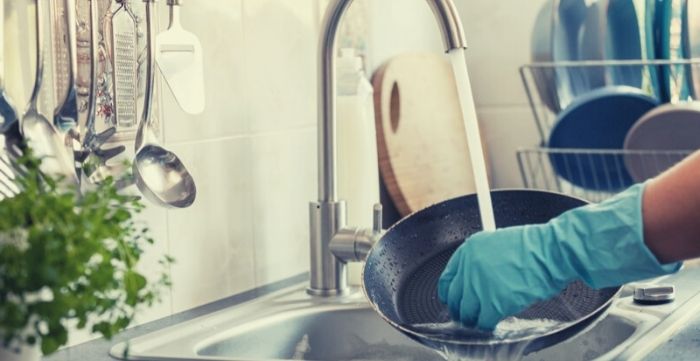
A granite frying pan earns its keep by making cleanup easy, but “easy” still means doing it the right way. Learning how to clean granite frying pan surfaces properly is what keeps that nonstick coating working for years instead of months. This guide walks through the full process, from everyday washing to stubborn burnt-on stains. It also covers what to avoid so you don’t damage the coating along the way.
Key Takeaways
- Learning how to clean granite frying pan surfaces the right way comes down to three rules. Let it cool first, skip the abrasive tools, and hand wash whenever you can.
- Most everyday messes come off with warm water, mild dish soap, and a soft sponge. No special products needed.
- Burnt-on residue responds well to a baking soda and water paste, or a simmered vinegar-and-baking-soda solution.
- Even if a granite pan is labeled dishwasher-safe, hand washing extends the life of the nonstick coating.
How Often Should You Clean a Granite Frying Pan?
The short answer: after every use. Waiting lets oil and food residue harden, which turns a 30-second wipe-down into a longer scrubbing session. Knowing how to clean granite frying pan surfaces on a consistent schedule matters more than any single deep-cleaning trick. A quick rinse and wash right after cooking, once the pan has cooled, keeps the surface clean. It avoids the kind of stubborn residue that eventually requires baking soda or vinegar to remove.
If you cook with the pan daily, try a deeper clean once a week using the baking soda method below. It helps prevent the slow buildup of an invisible oily film. That film is a common, overlooked reason food starts sticking to a pan that still looks clean.
Removing White Spots and Mineral Buildup
Hard water can leave chalky white spots on a granite pan’s surface. This happens especially if it air-dries instead of getting toweled off. These spots are mineral deposits, not damage to the coating, and they come off easily. Wipe the pan with a cloth dampened in white vinegar, let it sit for a couple of minutes, then rinse and dry as usual. This is also a good moment to inspect the coating closely for any chips or thinning spots. Mineral buildup can sometimes mask early wear.
What You’ll Need
- Warm water
- Mild dish soap
- Soft sponge or washcloth
- Nylon scrubber (never steel wool)
- Baking soda
- White vinegar
- Soft-bristled toothbrush, for tight corners
- Soft towel for drying
How to Clean Granite Frying Pan Surfaces, Step by Step
These steps cover the everyday routine. If your pan has stubborn burnt-on residue, skip to the dedicated section below for a deeper clean.
Step 1: Let the Pan Cool Completely
Never run a hot pan under cold water. The sudden temperature swing causes thermal shock, which can warp the metal base and stress the nonstick coating. Set the pan aside and let it cool to room temperature before you start cleaning. This one habit does more to protect a granite pan’s lifespan than almost anything else on this list.
Step 2: Rinse with Warm Water
Once the pan is cool, rinse it under warm running water. This loosens light residue and makes the next step faster. A quick wipe with a soft cloth at this stage often removes most of what’s stuck to the surface.
Step 3: Wash with Mild Dish Soap
Add a small amount of mild dish soap to a soft sponge or washcloth. Wash the pan in gentle, circular motions. The nonstick surface means food rarely bonds tightly, so this step usually finishes the job. Skip anything abrasive here, including scouring pads, stiff brushes, or steel wool. Those materials scratch the coating even when you’re being careful.
Step 4: Rinse Thoroughly
Rinse under warm water until every trace of soap is gone. Leftover soap residue can leave a filmy layer that affects the pan’s release the next time you cook.
Step 5: Dry and Store
Wipe the pan dry with a soft towel rather than letting it air dry. Sitting water can leave mineral spots. Drying by hand also gives you a chance to check the coating for wear. Store the pan with a paper towel or pan protector between it and any stacked cookware to prevent scratches.
Is a Granite Frying Pan Dishwasher Safe?
Some granite pans carry a dishwasher-safe label, but that doesn’t mean the dishwasher is the best choice. Hot water jets, harsh detergents, and contact with other cookware inside a dishwasher all wear down a nonstick coating. Hand washing is gentler. If you want your pan to keep its nonstick performance as long as possible, hand wash it. Do this even when the label says you don’t have to. Save the dishwasher for occasional use, not your default routine.
How to Remove Burnt-On Residue and Stubborn Stains
Soap and water handle most everyday cooking messes, but scorched oil or stuck-on food needs a bit more effort. Here are two methods that work without damaging the coating.
Method 1: Baking Soda Paste
Mix baking soda with a small amount of water until it forms a thick paste. Spread the paste over the stained or burnt areas and let it sit for 15 to 30 minutes. The baking soda gently lifts residue without scratching the surface. Afterward, wipe away the paste with a soft sponge, then rinse and wash as usual.
Method 2: Vinegar and Baking Soda Simmer
For tougher stains, cover the bottom of the pan with water. Add equal parts white vinegar and baking soda, roughly two tablespoons of each. Bring the mixture to a gentle boil on the stove. Let it simmer for about five minutes, stirring with a silicone or wooden spoon. The fizzing reaction helps loosen baked-on grease. Let the pan cool, discard the liquid, then wash normally with soap and a soft sponge.
If any residue remains after both methods, try soaking the pan in warm soapy water for an hour. Trying again after that usually finishes the job. A pan that still won’t release stubborn buildup after repeated attempts may have a coating that’s starting to fail. That’s worth checking before you keep using it.
Watch: How to Properly Maintain a Nonstick Pan
For a visual walkthrough of daily cleaning and the habits that protect a nonstick coating over time, this video covers the same principles that apply to granite frying pans.
What to Avoid When Cleaning Your Granite Frying Pan
A few common habits do more damage to a granite pan’s coating than actual cooking does. Most of these mistakes happen out of convenience rather than carelessness, which is exactly why they’re easy to fall into without noticing.
- Steel wool and scouring pads: These scratch straight through the nonstick coating, even on a single use.
- Metal utensils during cooking: Scratches from cooking are just as damaging as scratches from cleaning. Stick to wood, silicone, or nylon tools.
- Cutting food in the pan: A knife blade does the same damage a metal spatula does. Transfer food to a cutting board first.
- High heat: Don’t use your granite pan under the broiler or above 450°F. Intense heat degrades the nonstick surface over time.
- Cooking sprays: Aerosol sprays leave a sticky residue that builds up over time. Ironically, this makes the pan harder to clean.
- Cold water on a hot pan: As covered above, this causes thermal shock and can warp the base.
Tips for Keeping the Nonstick Coating Intact Longer
- Cook on low to medium heat. High heat is the fastest way to shorten a nonstick coating’s lifespan.
- Season the pan with a light coat of oil periodically, following the manufacturer’s instructions for your specific pan.
- Use nonmetallic utensils exclusively, including silicone, wood, rubber, or nylon.
- Hand wash after every use rather than letting food sit and dry onto the surface.
- Store pans with a protective layer between stacked pieces to prevent scratching.
Frequently Asked Questions
How do you clean a granite frying pan without damaging the coating?
Let the pan cool, then wash with warm water, mild dish soap, and a soft sponge. Avoid steel wool, scouring pads, and metal utensils, which scratch the nonstick surface.
Can you use baking soda to clean a granite frying pan?
Yes. A paste of baking soda and water is one of the safest ways to lift burnt-on residue without scratching the coating. Let it sit for 15 to 30 minutes before wiping it away.
Is it safe to soak a granite frying pan overnight?
An hour-long soak in warm soapy water is fine for loosening stubborn residue. Extended overnight soaking isn’t necessary for most stains, though, and can make the handle or coating more prone to wear over time.
Why does food stick to my granite frying pan even after cleaning it well?
This usually means the nonstick coating has started to wear down. Common causes are high heat, metal utensils, or an accumulated buildup of cooking spray residue. If a thorough cleaning and reseasoning doesn’t restore the release, the coating may be nearing the end of its useful life.
Can I use dish soap every time I clean my granite frying pan?
Yes, mild dish soap is fine for every wash. It won’t strip a nonstick coating the way it can strip cast iron seasoning. Granite pans don’t rely on a built-up oil layer the same way. Just stick to a soft sponge rather than anything abrasive.
What’s the fastest way to clean a granite frying pan after cooking?
Let it cool, then rinse and wash immediately with warm water and dish soap while residue is still fresh. Cleaning right after cooking, once the pan has cooled, takes far less effort than letting food dry onto the surface.
Do I need special products to clean a granite frying pan?
No. Learning how to clean granite frying pan surfaces doesn’t require specialty cleaners. Mild dish soap, baking soda, and white vinegar handle nearly every situation you’ll run into.
Final Thoughts
Knowing how to clean granite frying pan surfaces properly isn’t complicated, but it does take a bit more care than tossing a pan into the dishwasher and hoping for the best. Stick to warm water, mild soap, and gentle tools for everyday cleaning. Reach for a baking soda or vinegar treatment when something’s stuck. Follow those habits consistently, and your granite frying pan’s nonstick coating will stay in good shape for years rather than months.
For more on caring for nonstick and coated cookware, see our guide to storing nonstick cookware properly. If you’re still deciding whether granite cookware is right for your kitchen, our granite cookware pros and cons guide and safety breakdown cover what to expect before you buy.

Hey, My name is MAMON. I am a SEO content creator and affiliate marketer with over 8 years of experience. I create honest product reviews, in-depth buying guides, and practical how-to articles to help readers make informed decisions. My mission is to provide trustworthy, research-backed content that delivers real value.