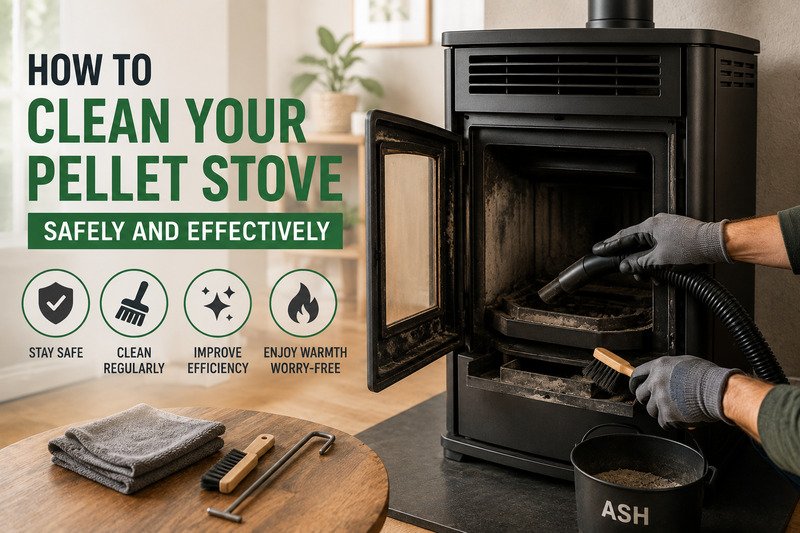
Learning how to clean a pellet stove properly keeps it running safely and efficiently all winter. Skip it, and ash residue builds up fast. Airflow gets choked off, the auger and blower start straining, and the risk of a chimney or vent fire rises.
This guide walks through exactly how to clean a pellet stove step by step. We’ll also cover how often each part needs attention, what belongs in your cleaning kit, and the mistakes that send homeowners to the repair shop each season.
Key Takeaways
- Clean the burn pot, ash pan, and glass weekly or every 1-3 bags of pellets, whichever comes first.
- Vacuum the hopper monthly and schedule a full venting system cleanout and professional inspection once a year.
- Never use a household vacuum on stove ash. It can ignite combustible debris already inside the canister.
- Premium-grade pellets contain under 1% ash, versus up to 2% for standard grade, which meaningfully cuts down on cleaning frequency.
Why Cleaning Your Pellet Stove Matters
A pellet stove burns compressed wood or biomass pellets. That combustion process leaves behind ash and fine particulate, no matter how clean-burning the unit is. Left alone, that residue does more than look messy.
- Ash buildup blocks the burn pot’s air holes, which weakens combustion and can trigger error codes or shutdowns.
- A clogged system forces the auger and blower motors to work harder, shortening their lifespan.
- Built-up ash and creosote in the venting system is a genuine fire hazard, not just a performance issue.
- Neglected stoves burn less efficiently, which means more pellets used for the same amount of heat.
What You’ll Need Before You Start
Gather these before you begin so you’re not stopping mid-task:
- An ash vacuum rated for hot ash, with metal or heat-resistant components. A household or shop vacuum won’t work.
- A burn pot scraper or wire brush
- Non-abrasive cleaner and cloth made for high-heat stove glass
- Work gloves and a dust mask
- A metal ash container with a tight-fitting lid
Safety Precautions Before You Begin
Let the stove cool for a full 24 hours after its last use. Ash can hold enough heat to reignite or cause burns well after the visible flame is gone. Unplug the unit completely before touching anything inside it. Several components still run on electricity even when the fire is out.
Pick a calm day with no wind if you’ll be opening any exterior vent components. A sudden downdraft can blow ash back into the room. Wear gloves and a mask throughout, and work over a drop cloth or newspaper to make cleanup easier.
How to Clean a Pellet Stove: Step by Step
Here’s the full process, from the burn pot to the exterior glass.
1. Prep and Power Down
Confirm the stove is fully cool and unplugged. Put on your gloves and mask before opening any access panels.
2. Remove and Empty the Ash Pan
Slide out the ash pan and empty it into your metal ash container. Even ash that looks cold can hold embers. Keep the sealed container outdoors on a noncombustible surface for at least 48 hours before disposing of it.
3. Scrape and Vacuum the Burn Pot
Use your scraper to knock loose any carbon buildup clogging the burn pot’s air holes. Then vacuum out the debris with an ash-rated vacuum. Keeping these holes open is what keeps combustion efficient.
4. Clean the Interior Chamber
Vacuum the firebox interior and any accessible ash traps behind it. A pellet stove cleaning kit with narrow brushes helps reach tight corners around the heat exchanger tubes.
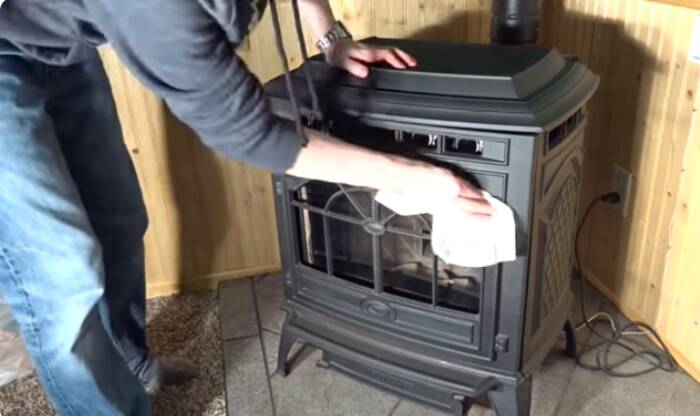
5. Wipe Down the Glass
Once the glass has fully cooled, wipe it with a damp cloth or a cleaner made specifically for high-heat stove glass. Skip household glass cleaners and anything abrasive. Both can scratch the surface or leave residue that hazes over once the stove heats back up.
6. Inspect Gaskets and Moving Parts
Check the door gasket, burn pot, and any visible seals for wear. A simple test: close the door on a dollar bill and try to pull it out. If it slides out easily, the gasket has lost its seal and needs replacing.
7. Reassemble and Test
Put everything back together and plug the stove back in. Run it briefly to confirm normal ignition and airflow before loading it up for regular use.
How Often Should You Clean a Pellet Stove?
Cleaning frequency breaks down into three tiers, and skipping any one of them eventually shows up as a performance or safety problem.
Weekly (or Every 1-3 Bags of Pellets)
- Scrape and vacuum the burn pot to keep air holes clear.
- Empty the ash pan before it overflows, which restricts airflow and combustion.
- Wipe down the glass and exterior surfaces.
Monthly
- Vacuum the hopper’s interior and the area around the auger intake, where fine pellet dust collects and can eventually jam the feed mechanism.
- Check the exterior vent termination for blockages from debris, insects, or nesting material.
Annually (Ideally in Spring or Summer)
- Have a professional deep-clean and inspect the entire venting system, since fly ash accumulates inside the pipe even when the burn pot looks clean.
- Service the auger motor and blower fans.
- Replace worn gaskets and seals.
According to Pellet Heat’s maintenance guidance, scheduling this deep clean during the off-season beats waiting for the first cold snap. You won’t be stuck without heat if a part needs ordering.
Cleaning the Venting System
Even a pellet stove that burns cleanly still produces fine fly ash that travels into the vent pipe rather than staying in the burn pot. Over time, that ash narrows the pipe’s interior, which weakens draft and forces the stove to work harder to expel exhaust.
A restricted vent doesn’t just hurt performance. It can cause sootier glass, poor ignition, and nuisance shutdowns, and in more severe cases it raises the risk of exhaust backing up into the home. A full venting cleanout once a year, done by a professional with a proper chimney brush, is the standard recommendation for most households. Heavier daily users may need a mid-season check as well. If you’re unsure whether your current setup even routes through a masonry chimney, our guide on whether pellet stoves need a chimney breaks down the two venting types.
What Not to Use When Cleaning
A few common shortcuts cause more harm than they save in time:
- A household or shop vacuum. Regular vacuums aren’t built to handle heat, and warm ash introduced to the combustible lint, hair, and paper already sitting in the canister can ignite.
- Water or liquid cleaners inside the firebox. Moisture on internal components leads to rust and can damage electronics near the auger and igniter.
- Abrasive pads or scouring cleaners on the glass. These scratch the surface permanently and make future soot buildup harder to wipe away.
- Any cleaning while the stove is still warm. Beyond the burn risk, warm components expand slightly, making seals and screws harder to work with safely.
Choosing Pellets That Reduce Cleaning Frequency
Fuel quality has a direct effect on how often you’ll need to clean. Pellets certified by the Pellet Fuels Institute fall into two main grades: premium pellets contain less than 1% ash, while standard-grade pellets can run up to 2%. That difference adds up fast over a heating season, since a lower-ash pellet leaves less residue in the burn pot and less fly ash traveling into the vent.
Choosing a bag with a visible PFI certification is a simple way to reduce both cleaning frequency and the amount of ash you’re disposing of each week. If you’re still comparing specific stove models before you buy, our best pellet stove reviews cover which units tend to run cleaner.
Safety Reminders for Pellet Stove Owners
Cleaning is one part of a larger safety routine. Keep working carbon monoxide alarms on every level of your home, and don’t skip the annual professional inspection even if the stove seems to be running fine. If you’re still deciding whether one is right for your home, our overview of the pros and cons of a pellet stove can help.
Watch: How to Clean a Pellet Stove
Video: “How To Clean Your Pellet Stove (An In-Depth Cleaning Tutorial)” by Miles Pellet Stoves
Frequently Asked Questions: How to Clean a Pellet Stove
How often should I empty the ash pan?
Most manufacturers recommend emptying it every 1 to 3 bags of pellets, or weekly for regular use. Letting it overflow restricts airflow and hurts combustion efficiency.
Can I use a regular vacuum to clean pellet stove ash?
No. Standard household and shop vacuums aren’t built to handle heat, and warm ash can ignite the combustible debris already inside the canister. Use a vacuum specifically rated for hot ash instead.
How do I know if my door gasket needs replacing?
Close the door on a dollar bill and try to pull it out. If it slides out with little resistance, the gasket has lost its seal and should be replaced before your next cleaning cycle.
Do I need a professional for annual pellet stove cleaning?
For the venting system specifically, yes, in most cases. A full chimney or vent-pipe cleanout requires the right brushes and access, and a professional will also catch component wear a homeowner might miss.
Does the type of pellet I buy affect how often I need to clean?
Yes. Premium-grade pellets with under 1% ash content leave noticeably less residue than standard-grade pellets, which can run up to 2% ash.
Is it safe to clean the stove myself, or should I always call a professional?
Weekly and monthly cleaning tasks, like the burn pot, ash pan, and glass, are safe for most homeowners to handle. The annual deep clean of the venting system is best left to a professional with the right tools and training.
Final Thoughts
Knowing how to clean a pellet stove properly comes down to consistency more than complexity. A few minutes with the burn pot and ash pan each week, a monthly check of the hopper, and one professional venting cleanout a year will keep your stove running efficiently and safely through the whole season.
Skip these steps, and you’re not just risking a dirtier glass door. You’re risking reduced efficiency, a shortened stove lifespan, and a real fire hazard in the venting system. A clean pellet stove is a safer, more affordable one to run all winter long.

Hey, My name is MAMON. I am a SEO content creator and affiliate marketer with over 8 years of experience. I create honest product reviews, in-depth buying guides, and practical how-to articles to help readers make informed decisions. My mission is to provide trustworthy, research-backed content that delivers real value.
Leave a Reply