You’re hosting a dinner party. The main course is ready, but your seasoning mill has run dry. You look it over, unsure exactly how to open oxo salt and pepper grinder without forcing something that isn’t meant to twist that way. Your guests are waiting, and your perfectly seasoned meal is missing a key ingredient.
This common kitchen frustration happens more often than you’d think, mostly because the mechanism isn’t always obvious at a glance. The good news: OXO’s grinders use one of the simplest refill designs on the market, once you know exactly where to twist.
This guide walks through the correct method step by step, so you can refill your grinder confidently without forcing a part that isn’t designed to come apart, and without stripping the threads that hold the top cap in place.
Key Takeaways
- OXO’s Good Grips grinders open with a simple twist-off top cap, not a clip-release mechanism.
- The grind-coarseness dial is separate from the refill opening and doesn’t need to be touched to refill the mill.
- Twisting counterclockwise removes the cap; twisting clockwise seals it back on.
- Keeping the mechanism dry after cleaning prevents clumping and protects the internal grinding mechanism.
- Most OXO grinders are designed to stand upside down for mess-free refilling.
Introduction: Understanding Your OXO Salt and Pepper Grinder
A closer look at the OXO Good Grips design reveals thoughtful engineering for daily use. Knowing your device’s construction prevents unnecessary force and accidental damage during refilling. This knowledge is vital for proper care and long-term operation.
Design and Build Quality
The OXO Good Grips Accent Mess-Free Salt & Pepper Grinder Set typically retails for around $60 to $65 for the pair, with single grinders available separately for less. Its build quality is designed for reliable performance over years of daily use, and the mess-free design means it rests flat upside down while you refill it, so nothing spills across the counter.
Key Features and Good Grips Technology
Good Grips technology is central to this salt and pepper set. It provides a firm, comfortable hold during grinding, and the ergonomic body benefits users with all levels of hand strength.
A separate coarseness dial, usually at the top near the grinding mechanism, adjusts how fine or coarse the output is. This dial is not part of the refill process, and turning it will not open the unit.
How to Open OXO Salt and Pepper Grinder

Once you know the mechanism, twisting the cap open takes only a few seconds.
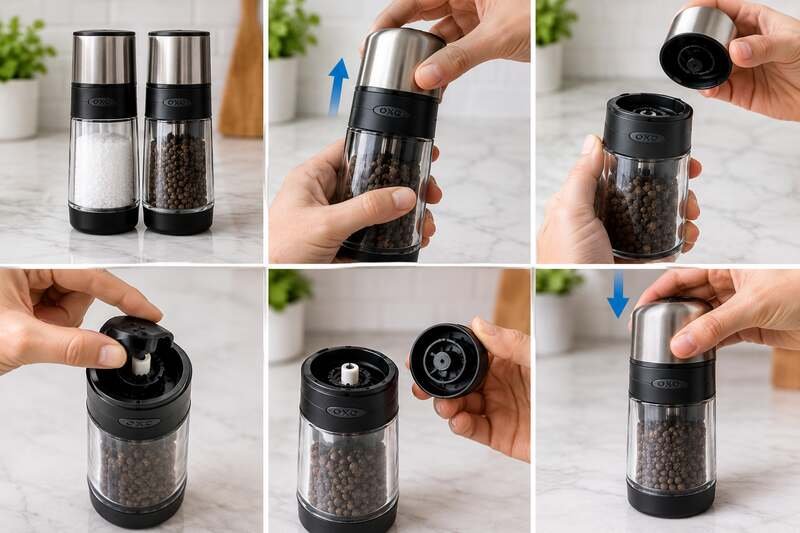
Opening your OXO grinder is genuinely simple once you know where to twist. The mechanism is a threaded, twist-off top cap, not a clip or button.
The Twist-Off Method
First, find the top cap of the grinder, the section above the coarseness dial. Hold the base firmly in one hand using the Good Grips texture for a secure grip.
With your other hand, twist the top cap counterclockwise. It should turn smoothly, since it’s a simple threaded connection rather than a locking clip. Continue turning until the cap lifts away completely, exposing the fill chamber below.
This twist-off design means there’s no clicking, prying, or forcing involved. If the cap feels stuck, a bit of dried spice residue in the threads is the most likely cause, not a jammed internal mechanism.
| Step | Purpose | Key Tip |
|---|---|---|
| Locate the Top Cap | Identifies the section that twists open, above the coarseness dial. | Don’t confuse this with the coarseness dial itself. |
| Grip the Base Firmly | Keeps the body steady while you twist the cap. | Use the textured Good Grips area for a secure hold. |
| Twist Counterclockwise | Unscrews the cap from the threaded body. | Turn steadily; it should not require much force. |
| Lift the Cap Away | Fully exposes the fill chamber for refilling. | Set the cap somewhere it won’t roll off the counter. |
If the Cap Feels Stuck
A cap that resists turning usually means salt or pepper residue has dried in the threads. Try wiping the seam between the cap and body with a dry cloth first, then attempt the twist again. Avoid pliers or excessive force, since threaded plastic components can crack under pressure that a simple twist wouldn’t otherwise require.
Refilling and Reassembling Your Grinder
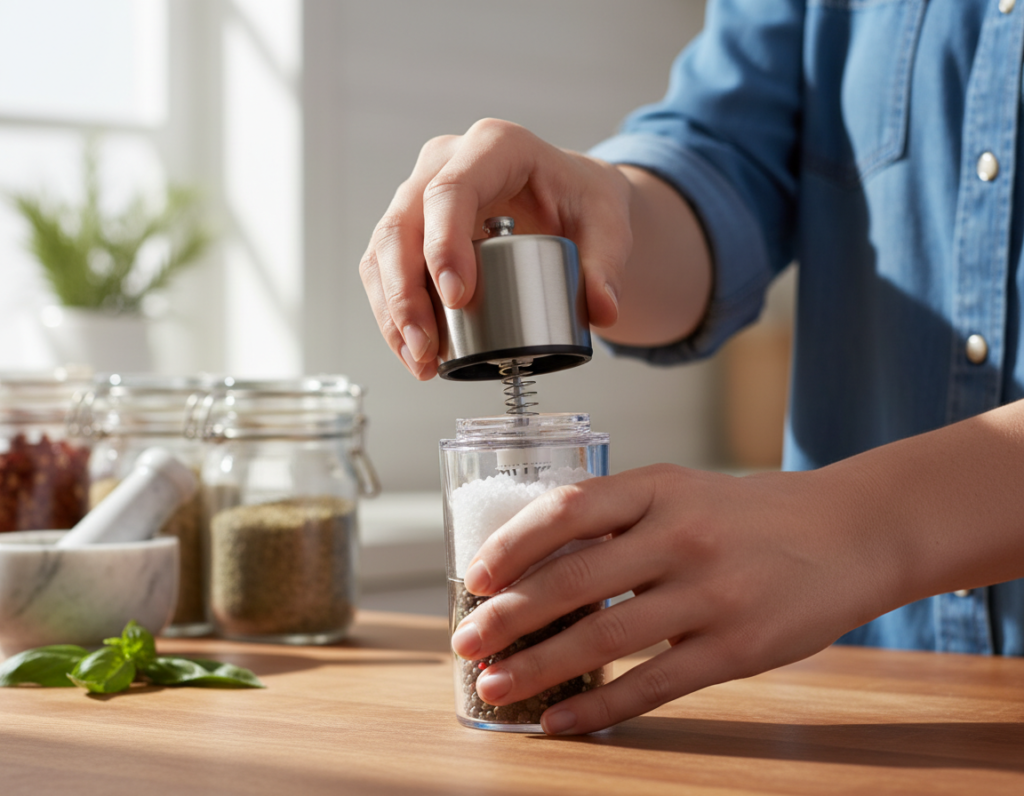
Once the cap is off, refilling is straightforward. Pour coarse salt or whole peppercorns into the chamber, filling it most of the way rather than to the very top, which leaves room for the grinding mechanism to draw from the chamber properly.
To close it back up, place the cap back onto the threads and twist clockwise until it’s snug. You shouldn’t need to force it. If it resists, the threads likely aren’t aligned, so back it off slightly and restart the twist. For a closer look at the full refill process from start to finish, this refill guide walks through it with additional tips for both salt and pepper chambers.
Inspecting the Grinding Mechanism
While the cap is off, it’s a good time to glance at the grinding mechanism at the base of the chamber. Look for clumps of salt or pepper residue that could restrict a consistent grind. A dry, soft brush clears loose debris without needing to fully disassemble the grinding gears themselves.

Whole peppercorns and coarse salt both need a clear path through the grinding mechanism to avoid clogs.
Maintenance and Care for Longevity
Dedicated maintenance transforms your grinder from a simple tool into a lasting kitchen companion. Consistent care ensures peak grinding performance and protects your investment.
Routine Cleaning and Drying
Wipe the exterior with a damp cloth after each use to prevent spice buildup on the housing. For the threads specifically, a dry cotton swab clears out residue that could otherwise make the cap harder to twist next time.
Always ensure every component is completely dry before closing the cap back on. Moisture trapped in the chamber can cause salt to clump and pepper to stick, both of which affect grind consistency over time. Proper drying is a simple, non-negotiable step for longevity.
Deep Cleaning and Storage Tips
Perform a more thorough clean every few months. Twist off the cap, empty the chamber completely, and wipe the interior with a dry cloth. OXO’s grinding mechanisms are generally not meant to be submerged in water, since moisture can affect the internal gears, so stick to dry cleaning for the working parts and a lightly damp cloth for the exterior only.
When storing your mill, keep it upright in a cool, dry spot away from stovetop steam, which can introduce moisture into the chamber over time even when the cap is fully closed.
Choosing Replacement Salt and Pepper
Not every salt or peppercorn works equally well in a grinder mechanism. Fine table salt tends to clump and can jam narrow grinding paths, while coarse sea salt or kosher salt moves through more predictably. Likewise, whole peppercorns grind more evenly than pre-cracked pepper, which can leave inconsistent particles behind in the chamber.
If you’re unsure which salt works best for your setup, this guide to preparing coarse salt for a grinder covers what to look for.
Why OXO Designed It This Way
A twist-off cap might seem like a small design choice, but it solves a few real problems that a clip-style mechanism doesn’t. Threaded connections don’t loosen from normal grinding vibration the way a snap-fit clip can over months of use. They also seal more consistently, which matters for keeping humidity out of the salt chamber between refills.
The tradeoff is that a twist-off cap needs clean threads to turn smoothly, which is why dried residue is the most common complaint people run into. It’s a simple mechanism, but like any threaded part, it rewards a quick wipe-down over force.
Troubleshooting Common Issues
A few problems come up often enough with grinder mills that they’re worth addressing directly, separate from the basic open-and-refill process.
The Grinder Dispenses Unevenly
Inconsistent output usually traces back to either the coarseness dial being set too fine for the salt or pepper you’re using, or a partially clogged mechanism from moisture exposure. Try adjusting the dial one notch coarser first, since fine settings ask more of the grinding gears and clog more easily with certain salt textures.
Nothing Comes Out at All
A completely empty chamber is the most common cause, so check the fill level before assuming a mechanical problem. If the chamber has plenty of salt or pepper but nothing dispenses, dried clumping near the grinding gears is the likely culprit. Twist off the cap, empty the chamber, and brush out the mechanism before refilling with fresh, dry salt or peppercorns.
The Cap Won’t Stay Closed
If the cap feels loose or spins without catching, the threads may have worn slightly from repeated use, or debris is preventing a full seat. Clean the threads thoroughly, then twist the cap on slowly, checking that it engages evenly rather than catching at an angle partway through.
Twist-Off Versus Other Grinder Mechanisms
Not every grinder on the market opens the same way, which is part of why this specific question comes up so often. Some competing brands, including certain Peugeot and Cole & Mason models, use a twist-off base instead of a twist-off top, with the coarseness dial doubling as the refill point at the bottom. Others use a pull-cap design that simply lifts off without any twisting at all.
None of these approaches is inherently better; they’re just different engineering choices. The practical takeaway is to check which end of your specific grinder separates before assuming it works like a model you’ve used before, since forcing the wrong end can strip threads or crack housing that was never meant to twist in that spot.
Frequently Asked Questions
Does the OXO salt and pepper grinder open the same way as other brands?
Many consumer grinders use a similar twist-off top cap, though some brands use a twist-off base instead. If you’re not sure which your specific model uses, check whether the coarseness dial is at the top or bottom, since the opening mechanism is typically on the opposite end from the dial.
Why won’t my grinder cap twist open?
Dried spice residue in the threads is the most common cause. Wipe the seam with a dry cloth and try again with steady, even pressure rather than force. If it still won’t budge after cleaning, the threads may be slightly misaligned from a previous closing.
Can I wash the grinding mechanism with water?
It’s best to avoid submerging the internal grinding mechanism, since moisture can affect the gears and cause clumping. Stick to dry brushing for the mechanism and a damp cloth for the exterior housing only.
How do I know if my grinder needs replacing rather than just refilling?
If the mechanism no longer grinds consistently after cleaning and a fresh refill, or if the cap threads have stripped from repeated forcing, it may be time to replace the unit. This guide to choosing a salt and pepper grinder covers what to look for in a replacement.
A Quick Recap
Twist counterclockwise to open, twist clockwise to close, and keep the threads dry and clean in between. That single habit resolves the vast majority of “stuck cap” and “nothing dispenses” complaints people run into, long before a mechanism actually needs replacing.
Conclusion
Confidence in maintaining your equipment is the final step to a fully functional kitchen. Mastering the twist-off method in this guide extends the life of your salt and pepper grinder and keeps every meal properly seasoned.
Remember: it’s a simple counterclockwise twist to open, a clockwise twist to close, and a dry cloth on the threads whenever the cap feels stiffer than usual. Always store your mill in a cool, dry place, and if the grinding mechanism ever needs a full reset, this deep-cleaning guide covers the process in more detail.
With the right technique, refilling your grinder becomes a quick routine rather than a dinner-party emergency. This small bit of know-how protects your kitchen tool investment for years to come.

Hey, My name is MAMON. I am a SEO content creator and affiliate marketer with over 8 years of experience. I create honest product reviews, in-depth buying guides, and practical how-to articles to help readers make informed decisions. My mission is to provide trustworthy, research-backed content that delivers real value.