
Shopping for a new gas range with a griddle, or just replacing an aging stove? You’ll run into two main installation styles almost immediately: freestanding and slide-in. Pick the wrong one, and you can end up with gaps against your cabinets or a range that doesn’t fit your kitchen’s footprint.So what is a freestanding gas range, exactly? And how is it different from the alternatives? This guide covers how a freestanding gas range works, what sets it apart from a slide-in model, and how to tell if it’s the right fit for your kitchen.
Key Takeaways
- A freestanding gas range has finished sides and a backguard, so it can sit alone or between cabinets.
- A slide-in range needs cabinets or other appliances on both sides, since its sides aren’t finished.
- Freestanding ranges are typically more budget-friendly and easier to install than slide-in models.
What Is a Freestanding Gas Range?
A freestanding gas range is a gas range built to stand entirely on its own. It doesn’t need cabinets on either side to look finished. Push it into a run of cabinetry, or place it at the end of a counter. Either way, it looks complete.
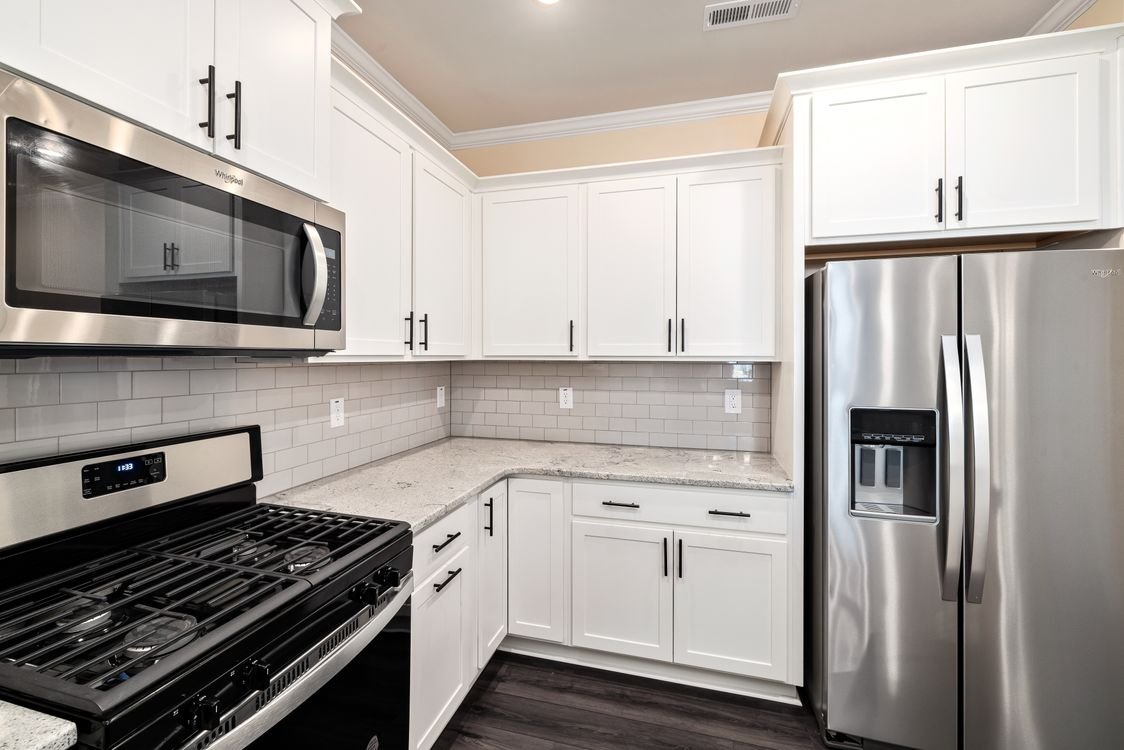
A freestanding gas range typically has a cooktop surface with burners up top, and one or two ovens underneath. Most models include a raised backguard at the rear. This houses the control panel and doubles as a splash shield for the wall behind the range. The sides are finished in the same material as the front. That’s what lets a freestanding gas range work equally well standing alone or tucked between two cabinets.
How a Freestanding Gas Range Differs From a Slide-In Range
Both range styles do the same basic job. Where they differ is installation and control placement.
Installation
A freestanding range can go almost anywhere. Set it alone, at the end of a counter, or between two cabinets. Its finished sides mean there’s no unfinished panel to hide. A slide-in range works differently, as Whirlpool’s appliance guide explains. It’s built to slide into a gap between two cabinets or appliances. Its sides usually aren’t finished, so it needs something on both sides to look complete once installed.
Control Location
Freestanding ranges put their controls on the backguard, the raised panel at the back of the unit. Slide-in ranges skip the backguard entirely. Their controls sit on the front or top edge instead. That gives slide-in models a lower profile and a more built-in look.
Backsplash Protection
A freestanding range’s backguard covers part of the wall behind it. That protects the wall from spills and splatters. A slide-in range has no backguard, which is part of what gives it a sleeker look. But it also means the countertop runs all the way to the wall behind it. Many homeowners install tile or a separate backsplash panel there, since the range itself won’t shield that wall.
Price
Freestanding ranges tend to be the more budget-friendly of the two styles. They’re often easier to install too, since they don’t require precise cabinet spacing on both sides. Slide-in ranges typically carry a higher price tag for their built-in, custom look.
Benefits of a Freestanding Gas Range
1. Flexible Placement
A freestanding gas range can go almost anywhere in your kitchen. Push it into a cabinet run for a built-in look. Or place it at the end of a counter as a standalone unit. That flexibility helps with layouts that don’t offer much built-in cabinet spacing. It’s also useful if you want the option to rearrange your kitchen later.
2. Easier to Clean
A freestanding range isn’t wedged tightly between cabinets. You can pull it out slightly to clean behind and beside it, without disconnecting anything. Slide-in models fit much more snugly. Cleaning around them usually means careful maneuvering, and sometimes disconnecting the gas line just to move them.
3. Straightforward Controls
Controls mounted on the backguard stay out of the way of pots and pans on the cooktop. Some cooks find that safer around kids and pets. The tradeoff is a bit less of the sleek, uninterrupted look that front-mounted controls give a slide-in range.
4. More Configuration Options
Freestanding gas ranges come in a wide range of sizes, finishes, and burner configurations. You’ll find compact 20-inch units for small kitchens, all the way up to full-size 30-inch and larger models with five or six burners. That breadth makes it easier to find one that matches your existing appliances and kitchen footprint.
5. Built-In Wall Protection
The backguard doesn’t just house the controls. It also shields the wall behind the range from grease splatter and boil-overs. Over time, that can mean less backsplash cleaning compared to a slide-in range with an exposed wall behind it.
Downsides to Consider
A freestanding range isn’t the right call for every kitchen. If your design calls for a fully flush, built-in look with no visible backguard, a slide-in range does that better. The visible backguard on a freestanding model can also feel dated next to more minimalist countertop-to-wall designs. And if you’re installing in a kitchen island, a freestanding unit with an exposed back generally won’t work as well as a slide-in model built for that placement.
Freestanding Gas Range vs. Drop-In Range
There’s a third, less common style worth knowing about: the drop-in range. A drop-in range sits directly on top of cabinetry, with no gap underneath. That gives it an even more built-in look than a slide-in model. Drop-in ranges are less widely available than freestanding or slide-in options, and they tend to cost more. Still, they’re worth a look if you’re designing custom cabinetry from scratch and want the range to sit flush at counter height.
Caring for a Freestanding Gas Range
A freestanding range’s finished sides and backguard need a bit more upkeep than a slide-in model, simply because more surface area is exposed and visible. A few habits keep it looking sharp:
- Wipe the backguard regularly. Since it sits closest to the burners, the backguard collects grease and splatter fastest. A quick wipe after cooking prevents buildup.
- Clean the finished sides. Unlike a slide-in range, a freestanding model’s sides are visible and part of the overall look. Stainless steel sides benefit from a dedicated stainless cleaner to avoid streaking.
- Check the leveling feet periodically. Because freestanding ranges can be moved more easily than slide-in models, it’s worth confirming the unit is still level after any relocation, since an unlevel range can affect oven baking results.
- Inspect the gas connection if you’ve moved the range. Pulling a freestanding range out to clean behind it is one of its advantages, but always have a technician confirm the flexible gas line is intact and properly seated afterward.
Standard Sizes and Fuel Options
Most freestanding gas ranges sold in the U.S. come in a 30-inch width, which fits the standard cabinet opening in most kitchens. Compact 20-inch and 24-inch models exist for smaller spaces, like apartments, tiny homes, or galley kitchens. On the larger end, professional-style freestanding ranges can run 36 inches or wider, often with five or six burners and a bigger oven cavity.
Fuel-wise, freestanding ranges are available as pure gas models, pure electric models, and dual fuel ranges that pair a gas cooktop with an electric oven. If you’re deciding between fuel types for the cooktop itself, our guide on the difference between a range and a stove and our dual fuel range guide cover how those options compare in day-to-day cooking.
How to Choose the Right Gas Range Style
A few questions can help narrow the decision:
- Do you have finished cabinets on both sides of the range’s future spot? If not, a freestanding range with finished sides is the safer choice.
- Is budget a bigger factor than a fully built-in look? Freestanding ranges are generally the more affordable option.
- Are you doing a full remodel, or replacing an existing range? If you’re swapping a freestanding range for a slide-in model, you may need to add a backsplash or tile behind it, since the old backguard was doing that job.
- Do you want the controls away from the cooktop surface? A freestanding range’s backguard-mounted controls sit farther from pots and pans than a slide-in range’s front controls.
Still comparing specific models? Our best gas range roundup covers current options across both installation styles. Our guide to how to choose a gas range for your kitchen also breaks down BTU output, burner count, and other specs worth comparing once you’ve settled on a style.
Watch: Freestanding vs. Slide-In Range Explained
Prefer a visual comparison? This walkthrough covers the key differences between the two styles in just a few minutes.
Frequently Asked Questions
Can a freestanding gas range go in a kitchen island?
Generally, no. Freestanding ranges rely on a rear wall connection for gas and ventilation, and their exposed backguard isn’t designed for island placement. A slide-in or drop-in range is usually the better fit for an island, since those models are built without a backguard blocking the sightline.
Do I need a professional to install a freestanding gas range?
Yes, for the gas connection. A licensed technician or plumber should handle that part, even though the range itself can often be moved into place without special tools. Many retailers offer installation as part of delivery, which is worth considering if you don’t already have a gas line in place.
Is a freestanding gas range cheaper than a slide-in range?
In most cases, yes. Freestanding ranges are typically the more budget-friendly of the two styles. Their simpler installation and backguard-mounted controls generally cost less to manufacture than a slide-in range’s front-control, no-backguard design.
Can I replace a slide-in range with a freestanding one?
Yes, but check the width and depth against your existing cutout first. You’ll likely also need to add a backsplash or tile behind the new range, since a slide-in installation typically doesn’t have a finished wall section where the old range’s non-existent backguard would have been.
What’s the standard width for a freestanding gas range?
30 inches is the most common width in the U.S. market, matching the standard cabinet cutout in most kitchens. Compact 20-inch and 24-inch models are available for smaller spaces, and professional-style units can run 36 inches or wider.
Final Verdict
A freestanding gas range earns its popularity by being the most flexible, and often the most affordable, of the major range styles. It works whether you’re tucking it into a run of cabinets or placing it as a standalone unit at the end of a counter. Its backguard-mounted controls and built-in splash protection make it a practical everyday choice. Want a fully flush, custom-built look instead? A slide-in or drop-in range will serve you better. Either way, once you’ve settled on a style, look for a high-quality gas range with the burner configuration and oven capacity that match how you actually cook.

Hey, My name is MAMON. I am a SEO content creator and affiliate marketer with over 8 years of experience. I create honest product reviews, in-depth buying guides, and practical how-to articles to help readers make informed decisions. My mission is to provide trustworthy, research-backed content that delivers real value.
Leave a Reply