Shopping for a new cooktop means picking a heat source first. The induction vs gas vs electric cooktop choice affects how fast you cook and what you pay for energy. It also shapes cleanup and even your indoor air. Each type has real strengths. This guide compares all three with ENERGY STAR efficiency data and Consumer Reports speed findings. It also includes national cost ranges. By the end, you will know which one fits your kitchen and cooking style.
Key Takeaways
- Induction is the fastest and most efficient. ENERGY STAR rates it at about 85% efficiency.
- Electric smoothtop and coil cooktops run about 75% to 80% efficient. They are affordable but slower to respond.
- Gas is about 32% efficient. Cooks love its visible flame, but it adds combustion pollutants to indoor air.
- Installed costs typically run $375 to $1,150 for electric, $400 to $1,675 for gas, and $1,225 to $2,850 for induction.
- Induction needs magnetic cookware. Gas and standard electric work with almost any pan.
Quick Answer: Which Cooktop Is Best?
For most homes in the induction vs gas vs electric cooktop debate, induction is the best all-around pick. It boils water fastest, wastes the least energy, and keeps the surface cooler. Gas is best for cooks who want a flame and already have a gas line. Standard electric is best for tight budgets and simple swaps.
Induction vs Gas vs Electric Cooktop at a Glance
| Feature | Induction | Gas | Electric (Smoothtop/Coil) |
|---|---|---|---|
| Energy efficiency | About 85% | About 32% | About 75% to 80% |
| Heating speed | Fastest | Fast | Slowest to respond |
| Temperature control | Precise and instant | Instant and visual | Slow to change |
| Surface heat | Stays cooler | Open flame | Stays hot after use |
| Cookware | Magnetic pans only | Almost any pan | Flat-bottom pans best |
| Cleaning | Easy glass surface | Grates and burners | Easy (smoothtop) |
| Indoor air | No combustion | Combustion by-products | No combustion |
| Installed cost | $1,225 to $2,850 | $400 to $1,675 | $375 to $1,150 |
Efficiency figures come from ENERGY STAR. Cost ranges come from Fixr’s national installation data and vary by region and model.

How Each Cooktop Works
Induction
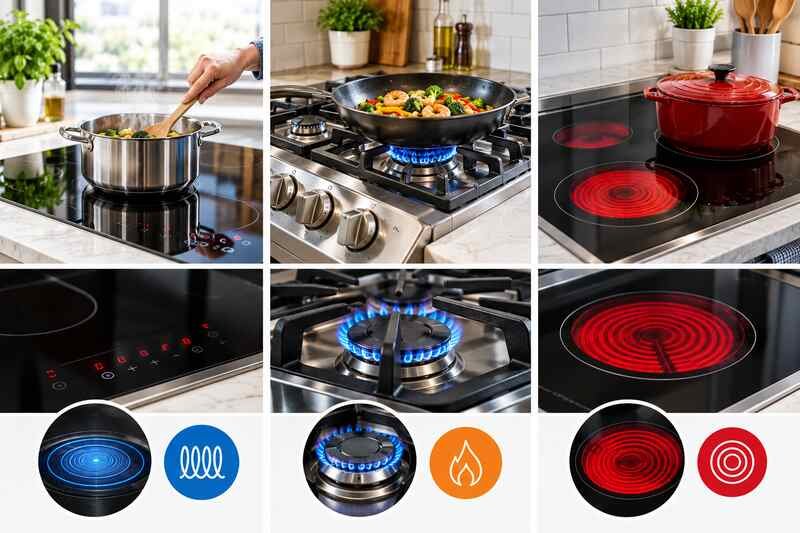
An induction cooktop uses a magnetic field under the glass. The field heats the pan directly, not the cooktop surface. That is why only magnetic cookware works and why so little heat escapes into the room.
Gas
A gas cooktop burns natural gas or propane in an open flame. The flame heats the pan from below. You can see the heat level and change it instantly.
Electric (Smoothtop and Coil)
A standard electric cooktop heats a metal coil or a radiant element under glass. The element gets hot, then passes that heat to the pan. This adds a delay when you turn the heat up or down.
Energy Efficiency
Efficiency is where the induction vs gas vs electric cooktop gap is largest. According to ENERGY STAR, induction is about 85% efficient. Standard electric resistance cooktops are about 75% to 80% efficient. Gas is about 32% efficient.
ENERGY STAR says induction beats standard electric by about 5% to 10%. It is about three times more efficient than gas. Less wasted heat also means your kitchen stays cooler, which can reduce the load on your air conditioning.
Keep in mind that energy prices matter too in any induction vs gas vs electric cooktop comparison. Gas often costs less per unit of energy than electricity in many areas. So your actual bill depends on local utility rates, not efficiency alone.
Cooking Speed and Control
Induction is the speed leader. Consumer Reports found that 6 quarts of water approach a boil 2 to 4 minutes sooner on induction than on gas or electric, as reported by Tasting Table. Consumer Reports also said no other cooking technology it has tested is faster than induction.
Control is different for each type:
- Induction changes heat almost instantly and holds low simmers very steadily.
- Gas also responds instantly, and you can see the flame size. Many chefs prefer it for charring and wok cooking.
- Electric responds slowly because the element must heat up or cool down. You may need to move a pan off the burner to stop a boil-over.
Indoor Air Quality and Safety
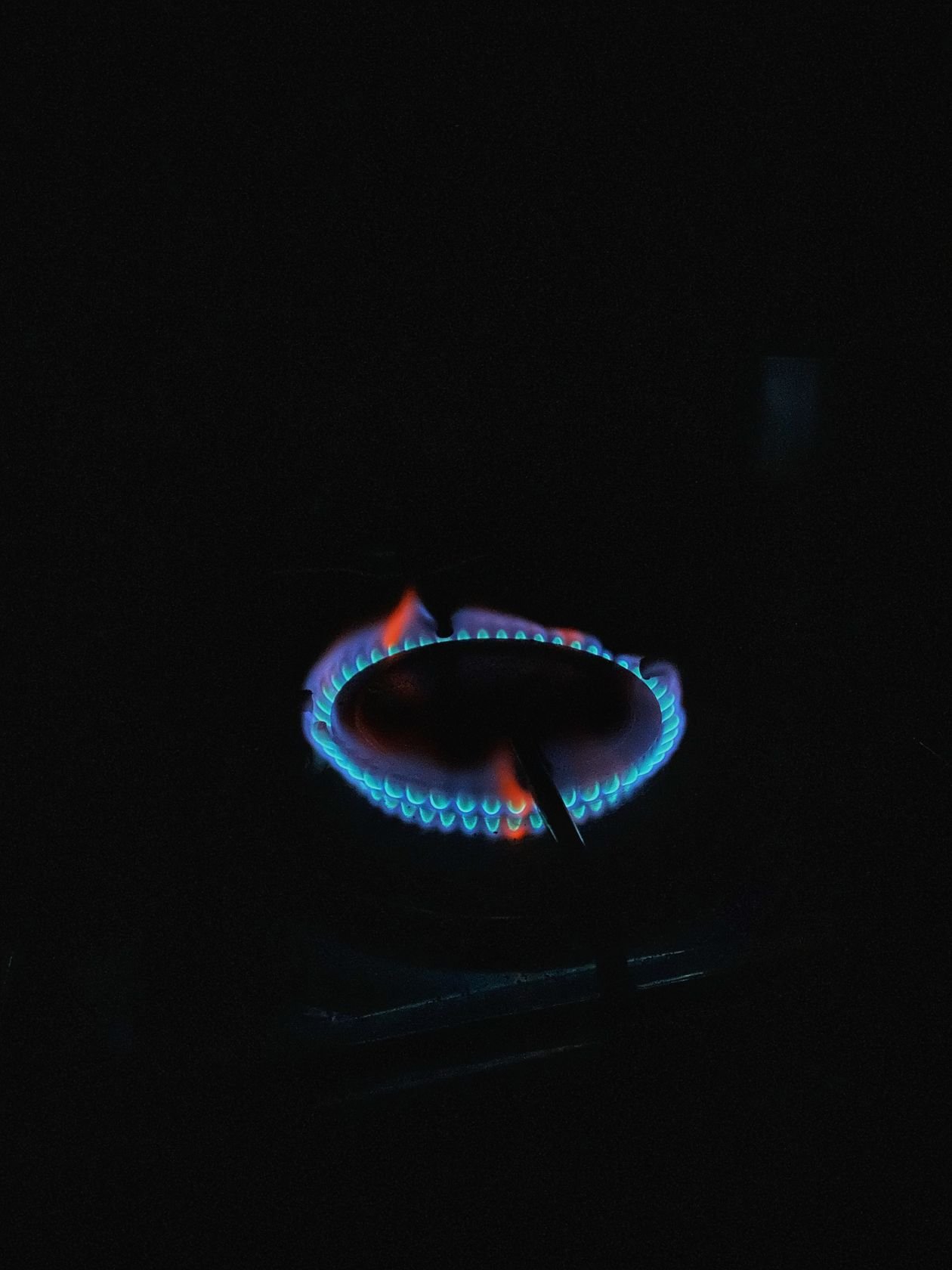
Gas cooktops burn fuel inside your home. That releases combustion by-products such as nitrogen dioxide. A 2022 study published in the International Journal of Environmental Research and Public Health estimated that 12.7% of current U.S. childhood asthma cases are linked to gas stove use. The researchers compared this to the share linked to secondhand smoke. It is a modeling estimate, and some experts have debated its methods.
If you cook with gas, good ventilation matters. Use a range hood that vents outside and run it every time you cook. Our guide on whether gas ranges need to be vented explains the options.
Safety also differs by type:
- Induction: No flame, and the surface stays cooler. ENERGY STAR notes this makes induction safer to work with. Many models shut off when you remove the pan.
- Gas: Open flames can ignite towels or sleeves. Gas leaks are rare but serious.
- Electric: The surface stays very hot after use. Most smoothtops have a hot-surface light.
Cookware Compatibility
Induction only works with magnetic cookware. Cast iron, enameled cast iron, carbon steel, and most stainless steel work well. Aluminum, copper, and glass do not work unless they have a magnetic base.
A quick test: if a magnet sticks firmly to the bottom of your pan, it will work on induction. See our best induction cookware guide for compatible sets.
Gas works with almost any pan, including round-bottom woks. Electric smoothtops work best with flat-bottom pans that make full contact with the glass. Learn more in our guide to the best cookware for gas stoves.
Cost to Buy and Install
Here are typical national ranges from Fixr:
- Electric: $300 to $1,000 for the unit, plus $75 to $150 to install. Total about $375 to $1,150.
- Gas: $300 to $1,500 for the unit, plus $100 to $175 to install. Total about $400 to $1,675.
- Induction: $1,000 to $2,500 for the unit, plus $225 to $350 to install. Total about $1,225 to $2,850.
Switching fuel types adds cost. Going from gas to induction may require a new 240-volt circuit. Going from electric to gas requires a gas line, which a licensed plumber must install.
Rebates can help. The federal Home Energy Rebates program offers electric appliance rebates in participating states, and rules have changed in 2026. Check your state energy office and your utility for current offers before you buy.
Cleaning and Maintenance
- Induction: Easiest to clean. Spills do not bake on because the glass stays cooler.
- Electric smoothtop: Flat glass wipes clean, but spills can burn onto the hot surface. Use a cooktop cleaner and a razor scraper made for glass.
- Gas: Hardest to clean. You must remove grates and wash burner caps. Our guide on cleaning gas burners walks through it.
Pros and Cons Summary
Induction
- Pros: Fastest, most efficient, precise control, cooler surface, easy cleanup.
- Cons: Highest upfront cost, needs magnetic cookware, may need electrical upgrades.
Gas
- Pros: Visible flame, instant control, works with almost any pan, may work in some power outages.
- Cons: Least efficient, indoor air pollutants, harder to clean, open-flame risk.
Electric
- Pros: Lowest cost, easy installation, no combustion, simple to use.
- Cons: Slow to respond, surface stays hot, less precise control.
Common Myths About Induction, Gas, and Electric
- Myth: Gas is the fastest. Consumer Reports found induction boils water faster than both gas and electric.
- Myth: Induction cannot sear. Induction reaches high heat quickly and sears well with cast iron or heavy stainless pans.
- Myth: Electric is always cheaper to run. Standard electric is less efficient than induction. Running cost depends on your local rates.
- Myth: Induction is silent. Many units make a light hum or fan noise, especially on high settings. This is normal.
- Myth: Gas works in every outage. Many gas cooktops use electric igniters. You may need to light burners with a match, and you should follow the maker’s instructions.
Switching Cooktops: A Quick Checklist
Changing fuel types is the biggest hidden cost in the induction vs gas vs electric cooktop decision. Use this checklist before you buy.
- Check your power supply. Induction and electric cooktops usually need a dedicated 240-volt circuit. Confirm the amperage in the install manual.
- Cap or add gas safely. Moving away from gas means capping the line. Adding gas means running a new line. Both need a licensed pro.
- Measure the cutout. Cooktop sizes vary, so match the new unit to your counter opening.
- Review your cookware. Test pans with a magnet if you plan to switch to induction.
- Plan ventilation. Gas needs a vented hood. All cooktops benefit from one.
For an electric install, see our guide on how to install an electric cooktop.
Induction vs Gas vs Electric Cooktop: Which Should You Choose?
Choose Induction If You:
- Want the fastest boiling and most precise simmering.
- Care about energy efficiency and indoor air quality.
- Have young children and want a cooler cooktop surface.
- Already own or will buy magnetic cookware.
Choose Gas If You:
- Love cooking over a visible flame, including wok cooking and charring.
- Already have a gas line and a vented range hood.
- Want a cooktop that may still work during a power outage. Check the manual for safe manual lighting.
Choose Electric If You:
- Want the lowest upfront cost.
- Are replacing an existing electric cooktop with no wiring changes.
- Cook simple meals and do not need instant heat changes.
Ready to compare models? See our best gas cooktop reviews and best electric cooktop reviews.
Frequently Asked Questions
Is induction better than gas?
For speed, efficiency, and indoor air, yes. Induction is about 85% efficient versus about 32% for gas. Gas still wins for cooks who want a visible flame and round-bottom wok cooking.
Does induction use more electricity than a regular electric cooktop?
No. Induction is about 5% to 10% more efficient than a standard electric cooktop. It wastes less energy for the same job.
Can I use my current pans on induction?
Only if they are magnetic. If a magnet sticks firmly to the bottom, the pan will work.
Is induction safe for people with pacemakers?
Some makers advise people with pacemakers or other implanted devices to talk with their doctor first. Check your cooktop’s manual for specific guidance.
Which cooktop is cheapest to run?
It depends on local energy prices. Induction uses energy most efficiently, but gas can cost less per unit in some areas. Compare your gas and electric rates.
Final Verdict
The induction vs gas vs electric cooktop decision comes down to your priorities. Induction leads on speed, efficiency, safety, and cleanup, but costs the most upfront. Gas offers a flame and familiar control, with trade-offs in efficiency and indoor air. Standard electric is the budget choice for simple, reliable cooking.
Think about how you cook, what fuel your kitchen already has, and your budget. Then match the cooktop to those needs. Whichever you pick, the right cookware and good ventilation will make every meal easier.

Hey, My name is MAMON. I am a SEO content creator and affiliate marketer with over 8 years of experience. I create honest product reviews, in-depth buying guides, and practical how-to articles to help readers make informed decisions. My mission is to provide trustworthy, research-backed content that delivers real value.
Leave a Reply