Key Takeaways
- Kitchen and cooking knives account for roughly a third of the estimated 434,000 knife-related ER visits recorded annually in the U.S., and fingers and thumbs take the brunt of it in 66% of cases.
- A sharp knife is safer than a dull one: dull blades slip instead of cutting cleanly, which is what causes most kitchen lacerations.
- The “claw grip” and a stable cutting board eliminate most accidental cuts in under a minute of practice.
- If you do get cut, apply firm direct pressure for several minutes before checking the wound, don’t keep lifting the cloth to look.
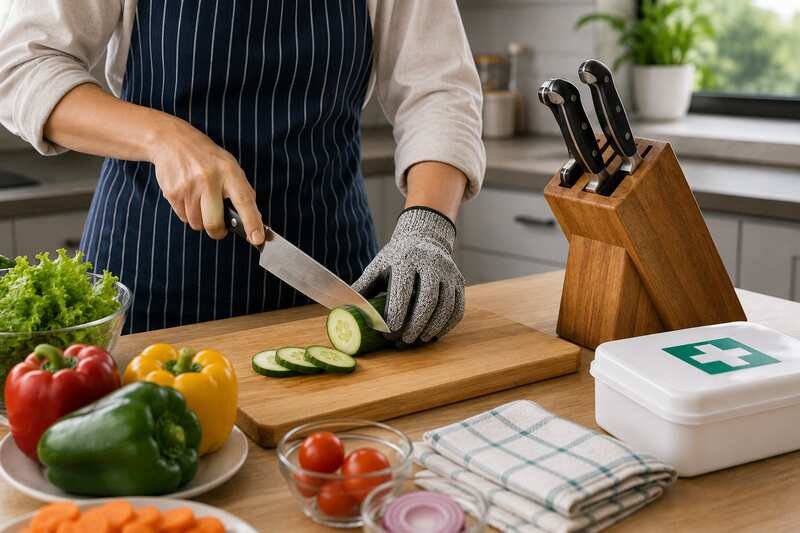
Cooking should be one of the most relaxing parts of the day, not a trip to urgent care. Most kitchen cuts don’t come from a “bad knife” or bad luck. They come from a handful of repeatable mistakes: cutting toward your body, working with a dull blade, or reaching into a drawer full of loose knives. Fix those habits and you fix most of your risk. Below is a practical, evidence-backed guide on how to prevent cuts in the kitchen, from grip and storage to what to do if a cut happens anyway.
How Common Are Kitchen Knife Injuries?
Knife injuries aren’t rare. A long-run U.S. emergency department study covering 1990 to 2008 found cooking and kitchen knives were linked to roughly 900,000 of the 2.5 million knife-related ER visits it tracked, an average of well over a thousand knife injuries a day across all knife types, with fingers and thumbs injured in two-thirds of cases and lacerations the dominant injury type. More recently, hand surgeons at Midwest Orthopaedics at Rush put the annual U.S. figure for knife-related ER visits at around 350,000, with a noticeable spike around the holidays when unfamiliar cooks are carving turkeys and prepping big meals.
The takeaway isn’t to fear your knife block. It’s that most of these injuries share the same root causes: a dull blade, an unstable cutting surface, a distracted cook, or fingers positioned where the blade is headed. Every section below targets one of those causes directly.
Choose and Maintain the Right Knife
Counterintuitively, a sharp knife is the safer knife. When a blade is dull, it needs extra force to cut through food, and that force has to go somewhere when the blade suddenly slips, usually into your guiding hand. A sharp blade glides through with light, controlled pressure and stays where you point it.
A few habits keep a knife both sharp and safe:
- Sharpen and hone regularly. A whetstone, pull-through sharpener, or honing steel used every few uses keeps the edge predictable.
- Wash by hand, immediately. Never leave a knife submerged in a sink of soapy water where the next person reaches in blind, and never run it through the dishwasher, which dulls the edge and can loosen the handle. If you want to learn more about what different knife materials mean for edge retention, it’s worth matching your sharpening routine to your blade’s steel type.
- Dry it before you put it away. Moisture left on the blade encourages rust and makes the handle slippery on the next use.
- Replace or professionally re-grind a knife with a chipped or rolled edge. A damaged edge behaves unpredictably no matter how carefully you sharpen it.
If you’re shopping for a first “good” knife, start with a single well-balanced chef’s knife rather than a full block.
Master a Safe Grip and Cutting Technique
Technique prevents more cuts than any product ever will.
Use the claw grip. Curl the fingertips of your guiding hand under, so your knuckles, not your fingertips, face the blade. Rest the flat of the blade against your knuckles as a guide while you cut. This alone removes the most common way home cooks lose a fingertip.
Always cut on a stable board. Never slice food held in your hand or against your body. If the cutting board slides on the counter, place a damp towel or a silicone mat underneath it before you start, not after it’s already moved once.
Create a flat surface first. For round or unstable foods like onions, tomatoes, or potatoes, slice off one side first so the food sits flat and stops rolling under the blade.
Cut away from your body, not toward it. If the blade slips while you’re pulling it toward yourself, it has nowhere to go but into you. Push or draw the blade in a direction that ends away from your hands and torso.
Let go of a falling knife. It’s an old kitchen instinct to grab for a dropped knife. Don’t. Step back and let it fall; a bruised foot heals faster than a cut hand.
Safe Handling Habits That Prevent Cuts
Beyond grip and cutting, a few handling rules cut down on incidental injuries that have nothing to do with the actual chopping:
- Carry a knife point-down, blade turned slightly toward your leg, and keep your arm relaxed at your side. Never carry a knife while also carrying something else in the same hand.
- Pass a knife handle-first. Hold the flat of the blade and extend the handle toward the other person; never slide a knife across a counter to someone.
- Never use a knife as a lever or pry tool, and never place your non-cutting hand flat against the spine of the blade for “extra pressure.” That’s how palms get cut.
- Stay focused while cutting. Most home-kitchen slips happen when a cook is talking, reaching for their phone, or watching something else while the blade is still moving.
- Treat paring and steak knives with the same respect as a chef’s knife. A smaller blade is not a safer blade; it’s often sharper relative to its size and easier to lose track of near your fingers.
Watch how a trained cook applies these habits in real time:
Store Knives the Right Way
Loose knives in a utensil drawer are a hazard every time someone reaches in without looking. Proper storage protects the blade’s edge and your hands.
- A knife block or in-drawer knife tray keeps blades separated and edges protected.
- A magnetic strip mounted on the wall works well in small kitchens and keeps knives visible and out of a drawer entirely.
- Blade guards or sheaths are the right call if you’re short on counter or wall space and need to store knives in a drawer.
- Whatever method you choose, keep it consistent. Knives that migrate between the block, the drawer, and the dish rack are the ones that end up forgotten somewhere unsafe.
Keep Knives Away From Children, Then Teach Them Properly
Store knives somewhere young children can’t reach or see, whether that’s a high drawer, a locked block, or a cabinet with a child safety latch. That’s the easy part.
The harder, more useful part is teaching age-appropriate knife skills once a child is ready. Kids who are taught proper grip and cutting technique under direct supervision, using a knife sized for their hand, tend to be more careful with blades as they get older, not less, because they understand the tool instead of just being told to fear it. Never leave a child alone with a knife, even a “kid-safe” one, and stay within arm’s reach until you’re confident in their technique.
What to Do If You Cut Yourself
Even careful cooks get cut. Knowing the first-aid basics changes the outcome.
- Apply firm, direct pressure to the wound with a clean cloth or sterile gauze. Keep steady pressure rather than repeatedly lifting the cloth to check.
- Rinse under cool running water once the bleeding has slowed, to clear debris, then pat the area dry.
- Elevate the injured hand above heart level if possible; it can help slow the bleeding.
- Apply an antibiotic ointment and a clean bandage once bleeding has stopped.
- Seek emergency care if the bleeding doesn’t stop after several minutes of firm pressure, if the cut is deep enough to see fat or bone, if you can’t fully close the wound edges, or if you lose sensation near the cut.
For anything beyond a minor kitchen nick, the Mayo Clinic’s guide to severe bleeding first aid and the American Red Cross’s guide to wound care are worth bookmarking before you need them, not after.
Frequently Asked Questions
Is a sharp or dull knife more likely to cause a cut?
A dull knife causes more injuries. It requires extra force and is more likely to slip off the food instead of cutting cleanly, sending the blade somewhere you didn’t plan for.
What’s the safest way to hold food while cutting it?
Use the claw grip: curl your fingertips under and guide the blade against your knuckles rather than your fingertips.
Should I store knives loose in a kitchen drawer?
No. Loose blades dull faster and put anyone reaching into the drawer at risk. Use a block, an in-drawer knife tray, blade guards, or a magnetic strip instead.
How long should I apply pressure to a kitchen cut before checking it?
Several minutes of steady, uninterrupted pressure. Repeatedly lifting the cloth to check disrupts clotting and can restart the bleeding.
Conclusion
Most kitchen cuts trace back to the same few causes: a dull blade, an unstable board, a distracted moment, or fingers in the blade’s path. Sharpen your knives, use the claw grip, cut on a stable board, and store blades where they belong instead of loose in a drawer, and you remove nearly all of the everyday risk. If a cut does happen, apply firm pressure, keep the wound elevated, and know the point at which a bandage isn’t enough and a trip to urgent care is the right call.

Hey, My name is MAMON. I am a SEO content creator and affiliate marketer with over 8 years of experience. I create honest product reviews, in-depth buying guides, and practical how-to articles to help readers make informed decisions. My mission is to provide trustworthy, research-backed content that delivers real value.
Leave a Reply