
Kitchen sinks take a beating daily, so the material behind that finish matters more than most shoppers realize. So, what are kitchen sinks made of? Most kitchen sinks are made of stainless steel, granite or quartz composite, fireclay, and ceramic. Others are made of porcelain, natural stone, copper, cast iron, glass, or wood, depending on the kitchen’s style and the owner’s budget.
This guide covers the seven most common kitchen sink materials, along with several less-common options. It breaks down the real pros and cons of each so you can pick a sink that matches how your kitchen actually gets used.
Key Takeaways
- Stainless steel dominates U.S. kitchens because it resists corrosion, costs less than stone alternatives, and holds up to daily use.
- Gauge matters for steel sinks: 16-gauge is thicker and more dent-resistant than 18-gauge, though it costs more.
- Granite composite sinks are typically about 80% crushed granite and 20% acrylic resin, giving them a stone look without stone’s fragility.
- Fireclay is fired above 2,100°F, fusing the glaze into the clay for a dense, non-porous surface that resists stains and chips.
What Are Kitchen Sinks Made Of? (7 Best Materials, Pros, and Cons)
Kitchen sinks are made from a range of materials, each bringing a different balance of durability, price, noise level, and upkeep. Here are the seven most common kitchen sink materials, starting with the one found in more American kitchens than any other.
1. Stainless Steel
Stainless steel is the most common kitchen sink material in the U.S. because it works with almost any kitchen style and holds up well to daily wear. Most residential sinks use 300-series stainless steel, typically grade 304. It’s an alloy of chromium and nickel that resists rust and corrosion without being magnetic.
Thickness is measured in gauge, and the number works backward from what you’d expect: a lower gauge number means thicker steel. A 16-gauge sink runs about 0.063 inches thick, noticeably sturdier than an 18-gauge sink at roughly 0.047 inches. Thicker steel resists denting better and dampens the noise of running water and dropped dishes more effectively. That’s why many sink brands skip 18-gauge for kitchen use entirely and build only in 16-gauge or thicker.
Pros
- Resistant to corrosion and rust
- Strong, durable, and widely available
- Relatively affordable compared to stone and composite options
- Easy to clean and sanitize
- Compatible with almost any kitchen style or countertop
Cons
- Prone to visible scratches and water spots over time
- Thinner gauges can be noisy without added sound-dampening pads
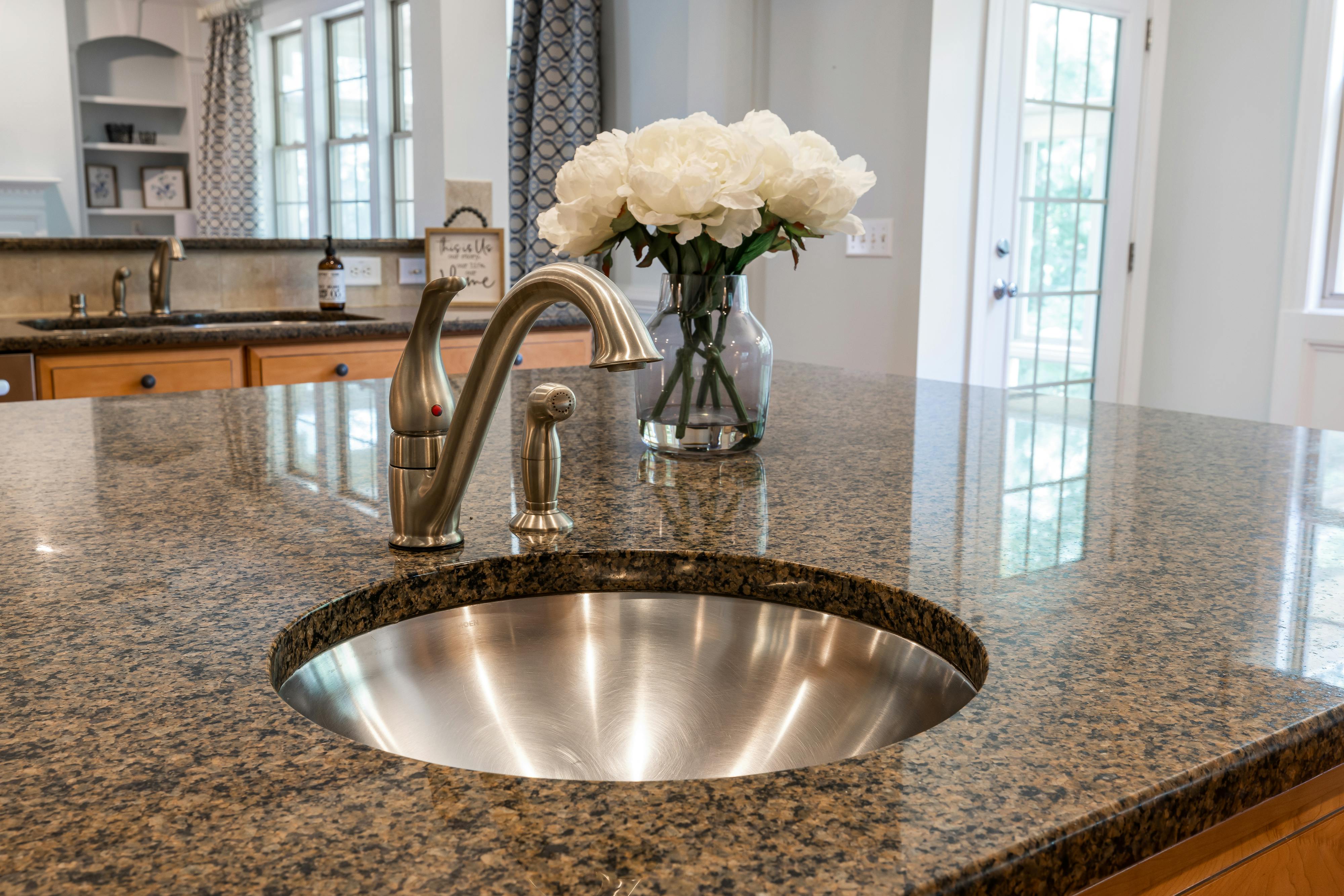
2. Granite and Quartz Composite
Composite sinks blend crushed natural stone with acrylic or polyester resin to create a material that’s more uniform and less fragile than solid stone. Granite composite sinks are typically made of about 80% crushed granite mixed with 20% acrylic resin, according to Signature Hardware’s buying guide. That ratio gives them the look and heft of stone at a more accessible price. Quartz composite follows a similar formula, using crushed quartz sand blended with resin instead.
Both versions resist scratching, staining, and heat far better than stainless steel. The resin content also makes them non-porous, so they don’t absorb odors or bacteria the way untreated natural stone can.
Pros
- Comes in a range of colors, unlike the silver-only look of steel
- Highly resistant to scratches, dents, and heat
- Non-porous surface that resists staining
- Quieter than stainless steel, with less vibration from running water
Cons
- More expensive than stainless steel or ceramic
- Heavy, which can complicate installation and cabinet support
3. Fireclay
Fireclay sinks start as molded clay that’s fired at temperatures exceeding 2,100°F. That process fuses the glaze directly into the clay body rather than leaving it as a surface coating. That extreme heat triggers vitrification, where the clay’s molecular structure becomes dense enough to create a seamless, glass-like, non-porous surface.
The result resists chipping, staining, and household acids far better than standard ceramic. Most fireclay sinks are still hand-poured and finished in small batches. That’s part of why the classic farmhouse apron-front look is so closely associated with this material.
Pros
- Resistant to dents, stains, chips, and household chemicals
- Non-porous surface that’s quick and easy to clean
- Extremely durable when properly cared for
- Classic farmhouse look that holds up over decades
Cons
- Among the most expensive materials on this list
- Heavy enough that installation often costs more too
4. Ceramic
Ceramic sinks are made from clay and fiber materials blended and heated to form a compact, solid structure, though at lower firing temperatures than fireclay. They’re generally lighter than cast iron and only slightly heavier than stainless steel. They also produce noticeably less noise from running water than an uncoated metal sink.
Ceramic gives a kitchen a traditional look with a clean, modern edge. That combination is part of why it remains popular in farmhouse and cottage-style kitchens across the U.S.
Pros
- Relatively affordable compared to fireclay or composite
- Traditional look with a modern finish
- Durable under normal household use
- Quick to wipe clean
Cons
- Can become porous and stain-prone as the glaze wears down over the years
- Susceptible to chips if heavy cookware is dropped in
5. Porcelain
Porcelain sinks aren’t a standalone shell the way fireclay ones are. They’re typically a cast iron or pressed-steel base coated with a porcelain enamel, which is what gives them that glossy, reflective finish. The clay glaze itself is made from kaolin clay, feldspar, and quartz. It’s fired at high heat to bond into a smooth, compact surface with essentially no porosity.
The metal core underneath is also what makes porcelain sinks noticeably quiet. The enamel and base absorb vibration far better than exposed steel does. That combination is why porcelain remains a popular pick for undermount kitchen sinks.
Pros
- Minimal noise from running water thanks to the metal core
- Attractive, reflective, glass-like finish
- Strong and highly durable when the enamel stays intact
- Easy to wipe down and maintain
Cons
- Enamel can crack or chip if the underlying metal core is struck hard
- Susceptible to hard water mineral stains over time
6. Wood
Wood is an uncommon choice for a full sink basin. It shows up more often as an integrated wood countertop sink or a farmhouse-style trough, typically built from a dense, water-resistant hardwood like teak. Properly sealed wood sinks bring a warm, handcrafted look that no other material on this list can replicate.
The tradeoff is maintenance. Wood needs regular oiling or sealing to stay water-resistant, and any lapse in upkeep shortens its lifespan considerably compared to stainless steel or composite.
Pros
- Unique, handcrafted appearance unlike any other material
- Warm look that blends traditional and modern styles
- Naturally quiet under running water
Cons
- Requires consistent sealing or oiling to prevent water damage
- More susceptible to scratches and warping than sealed stone or metal
7. Natural Stone
Solid natural stone sinks are carved from materials like granite, marble, or soapstone. They show up most often in high-end kitchens where a one-of-a-kind look matters more than cost. No two solid-stone sinks look exactly alike.
Natural stone can withstand high heat and most household chemicals without damage. Manufacturers often leave the interior slightly softened to reduce the risk of chipping when cutlery drops in.
Pros
- One-of-a-kind, classy finish unmatched by manufactured materials
- Stain and oil resistant when properly sealed
- Easy to clean and maintain day to day
- Withstands high temperatures without damage
Cons
- Prone to cracking under sharp impact despite its overall strength
- Among the most expensive options, with specialized installation to match


Other Materials Used to Make Kitchen Sinks
A handful of other materials show up in kitchen sinks too, though usually in higher-end or specialty installations rather than everyday remodels.
Copper is one of the more interesting options because of what it does beyond looks. Copper alloys containing at least 95.6% copper are EPA-registered to continuously kill bacteria and viruses on contact. That includes eliminating 99.9% of certain viruses within two hours, according to the EPA’s own registration data. A copper sink develops a natural patina over time, which owners either love for its character or maintain against with regular polishing.
Cast iron sinks use a heavy iron base coated in enamel, similar in concept to porcelain but with a thicker, more substantial core. That extra mass makes cast iron sinks exceptionally durable and quiet. It also makes them considerably heavier to ship, move, and install than steel or composite.
Glass, acrylic, bamboo, and brass round out the less common options. Glass and acrylic sinks lean decorative, showing up mostly in bar sinks rather than heavy-use kitchen basins. Bamboo appeals to buyers prioritizing a renewable material. Brass, like copper, carries some natural antimicrobial properties and develops a similar patina, but it’s rarely used for a full kitchen basin due to cost.
Comparing Kitchen Sink Materials at a Glance
Now that you know what are kitchen sinks made of, here’s a quick side-by-side comparison to help you weigh the trade-offs at a glance.
| Material | Durability | Noise Level | Relative Cost |
|---|---|---|---|
| Stainless steel | High (dent-resistant at 16-gauge) | Moderate to high | Low to moderate |
| Granite/quartz composite | Very high | Low | Moderate to high |
| Fireclay | Very high | Low | High |
| Ceramic | Moderate | Low to moderate | Low to moderate |
| Porcelain | High | Low | Moderate |
| Natural stone | High, but chip-prone | Low | Very high |
| Cast iron | Very high | Very low | High |
Factors to Consider When Selecting Materials for Kitchen Sinks
Once you’ve narrowed down a few materials you like, a handful of practical factors usually decide which one actually goes in the cabinet.
- Price. Composite, fireclay, and natural stone sit at the top of the price range, while stainless steel and ceramic are typically the most budget-friendly.
- Compatibility with the countertop. A sink’s material and finish should complement the surrounding countertop in color and texture. A polished granite composite sink against a matte laminate counter, for instance, can look mismatched even if both are individually attractive.
- Durability and expected lifespan. A kitchen sink is a long-term fixture that most homeowners don’t plan to replace for a decade or more. Fireclay, composite, and cast iron tend to outlast glass or unsealed ceramic under daily use.
- Water safety certification. Look for sinks and fixtures certified to NSF/ANSI/CAN 61, the standard that verifies plumbing components don’t leach contaminants into drinking water, according to NSF International.
- Sink size and fit. The material you choose also needs to physically fit your existing or planned cabinet and countertop cutout. If you’re replacing an old sink, our guide on how to measure a kitchen sink walks through getting those dimensions right before you buy.
Installation and Care Considerations by Material
Heavier materials like fireclay, cast iron, natural stone, and composite typically need reinforced cabinet support and, in many cases, professional installation to handle their weight safely. Stainless steel and ceramic are lighter and generally more forgiving for a DIY swap. If you’re already planning to work underneath the sink, it’s worth reviewing our guide on installing a kitchen sink drain pipe. It covers the plumbing connections so they go smoothly regardless of which material you choose.
Whatever material you land on, day-to-day care matters more than the material itself for keeping a sink smelling clean. Grease and food residue can build up in any sink’s drain over time. Our guide on how to get rid of smell in a kitchen sink covers the cleaning routine that keeps that from becoming a problem, no matter what your sink is made of.
Watch: A Kitchen Sink Material Guide
This walkthrough compares the look, sound, and upkeep of the major sink materials side by side. It’s useful if you’re trying to picture how a few finalists would actually look installed.
Frequently Asked Questions About What Are Kitchen Sinks Made Of
Which is the best material for making kitchen sinks?
There isn’t a single best material, since the right choice depends on budget, noise tolerance, and style. Stainless steel remains the most popular all-around choice in the U.S. for its balance of cost and durability, while fireclay and composite sinks appeal to buyers prioritizing looks and quiet operation over price.
What are porcelain sinks made of?
Porcelain sinks are typically a cast iron or steel base coated with a porcelain enamel glaze made from kaolin clay, feldspar, and quartz. The metal core provides strength, while the enamel gives the sink its glossy, easy-to-clean surface.
Are kitchen sinks made of aluminum durable?
Aluminum kitchen sinks aren’t common and generally aren’t recommended for heavy daily use. Aluminum is lightweight and prone to dents, scratches, and hard water stains. It doesn’t hold up as well as stainless steel or composite over the long run.
Are granite composite and quartz composite sinks the same thing?
They’re similar but not identical. Granite composite sinks use crushed granite stone blended with resin, while quartz composite sinks use crushed quartz sand instead. Both perform similarly in terms of durability and heat resistance, with the main difference coming down to color options and manufacturer.
How long does a kitchen sink typically last?
A well-maintained stainless steel or composite sink commonly lasts 15 to 30 years. Fireclay and cast iron sinks, when the enamel or glaze stays intact, can last even longer, sometimes matching the lifespan of the home itself.
Is a heavier kitchen sink material always better?
Not necessarily. Heavier materials like fireclay and cast iron generally resist noise and chipping well. They also demand stronger cabinet support and often cost more to install. A well-made 16-gauge stainless steel sink can outperform a poorly supported heavy sink in daily practical use.
Which kitchen sink material is quietest?
Cast iron and porcelain sinks tend to be the quietest, since their dense metal cores absorb vibration from running water and dishes. Composite and fireclay sinks are also relatively quiet. Uncoated, thinner-gauge stainless steel is typically the noisiest without an added sound-dampening pad.
Conclusion
So, what are kitchen sinks made of? Most come down to stainless steel, granite or quartz composite, fireclay, ceramic, porcelain, wood, or natural stone. Copper, cast iron, glass, and bamboo cover the more specialized end of the market. Each material trades off price, weight, noise, and upkeep differently. The best pick depends on your budget, your kitchen’s style, and how much maintenance you’re willing to keep up with. Match the material to how your kitchen actually gets used, and it should serve you well for decades either way.

Hey, My name is MAMON. I am a SEO content creator and affiliate marketer with over 8 years of experience. I create honest product reviews, in-depth buying guides, and practical how-to articles to help readers make informed decisions. My mission is to provide trustworthy, research-backed content that delivers real value.
Leave a Reply