
A foul smell coming from the kitchen sink almost always traces back to grease, food particles, or bacteria buildup somewhere in the drain, not the sink basin itself. Learning how to get rid of smell in kitchen sink starts with figuring out which kind of sink you have. A sink with a garbage disposal needs a different approach than one without. Both are covered below, along with a few habits that keep the smell from coming back once it’s gone.
Key Takeaways
- Most kitchen sink odors come from grease and food residue trapped in the drain or disposal, not the sink itself.
- Run cold water during normal disposal use, per InSinkErator’s official guidance. Save hot water and soap for an occasional deep clean.
- Boiling water is safe for metal drain pipes but can soften or deform PVC pipes over repeated use. Know what your plumbing is made of first.
- If the smell persists after cleaning, it may point to a clogged or dry P-trap rather than a dirty drain.
Why Does a Kitchen Sink Start to Smell?
Before jumping into how to get rid of smell in kitchen sink for good, it helps to know what’s actually causing it. The short version: it’s rarely the sink material itself, whether that’s stainless steel, stone, or composite. It’s almost always what’s built up inside the drain.
Grease coats the inside of the drain pipe a little more with every dish washed. Food particles that don’t fully wash down get trapped in that grease. Bacteria feed on the buildup and produce the sulfur-like odor most people associate with a smelly sink. A garbage disposal adds another layer. Ground food can cling to the underside of the splash guard and the disposal chamber itself, out of sight but very much in smelling range.
How to Get Rid of Smell in a Kitchen Sink With a Garbage Disposal
Modern kitchens increasingly pair a disposal with the sink to grind food waste before it reaches the drain. If yours has started to smell, these methods target the disposal chamber and blades directly.
1. Run Cold Water During Normal Use, Hot Water and Soap for Deep Cleaning
Day to day, run cold water while the disposal is grinding. Cold water keeps grease solid so the blades can chop it up and flush it through. It won’t melt and coat the chamber walls that way. That’s the official guidance from InSinkErator, one of the largest disposal manufacturers.
For a deeper clean when odor has already set in, plug the sink first. Fill it about three-quarters full with hot water, then add a squirt of dish soap and stir it in briefly. Pull the stopper and turn on the disposal while the water drains through. The hot, soapy water helps break down grease that’s already built up, which is a different job than day-to-day rinsing.
2. Ice Cubes, Salt, and Lemon Peels
If the cold-water routine and an occasional soapy flush aren’t enough, it’s time for reinforcements. Add ice cubes, coarse salt, and lemon peels to the mix. Each ingredient does something different. Ice knocks food residue off the grinding blades as it gets chopped up. Salt acts as a mild abrasive scrub. Lemon peels leave behind a fresh scent once everything’s ground up and flushed through.
3. Frozen Vinegar and Lemon Cubes
This one works as prevention as much as a cure. Freeze chopped lemon in white vinegar using an ice cube tray. Drop a few cubes into the disposal with a low stream of water running, then turn the disposal on and let it grind through them. The slow-melting ice gives the vinegar and lemon time to work through the chamber rather than rinsing through in a few seconds. That’s part of why this method holds up well as a regular habit rather than a one-time fix.
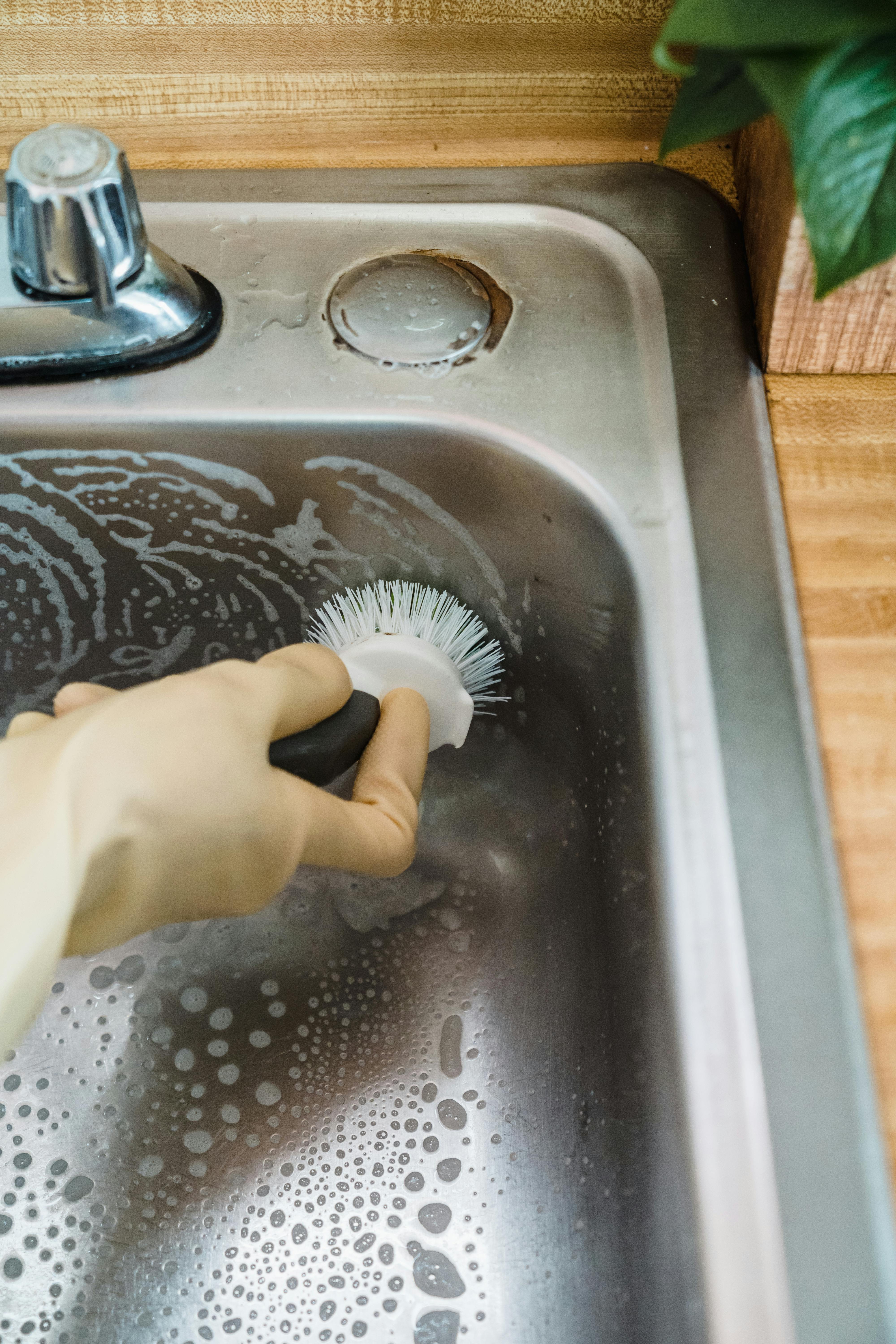
How to Get Rid of Smell in an Ordinary Kitchen Sink (No Disposal)
If you’re wondering how to get rid of smell in kitchen sink without a garbage disposal in the mix, the process is simpler since there’s no chamber or blades to work around.
Without a disposal grinding food waste, odors in a plain kitchen sink usually come down to grease and residue sitting in the trap and drain line. These methods work from mild smells up to genuinely stubborn ones.
1. Pour Boiling Water
This trick has been used for decades because it works. Boiling water melts grease clinging to the inside of the pipe and flushes food particles along with it. It’s a reasonable first move for a mild odor. One caveat worth knowing, per licensed plumbers: boiling water is fine for metal pipes like cast iron or copper. Repeated use on PVC pipes can soften or slightly deform the plastic over time, though, especially if the water sits or drains slowly. If you’re not sure what your drain line is made of, a quick look under the sink usually settles it. PVC is the white or cream-colored plastic pipe most homes built or replumbed in the last few decades will have.
2. Baking Soda, Vinegar, and Boiling Water
For a smell that boiling water alone doesn’t clear, pour a cup of baking soda down the drain. Follow it with two cups of white vinegar. The mixture will fizz and bubble as it works through the pipe. Let it sit for a few minutes, then finish with a kettle of boiling water to flush everything through. Repeating this roughly every two months as routine maintenance keeps most smells from building back up.
3. Baking Soda, Salt, Vinegar, and Boiling Water
For genuinely stubborn odors, add coarse salt to the baking soda and vinegar combination. The salt acts as a scouring agent that scrubs the inside of the pipe as everything flushes through. Use about half a cup of coarse salt, half a cup of baking soda, and one cup of vinegar. Pour them in that order with the drain plugged, so the mixture has time to work before draining. Finish with boiling water to clear out anything the salt loosened. Coarse salt works better than fine table salt here. The larger grains provide more scrubbing action as they pass through.
Keeping the Smell From Coming Back
A few habits keep a clean sink smelling that way longer, rather than needing a full deep-clean every few weeks.
- Lemon juice. A splash down the drain every so often leaves a clean, citrus scent. It also helps cut through light grease buildup between deeper cleanings.
- Essential oils. Mix a few drops into baking soda and leave it in the drain overnight. Flush it with boiling water in the morning for a natural deodorizer between cleanings.
- Vinegar. It’s less pleasant-smelling on its own than lemon or essential oils. Its acidity still helps prevent the grease buildup that causes odors in the first place.
When It’s Not the Sink: Checking for a Clogged Drain or Sewer Issue
If the smell persists after trying these methods, the problem may sit further down the line than a simple cleaning can reach. A dry P-trap is one common culprit. That’s the curved section of pipe under the sink that’s supposed to hold a small amount of water at all times. If the sink hasn’t been used in a while, that water can evaporate and let sewer gas drift back up into the kitchen. Running water for a minute usually refills it. If that doesn’t help, it’s worth having a plumber check for a clogged or damaged sewer line further downstream. That’s outside what any amount of baking soda and vinegar can fix.
Watch: How to Deodorize a Smelly Kitchen Sink
This walkthrough from a licensed plumbing company covers five methods in real time. It’s useful if you’d rather watch the process before trying it yourself. If the smell turns out to be a symptom of a bigger plumbing issue, our guide on installing a kitchen sink drain pipe covers what’s underneath the sink and how it’s supposed to connect.
Frequently Asked Questions About How to Get Rid of Smell in Kitchen Sink
What is the fastest way to get rid of smell in a kitchen sink?
Boiling water flushed straight down the drain is the quickest first step for a mild smell. For anything stronger, baking soda and vinegar followed by boiling water usually clears it within a few minutes.
Is it safe to pour boiling water down a kitchen sink every time it smells?
It’s safe for metal pipes like cast iron or copper. If your home has PVC drain pipes, occasional use is fine. Frequent boiling-water flushes, though, can soften or warp the plastic over time.
Why does my garbage disposal still smell after I clean it?
Odor often hides under the splash guard or rubber baffle. Trapped food can cling there even after a normal cleaning. Lift or remove the splash guard, if it’s removable on your model, and scrub underneath directly.
Should I use hot or cold water when running my garbage disposal?
Cold water for everyday grinding, per the manufacturer’s own guidance. Cold water keeps grease solid so it grinds and flushes properly. Save hot, soapy water for periodic deep cleaning instead of daily use.
How often should I clean my kitchen sink drain to prevent smells?
Roughly every two months with baking soda, vinegar, and boiling water covers most households. Kitchens that see heavy grease from regular cooking may need it more often, closer to once a month.
Why does my kitchen sink smell even though I just cleaned it?
A lingering smell after cleaning often points to a dry P-trap. It can also mean a clog or issue further down the drain line, past the section you’re able to clean from the sink. Running water for a minute or two usually resolves a dry trap.
Can I use bleach to get rid of kitchen sink smell?
It’s better to avoid it, especially if you have a garbage disposal or septic system. Bleach can damage rubber parts inside a disposal over time and isn’t necessary when baking soda, vinegar, and boiling water handle the same job without the fumes or the risk to your plumbing.
Does a smelly kitchen sink mean I have a clog?
Not necessarily. Odor and clogs often show up together since both come from buildup in the drain, but a sink can smell without draining slowly, and it can drain slowly without smelling. Treat them as related but separate problems worth checking independently.
Conclusion
Whether your kitchen has a garbage disposal or not, how to get rid of smell in kitchen sink usually comes down to the same basics. Break down the grease and food particles causing it, then keep up a simple routine so it doesn’t build back up. Start with boiling water or a soapy disposal flush. Move up to baking soda and vinegar for anything stubborn, and check the P-trap if the smell won’t quit after a proper cleaning.

Hey, My name is MAMON. I am a SEO content creator and affiliate marketer with over 8 years of experience. I create honest product reviews, in-depth buying guides, and practical how-to articles to help readers make informed decisions. My mission is to provide trustworthy, research-backed content that delivers real value.
Leave a Reply