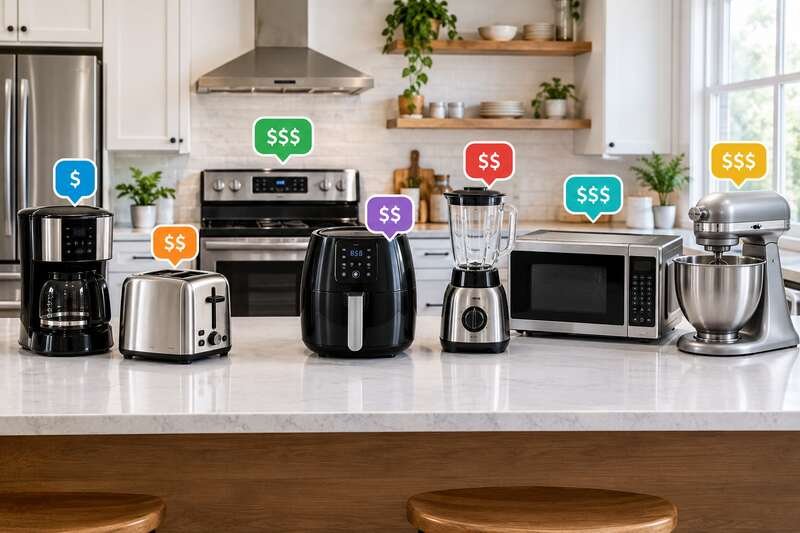
Outfitting a kitchen from scratch, or replacing a single appliance that just died, comes down to one question: what should you actually expect to pay? This kitchen appliance pricing guide breaks down real 2026 U.S. costs for every major category. It covers refrigerators, ranges, and dishwashers, plus the small countertop gadgets you use every morning. A full kitchen appliance package typically runs $3,000 to $12,000 depending on quality tier. You can piece it together far more affordably once you know where the real price differences come from.
Key Takeaways
- Refrigerators range from $300 for a basic top-freezer to $10,000+ for a built-in unit, with most households landing in the $600-$2,300 “good quality” tier.
- Ranges and ovens run $600-$1,300 for gas or electric, but induction and dual-fuel models can push past $4,000.
- ENERGY STAR certified appliances can save real money over their lifetime, even though the upfront price is often similar to standard models.
- A complete washer and dryer set costs $1,000-$2,300, and a dishwasher adds another $350-$3,400 depending on the style.
Refrigerators: What You’ll Actually Pay
A good refrigerator is the appliance you’ll live with the longest. That’s why it’s worth understanding the full price spread before you shop. According to HomeGuide’s 2026 pricing data, basic units with limited storage and no ice maker run $200-$600. Good-quality refrigerators with digital controls and filtered water start around $600 and climb to $2,300. Premium units with smart features and custom panel-ready finishes range from $2,300 up to $5,000.
Style matters just as much as tier. Top-freezer models are the most affordable at $300-$1,000, while bottom-freezer units run $700-$2,000. French door refrigerators typically cost $1,300-$3,000, and side-by-side models land at $1,200-$2,000. If you want a counter-depth fridge that sits flush with your cabinets, budget $900-$2,400. Built-in refrigerators are the priciest category by far, often $2,000-$10,000 for the unit alone before installation. If space is tight, our guide to small refrigerators with ice makers covers compact options that still deliver the features you need.
Most refrigerators last 10-20 years with regular maintenance. If yours is already past the 15-year mark and needs frequent repairs, replacing it usually beats sinking more money into an aging compressor or sealed system.

Energy-Efficient Appliances: The Real Savings
Choosing an ENERGY STAR certified appliance rarely costs more upfront than a standard model. What it changes is what you pay to run it afterward. ENERGY STAR data shows certified refrigerators use about 9% less energy than models that just meet the federal minimum. Swapping out a refrigerator over 15 years old can save roughly $95 a year on its own. Over a typical 12-year lifespan, replacing an old fridge with a certified model saves around $150 in electricity. That’s on top of whatever rebate your utility offers for recycling the old unit.
That efficiency math holds across categories. A washer, dryer, or dishwasher with a high efficiency rating usually costs a little more at checkout. But the gap often closes within a few years through lower water and electricity bills. If you’re deciding between two similarly priced models, the certified one is almost always the better long-term value.
Dishwashers: Built-In, Portable, and Countertop
Dishwashers span a wide range depending on how they install and where they sit. Countertop models that hook up to your faucet run $250-$400, making them a good option for renters or small kitchens. Portable units that roll up to the sink cost $650-$1,000. Full built-in dishwashers with front-door controls range from $350 on the budget end to $3,400 for luxury models. Single-drawer dishwashers run $750-$1,400, and double-drawer models cost $1,250-$2,500.
Brand also drives price. Entry-level Frigidaire and Whirlpool dishwashers run $400-$1,200. GE spans an especially wide range at $250-$1,600. Samsung and LG sit in the mid-range at $600-$1,900, and KitchenAid pushes into premium territory at $750-$2,100. Miele tops the category at $1,300-$3,500. If counter space is limited, our countertop dishwasher buying guide covers the best compact models.
Washers and Dryers
Laundry appliances aren’t technically kitchen appliances, but for many households they’re part of the same purchase decision. A standalone washing machine runs $700-$1,300, and a dryer costs $800-$1,200. Buying a matched set brings the total to $1,000-$2,300. Top-load pairs sit on the lower end at $1,000-$1,600, while front-load sets run $1,200-$2,300.
If space is limited, stackable sets cost $1,400-$2,300, and one-piece stacked units run $1,200-$2,200. Washer-dryer combo units handle both functions in a single machine. They cost $1,200-$1,700 and work well in apartments or small laundry closets. Within any of these categories, basic washers start around $450. High-end models with smart features and larger drums can reach $2,000 or more.
Ranges, Ovens, and Cooktops
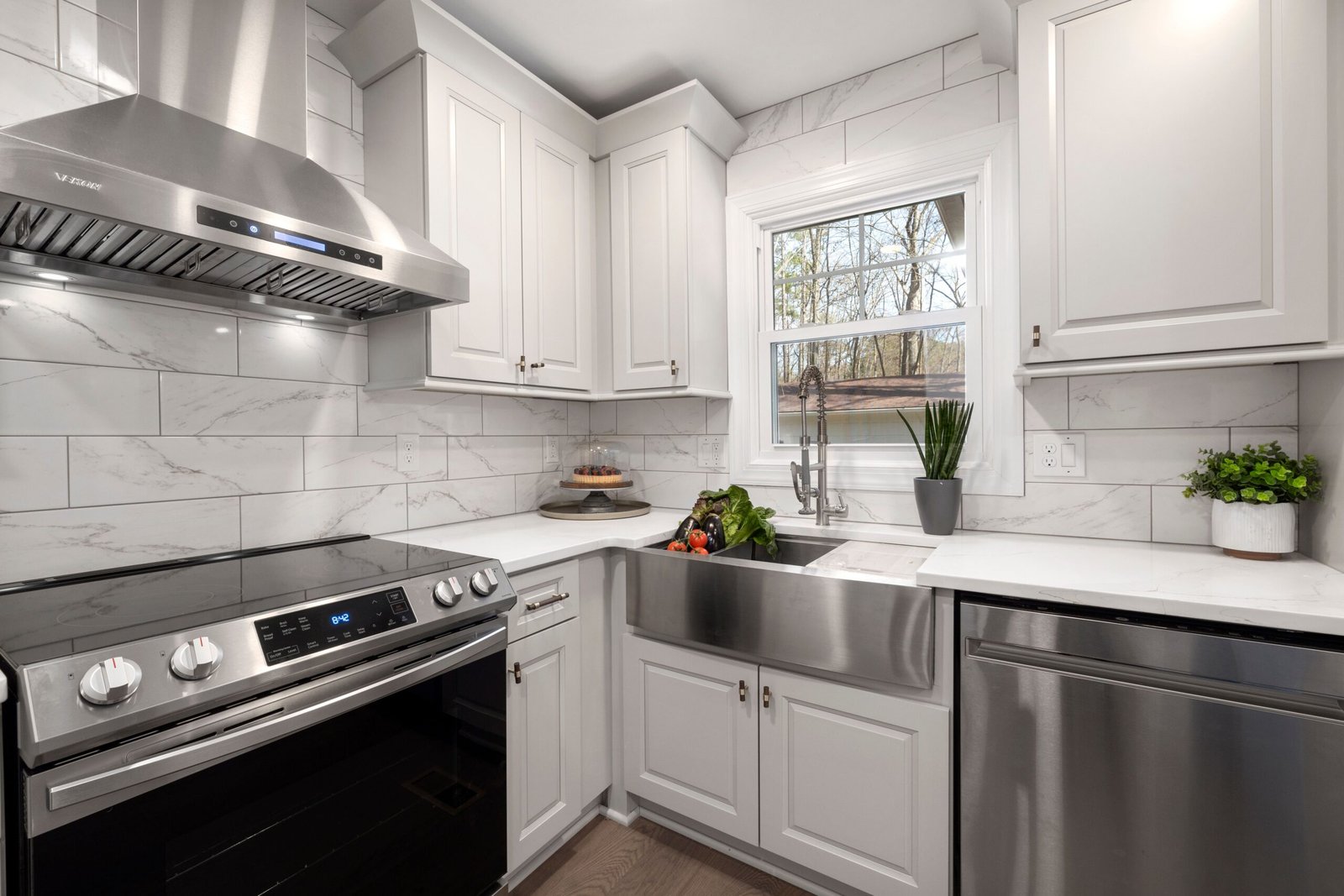
The cooking appliance you choose has the widest price range of any category in this kitchen appliance pricing guide. Gas ranges run $600-$1,300, and electric ranges cost about the same at $700-$1,100. Induction ranges heat cookware directly through electromagnetic fields. They cost more upfront, at $1,000-$4,000, but heat faster and cool down almost instantly. Dual-fuel ranges pair a gas cooktop with an electric oven. They’re the priciest mainstream option, at $1,900-$4,800.
Installation style adds another variable. Freestanding ranges are the most affordable at $600-$1,300, while slide-in and drop-in models run $800-$2,000. A built-in wall oven costs $1,100-$3,400, and a double oven runs $1,300-$4,300. Professional and luxury ranges start around $2,000 and can climb past $7,000. Labor for installation typically adds $100-$300 on top of the unit price. If you’re specifically shopping for a gas model, our guide to freestanding gas ranges breaks down what to look for.
Small Kitchen Appliances
The countertop appliances you use daily add up faster than most people expect, even though each one is individually affordable.
- Microwaves ($100-$600): Countertop models sit at the low end, while built-in and over-the-range units can reach $2,000. Our guide on appliance wattage also covers how microwave power affects both cook time and your electric bill.
- Range hoods ($100-$600): Under-cabinet and wall-mounted styles fall in this range. Pricier models offer stronger ventilation and quieter operation.
- Garbage disposals ($100-$300): Most homeowners land in the middle of this range, unless they need a heavy-duty motor for a large household.
- Toasters ($20-$80): Basic two-slice models sit at the bottom of the range. Four-slice and smart toasters with wider slots cost more. See our breakdown of toaster wattage for how much they actually cost to run.
- Electric kettles ($20-$60): Basic models boil water quickly for a modest price. Temperature-control kettles built for pour-over coffee or tea cost more.
- Coffee makers ($25-$250): According to Consumer Reports, most top-rated drip coffee makers cost $50-$250, though solid budget options exist under $50. Espresso machines and combo units can run higher.
New Construction vs. Replacing a Single Appliance
Pricing works differently depending on whether you’re outfitting a brand-new kitchen or swapping out one broken appliance. A full new-construction package, where every appliance ships and installs at once, often qualifies for bundle discounts of 10-20% off individual retail prices. Contractors and builders also tend to get preferred pricing that isn’t available to a single retail shopper.
Replacing one appliance is a different calculation. You’re paying full retail plus a standalone delivery and installation fee, which can add $50-$150 compared to a bundled install. On the plus side, you only need to match the appliance that failed. There’s no pressure to coordinate finishes or features across an entire kitchen at once, which gives you more room to prioritize your budget where it matters most.
Does Appliance Finish Affect the Price?
Finish is one of the most overlooked line items in any kitchen appliance pricing guide, but it can add hundreds of dollars per unit. Standard stainless steel is usually the baseline price for a given model. Black stainless steel, which resists fingerprints and smudges better than traditional stainless, typically adds $50-$200 per appliance.
Panel-ready appliances, which accept custom cabinet fronts so the unit blends into your cabinetry, cost the most. Expect to pay $300-$1,000 more per appliance for the panel-ready version, plus the cost of the matching cabinet panel itself. White and black (non-stainless) finishes are often the cheapest option, since they’re typically reserved for entry-level model lines.
What a Full Kitchen Actually Costs
Here’s a quick side-by-side for planning a full appliance budget:
- Garbage disposal: $100-$300
- Small appliances (toaster, kettle, coffee maker): $65-$390
- Microwave: $100-$600
- Range hood: $100-$600
- Dishwasher: $350-$3,400
- Range or oven: $600-$4,800
- Washer and dryer set: $1,000-$2,300
- Refrigerator: $300-$10,000
For a mid-range kitchen with a good-quality fridge, range, and dishwasher plus a basic washer and dryer, expect to land around $4,000-$7,000 total. A builder-grade budget kitchen can come in under $3,000. A high-end kitchen with premium brands and a built-in fridge can easily exceed $15,000.
Watch: How to Shop for Kitchen Appliances
How to Budget for Your Kitchen Appliance Purchases
A few practical habits make this kitchen appliance pricing guide easier to put into action.
- Buy during sale seasons. Major retailers discount appliances heavily around Labor Day, Black Friday, and President’s Day. New model years arrive around then, and older stock needs to move.
- Prioritize the appliances you use most. Splurge on the refrigerator and range since you touch them daily. Save on the dishwasher or microwave if your budget is tight.
- Check for rebates. Many utility companies and states offer rebates for ENERGY STAR appliances, sometimes worth $50-$500 per unit.
- Plan around your renovation, not just the appliance. If you’re also updating countertops or a faucet, our guides on what kitchen appliances you actually need and how much to spend on a kitchen faucet can help you sequence the whole project.
- Consider open-box and scratch-and-dent units. Retailers often discount these by 20-50% off retail for cosmetic damage that won’t show once the appliance is installed. Just confirm the warranty still applies before you buy.
Frequently Asked Questions
What’s the most expensive kitchen appliance to replace?
Refrigerators and ranges typically carry the widest price ranges and the highest ceilings. A built-in refrigerator or a professional-grade range can each run well past $5,000, far more than any other single kitchen appliance.
Is it cheaper to buy kitchen appliances as a package?
Often, yes. Many retailers and manufacturers offer package discounts when you buy a refrigerator, range, dishwasher, and microwave together. Buying as a set sometimes saves 10-20% compared to buying each piece separately.
How much should I budget for appliance installation?
Installation labor typically adds $100-$300 per major appliance. Gas ranges and built-in units can cost more if they need new venting, wiring, or plumbing work.
Do ENERGY STAR appliances really save money?
Yes, though the savings show up over time rather than at checkout. A certified refrigerator can save around $150 over a 12-year lifespan compared to a standard model. The gap grows larger for appliances that run more often, like dishwashers and washing machines.
Should I repair or replace an aging kitchen appliance?
If a repair costs more than half the price of a new unit, replacement is usually the better financial choice. The same is true once an appliance is past its typical 10-15 year lifespan, especially if a newer model would also cut your energy bill.
What’s the best time of year to buy kitchen appliances?
September and October tend to bring the deepest discounts, since manufacturers release new models in the fall. Retailers discount outgoing inventory to make room. Black Friday and Memorial Day are also reliable sale windows.
Are open-box or scratch-and-dent appliances worth buying?
Usually, yes, if the damage is purely cosmetic and hidden once installed, like a small dent on a side panel that faces a cabinet. Confirm the manufacturer’s warranty still applies, since some open-box deals come with a shortened or store-only warranty instead of the full factory coverage.
Conclusion
Every category in this kitchen appliance pricing guide has room to spend more or less, depending on the features you actually need. Focus your budget on the appliances you use every day, like the refrigerator and range. Look for ENERGY STAR models where the efficiency savings will pay you back over time. Whether you’re outfitting a full kitchen or replacing one appliance that gave out, matching your spending to how you actually cook and live will get you the most value for your money.

Hey, My name is MAMON. I am a SEO content creator and affiliate marketer with over 8 years of experience. I create honest product reviews, in-depth buying guides, and practical how-to articles to help readers make informed decisions. My mission is to provide trustworthy, research-backed content that delivers real value.
Leave a Reply