If you’ve ever taken a sip of water from a “clean” glass and immediately regretted it, you know exactly why you’re here. Why do my dishes taste like soap after dishwasher cycles that are supposed to leave them spotless? It’s a common problem with a handful of usual suspects, and the fix is almost always simpler than replacing the machine.
Most of the time, the cause comes down to one of a few things: too much detergent, water that isn’t hot enough to fully dissolve it, hard water reacting with the soap, or dishes loaded in a way that blocks proper rinsing. This guide walks through each cause, how to confirm which one applies to you, and exactly how to fix it.
Key Takeaways
- Using more detergent than recommended is one of the most common causes of soapy-tasting dishes, not too little.
- Water needs to reach at least 120°F for detergent to dissolve and rinse away properly.
- Detergent pods and tablets are generally recommended by manufacturers over powder or liquid, contrary to some older advice.
- Overloading the dishwasher or blocking the spray arm’s path is one of the most overlooked causes of leftover residue.
You’re Using Too Much Detergent
It’s tempting to think more detergent means a more thorough clean, but the opposite is usually true. Excess detergent doesn’t fully rinse away during the cycle, leaving a soapy film on your dishes. One pod or tablet is enough for a standard load, and if you’re using powder or gel, filling the dispenser to the recommended line, not overflowing it, is all you need. Using less than directed can leave food behind, but using more is the more common mistake and the more likely reason your dishes taste soapy rather than just dirty. This is also different from using the wrong product entirely. Regular dish soap, the kind meant for hand washing, produces far more suds than a dishwasher is designed to handle, so always confirm you’re reaching for detergent labeled specifically for automatic dishwashers.
Your Water Isn’t Hot Enough
Detergent needs heat to dissolve and do its job. If the water entering your dishwasher is too cool, especially below 120°F, the detergent won’t break down completely, and what’s left behind ends up on your dishes. This is especially common in homes where the water heater is set conservatively for safety, or in kitchens where the dishwasher is far from the water heater and the water cools in the pipes before it arrives.
To check this, run your kitchen faucet on hot until the water feels consistently hot to the touch before starting the dishwasher. This “primes” the line with hot water so the dishwasher isn’t waiting on cold water to heat up mid-cycle. If your dishes still taste soapy after this, your water heater itself may be set too low, or your dishwasher’s heating element could need attention.
You Have Hard Water
Hard water contains calcium and magnesium that interfere with how well soap dissolves and rinses away. Instead of lathering and washing off cleanly, the minerals react with the detergent to form a scummy residue that clings to dishes and leaves that unmistakable soapy taste. If you’ve also noticed cloudy glasses or a chalky film inside your dishwasher, hard water is very likely the underlying issue. Our full guide on cleaning hard water buildup from a dishwasher covers descaling and prevention options, including dishwasher salt and water softeners, in more depth.
Dishes Are Overloaded or Blocking the Spray Path
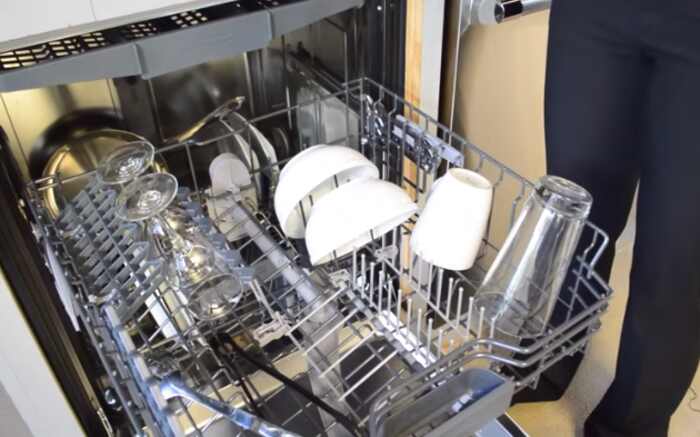
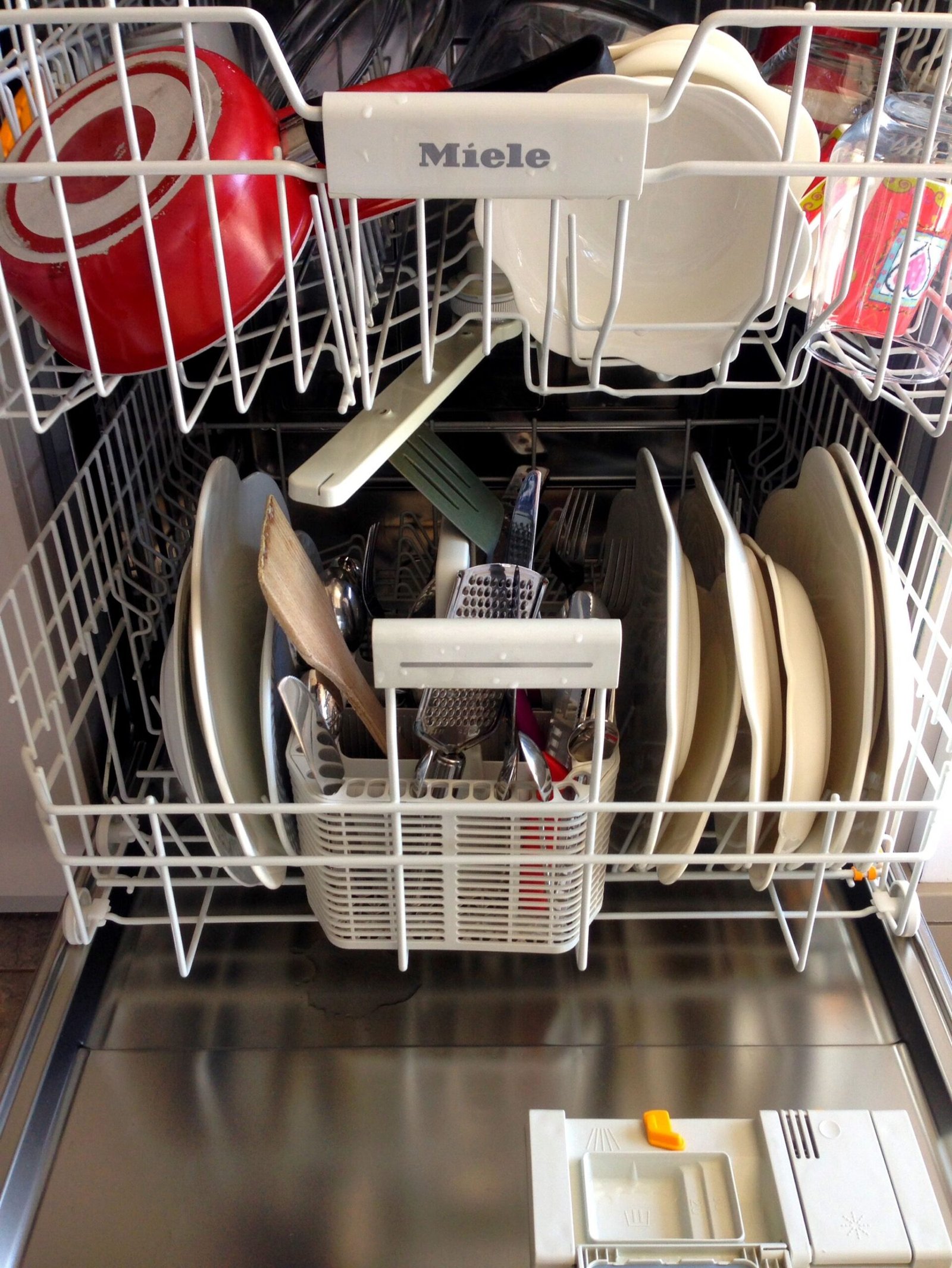
An overpacked dishwasher is one of the most overlooked causes of soap residue. When dishes are stacked too close together, or a large pan blocks the spray arm’s rotation, water and detergent can’t reach every surface evenly. That means detergent lands on a plate but never gets properly rinsed off, since the spray arm can’t complete its full pass. Leave gaps between larger items, angle bowls and cups so water can reach every surface, and make sure nothing tall is hanging down into the path of the lower spray arm.
Soap Residue Has Built Up Inside the Dishwasher
Just like food residue accumulates over time, so does soap residue, particularly on the heating element, spray arms, and interior tub walls. This buildup tends to get worse if the dishwasher isn’t reaching a high enough temperature to fully dissolve detergent cycle after cycle, since undissolved soap has more opportunity to cling to surfaces instead of rinsing away. Running an empty cycle on the hottest setting, with no detergent and a cup of white vinegar in a bowl on the top rack, helps clear out accumulated residue and gives you a cleaner baseline to work from.
The Detergent Dispenser Is Dirty or Blocked
A clogged or dirty detergent dispenser can prevent the door from opening fully during the wash cycle, or it can release detergent at the wrong moment, sending soap into the rinse cycle where it doesn’t belong. Check that the dispenser isn’t blocked by silverware, a tall dish, or leftover detergent residue that’s hardened over time. If the dispenser door doesn’t snap open and closed cleanly, clean it with a damp cloth and confirm nothing is obstructing its hinge.
The Drainage Filter Is Damaged or Clogged
The drainage filter’s job is to catch food particles before dirty water leaves the machine. If it’s damaged, missing, or clogged, that dirty, soapy water has nowhere to go and can end up recirculating onto your dishes during the rinse. If your dishes look visibly dirty in addition to tasting soapy, a damaged or neglected filter is a likely culprit. Clean the dishwasher filter at least once a week, and replace it if it’s cracked or too clogged to clean effectively.
Are Dishwasher Pods Actually the Problem?
Some older advice suggests avoiding detergent pods because they supposedly dissolve too slowly. That’s largely outdated. GE Appliances’ own guidance notes that detergent packs and pods are recommended and often provide better wash performance than liquid or powder detergent, provided they’re placed correctly and aren’t blocking the dispenser cover from opening. If a pod isn’t dissolving fully, the more likely explanation is water temperature, an obstructed dispenser, or a pod that got damp before use and started clumping. Switching away from pods rarely solves a soap residue problem on its own.
Check Your Rinse Aid
Rinse aid helps water sheet off dishes instead of pooling and evaporating in place, which reduces both spotting and leftover residue. If your rinse aid dispenser is empty, or you’ve never filled it, that’s worth addressing before assuming something else is wrong. Cascade’s own troubleshooting guidance recommends confirming your water reaches at least 120°F and considering a rinse aid booster if filming or residue persists after that. Refill the dispenser monthly, or more often if you notice it running low sooner.
Is Standing Water the Problem?
If water isn’t draining fully from the bottom of the tub between cycles, that leftover water, along with whatever detergent it’s carrying, can get picked up and resprayed onto your dishes during the next wash. This is different from a clogged filter, though the two often go together. Check the very bottom of the tub after a completed cycle. A shallow puddle around the drain is normal, but standing water pooling well beyond that suggests a drain hose kink, a clogged air gap, or a pump issue that’s worth investigating separately from the detergent-related causes above.
Preventing Soapy Dishes Going Forward
- Measure detergent instead of eyeballing it. One pod, or detergent filled only to the recommended line, is enough for a standard load.
- Run hot water at the sink first so the dishwasher starts with hot water rather than waiting for it to heat up mid-cycle.
- Load with spacing in mind. Nothing should block the spray arm’s rotation or nest so tightly against another dish that water can’t reach both surfaces.
- Keep the filter and dispenser clean on a weekly and monthly basis respectively, so debris doesn’t interfere with either detergent release or drainage.
- Refill rinse aid regularly rather than waiting until you notice spotting, since an empty dispenser is an easy thing to overlook.
When to Call a Professional
Most causes of soapy-tasting dishes are fixable with adjustments to detergent amount, water temperature, and loading habits. If you’ve worked through all of these and the problem persists, especially if you notice suds or foam when opening the door mid-cycle, or if the dishwasher isn’t heating water at all, it’s worth having a technician check the heating element, water inlet valve, or control board. Those are mechanical issues that go beyond routine troubleshooting.
Frequently Asked Questions
Is it safe to eat off dishes that taste like soap?
Small amounts of dishwasher detergent residue aren’t typically dangerous, but it’s not something you want to make a habit of. If dishes consistently taste soapy, rewash them by hand before use and address the underlying cause.
Why does my dishwasher leave suds or foam when I open it mid-cycle?
This usually means regular dish soap was accidentally used instead of dishwasher detergent, or too much detergent was added. Regular dish soap isn’t formulated for dishwashers and creates far more suds than the machine can handle.
Can I run an extra rinse cycle to fix soapy dishes?
Yes, running an additional rinse-only cycle is a reasonable quick fix if you’ve already loaded and started a cycle. It won’t solve the underlying cause, but it will get the current load usable.
Does the type of detergent matter as much as the amount?
Both matter, but amount tends to be the bigger factor. A high-quality detergent used in excess can still leave residue, while a basic detergent used correctly usually performs fine.
How can I tell if it’s hard water versus too much detergent?
Hard water residue tends to look chalky or white and shows up consistently regardless of how much detergent you use. Detergent residue is more likely to feel slick or slippery and often improves noticeably when you reduce the amount you’re using.
Is regular dish soap ever okay to use in a dishwasher?
No. Regular dish soap is formulated to create suds for hand washing, and that same sudsing behavior overwhelms a dishwasher, leaking foam out of the door seal and leaving heavy residue behind. Always use detergent made specifically for automatic dishwashers.
Final Thoughts
Soapy-tasting dishes almost always trace back to one of a few fixable causes: too much detergent, water that isn’t hot enough, hard water minerals, an overloaded rack, or a dispenser and filter that need attention. Work through these one at a time rather than guessing, and you’ll usually land on the answer without needing to call in a repair technician. Once it’s dialed in, your dishwasher should go back to doing exactly what it’s supposed to: leaving your dishes clean, not soapy.

Hey, My name is MAMON. I am a SEO content creator and affiliate marketer with over 8 years of experience. I create honest product reviews, in-depth buying guides, and practical how-to articles to help readers make informed decisions. My mission is to provide trustworthy, research-backed content that delivers real value.
Leave a Reply