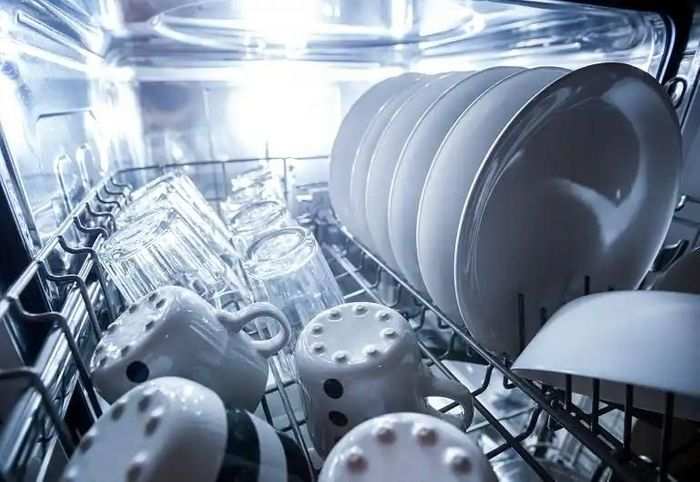
If your glasses come out of the dishwasher covered in a chalky film, or you’ve noticed a crusty white buildup along the door and racks, hard water is almost always the reason. Knowing how to clean hard water from dishwasher interiors, and understanding why it happens in the first place, can save you from cloudy dishes, a struggling heating element, and a shortened appliance lifespan. This guide walks through what causes the buildup, how to clear it out safely, and how to keep it from coming back.
Key Takeaways
- Water is classified as hard once it reaches 121 mg/L (about 7 grains per gallon) of dissolved calcium and magnesium, according to the U.S. Geological Survey.
- A cup of white vinegar run through a hot, empty cycle is the most effective at-home fix for mineral buildup on dishwasher walls, racks, and spray arms.
- Left untreated, hard water buildup can coat the heating element, clog spray arm holes, and cause rust on metal racks.
- Dishwasher salt or a water softener addresses the root cause, while vinegar and citric acid treat the symptoms after the fact.
What Makes Water “Hard,” and Why It Matters
Hardness comes from dissolved minerals, mainly calcium and magnesium, that water picks up as it moves through soil and rock before reaching your tap. According to the U.S. Geological Survey’s water hardness classification, water with 0 to 60 mg/L of calcium carbonate is considered soft, 61 to 120 mg/L is moderately hard, 121 to 180 mg/L is hard, and anything above 180 mg/L is very hard. In grains per gallon, the more common unit for water softener settings, that works out to roughly 7 grains per gallon and up being the point where most homeowners start noticing scale.
Hard water isn’t a safety issue. It’s a practical one. Once the water inside your dishwasher heats up and evaporates during the dry cycle, the minerals it was carrying don’t go anywhere. They settle out as a chalky residue on every surface the water touched.
Where you live plays a big role in how hard your water is. Regions with groundwater that flows through limestone and chalk deposits, common across much of the Midwest, Texas, and the Southwest, tend to have notably harder water than areas that draw mostly from surface lakes and rivers. If you’re on well water, hardness can also vary from one property to the next even within the same neighborhood, so it’s worth testing your own water rather than assuming based on your city’s average.
How Hard Water Damages Your Dishwasher
Left unaddressed, mineral buildup causes a handful of specific problems rather than just looking unpleasant.
- Cloudy, spotted glassware. Limescale leaves a chalky film on glasses and dishes that doesn’t rinse away, and it can feel gritty to the touch.
- A coated heating element. Scale buildup on the heating element insulates it, forcing it to work harder to reach the same water temperature, which lowers detergent effectiveness and wastes energy.
- Rust on metal racks. Mineral deposits combined with worn rack coating can accelerate corrosion, weakening the racks over time.
- Clogged spray arm nozzles. Scale narrows or blocks the small holes in the spray arm, reducing water pressure and leaving food residue behind on dishes.
- Reduced detergent performance. Hard water interferes with how detergent lathers and dissolves, so you often end up using more of it for worse results.
Signs Your Dishwasher Has a Hard Water Problem
Sometimes a dishwasher runs a full cycle without any obvious error, but the results still aren’t right. Watch for these signs:
- Cloudy or chalky spots on glasses and dishes after a normal cycle
- Food residue still present even though the cycle finished
- Visible white or gray crust inside the tub, door, or around the spray arm
- A metallic or musty smell coming from otherwise clean dishes
- Using noticeably more detergent than the manufacturer recommends just to get acceptable results
- Rust spots starting to appear on the wire racks
How to Clean Hard Water From Dishwasher: Step-by-Step
1. Run a white vinegar cycle
This is the most reliable and cheapest fix. Place a dishwasher-safe bowl with 2 cups of white vinegar on the top rack of an empty dishwasher. Run a full, hot-water cycle with no detergent and no dishes inside. The vinegar’s acidity breaks down the calcium and magnesium deposits, and the hot water carries the dissolved minerals down the drain.
2. Follow with a baking soda rinse
Once the vinegar cycle finishes, sprinkle about a cup of baking soda across the bottom of the tub and run a short, hot cycle. This step helps lift any remaining residue and neutralizes lingering odors, leaving the interior smelling noticeably fresher.
3. Wipe down the spray arms by hand
Scale buildup tends to concentrate around the spray arm nozzles, where it’s easy to miss during a standard cycle. Soak a cloth in white vinegar and wipe down the arms directly, working the cloth into each nozzle hole to clear blockages. A soft toothbrush works well for stubborn spots.
4. Use citric acid for heavier buildup
If vinegar alone isn’t cutting through thick, established scale, food-grade citric acid is a stronger option. Add about half a cup of citric acid crystals directly to the detergent dispenser and run the longest, hottest cycle available on an empty dishwasher. Citric acid is the active ingredient in most commercial dishwasher descalers, so this approach gets similar results without the packaging markup.
5. Check and clean the filter
Hard water residue often collects around the filter along with regular food debris. Pull the filter, rinse it under hot water, and use a soft brush to clear any trapped mineral buildup before reinstalling it.
Vinegar vs. Citric Acid vs. Commercial Cleaner
All three options work by the same basic principle, using an acid to dissolve mineral deposits, but they differ in strength and convenience.
| Method | Best for | How often |
|---|---|---|
| White vinegar | Light to moderate buildup, routine maintenance | Monthly |
| Citric acid | Heavier, established scale that vinegar doesn’t fully clear | Every 2 to 3 months, or as needed |
| Commercial dishwasher cleaner | Convenience, pre-measured single-use cleaning | Monthly, per product instructions |
Citric acid is the more aggressive descaler of the two natural options, which makes it worth reaching for if you’ve let buildup go unaddressed for a while. For ongoing maintenance once your dishwasher is already clean, white vinegar is usually enough to keep pace with new mineral deposits.
Should You Replace Damaged Parts Instead of Cleaning Them?
Once rust has set into a rack or a component has been coated in scale for a long time, scrubbing can do more harm than good. Aggressive brushing on a rusted rack wears through the protective coating faster, which speeds up further corrosion rather than fixing it. If a part shows heavy rust or has become brittle, replacing it is usually the more cost-effective move than trying to restore it. This is especially true for spray arms, which are inexpensive and simple to swap out compared to the cleaning time a badly clogged one demands.
Preventing Hard Water Buildup Going Forward
Install a water softener
A whole-home water softener strips calcium and magnesium out of your water supply before it ever reaches your dishwasher, washing machine, or pipes. It’s the most complete fix, though it comes with an upfront installation cost. If you’re weighing whether it’s worth it, the same hard water minerals that build up in your dishwasher are also affecting your water heater and plumbing, so the benefit typically extends well beyond just cleaner dishes.
Use dishwasher salt if your model has a built-in softener
Many dishwashers, particularly European brands, include a built-in water softener that uses dishwasher-specific salt to treat incoming water. Bosch’s own guidance on dishwasher salt notes that once tap water hardness crosses a certain threshold, running the appliance without salt can lead to limescale buildup and potential damage over time. Check your owner’s manual to see if your model has this feature, and never substitute table salt, which isn’t formulated for the softening resin and can damage it.
Switch to a hard water detergent
Standard detergent is formulated assuming a baseline level of water softness. Hard water detergents are built with a different molecular structure specifically to counteract mineral interference, which helps the wash produce noticeably better results without changing anything else about your routine.
Add a rinse aid
Rinse aid helps water sheet off dishes rather than pooling and evaporating in place, which is the exact process that leaves mineral spots behind. It won’t stop scale from forming inside the machine, but it meaningfully cuts down on spotted glassware.
Run a maintenance cycle monthly
Even with a softener or hard water detergent in place, running an empty vinegar cycle once a month keeps buildup from accumulating in the first place. It’s a five-minute habit that saves a much bigger cleaning job later, and pairs well with routine steps like checking the filter and pump.
Frequently Asked Questions
How often should I clean hard water buildup from my dishwasher?
Once a month is a reasonable baseline for most households with moderately hard to hard water. If you notice spotting or residue forming sooner than that, clean it as soon as you see it rather than waiting for a scheduled date.
Can I leave vinegar in the rinse aid dispenser instead of running a separate cycle?
It’s not recommended. Vinegar’s acidity can gradually damage the rubber seals and gaskets in the rinse aid dispenser if left sitting over time. Keep it contained in a bowl on the top rack instead.
Will a water softener fix cloudy glasses immediately?
Not immediately. A softener prevents new mineral buildup, but any existing scale already inside your dishwasher and etched into glassware needs to be cleaned separately first.
Is hard water buildup covered under my dishwasher’s warranty?
Generally not. Most manufacturer warranties treat mineral scale as a maintenance issue tied to local water conditions rather than a manufacturing defect, so repairs related to it are typically the owner’s responsibility. Check your specific warranty terms to confirm.
Does every U.S. region deal with hard water?
No, hardness varies significantly by region. Areas with groundwater that passes through limestone, common across much of the Midwest and Southwest, tend to have harder water than regions relying on surface water from lakes and rivers. A simple test strip or a call to your local water utility can tell you where your home falls.
Final Thoughts
Hard water buildup is one of the most common, and most fixable, dishwasher problems out there. A regular vinegar cycle handles routine maintenance, citric acid tackles heavier scale, and a water softener or dishwasher salt addresses the root cause if you’re dealing with genuinely hard water in your area. None of it reflects a flaw in your dishwasher itself. Keeping the minerals in check is simply part of living with hard water, and a small amount of regular upkeep goes a long way toward protecting your dishwasher’s performance and lifespan.

Hey, My name is MAMON. I am a SEO content creator and affiliate marketer with over 8 years of experience. I create honest product reviews, in-depth buying guides, and practical how-to articles to help readers make informed decisions. My mission is to provide trustworthy, research-backed content that delivers real value.
Leave a Reply