
Knowing how to dry carpet fast after cleaning matters just as much as picking the right cleaning method in the first place. A carpet that stays damp too long can trap odors and invite mold. It can also undo all the work you just put into cleaning it.
In this guide, we’ll walk through five methods professional carpet cleaners recommend for shortening drying time. We’ll also cover how long the process should normally take, the mistakes that slow it down, and how to tell when your carpet is truly dry all the way through.
Key Takeaways
- Carpet drying time ranges from 30 minutes to 72 hours depending on the cleaning method, with steam cleaning taking the longest.
- Combining airflow (fans and open windows) with moisture removal (a dehumidifier or air conditioner) cuts drying time the most.
- The EPA notes mold can begin growing within 24 to 48 hours on damp surfaces, so faster drying isn’t just about comfort.
- Low-moisture cleaning methods like encapsulation or dry foam can have your carpet dry in as little as 1 to 2 hours.
How Long Should Carpet Take to Dry After Cleaning?
Drying time depends heavily on which cleaning method was used. According to Bob Vila’s guide to carpet drying times, dry cleaning methods typically finish in 30 minutes to 1 hour. Encapsulation cleaning takes about 1 to 2 hours. Shampooing needs roughly 6 to 10 hours. Traditional steam cleaning, also called hot water extraction, can take anywhere from 24 to 72 hours to fully dry.
Carpet padding thickness matters as well. A thick, cushioned pad holds far more water than a thin one, so two rooms cleaned the same way can still dry at very different speeds. Carpet material and pile height play a role too. Synthetic fibers like nylon and polyester dry noticeably faster than natural fibers such as wool or cotton. Low-pile carpet dries quicker than plush or deep-pile styles. Humidity, indoor temperature, and how much airflow the room gets will all push that number up or down. That’s exactly why learning how to dry carpet fast after cleaning is worth a few minutes of extra effort.
5 Effective Ways to Dry Carpet Fast After Cleaning
Here are the five methods professional carpet cleaners rely on most often to speed things along.
1. Choose a Cleaning Method That Minimizes Extra Water Use
The cleaning method you pick has the single biggest impact on drying time. If you want to speed things up, look for a method that uses less water to begin with.
Dry Foam or Encapsulation Cleaning
Dry foam cleaning uses detergents that break down into a fine powder. This leaves no residue, and it vacuums away once the cleaning is finished. Encapsulation cleaning works in a similar way, using a brushing machine and synthetic foam detergents that crystallize dirt for easy vacuuming. Both use far less water than steam cleaning, so they can dry in as little as 1 to 2 hours.
Hot Water Extraction (Steam Cleaning)
If you’re using a machine for a deeper clean, such as when you work a Bissell carpet cleaner, keep the water tank on the lower end of the fill line instead of filling it all the way. Make a few extra dry passes at the end of each session to pull up leftover moisture. Adding too much cleaning solution, including substituting the wrong detergent in a carpet cleaner, tends to leave excess suds and moisture trapped in the fibers. That only extends drying time further.
2. Use Fans to Boost Airflow
Once your carpet is cleaned, moving air across it is one of the fastest ways to speed up evaporation. Different fan types work a little differently, so it helps to know which one suits your space.
| Fan Type | Best For | Tip |
|---|---|---|
| Ceiling fans | Whole-room circulation | Run on the highest speed setting for several hours |
| Oscillating fans | Medium to large rooms | Position in the center so airflow reaches every corner |
| Box fans | Targeted damp spots | Place directly in a window or doorway to push moist air out |
| Floor fans | High-traffic hallways | Angle low across the carpet surface for direct contact |
| Blower fans | Heavily saturated areas | Use a concentrated, high-powered stream on the wettest spots first |
A single fan works. But running two or three at once, especially a box fan in a window paired with a ceiling fan, moves noticeably more air. That combination can cut drying time by several hours.
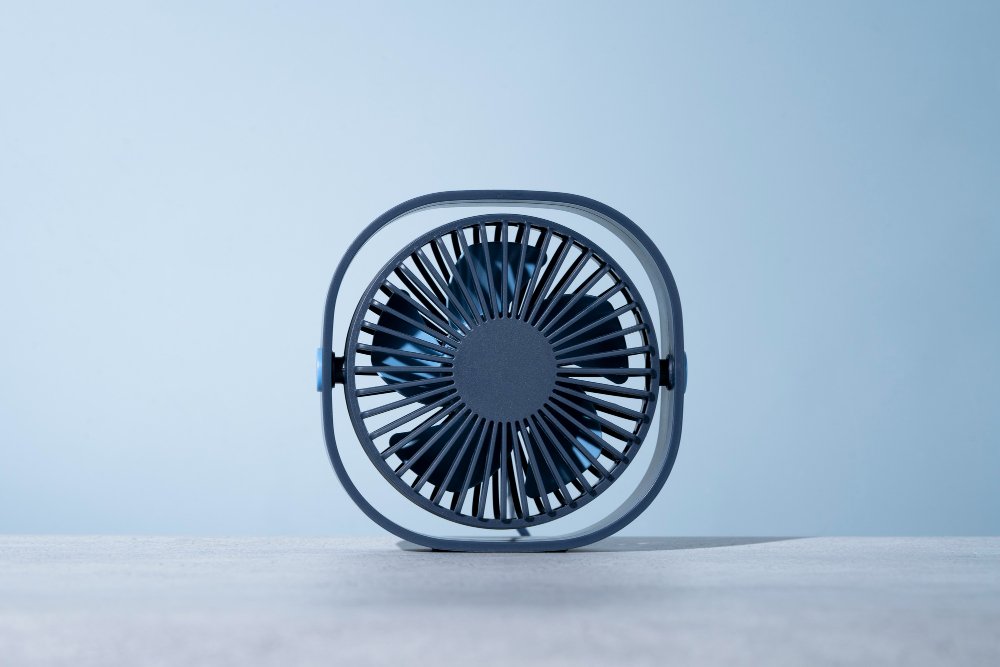
Running a fan directly over damp carpet speeds up evaporation.
3. Open Windows When the Weather Cooperates
Opening windows lets fresh outside air circulate through the house, which helps pull moisture out of the carpet. This works best on a hot, dry day. On the right day, you can sometimes shave hours off the total drying time.
Cold or humid weather has the opposite effect. Damp outside air slows evaporation instead of helping it. On those days, keep windows closed and rely on fans, a dehumidifier, or the air conditioner instead.
4. Run a Dehumidifier in the Room
A dehumidifier pulls moisture directly out of the air. This keeps humidity from settling back into the carpet as it dries. For the best results, close the door to seal off the room you’re drying.
Sealing the room creates a contained environment that the dehumidifier can control more efficiently. It also stops moisture from spreading into other parts of the home.
5. Turn on the Air Conditioner or Heat
Running the air conditioner helps pull humidity out of both the air and the carpet fibers. It pairs especially well with an oscillating fan running at the same time. In cooler months, raising the thermostat a few degrees above normal has a similar effect, since warmer air holds and moves moisture more efficiently than cold air does.
The right setting depends on your specific room. Larger rooms, higher humidity, and thicker carpet padding all mean the air conditioner or heater will need more time to finish the job.

A ceiling fan combined with natural light and airflow helps carpet dry evenly.
Why Fast Drying Matters More Than Comfort
Drying your carpet quickly isn’t only about getting back to a normal routine faster. According to the EPA’s guide to mold and moisture, mold can begin growing on damp materials within just 24 to 48 hours. Carpet padding holds moisture particularly well, which makes it an easy target if drying drags on too long.
Beyond mold, a carpet that stays wet for days can develop a musty smell and attract dust mites. In homes with wood subflooring, it can even contribute to warping underneath. None of that is worth risking when a few extra fans or an open window can prevent it.
Common Mistakes That Slow Down Carpet Drying
A few habits tend to undo your drying efforts without you realizing it.
Walking on damp carpet before it’s dry presses moisture deeper into the padding instead of letting it evaporate. Closing the room off completely with no airflow traps humidity rather than releasing it. Skipping the dry-pass step on your cleaning machine leaves more water behind than necessary.
Running a fan on low power for a shorter time is also far less effective than running two fans on high. That’s true even if the low-power fan runs for longer overall. Airflow volume matters more than how long any single fan runs.
How to Tell When Your Carpet Is Fully Dry
Press your palm flat against the carpet in a few different spots. Check near baseboards and under furniture legs, where moisture tends to linger longest. If it feels cool or damp to the touch, it needs more time. A faint musty smell is another sign that moisture is still trapped beneath the surface, even if the top feels dry.
Once you’ve confirmed the carpet is dry throughout, it’s safe to move furniture back into the room. Putting heavy furniture back too soon can trap residual moisture underneath. That can lead to rust rings or mildew spots on the carpet.
Quick Checklist: How to Dry Carpet Fast After Cleaning
- Use a low-moisture cleaning method, or make extra dry passes with your machine
- Run two or more fans at once, positioned for cross-airflow
- Open windows on hot, dry days; keep them shut on cold or humid ones
- Run a dehumidifier in a sealed-off room for faster moisture removal
- Turn on the air conditioner or raise the heat a few degrees
- Check for coolness or dampness by hand before walking on the carpet or replacing furniture
Watch: How to Get Carpet Dry Faster After Cleaning
Video: “Carpet Not Drying After Cleaning – How To Get It To Dry Faster” by Helpful DIY
Frequently Asked Questions About How to Dry Carpet Fast After Cleaning
Is it normal for carpet to still be damp after 24 hours?
It depends on the cleaning method. Steam-cleaned carpet can take up to 72 hours to fully dry, so damp carpet after 24 hours isn’t unusual with that method. If you used a low-moisture method like encapsulation, though, it should typically be dry well within that window.
Can I speed up drying overnight while I sleep?
Yes. Leave fans running overnight, and a dehumidifier too if you have one. Just make sure the space is safe to leave unattended and that cords aren’t a tripping hazard.
Does vacuuming a damp carpet help it dry faster?
No, and it can damage the fibers. Wait until the carpet has fully dried before you vacuum after carpet cleaning. Vacuuming while damp can grind residual dirt back into wet fibers.
What if my carpet still smells musty after it’s dry?
A lingering musty smell after the carpet feels completely dry can signal that moisture reached the padding underneath. In that case, a professional inspection is worth the cost to rule out mold before it spreads.
Does the type of carpet cleaner I use affect drying time?
Yes. Comparing options in a portable carpet cleaner buyer’s guide shows that machines with strong suction and a dedicated dry-pass mode pull up significantly more moisture during cleaning. That extra moisture removal shortens the drying time that follows, sometimes by an hour or more on a medium-sized room.
Final Thoughts
Learning how to dry carpet fast after cleaning isn’t just about convenience. It’s about protecting your carpet and your home’s air quality. A carpet left wet for too long becomes a breeding ground for bacteria, mold, and mildew, none of which you want to deal with after doing the work to clean it in the first place.
Combine a couple of these methods, such as fans plus a dehumidifier, or open windows plus the air conditioner. Most rooms will dry in a matter of hours instead of days when you do. Keeping your carpet cleaner’s brushes clean between uses also helps each cleaning session start with less excess moisture, giving every future drying cycle a head start.
Whichever combination you choose, the goal is the same: get airflow and moisture removal working together instead of relying on just one method by itself.

Hey, My name is MAMON. I am a SEO content creator and affiliate marketer with over 8 years of experience. I create honest product reviews, in-depth buying guides, and practical how-to articles to help readers make informed decisions. My mission is to provide trustworthy, research-backed content that delivers real value.
Leave a Reply