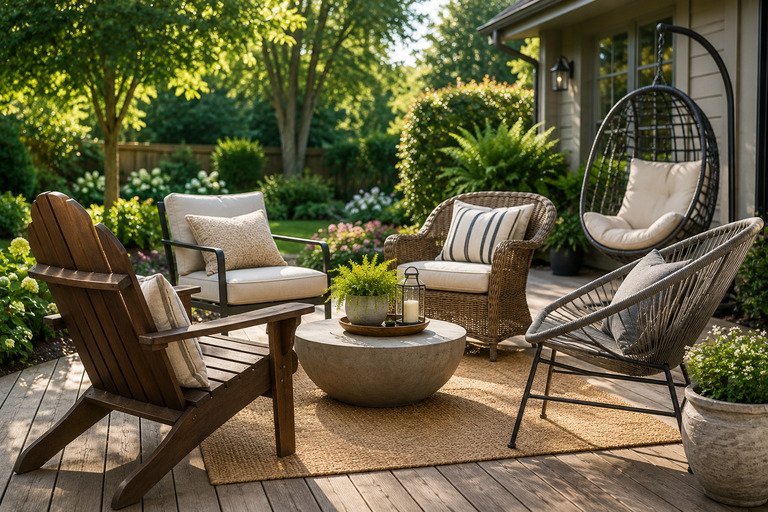
Choosing the right outdoor chairs turns a bare patio or deck into a space you actually want to spend time in. But with so many types, materials, and price points on the market, it’s easy to get this wrong. Plenty of chairs look great for one season and fall apart the next.
This guide breaks down the main types of outdoor chairs and how the common materials actually hold up outside. We’ll also cover what to check before you buy and how to keep whatever you choose looking good for years.
Key Takeaways
- Teak and powder-coated aluminum are the most durable outdoor chair materials, while synthetic HDPE wicker offers the best value for the price.
- Solution-dyed acrylic fabrics like Sunbrella resist fading far longer than standard printed outdoor fabric, often with a multi-year warranty.
- Look for chairs tested to ANSI/BIFMA standards, which put seating through roughly 140,000 durability cycles, the equivalent of about 10 years of regular use.
- Acacia wood costs less than teak but needs oiling every 2-3 months, compared to teak’s 6-12 month cycle.
Types of Outdoor Chairs
Different outdoor activities call for different chair designs. Here’s how the most common types compare.
Adirondack Chairs
Adirondack chairs are a classic American design, recognizable by their slanted backrest, wide armrests, and low seat. They’re built for lounging rather than dining. You’ll find them as a fixture on porches, lake docks, and fire pit patios across the U.S. Most are made of wood, though weather-resistant polywood versions have become popular for their low maintenance.
Lounge and Chaise Chairs
Lounge chairs are designed for stretching out. Many recline to multiple positions, and some include a built-in footrest. These are the go-to choice for poolside seating, sunbathing, or reading in the shade.
Dining Chairs
If you host outdoor meals regularly, dedicated dining chairs matter. They’re built to pair with patio tables at standard dining height. Since they’re used upright rather than reclined, they typically prioritize durability over deep cushioning.
Hanging and Swing Chairs
Hanging chairs suspend from a freestanding frame or a mounted ceiling hook. The gentle swaying motion has made them a popular addition to covered porches and pergolas, adding a relaxed, informal feel other chair types don’t quite match.
Folding and Portable Chairs
Folding chairs collapse flat for storage or transport, making them a practical choice for small patios, camping, or tailgating. Look for lightweight aluminum frames, since some budget steel folding chairs add unnecessary weight without added durability.
Zero-Gravity Chairs
Zero-gravity chairs recline to a position that evenly distributes body weight, reducing pressure on the spine. They’ve become a popular ergonomic option for backyard relaxation, especially among buyers dealing with back discomfort in traditional seating.
Adirondack chairs remain one of the most recognizable styles of outdoor chairs in the U.S.
Outdoor Chair Materials Compared
The material determines how long your seating lasts and how much upkeep it demands. Here’s how the most common options stack up, based on comparisons from Forbes Vetted’s outdoor furniture materials guide.
Teak
Teak is naturally rich in oils that resist rot, insects, and water damage. That makes it one of the most durable outdoor furniture materials around. Left untreated, it weathers to a silvery-gray patina; oiled every 6 to 12 months, it holds its warm honey tone. It’s also a premium-priced option.
Acacia Wood
Acacia is a more affordable alternative to teak with a similar look, but it’s less naturally weather-resistant. It needs oiling every 2 to 3 months to prevent cracking and drying. That makes it a better fit for milder, temperate climates than for extreme heat or humidity.
Powder-Coated Aluminum
Aluminum is lightweight, rust-proof, and low-maintenance, which makes it a favorite for modern outdoor chair designs. Its main downside is that dark-colored aluminum can get hot to the touch in direct sun. The powder coating can also chip if the frame is knocked around.
Wrought Iron and Steel
Wrought iron and steel offer a heavier, more traditional look and excellent stability, especially in windy areas. Both are prone to rust if the protective coating gets scratched. That means more regular maintenance than aluminum to stay in good shape.
Synthetic Wicker (HDPE Resin)
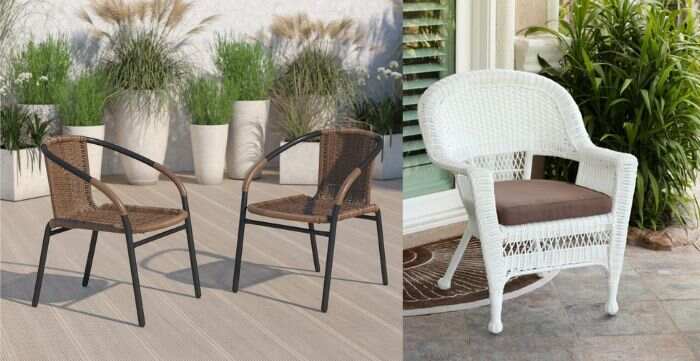
Synthetic wicker woven from high-density polyethylene resin gives you the classic wicker look without the upkeep natural rattan requires. It resists mold, mildew, and fading better than natural rattan, and it cleans up easily with mild soap and water. It’s generally less durable long-term than teak or metal frames, though.
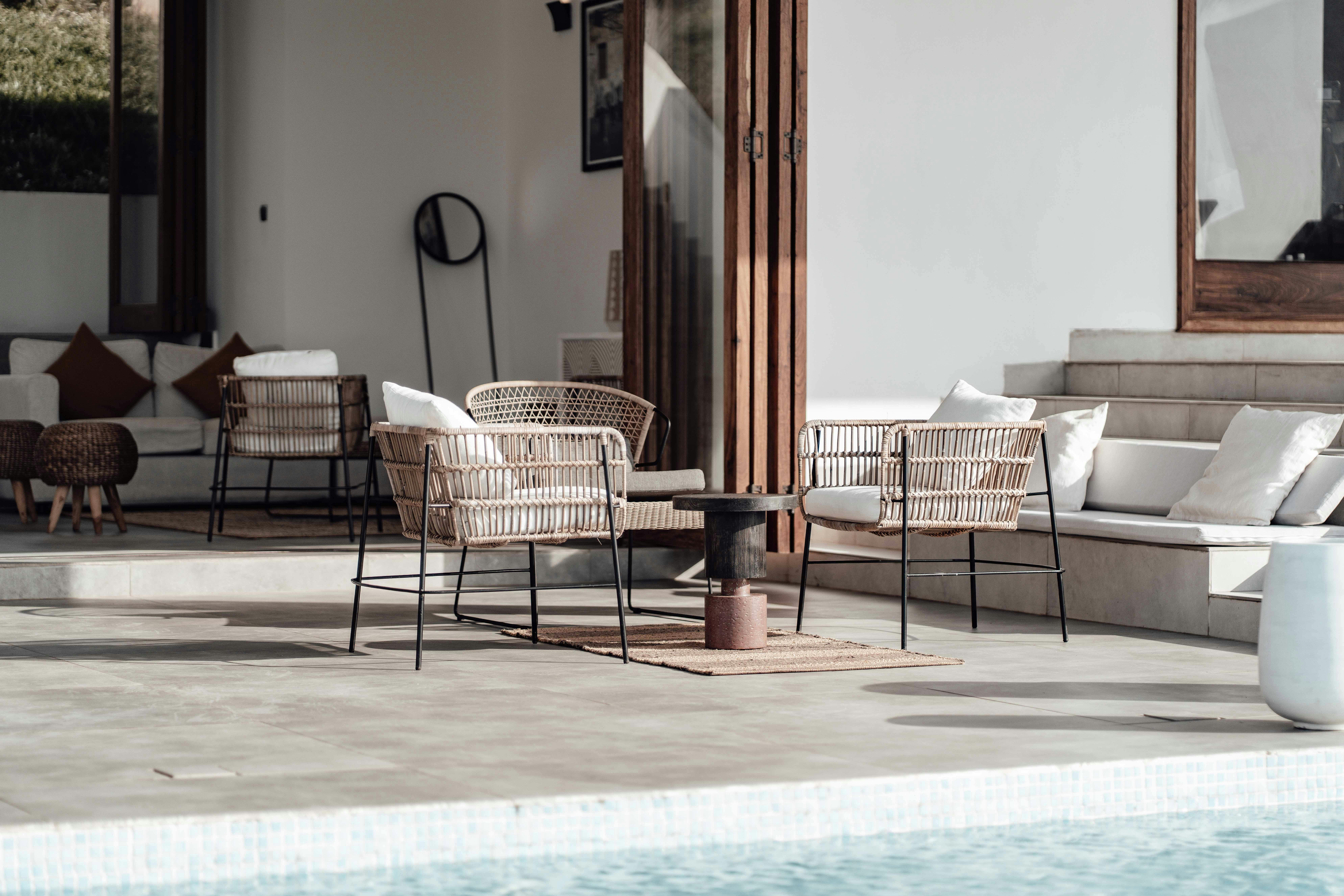
Synthetic HDPE wicker delivers the look of natural rattan with far less maintenance.
Cushions and Outdoor Fabric
The frame is only half the equation. Cushion fabric determines how comfortable your seating feels and how well it holds up to sun and rain. Solution-dyed acrylic fabrics, like the well-known Sunbrella line, have the color woven into each fiber during production rather than printed on the surface afterward. That construction resists fading, mildew, and water far better than standard printed outdoor fabric, and it often comes with a multi-year fade warranty.
When shopping for cushions, look specifically for fabric labeled solution-dyed or performance fabric, and check whether foam inserts are quick-drying, since standard foam can trap water and develop mildew after rain.
What to Look for Before You Buy
A few practical checks can save you from replacing outdoor chairs after just one season.
- Weight capacity and testing. Chairs tested to ANSI/BIFMA X5.1 seating standards go through roughly 140,000 durability cycles, simulating about a decade of regular use. Look for this or similar third-party testing on higher-end purchases.
- Weather rating. Confirm the chair is actually rated for year-round outdoor exposure, not just “outdoor-friendly” for occasional use.
- Stackability. If storage space is limited, stackable dining or folding chairs make off-season storage far easier.
- Seat height and depth. Dining chairs generally sit 17-19 inches high, while lounge chairs sit lower for a more relaxed position. Try to match the chair to how you’ll actually use it.
- Hardware. Stainless steel screws and fittings resist rust far better than standard zinc-plated hardware, especially near coastal areas.
Choosing Outdoor Chairs for Your Climate
Where you live in the U.S. should shape which material you pick, since the same chair that thrives in Arizona can fall apart on the coast of Maine.
- Coastal and humid regions: Salt air accelerates rust on wrought iron and steel. Stick with aluminum, teak, or HDPE resin, and choose stainless steel hardware over standard zinc-plated fittings.
- Hot, sunny climates: UV exposure fades printed fabric fast. Solution-dyed cushions and light-colored aluminum frames stay cooler and hold their color longer than dark metal or standard fabric.
- Cold, snowy regions: Wood and wrought iron are more prone to cracking or rusting from freeze-thaw cycles. Plan on indoor winter storage or heavy-duty covers if you’re keeping these materials outside year-round.
- Humid, rainy areas: Look for quick-dry foam cushions and mildew-resistant fabric. Standing water in a cushion is one of the fastest ways to shorten its lifespan.
How Many Outdoor Chairs Do You Need?
Sizing your set correctly avoids both an empty-looking patio and a cramped one. For a small balcony or two-person nook, a pair of lounge or Adirondack chairs plus a small side table is usually enough. Standard patios built around a dining table typically call for 4 to 6 chairs, matched to the table’s actual seating capacity rather than the space available.
For larger backyards meant for entertaining, consider mixing chair types. A dining set for meals, a couple of lounge chairs near a fire pit, and one or two extra folding chairs stored nearby for guests covers most situations without overcrowding the main seating area.
Matching Chairs to Your Outdoor Style
Outdoor chairs should complement the space around them as much as they need to hold up structurally. Neutral tones and natural materials like teak or wicker tend to suit traditional or coastal-style patios, while powder-coated aluminum in black, white, or bold colors reads as more contemporary.
Maintenance and Care
Even the most durable pieces need some routine care to reach their full lifespan.
- Cleaning: Wipe down frames regularly with mild soap and water. Avoid abrasive scrubbers on synthetic wicker, since they can fray the weave.
- Storage: Store chairs indoors or under weatherproof covers during harsh winter months, especially wood and wrought iron pieces that are more vulnerable to moisture damage.
- Oiling: Teak needs oiling every 6-12 months and acacia every 2-3 months to prevent cracking, unless you prefer the natural gray patina look.
- Inspection: Check screws, joints, and welds each season, and tighten or replace anything showing rust or looseness before it becomes a safety issue.
How Much Do Outdoor Chairs Cost?
Pricing varies widely by material and design. Budget synthetic resin or plastic chairs often run $30-$100 each. Mid-range aluminum or acacia wood chairs with cushions typically land between $100-$400. Premium teak or wrought iron pieces, especially lounge or dining sets from established outdoor furniture brands, can run $400-$1,000 or more per chair. Spending more upfront on a durable frame and solution-dyed fabric usually costs less over time than repeatedly replacing budget pieces that fade or crack within a couple of seasons.
Watch: Outdoor Furniture Materials Explained
Video: “Outdoor Furniture Materials: Pros & Cons” by Woodstock Furniture & Mattress Outlet
Frequently Asked Questions About Outdoor Chairs
What’s the most durable material for outdoor chairs?
Teak and powder-coated aluminum are generally the most durable options. Teak resists rot and insects naturally, while aluminum won’t rust and needs very little upkeep.
Can they be left outside all winter?
It depends on the material. Aluminum and synthetic resin chairs generally tolerate winter weather well, but wood and wrought iron pieces last longer if stored indoors or covered during freezing, wet months.
How do I stop cushion fabric from fading?
Choose solution-dyed acrylic fabric, such as Sunbrella, over standard printed outdoor fabric. The color is embedded in the fiber itself, so it resists UV fading far longer.
Are cheap plastic outdoor chairs worth buying?
For occasional or short-term use, yes. For daily use or long-term durability, mid-range aluminum or HDPE resin chairs typically hold up significantly better and don’t become brittle as quickly.
What size should outdoor dining chairs be?
Most outdoor dining chairs sit 17 to 19 inches high, matching standard dining table height. Confirm this measurement against your specific table before buying a full set.
How often should I oil a teak outdoor chair?
Every 6 to 12 months if you want to maintain its original honey-brown color. Skipping oiling entirely just lets it weather naturally to a silver-gray patina, which some homeowners prefer.
Planning a broader outdoor refresh? Our pool deck renovation ideas cover other ways to upgrade your outdoor living space.
Final Thoughts
The right outdoor chairs come down to matching material, style, and function to how you actually plan to use your space. A teak or aluminum lounge chair makes sense by the pool, while a set of sturdy dining chairs suits a patio built for entertaining, and a hanging chair adds a relaxed focal point to a covered porch.
Prioritize durable materials and solution-dyed fabric where your budget allows, and stay consistent with basic maintenance. Do that, and your outdoor chairs should stay comfortable and good-looking for many seasons rather than needing replacement after just one.

Hey, My name is MAMON. I am a SEO content creator and affiliate marketer with over 8 years of experience. I create honest product reviews, in-depth buying guides, and practical how-to articles to help readers make informed decisions. My mission is to provide trustworthy, research-backed content that delivers real value.
Leave a Reply