Key Takeaways
- Weight matters more than most buyers expect: stable stand mixers typically run 21 to 33 pounds, according to Consumer Reports’ testing.
- Wattage alone doesn’t predict performance. Torque, or how the motor holds speed under a heavy load, is what actually determines whether a mixer struggles with stiff dough.
- A 4.5 to 5.5-quart bowl covers most home baking; go larger only if you regularly bake for a crowd.
- Match attachments to what you actually cook: a dough hook and flat beater matter far more if you bake bread than if you mostly whip frosting.
Introduction
So you’ve decided to buy a stand mixer. A stand mixer is one of the most versatile appliances in a US kitchen: it blends, mixes, kneads, and whips, and it handles heavier ingredients at a wider range of speeds than a hand mixer ever could. But the specific model you choose determines the results you get, so it’s worth knowing exactly what to look for when buying a stand mixer before you spend the money.
This guide walks through the factors that actually matter, size and weight, motor power, features, attachments, cleaning, and noise, so you can compare models with more than just brand recognition.
Consider Size and Weight
One of the most important things to consider when buying a stand mixer is its size and weight. A mixer that’s too light will “walk” across the counter or bounce while kneading thick dough, which is both annoying and a little unsafe to leave unattended. According to Consumer Reports’ testing, the stand mixers that performed reliably on their recommended list ranged from 21 to 33 pounds, which is heavier than many buyers expect going in.
Bowl capacity matters just as much as overall weight. A 4.5 to 5.5-quart bowl is the standard sweet spot for most home bakers and comfortably handles cakes, cookie dough, and frosting. If you regularly bake bread for a large household or entertain often, a 6 to 8-quart model gives you more headroom, but also takes up more counter or cabinet space, so measure your kitchen before you commit to a larger mixer.
Consider Motor Power
Motor power is where a lot of buyers get misled. Wattage numbers get thrown around heavily in product listings, but according to America’s Test Kitchen, wattage alone doesn’t tell the full story: their testing found that torque, the rotational force a motor delivers under load, is the real measure of a stand mixer’s success, since some 350-watt machines stalled out on stiff dough while others rated at just 250 watts kneaded the same batch without issue.
That said, wattage is still a useful starting filter. A general guideline from Test Kitchen editors is to aim for at least 300 watts for typical home baking, and closer to 500 watts if you plan to knead bread dough regularly. Within your budget, prioritize the more powerful option, but don’t assume the highest wattage automatically wins if reviews mention a model struggling or stalling under thick dough.
Consider Features
Stand mixers share some common features but vary widely on others, so make a short list of what matters to you before comparing models:
- Speed settings. Look for multiple, well-differentiated speeds rather than a high number for its own sake. A slow, controlled lowest speed helps prevent flour and liquid from splattering when you start mixing, and a strong top speed matters if you whip cream or egg whites often.
- Tilt-head vs. bowl-lift design. Tilt-head mixers make it easy to swap attachments and the bowl, while bowl-lift models keep the head stationary and raise the bowl with a lever, which some bakers find sturdier for heavy dough and better suited to kitchens with low upper cabinets.
- Locking powerhead. The ability to lock the head in the up position keeps it from crashing down onto the bowl, and locking it down keeps the beater from riding up out of stiff dough mid-knead.
- Splash guard. A clip-on splash guard reduces mess when adding dry ingredients at higher speeds, particularly useful if you frequently add flour gradually while the mixer runs.
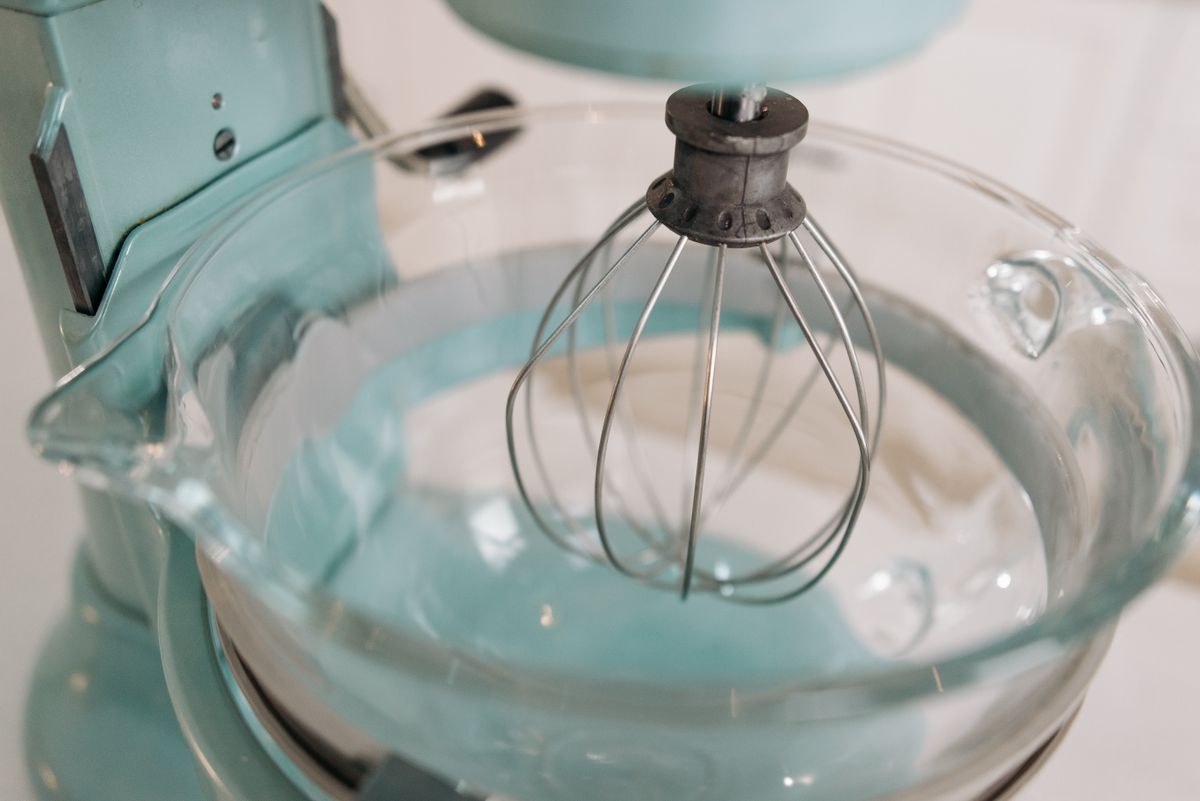
- Beater style. Wire beaters without a thick center post tend to be easier to clean than traditional-style beaters, since there’s less surface for batter to cling to.
If you bake dough frequently, prioritize a powerful motor and a stable base over flashier extras like digital timers or app connectivity.
Consider Attachments
The attachments included with a stand mixer shape your overall experience with the appliance. Every model ships with a basic bowl and beater, but the accessory set beyond that varies a lot by brand and price tier. Common attachments include a dough hook for kneading bread, a balloon whisk for whipping cream and egg whites, a flat beater for general mixing, and a splash guard. Some manufacturers also sell add-on attachments like pasta rollers, meat grinders, and spiralizers that turn the mixer’s power hub into a small appliance ecosystem.
Before you commit to a model, check that it comes with, or has affordable add-on access to, whatever attachments matter for how you actually cook. If you knead dough often, the dough hook and flat beater are non-negotiable. If you mostly bake cakes and frosting, the whisk and flat beater will cover nearly everything you do.
Consider Ease of Cleaning
Unlike a hand mixer, a stand mixer comes with several separate pieces, the bowl, beater, whisk, dough hook, and splash guard, that all need cleaning after use. Check whether the attachments are dishwasher safe before buying; if they are, cleanup is as simple as tossing them in with the rest of your dishes. Some brands also include a dedicated cleaning brush for the bowl and beater shaft, since food can collect in spots a dishwasher doesn’t fully reach. If easy cleanup matters to you, favor a model with dishwasher-safe parts over one that requires hand-washing every piece.
Consider Noise Level
Stand mixers are, generally speaking, loud appliances, and belt-driven models tend to run noisier than direct-drive ones since friction and vibration both add to the sound. If you’re sensitive to noise, or plan to run the mixer early in the morning or with a baby sleeping nearby, read customer reviews before buying. Manufacturers increasingly market quieter designs, but plenty of models on the market are still loud enough to notice from another room.
Watch: What to Consider Before Buying a Stand Mixer
For a quick visual rundown of these same buying factors, this video walks through the main features worth comparing before you make a purchase:
Long-Term Care and Warranty
A stand mixer is meant to be a long-term kitchen investment, some well-built models last well over a decade, so a few ownership factors are worth checking before you buy:
- Warranty length. Coverage varies widely by brand, from one year on budget models to several years on premium ones. A longer warranty is often a signal the manufacturer trusts the motor’s durability.
- Replacement parts availability. Popular mainstream brands make it easy to order a replacement beater, bowl, or seal years down the line. Less common brands can leave you stuck if a single part wears out.
- Refurbished options. Manufacturer-refurbished units, tested and restored to like-new condition, can be a way to get a higher-tier mixer at a lower price if you’re comfortable buying a non-new unit.
- Storage habits. If you plan to store the mixer in a cabinet rather than leave it on the counter, factor in its weight and height each time you lift it in and out, since a heavier mixer that’s great for stability can be a hassle to store daily.
Price and Value
Stand mixers span a wide price range, and the difference usually comes down to brand, capacity, motor quality, and included attachments. A solid entry-level stand mixer can be found for around $100, though these tend to be lighter and less sturdy under heavy or frequent use. Mid-range and premium models typically cost several hundred dollars, and for a household that bakes often, that upfront cost tends to pay off in durability and consistent results over years of use rather than a mixer that struggles or wears out early.
If budget is the main constraint, our affordable stand mixer buyer’s guide and Dash stand mixer reviews both cover well-reviewed options that don’t require a premium-tier budget.
Stand Mixer or Hand Mixer?
If you’re still deciding whether you need a stand mixer at all, it comes down to what you cook most. Stand mixers handle heavier tasks like bread dough and large batches hands-free, while hand mixers are lighter, cheaper, and easier to store, better suited to smaller jobs like whipping cream or mixing cake batter. Our hand mixer buying guide breaks down that comparison further if you’re weighing both options, and our roundup of essential kitchen electrical appliances can help you prioritize where a mixer fits into your broader kitchen setup.
Frequently Asked Questions
How heavy should a good stand mixer be?
Reliable models generally weigh 21 to 33 pounds. Anything significantly lighter is more likely to shift or bounce while kneading stiff dough.
Does higher wattage always mean a more powerful stand mixer?
No. Torque, how well the motor maintains speed under load, matters more than raw wattage. A well-engineered 300-watt mixer can outperform a poorly geared 800-watt one.
What bowl size do I need?
A 4.5 to 5.5-quart bowl covers most home baking. Go with 6 quarts or larger only if you regularly bake in bulk or for a large household.
Are stand mixer attachments interchangeable between brands?
Rarely. Most attachments are brand- and sometimes model-specific, so check compatibility before buying add-ons separately from the mixer itself.
Is a tilt-head or bowl-lift stand mixer better?
Neither is objectively better. Tilt-head models are easier to access for swapping attachments, while bowl-lift models tend to feel sturdier when handling heavy dough.
Final Thoughts
The stand mixer you choose has a real impact on the results you get in the kitchen, so it’s worth comparing more than just price and brand name. Weigh size and weight against your counter space, prioritize torque over raw wattage claims, and make sure the included attachments actually match how you cook. Get those fundamentals right, and the rest, color, styling, smart features, comes down to personal preference.
Related reading: Best Affordable Stand Mixer Reviews and Buyer’s Guide · Dash Stand Mixer Reviews and Buyer’s Guide · Best Electric Hand Mixer Reviews

Hey, My name is MAMON. I am a SEO content creator and affiliate marketer with over 8 years of experience. I create honest product reviews, in-depth buying guides, and practical how-to articles to help readers make informed decisions. My mission is to provide trustworthy, research-backed content that delivers real value.
Leave a Reply