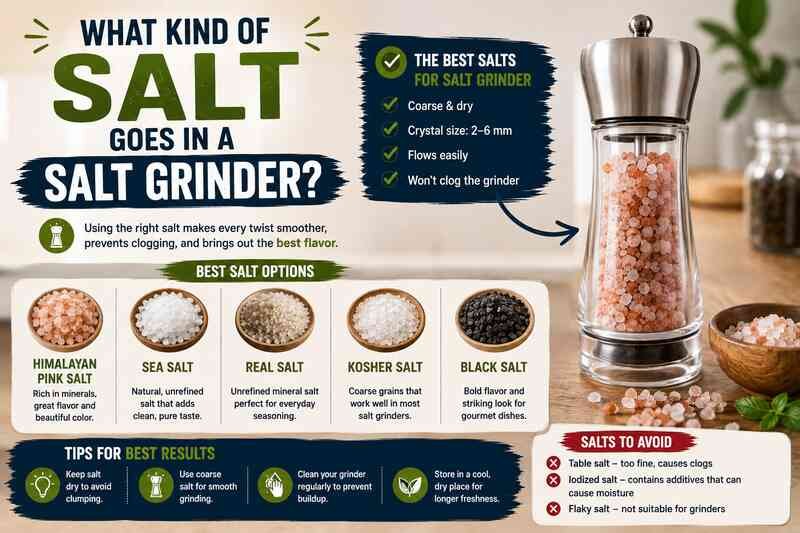
Imagine walking into your kitchen with the smell of freshly ground spices in the air. The key to bringing out real flavor is knowing what kind of salt goes in a salt grinder before you reach for one. Sea salt adds a briny taste, while fleur de sel gives a bold crunch. Each salt type has its own flavor that can make your dishes better. In this guide, we’ll cover what makes each salt type special for cooking and which ones actually work in a grinder mechanism, whether you’re a pro chef or a home cook.
Key Takeaways
- Understand the differences between sea salt, table salt, and specialty salts like Himalayan pink salt.
- Discover how grind size and flavor profile impact your choice of salt for grinders.
- Explore popular salt varieties that work best with manual and electric salt grinders.
- Learn the role of salt in enhancing umami flavors and balancing taste profiles.
- Gain tips for storing and maintaining your salt grinder for optimal freshness and performance.
Understanding Different Types of Salt
There are many types of salts for grinding, each with its own qualities. From Himalayan pink salt to table salt, knowing the differences can make your cooking better.
Sea Salt
Sea salt is made by letting seawater evaporate naturally. It has more minerals than other salts, giving it a unique taste. Sea salt comes in different textures, adding special flavors to your food.
Table Salt
Table salt is the most common salt. It’s mined or made from seawater and then cleaned. It has a fine texture and a mild taste, perfect for everyday cooking.
Himalayan Pink Salt
Himalayan pink salt comes from the Himalayas. It’s known for its pink color and rich flavor. It’s great for grinding and seasoning, available in coarse and fine forms.
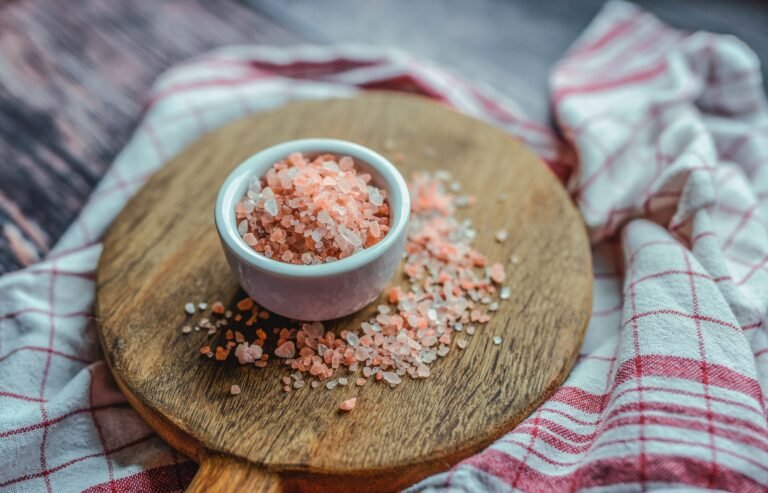
Each salt type has its own texture and taste, but the differences matter less than marketing suggests. According to the Cleveland Clinic, sea salt, kosher salt, and pink salt all contain roughly the same sodium by weight as table salt, and only iodized table salt reliably supplies iodine. Texture and flavor, not sodium content, are the real reasons to pick one.
| Salt Type | Source | Texture | Flavor Profile | Mineral Content |
|---|---|---|---|---|
| Sea Salt | Evaporated seawater | Coarse, irregular | Slightly briny | Higher in trace minerals |
| Table Salt | Rock salt or seawater | Fine, uniform | Mild, neutral | Lower in trace minerals |
| Himalayan Pink Salt | Hand-mined from ancient salt deposits | Coarse or fine | Delicate, mineral-rich | High in trace minerals |
What Kind of Salt Goes in a Salt Grinder: Key Factors
Answering what kind of salt goes in a salt grinder starts with two things: grain size and flavor. Knowing these helps you pick the best salt granules, salt flakes, or gourmet salts, and avoid a grinder mismatch down the road.
Grind Size
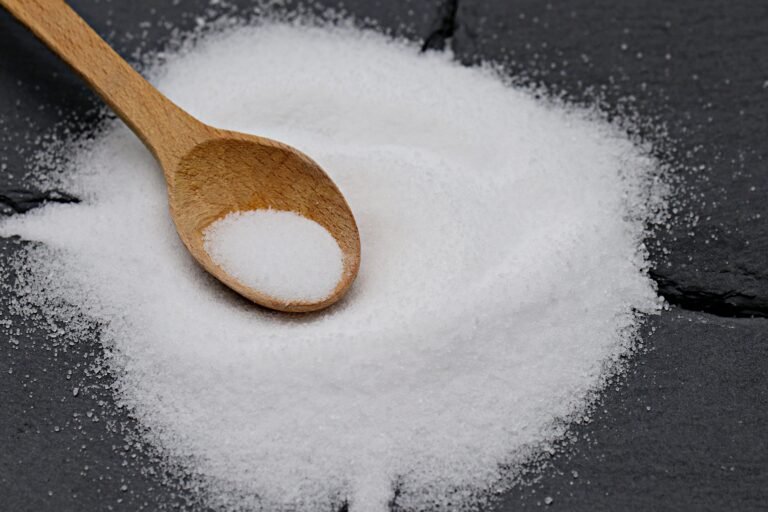
Grain size affects how we taste salt. Smaller salt granules dissolve quickly, spreading flavor evenly, and work well for everyday seasoning. Larger salt flakes add crunch as a garnish. Fine salt, like standard table salt, can clog most grinder mechanisms, so it helps to know how to make coarse salt for a grinder before loading it.
Flavor Profile
Gourmet salts range from mineral-rich to clean. Sea salt has a complex taste, while Himalayan pink salt is slightly sweet. Try a few to find the one that enhances your dish.
| Salt Type | Flavor Profile | Recommended Uses |
|---|---|---|
| Coarse Sea Salt | Briny, mineral-rich | Cooking, roasting, brining, pickling, finishing |
| Himalayan Pink Salt | Subtle, slightly sweet | Seasoning, finishing, grinders |
| Fleur de Sel | Delicate, nuanced | Finishing, garnishing |
| Kosher Salt | Clean, pure salt flavor | Cooking, seasoning, brining |
By weighing grain size against flavor, you can pick the perfect salt for your grinder. This will make your cooking better and your meals more enjoyable.
Popular Salt Varieties for Grinders
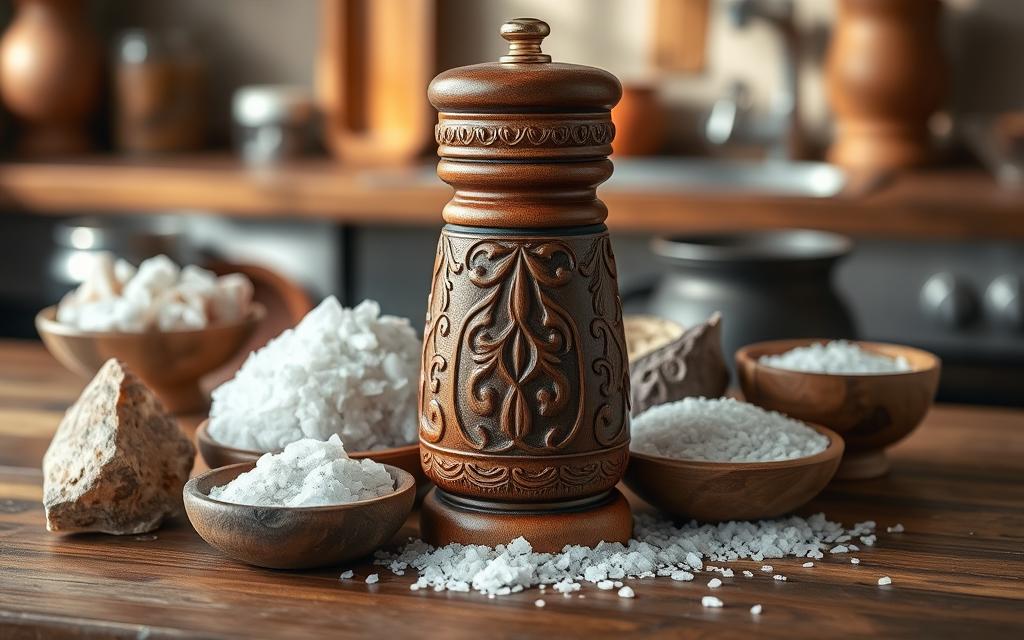
Once you know what kind of salt goes in a salt grinder, the fun part is picking a variety. Some specialty salts, like fleur de sel and black salt, offer unique flavors and textures that make dishes stand out — see our salt and pepper grinder reviews if you’re shopping for a new one.
Kosher Salt
Kosher salt is a favorite for grinders because of its low density and flaky texture. Its larger crystals spread evenly, avoiding over-salting.
Fleur de Sel
Fleur de sel, or “flower of salt,” is a delicate sea salt used as a finishing touch. Its lacy crystals add a subtle crunch that can transform simple dishes.
Black Salt
Black salt, also known as kala namak, has a distinct sulfurous taste. It’s a staple in South Asian cooking but also works well in a salt grinder.
These specialty salts bring a gourmet touch to your cooking. Try a few to find the perfect match for your dishes.
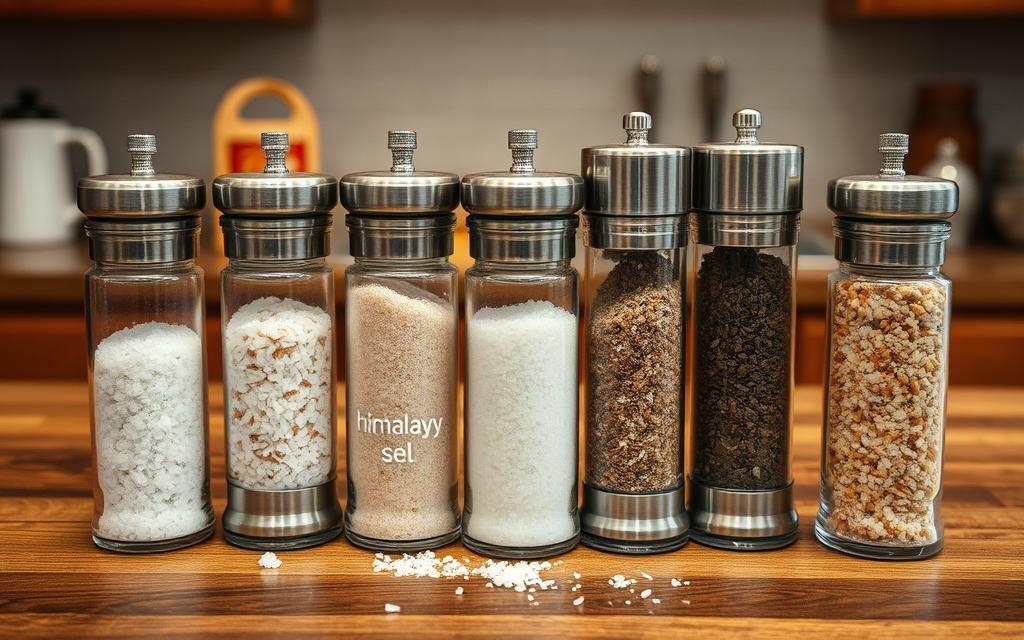
Grinding Mechanisms and Salt Compatibility
Choosing the right salt grinders means knowing how grinding types match salt types. Here’s how manual and electric grinders work with different salts.
Manual Grinders
Manual salt grinders give you control over grind size and usually have ceramic parts, making them durable and good for many salt types. If yours ran empty, our guide on how to refill a salt and pepper grinder walks through it.
Electric Grinders
Electric grinders make grinding fast and easy. They often use ceramic or stainless steel and work well with many salts, though with less control than manual models — our electric salt and pepper grinder buying guide compares top models.
Pick a grinder for dry salt to avoid clogs. Most grinders handle coarse salt well, but extra-coarse salts can be hard to grind unless your model is rated for them.
Taste Profiles of Various Salt Types
Salt is more than just a seasoning. It can make your food taste better by balancing flavors. It does this by bringing out the savory taste, or umami.
What Is Umami?
Umami is the fifth basic taste, alongside sweet, sour, bitter, and salty, with savory, meaty, broth-like notes. Japanese chemist Kikunae Ikeda identified it in 1908 while studying kombu broth, according to the Umami Information Center, which notes that pairing umami-rich ingredients with salt can let cooks cut added salt by around 30 percent without losing flavor.
Enhancing Dishes with Salt
Trying different gourmet salts can change your cooking. Fleur de Sel has a delicate flavor, while black salt has a smoky one. Each brings out different notes, so experimenting can take your cooking further.
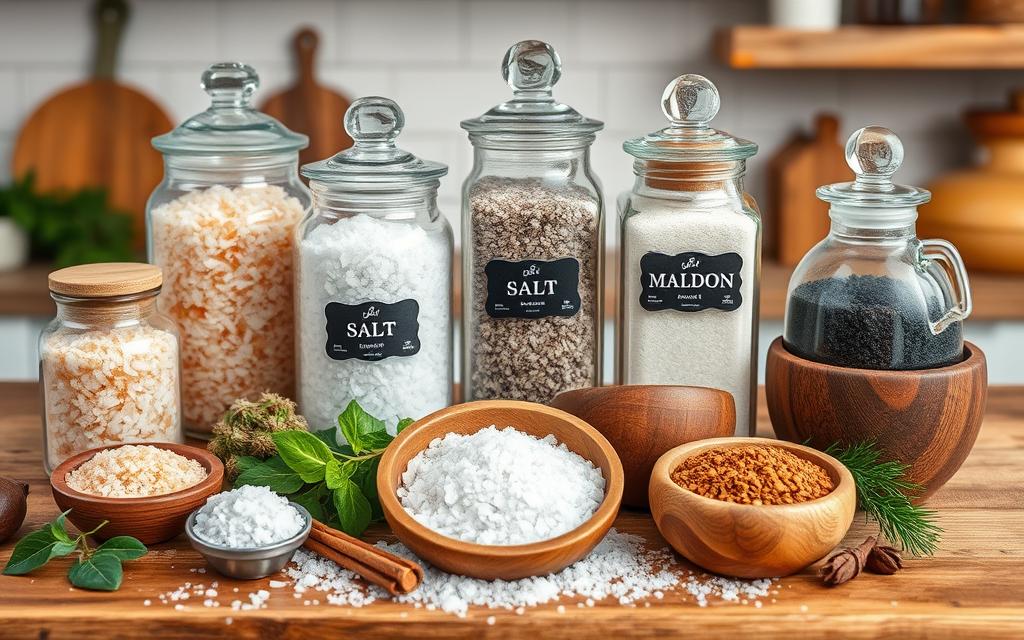
The right salt can make a good dish great, and the wrong salt can just as easily flatten an otherwise perfect meal. Whether it’s for a steak, vegetables, or desserts, the right salt can add depth. Explore different salts to discover new flavors in your cooking.
The Role of Salt in Cooking
Salt is key in cooking: it adds flavor, preserves food, and balances tastes, from basic seasoning to finishing touches with specialty salts.
Seasoning Basics
Good seasoning is the base of any dish. Salt boosts and balances flavors, from searing steaks to baking bread, bringing out the best in your food.
Balancing Flavors
Salt does more than add saltiness. It also balances sweetness and acidity, so a pinch in a sweet dish or alongside a splash of lemon can make flavors work together better.
| Salt Variety | Flavor Profile | Best Uses |
|---|---|---|
| Kosher Salt | Mild, clean flavor | Seasoning meats, vegetables, and baked goods |
| Fleur de Sel | Delicate, slightly sweet | Finishing touch for dishes, garnishes |
| Black Salt | Earthy, slightly sulfurous | Indian and Middle Eastern cuisine, eggs |
Knowing about different salts can make your dishes better. Try different salts to find the best ones for your recipes, then mastering seasoning and flavor balance can take your cooking to the next level.
How to Store Salt for Optimal Freshness
Keeping your salt fresh is key to full flavor. Whether it’s fine table salt or coarse Himalayan pink salt, proper storage matters for your salt grinders.
Container Options
The container you choose affects freshness. Airtight, moisture-resistant containers are best to prevent clumping — glass, ceramic, or food-grade plastic are great choices. Avoid metal, which can change the salt’s taste; metal grinder parts can also corrode over time, so see our tips on how to prevent rust in salt and pepper grinders.
Ideal Storage Conditions
Salt absorbs moisture easily, so store it in a cool, dry, dark place. Pantries, cabinets, or the fridge work well as long as the container is airtight. Heat, humidity, and sunlight make salt clump and lose flavor.
For long-term storage of larger amounts, Mylar bags or food-grade buckets work well to protect freshness.
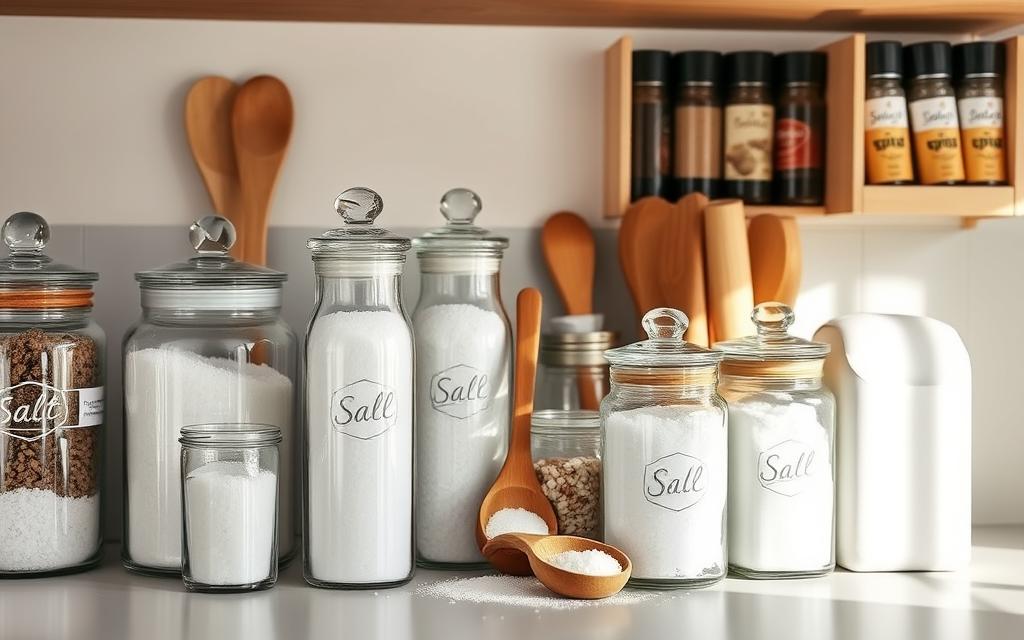
By following these tips, your salt will stay fresh and ready to use. It will enhance the flavors of your dishes every time you use your salt grinder.
Cleaning Your Salt Grinder
Keeping your salt grinder clean is key for great flavor. Regular care stops clogs, ensures even grinds, and makes your tool last longer.
Regular Maintenance Tips
- Brush away salt residue: Use a small, soft-bristled brush or compressed air to remove accumulated salt from the grinder’s interior and exterior.
- Disassemble for deep cleaning: Periodically take your grinder apart and soak the components in warm, soapy water. If you own an OXO model, our guide on how to open an OXO salt and pepper grinder shows the exact steps.
- Dry completely: Make sure all parts are fully dry before reassembling. Residual moisture can lead to caking and clogs.
Troubleshooting Common Issues
Having trouble with your grinder? Try these tips:
- Adjust the grind settings: Experiment with the grind adjustment knob or lever to find the optimal size for your salt.
- Choose the right salt type: Certain salt varieties, like coarse sea salt, may suit your grinder’s design better. Check the manufacturer’s recommendations.
- Inspect for obstructions: Disassemble the grinder and check for salt crystals or debris causing the mechanism to jam.
Eco-Friendly Salt Options
Choosing salt for your kitchen can be a chance to go green. Some brands focus on harvesting salt in ways that are kind to the planet, so you get great flavor while helping the environment.
Sustainable Brands
Look for salt brands that harvest the old-fashioned way or use salt from untouched places. These salts are often purer and richer in minerals. Some top brands include:
- Only Salt from Peru
- JQ Dickinson from West Virginia
- Jacobsen Salt Co. for flavored salts
- Maldon for flaky and flavored salts
Harvesting Practices
Sea salt harvested by the sun is better for the environment than industrial salt, keeping minerals and flavor intact, which is why it’s a favorite among chefs choosing eco-friendly, sustainable options. Check how a salt is harvested to support these practices, and find the ones that add unique flavor and texture to your dishes.
Final Tips for Choosing What Kind of Salt Goes in a Salt Grinder
Try different salts to improve your cooking. Maldon sea salt adds crunch, while Fleur de Sel is delicate, and mixing salts can create flavors you’ll love.
Experimenting with Flavors
Swap table salt for kosher salt when cooking meats, add smoky Maldon salt for depth, or try Himalayan pink salt and Fleur de Sel for earthy, briny notes.
Pairing Salt with Cuisine
Sea salt is great for salads, while Himalayan pink salt suits stews. The right pairing enhances both flavor and texture.
Frequently Asked Questions
What kind of salt goes in a salt grinder?
Coarse, dry salts work best: coarse sea salt, kosher salt, Himalayan pink salt, and fleur de sel all grind well. Avoid fine table salt and any salt with anti-caking agents or added moisture, since both tend to clog the mechanism.
Can you put regular table salt in a salt grinder?
Most grinders aren’t built for fine table salt; its small, uniform grains pack together and jam the mechanism. Use a coarse or kosher substitute instead, or make coarse salt from what’s already in your pantry.
Is Himalayan pink salt good for a salt grinder?
Yes. It’s sold in coarse and fine grades, and the coarse grade grinds smoothly in manual and electric grinders while adding a mild, slightly sweet flavor.
How often should I refill and clean my salt grinder?
Refill it whenever the reservoir runs low, and brush it out every few weeks. A deeper clean, disassembling and washing the parts in warm soapy water, once every few months keeps it grinding evenly.
Does the type of salt affect sodium content?
Not meaningfully. Sea salt, kosher salt, and pink salt contain about the same sodium by weight as table salt. The real differences are texture, trace minerals, and flavor.
Conclusion
Knowing what kind of salt goes in a salt grinder comes down to matching grain size and dryness to your mechanism, then picking a flavor that suits your cooking. Coarse sea salt, kosher salt, Himalayan pink salt, and fleur de sel are reliable choices, while fine table salt is best left for the shaker. Store your salt airtight, clean your grinder regularly, and experiment with a few varieties until you find the ones you love.

Hey, My name is MAMON. I am a SEO content creator and affiliate marketer with over 8 years of experience. I create honest product reviews, in-depth buying guides, and practical how-to articles to help readers make informed decisions. My mission is to provide trustworthy, research-backed content that delivers real value.
Leave a Reply