
As a passionate home cook, you know how vital a well-stocked kitchen is. Your salt and pepper grinders are among the tools you reach for most. Learning how to prevent rust in salt and pepper grinders is easier than it sounds. A few consistent habits around washing, drying, and storage keep both wood-bodied mills and stainless steel grinders working smoothly for years.
This guide walks through why rust and corrosion happen in the first place. It covers which materials hold up best, plus a simple step-by-step routine you can build into your kitchen cleanup. Whether you’re troubleshooting a mill that’s already showing spots or just want to get ahead of the problem, the same core habits apply.
Key Takeaways
- Moisture combined with salt’s chloride content is the main driver of rust and corrosion in salt and pepper grinders.
- Hand-washing and thorough drying matter more than any single material choice.
- Stainless steel resists rust well but isn’t immune; ceramic and acrylic mechanisms resist corrosion even better.
- A light coat of food-grade mineral oil on metal parts adds a real barrier against moisture.
- Catching early rust signs, like discoloration or rougher grinding, prevents bigger repairs later.
Why Salt and Pepper Grinders Rust
Most metal grinder parts are protected by a thin, invisible layer of chromium oxide. That layer keeps oxygen and water away from the metal underneath. Moisture on its own can weaken it over time, but salt speeds up the damage considerably.
The Role of Salt and Moisture
Table salt is sodium chloride, and chloride ions are especially good at attacking a metal’s protective oxide layer. According to Masteel’s guide to pitting corrosion, once that layer weakens, chloride exposure can eat small, hard-to-see holes into the surface. Those holes spread further into the metal over time. That’s why a salt grinder left damp is at more risk than a dry pepper mill sitting in the same kitchen.
True Rust vs. Surface Corrosion
Strictly speaking, only iron-based metal rusts, since rust is iron oxide. Many grinder mechanisms use carbon steel or plated metal, which can develop true reddish rust when wet. Stainless steel grinders are more likely to show pitting or a dull, spotty discoloration instead. The underlying cause is the same either way: chloride and moisture breaking down a protective layer. So this guide uses “rust” to cover both. The prevention steps below work regardless of which type of metal your grinder uses.
Choosing Rust-Resistant Materials
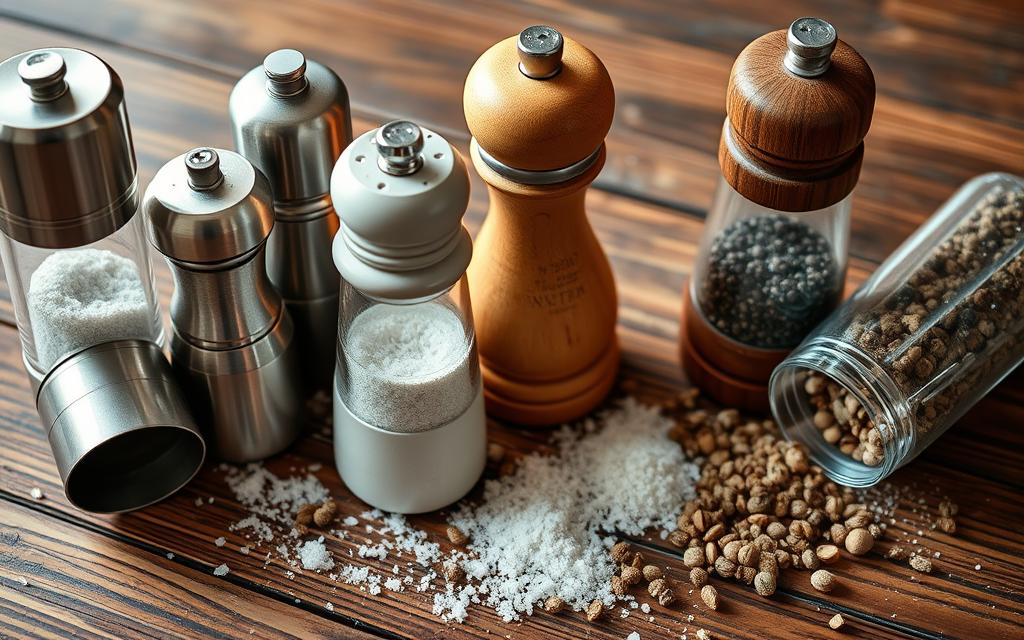
The material your grinder is made from has a real effect on how much maintenance it needs. Stainless steel, ceramic, and acrylic mechanisms are the most common choices. Each behaves a little differently around salt and moisture. If rust has already become a recurring problem with one grinder, switching materials for your next purchase can help.
Stainless Steel vs. Other Metals
Stainless steel grinders are durable and grind consistently. As noted above, they can still corrode with enough moisture exposure, especially cheaper grades with less chromium and nickel. Ceramic and acrylic mechanisms don’t rust at all, since they have no exposed iron. That’s part of why most dedicated salt mills use them instead of metal.
Ceramic, Glass, and Acrylic Bodies
The body of the grinder matters too, not just the grinding mechanism. Glass and ceramic bodies won’t rust or corrode under any normal kitchen conditions. They hold up well to years of daily use. Wood bodies are also a safe bet, since the rust risk is almost always in the metal mechanism, not the exterior housing.
| Material | Corrosion Resistance | Durability | Grinding Performance |
|---|---|---|---|
| Stainless Steel | Good, but not rust-proof | Excellent | Consistent |
| Ceramic | Excellent | Exceptional | Consistent, especially for salt |
| Acrylic/Plastic Mechanism | Excellent | Good | Consistent |
If you’re shopping for a new mill, our guide on how to choose the right salt and pepper grinder walks through material and mechanism options in more depth.
Once you understand the cause, preventing rust in salt and pepper grinders comes down to four consistent habits.

How to Prevent Rust in Salt and Pepper Grinders: A Step-by-Step Care Routine
Wash correctly, dry completely, store smart, and oil the metal parts occasionally: that’s the whole routine.
Step 1: Wash by Hand, Never in the Dishwasher
Don’t soak grinders in water or run them through the dishwasher, even if the label says dishwasher-safe. Cole & Mason’s care guidance notes that water exposure is the primary reason mills rust. It recommends wiping with a damp, not wet, cloth and drying immediately, rather than rinsing or submerging the mechanism. For a deeper clean, take the grinder apart and wipe each piece separately. Keep water away from the internal mechanism the whole time. Our full guide to cleaning a pepper grinder covers the disassembly process step by step.
Step 2: Dry Every Part Completely
Even a small amount of trapped moisture is enough to start corrosion. This step matters as much as washing itself. Air drying in a well-ventilated spot lets water evaporate naturally. A clean, lint-free cloth speeds things up and gets into tighter corners.
| Drying Technique | Advantages | Disadvantages |
|---|---|---|
| Air Drying |
|
|
| Towel Drying |
|
|
Step 3: Store in a Cool, Dry Spot
Keep grinders in a kitchen cabinet or pantry, away from the sink, stovetop, and any window where condensation collects. If you’re storing a mill for an extended period, empty it first. Leftover salt or pepper can hold onto ambient moisture even inside a closed grinder. An airtight container or resealable bag adds an extra layer of protection in humid climates.

Step 4: Oil the Metal Parts Periodically
A thin coat of food-grade mineral oil on exposed metal creates a barrier against moisture and keeps the mechanism turning smoothly. Cole & Mason specifically recommends adding a small amount of cooking oil, such as olive or vegetable oil, to the shaft threads whenever you refill a combination mill. That thin film helps prevent corrosion between the metal parts. To apply mineral oil, put a small amount on a clean, dry cloth and rub it over the metal surfaces. Reapply every few months, or whenever the grinder starts to feel stiff.
Recognizing Early Signs of Rust
Catching corrosion early means a quick fix instead of a replacement. It’s worth checking your grinders every so often, not just when something feels wrong.
Visual Warning Signs
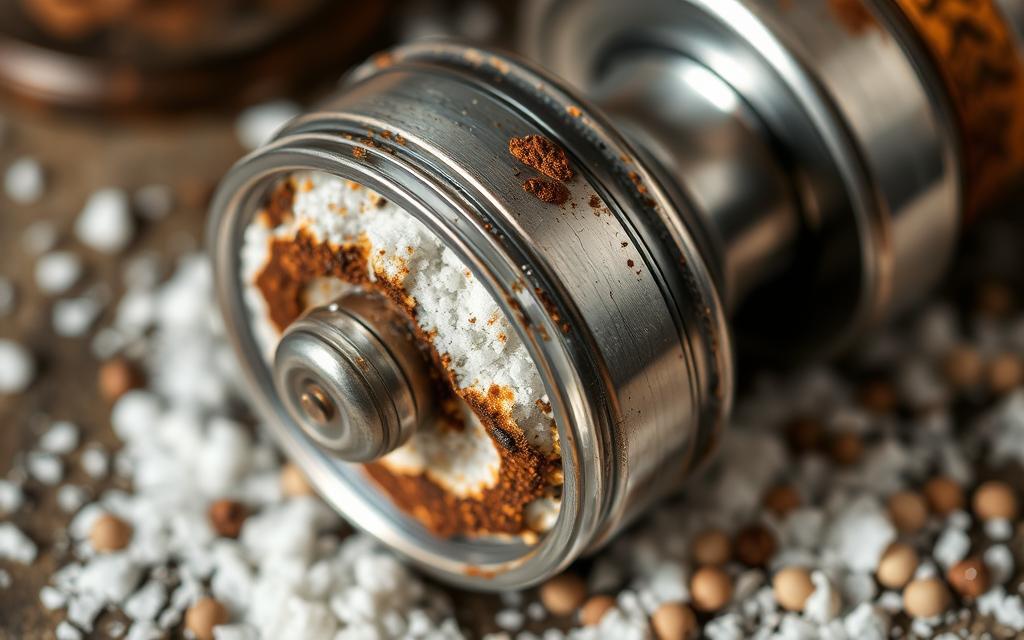
Look for reddish-brown spots, dull discoloration, or small pitted marks on any exposed metal. Check spots inside the mechanism too, since those aren’t visible at a glance. A quick monthly check, inside and out, catches most problems before they spread.
Grinding Performance Problems
Rust and corrosion don’t only look bad; they also affect how the grinder works. Stiff turning, uneven seasoning, or a gritty feel when you twist the mill can all point to corrosion building up inside.
| Visual Indicators | Performance Issues |
|---|---|
|
|
Building a Regular Maintenance Habit
The routine above only works if it becomes a habit, so it helps to build a simple schedule around it.
Set a Cleaning Schedule
Wipe grinders down at least once a month, or more often if you use them daily. This keeps spice residue from building up and holding moisture against the metal.
Inspect for Wear and Tear
- Check for loose or damaged components in the grinding mechanism or housing.
- Look closely at metal parts for early rust or pitting.
- Confirm the grinder still turns smoothly and grinds evenly.
- Replace worn mechanisms rather than pushing a struggling grinder further.
Controlling Humidity in Your Kitchen
A drier kitchen environment overall makes every other step easier. Your grinders spend most of their time sitting out on a counter or in a cabinet, absorbing whatever moisture is in the air around them.
Ventilation Matters
Good ventilation near the stovetop and sink controls the ambient moisture that contributes to rust. A working range hood or exhaust fan clears steam and condensation before it settles on nearby surfaces, including your grinders. Cracking a window while boiling water or steaming vegetables helps too, especially in smaller kitchens.
Keep Grinders Away From Wet Zones
Avoid storing mills right next to the sink, dishwasher, or stovetop, where splashes and steam are most likely to reach them. In particularly humid climates, a small dehumidifier helps protect grinders along with other metal tools, from knives to cast iron pans.
Rust-Resistant Alternatives Worth Considering
If you’re tired of babysitting a grinder, a couple of newer designs sidestep most of the rust risk entirely.
Electric Grinders
Electric pepper mills typically use sealed battery compartments and enclosed mechanisms. That design limits how much moisture reaches the internal parts in the first place.
Refillable Mechanisms
Refillable grinders with replaceable mechanisms let you swap out a worn or corroded part without replacing the whole mill. That’s often cheaper than buying an entirely new grinder every time rust sets in, and it keeps a well-loved wood or glass body in service for years longer than its original mechanism would have lasted alone. If you’re comparing options, our salt and pepper grinder reviews cover several rust-resistant picks across price ranges.
Frequently Asked Questions
What’s the fastest way to prevent rust in salt and pepper grinders I already own?
Stop washing them with water altogether. Wipe with a barely damp cloth, dry immediately, and store somewhere dry. That single change removes the biggest cause of rust for most home cooks.
Can I use regular table salt in a grinder, or does that make rust worse?
Fine table salt is more corrosive against metal mechanisms than coarser salt, partly because it clumps and holds moisture. Coarse sea salt, kosher salt, or Himalayan pink salt grind more evenly and cause less wear. Our guide on what kind of salt goes in a salt grinder covers this in more detail.
Is a little rust on a grinder mechanism dangerous to use?
Light surface rust isn’t typically a health hazard, but it affects taste and can flake into your food as it worsens, giving your seasoning a faint metallic or bitter edge. Once you see active pitting or flaking, clean thoroughly or replace the mechanism rather than keep grinding through it.
Does mineral oil go rancid inside a salt or pepper grinder?
Food-grade mineral oil is shelf-stable and doesn’t go rancid the way cooking oils can. That’s exactly why it’s the standard recommendation for seasoning metal kitchen tools. A light coat every few months is enough; there’s no need to oil it heavily.
How do I refill a grinder without reintroducing moisture?
Make sure the grinder and your hands are completely dry before opening it. Avoid refilling right after washing dishes nearby. Our step-by-step refill guide walks through the process for both salt and pepper mills.
Final Thoughts on Keeping Your Grinders Rust-Free
Preventing rust in salt and pepper grinders isn’t complicated once you understand what causes it: moisture, chloride from salt, and time. Handle both with a bit of care, and the rest follows naturally.
Quick Recap
Choose corrosion-resistant materials where you can. Hand-wash and dry thoroughly every time, store grinders somewhere dry, and oil metal parts periodically. Check in on them every month or so. Together, these habits are the whole answer to how to prevent rust in salt and pepper grinders long-term.
Make It a Habit
None of these steps take more than a minute or two, and most of them fit naturally into the cleanup you’re already doing after cooking. Together, they’re the difference between a mill that lasts a couple of years and one that lasts a decade. If you’re ready to put fresh salt through a well-cared-for grinder, our guide on how to make coarse salt for grinder use is a good next stop.

Hey, My name is MAMON. I am a SEO content creator and affiliate marketer with over 8 years of experience. I create honest product reviews, in-depth buying guides, and practical how-to articles to help readers make informed decisions. My mission is to provide trustworthy, research-backed content that delivers real value.
Leave a Reply