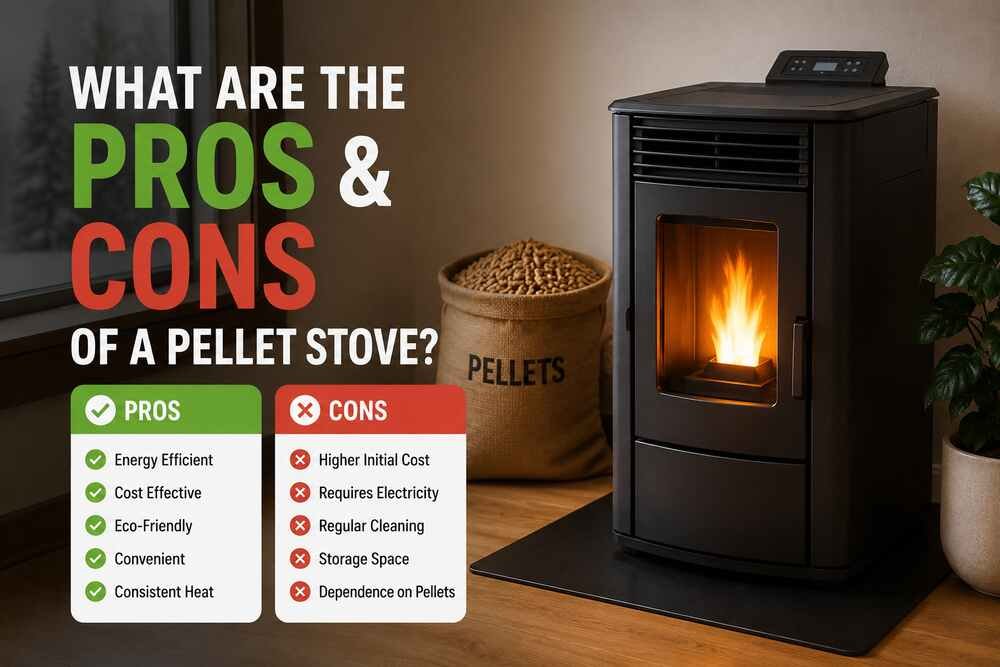
If you’re weighing whether to install a pellet stove in your home, the first question worth answering is: what are the pros and cons of a pellet stove? Demand for pellet stoves has grown steadily across the U.S. over the last decade. They heat a home at a lower running cost than many alternatives, and they burn cleaner than traditional wood.
That doesn’t mean a pellet stove is the right fit for every home, though. Below, we’ll walk through the real benefits and the genuine drawbacks. Every figure is backed by EPA data or independent cost research, so you can make an informed decision before you buy.
Key Takeaways
- EPA-certified pellet stoves typically run 70-83% efficient, among the highest of any solid-fuel heater.
- Annual pellet costs usually run $500-$750 for the 2-3 tons a typical home burns each winter.
- Pellet stoves need electricity to run the feeder and blower, so they won’t operate during a power outage without a backup.
- They produce far less smoke and ash than wood stoves, but still require weekly cleaning and yearly maintenance.
How a Pellet Stove Works
A pellet stove burns small, compressed wood pellets fed automatically from a hopper into a burn pot. An electric igniter starts the fire, and a thermostat controls how fast pellets feed in.
That automation is a big part of the answer to what are the pros and cons of a pellet stove. It explains why the list below plays out the way it does. Automation is what makes pellet stoves convenient to run day to day. It’s also exactly what makes them dependent on electricity, which shows up again in the cons section below.
Pros of a Pellet Stove
1. They’re Energy Efficient
According to the EPA’s guidance on pellet stoves, EPA-certified models typically fall in the 70% to 83% efficiency range. That makes them one of the most efficient home heating options available. The efficiency comes from how densely pellets are manufactured, since they burn hotter and more completely than loose firewood. Less heat is wasted up the flue as a result.
2. They’re Environmentally Friendly
Pellet stoves emit far less smoke and fewer particulates than wood-burning stoves. That’s largely because pellets are manufactured from compressed sawdust and wood waste rather than raw logs. Many manufacturers consider pellets close to carbon-neutral, since they’re made from wood byproducts that would otherwise decompose or be discarded anyway. That’s a meaningfully smaller footprint than burning fossil fuels for heat.
3. They’re Relatively Easy to Maintain
Pellet stoves produce far less ash and creosote buildup than wood stoves. You won’t be clearing the firebox every day the way you would with a wood-burning unit. You still need to empty the ash pan weekly during heavy use, though, and give the unit a deeper clean each season. Our guide on how to clean your pellet stove safely and effectively walks through that process step by step.
4. They’re More Economical to Run
Pellets typically cost between $180 and $250 per ton. Most homes burn two to three tons over a winter, which puts annual fuel costs at roughly $500 to $750. On a cost-per-BTU basis, that’s competitive with or cheaper than oil, propane, or electric resistance heating in most parts of the country. Pellet stoves also burn fuel efficiently enough that very little goes to waste.
5. Installation Is Relatively Simple and Flexible
Compared to a full wood-burning fireplace, pellet stove installation is straightforward. Many models don’t require a traditional masonry chimney at all. Instead, they vent directly through an exterior wall. Whether your specific model needs venting depends on the unit; we break that down in does a pellet stove need to be vented. That flexibility gives you more placement options than a wood stove typically allows.
6. They Don’t Attract Pests
Pellets are stored in sealed, prepackaged bags rather than stacked outdoors like firewood. That means they don’t create the kind of shelter that draws insects, rodents, or snakes. If you’ve dealt with a woodpile attracting pests before, this alone can be a meaningful quality-of-life improvement.
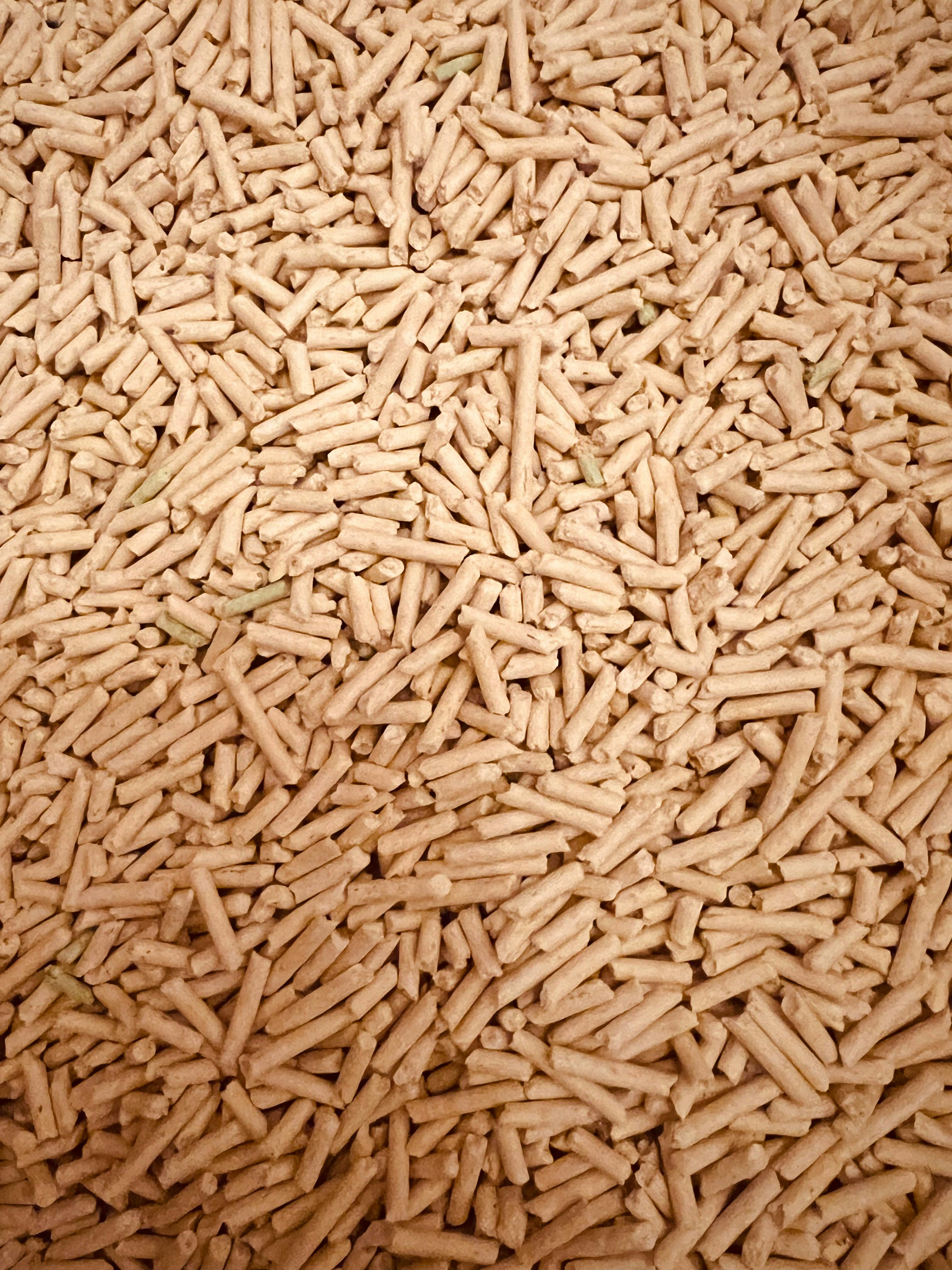
Compressed wood pellets burn hotter and cleaner than loose firewood.
Cons of a Pellet Stove
1. They Can Be Noisy
The auger motor that feeds pellets and the blower fan that circulates heat both run almost continuously while the stove is on. It’s not loud in the way a furnace is. It’s more of a low, steady hum, but some homeowners still find it bothersome in a quiet bedroom or living room.
2. They Require Electricity to Operate
Unlike a wood stove, a pellet stove won’t run without power. The auger, igniter, blower, and control board all need electricity. A blackout means no heat unless you have a battery backup or generator on hand. Our breakdown of how much electricity a pellet stove uses covers what that draw actually looks like on a typical utility bill.
3. Running Costs Rise If Pellets Are Scarce
Pellet prices aren’t fixed. During periods of high demand or supply disruption, prices can climb well above the typical $180-$250 per ton range. In a bad year, they can even double. It’s worth buying pellets early in the season rather than waiting until cold weather drives up demand.
4. Pellets Create Packaging Waste
Pellets are typically sold in 40-pound plastic bags. Burning through two to three tons a season means going through a lot of plastic. Some regions offer bag recycling through hardware stores or pellet retailers, but it’s still a downside worth factoring in if minimizing plastic waste matters to you.
5. They Need Regular Maintenance to Keep Working Well
Beyond weekly ash removal, the auger, glass, and exhaust vent all need periodic attention. Igniters and motors are mechanical parts, and they eventually wear out. Most units last 10 to 20 years with proper care, which our guide on how long pellet stoves last covers in more detail. Skipping maintenance shortens that lifespan significantly.

A well-maintained stove can last 10 to 20 years, but only with routine upkeep.
How Much Does It Cost to Install a Pellet Stove?
Installation costs vary based on the stove type, venting requirements, and whether you hire a professional. Freestanding units that vent through an exterior wall are typically the cheapest to install, while insert models that replace an existing fireplace tend to cost more. For a full cost breakdown by stove type and region, see how much it costs to install a pellet stove.
Even with professional installation, the total is usually lower than installing a new central furnace or a masonry wood fireplace. That makes pellet stoves an appealing option if you’re heating a single room or a smaller, open floor plan rather than an entire multi-story home.
Safety Considerations Worth Knowing Before You Buy
Most pellet stoves vent through a smaller pipe than a traditional chimney. Whether yours needs one at all depends on the specific model, which we cover in do pellet stoves need a chimney. Regardless of venting type, install a carbon monoxide detector nearby and have the unit inspected annually. That single habit prevents most of the safety issues pellet stove owners actually run into, and it takes only a few minutes to set up.
Keep the area around the stove clear of flammable materials at all times. Never bypass the safety shutoffs built into the control board, either. These exist specifically to cut power to the auger if the unit overheats or the hopper runs dry. Disabling them defeats the entire point of buying a stove with automated safety features built in from the factory.
Pellet Stove vs. Wood Stove: Quick Comparison
| Factor | Pellet Stove | Wood Stove |
|---|---|---|
| Typical efficiency | 70-83% | 65-75% |
| Fuel handling | Bagged pellets, low mess | Stacked logs, more mess |
| Power needed | Yes, for auger and blower | No |
| Ash and cleaning | Weekly, low volume | More frequent, higher volume |
| Ambiance | Small, mechanical flame | Large, visible flame |
Is a Pellet Stove Right for Your Home?
If lower running costs, cleaner emissions, and simpler maintenance matter more to you than an open, crackling flame, a pellet stove is usually the better fit. If your area is prone to long power outages and you don’t want to rely on a generator, that’s a real strike against it. It’s worth weighing seriously before you commit.
Comparing specific models in our best pellet stove reviews is a good next step.
Watch: Pellet Stove vs. Wood Stove Comparison
Video: “Pellet Stove vs Wood Stove: Which Actually Heats Better?” by Retired For Life!
Frequently Asked Questions: What Are the Pros and Cons of a Pellet Stove?
What are the pros and cons of a pellet stove compared to a furnace?
A pellet stove typically costs less to run than an electric or propane furnace. It also heats a single room or open floor plan efficiently. It can’t distribute heat throughout an entire multi-story home the way a central furnace can, though.
Do pellet stoves work during a power outage?
No, not without a battery backup or generator. The auger, igniter, and blower all require electricity. This is one of the biggest cons compared to a wood stove, which needs no power at all.
Are pellet stoves worth the cost long-term?
For most U.S. homeowners burning two to three tons of pellets a season, yes. Fuel costs are competitive with or lower than oil, propane, and electric heat. The units typically pay off their upfront cost within a few heating seasons.
How often do pellet stoves need professional servicing?
Most manufacturers recommend a professional inspection and deep cleaning once a year. That’s in addition to the weekly ash removal and periodic cleaning homeowners handle themselves.
Is a pellet stove better than a wood stove for a small house?
For a smaller, well-insulated home, a pellet stove’s steadier, thermostat-controlled heat is usually easier to manage. A wood stove requires more manual tending to maintain a consistent temperature.
Conclusion
So, what are the pros and cons of a pellet stove? The pros, efficiency, lower running costs, cleaner emissions, and easier maintenance, tend to outweigh the cons for most U.S. households. That’s especially true for anyone replacing an older wood stove or looking to cut heating costs. The main drawbacks, electricity dependence and the need for regular pellet purchases, are worth planning around rather than dismissing outright.
If you decide a pellet stove fits your home, buy from a reputable brand and size the unit correctly for your square footage. That single decision affects efficiency, running cost, and comfort more than almost anything else on this list. Taking the time to compare a few models upfront is far cheaper than replacing an undersized or poorly rated unit down the road.

Hey, My name is MAMON. I am a SEO content creator and affiliate marketer with over 8 years of experience. I create honest product reviews, in-depth buying guides, and practical how-to articles to help readers make informed decisions. My mission is to provide trustworthy, research-backed content that delivers real value.
Leave a Reply