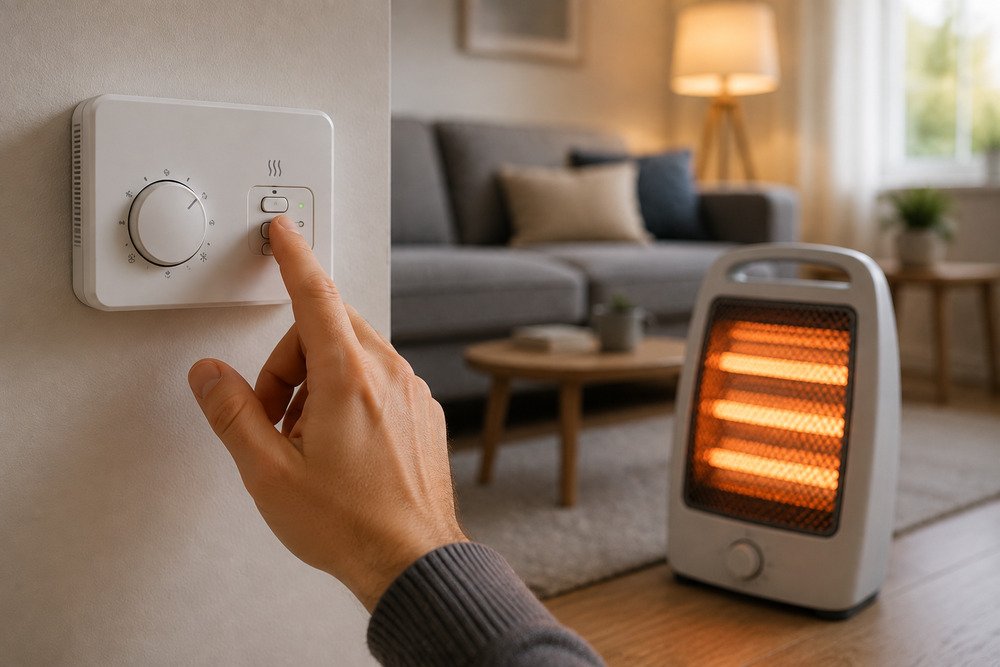
Learning how to turn on the heater at home sounds simple, but the exact steps depend heavily on what kind of heater you actually have. A central furnace, an electric wall heater, and a gas wall heater with a pilot light are each turned on a different way. Mixing up the steps can leave you frustrated or, worse, create a real safety risk.
This guide walks through how to turn on the heater at home for each common type. We’ll also cover when to actually turn it on, the safety precautions worth knowing, and what to check if it won’t start at all.
Key Takeaways
- The Department of Energy recommends 68°F while you’re home and awake, lowered 7-10 degrees while sleeping or away.
- Electric heaters have no pilot light or gas valve. Gas wall heaters do, and the two are turned on very differently.
- The CPSC recommends an annual professional inspection for any fuel-burning heating system, plus working CO alarms on every level of the home.
- Keep at least 3 feet of clearance between any heater and flammable materials like curtains, bedding, or furniture.
When Should You Turn Your Heater On?
There’s no single temperature that applies to every home, but the Department of Energy recommends setting your thermostat to 68°F while you’re home and awake. Lowering it by 7 to 10 degrees for the hours you’re asleep or away can cut annual heating costs by as much as 10%. Many households turn the heater down rather than off completely during the day for this reason.
Keeping your heating system properly maintained matters just as much as when you turn it on. A well-serviced system runs more efficiently and lasts longer, which is worth keeping in mind before the coldest part of the season arrives.
How to Turn On a Central Furnace
Most U.S. homes heat through a central furnace controlled by a wall thermostat. This is the most common version of how to turn on the heater at home.
- Check the furnace switch and breaker. Furnaces have a dedicated power switch, often near the unit and shaped like a light switch, plus a breaker in your electrical panel. Both need to be in the “on” position.
- Set the thermostat to “Heat.” Most thermostats have a mode selector; make sure it’s not set to “Cool” or “Off.”
- Set your target temperature a few degrees above the current room temperature. This signals the furnace to start running immediately rather than waiting.
- Wait a few minutes. You should hear the blower start and feel warm air at the vents within a few minutes of the furnace kicking on.
- Check for even heating. Walk through a few rooms to confirm warm air is reaching them. Uneven heating can point to duct or vent issues worth having checked.
How to Turn On an Electric Wall Heater or Space Heater
Electric heaters work differently from gas models. There’s no pilot light, no gas valve, and no flame to light. Turning one on is closer to switching on any other appliance.
- Plug the unit directly into a wall outlet. Avoid extension cords or power strips, since electric heaters draw enough current to overheat one.
- Flip the power switch to “On.” Built-in wall units usually have a switch near the base. Portable units typically have one on the body of the unit.
- Set the thermostat dial or digital display to your desired temperature.
- Give it a minute to start producing heat. Electric heating elements warm up almost immediately, so you should feel heat within a minute or two.
How to Turn On a Gas Wall Heater With a Pilot Light
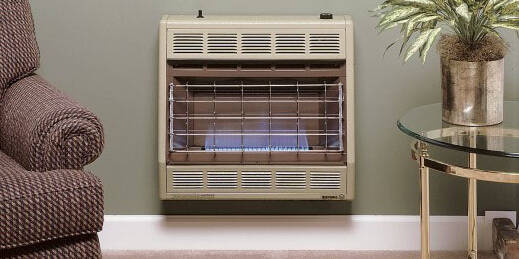
Older gas wall heaters use a standing pilot light that has to be manually lit, while many newer models use electronic ignition instead. Both types are genuinely gas-powered, unlike the electric heaters covered above.
Manual Pilot Light Models
- Locate the pilot light assembly, usually behind a small access panel near the bottom of the heater.
- Turn the gas control knob to “Pilot.” This lets a small amount of gas flow to the pilot burner without engaging the main burner.
- Press and hold the knob while lighting the pilot with a long-stemmed lighter or match. Hold the knob for about 30 seconds after the flame catches to let the thermocouple heat up.
- Release the knob and check that the pilot stays lit. If it goes out, wait a few minutes for gas to clear before trying again.
- Turn the control knob to “On” to activate the main burner, then set your desired temperature.
Electronic Ignition Models
Newer wall heaters skip the standing pilot light entirely. Turn the control to “On.” An electronic igniter sparks the burner automatically each time the thermostat calls for heat. It works similarly to how a modern gas range ignites without a match.
Safety Precautions When Turning On Your Heater
The Consumer Product Safety Commission’s winter heating guidance applies to every heater type covered above. A few habits matter most:
- Have a professional inspect any fuel-burning heating system, including furnaces and gas wall heaters, once a year.
- Install carbon monoxide alarms on every level of your home and just outside sleeping areas, and test them monthly.
- Keep at least 3 feet of clearance between any heater and curtains, bedding, furniture, or other flammable materials.
- Plug electric heaters directly into a wall outlet. Never use an extension cord or power strip.
- If you own a gas wall heater, know that a faulty thermocouple can let gas leak even when the pilot appears out, which is exactly why annual inspections matter.
- Never leave a heater running unattended, especially overnight or when you leave the room for an extended period.

Recommended Thermostat Settings
Once your heater is running, dialing in the right temperature matters for both comfort and your energy bill. The Department of Energy’s 68°F guideline while home and awake is a reasonable starting point for most households. Adjust it up or down from there based on personal preference and how well-insulated your home is.
A programmable or smart thermostat makes this easier to manage automatically. It can lower the temperature while you’re asleep or at work without you having to remember to adjust it manually every time.
Preparing Your Heater Before You Turn It On for the Season
The first time you turn on the heater at home each year, a little prep work goes a long way. Replace the furnace filter if it’s been sitting since last spring, since a clean filter helps the system run efficiently from the first cycle instead of straining against restricted airflow. Clear any furniture, boxes, or debris away from vents and radiators throughout the house.
If you have a gas wall heater, take a moment to visually inspect the area around it for anything that’s been stored too close over the summer. And if it’s been longer than a year since your last professional inspection, schedule one before you rely on the system through a full winter. Catching a small issue in the fall is far less disruptive than dealing with a full breakdown in January.
Why Is My Heater Not Turning On?
If you’ve followed the steps above and your heater still isn’t turning on, a handful of common issues are usually to blame:
- Pilot light is out. Relight it following the manual pilot steps above, or check for a blocked gas line if it won’t stay lit.
- Dirty furnace filter. A clogged filter restricts airflow and can trigger a safety shutoff. Replace it and try again.
- Thermostat set incorrectly. Double-check it’s set to “Heat” mode with a target temperature above the current room temperature.
- Blocked air ducts or vents. Clear any furniture or debris blocking vents throughout the house.
- Damaged igniter or burner. This requires a professional repair, not a DIY fix.
- Tripped breaker or blown fuse. Check your electrical panel before assuming the heater itself has failed.
If none of these resolve the issue, it’s worth a closer look at whether something more serious is going on.
Other Heating Options Worth Considering
If your current heater is unreliable or costly to run, it may be worth comparing alternatives before your next repair bill. Electric options are covered in our guide on how to use an electric fireplace safely. For a lower-cost, efficient alternative for whole-room heating, see the pros and cons of a pellet stove.
Watch: How to Turn On Your Heater
Video: “How To Use Thermostat for HEAT – How to turn on heater” by ImChillToo
Frequently Asked Questions About How to Turn On the Heater at Home
Why won’t my pilot light stay lit?
A pilot light that won’t stay lit is usually a sign of a failing thermocouple. This part shuts off gas flow as a safety measure if it doesn’t sense the flame properly. This typically needs a professional repair rather than repeated relighting attempts.
Is it normal for a furnace to smell when I first turn it on for the season?
A faint burning-dust smell for the first few minutes is normal, since dust that settled on the heat exchanger over the off-season burns off. A persistent or strong smell afterward is not normal and is worth investigating.
How long does it take for a house to warm up after turning on the heater?
It varies by home size, insulation, and outdoor temperature. Most homes still take 30 minutes to an hour to reach a comfortable temperature after the heater starts running.
Can I turn on my heater myself if I’ve never used a gas pilot light before?
Yes, for most manual pilot models, as long as you follow the steps carefully and can smell gas properly. If you ever smell gas outside of the brief lighting process, stop immediately, ventilate the area, and call your gas utility or a professional.
Should I leave my heater on all winter?
Most households don’t need to. Lowering the thermostat while asleep or away, rather than turning the heater off completely, balances comfort with energy savings. That approach beats leaving the heater at a constant high setting all day.
Final Thoughts
Knowing how to turn on the heater at home comes down to identifying what type you have first. A central furnace, an electric heater, and a gas wall heater with a pilot light each require different steps. Mixing them up is where most confusion comes from.
Whichever type you have, pair the startup process with the safety habits above, especially annual professional inspections and working carbon monoxide alarms. That combination keeps your home both warm and safe through the entire heating season.

Hey, My name is MAMON. I am a SEO content creator and affiliate marketer with over 8 years of experience. I create honest product reviews, in-depth buying guides, and practical how-to articles to help readers make informed decisions. My mission is to provide trustworthy, research-backed content that delivers real value.
Leave a Reply