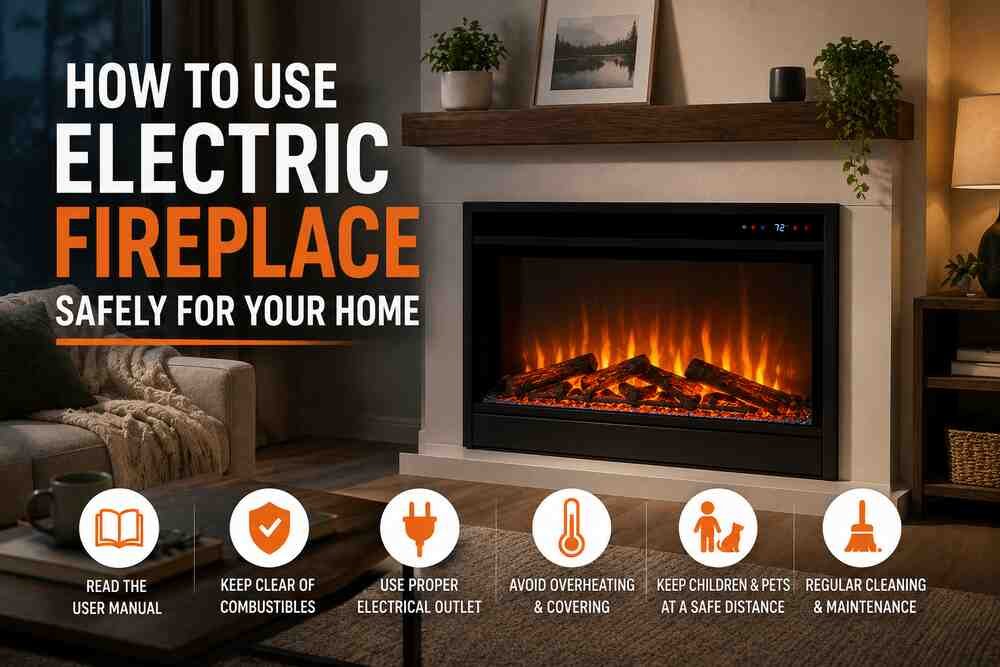
Learning how to use electric fireplace units correctly is simpler than most people expect. It’s also safer than a wood-burning or gas model in almost every way. If you’re considering one for your home but are worried about the risks, there’s good reason to relax. Electric fireplaces are among the safest heating appliances you can plug in.
This guide covers exactly how to use electric fireplace units step by step. We’ll also look at what makes them safer than a real fireplace, what they cost to run, and the specific safety habits that keep any electric heating appliance running the way it should.
Key Takeaways
- Electric fireplaces need no venting, chimney, or gas line, and they produce zero carbon monoxide or smoke.
- A typical 1,500-watt unit costs about 18 cents an hour to run, roughly $10.80 a month at two hours of daily use.
- The CPSC recommends keeping at least 3 feet of clearance around any electric heater and never using an extension cord.
- The flames are a visual effect only. You can touch them safely, though the heat vents themselves can still cause mild burns.
Are Electric Fireplaces Safe for Home Use?
A blazing fireplace adds warmth and color to a living space. Plenty of homeowners skip installing a traditional one over safety concerns. Hiring a professional to build one can get expensive fast, too.
Electric fireplaces solve both problems at once. They’re more adaptable than a masonry fireplace, and they require no venting at all, which even the best pellet stove can’t claim. For homes with pets and kids, an electric fireplace is a particularly good fit. The exterior stays cool enough to touch safely, even while the unit is running.
How to Use Electric Fireplace Units: Step by Step
Knowing how to use electric fireplace models correctly comes down to a handful of steps that take just a few minutes the first time.
- Choose a stable, flat location at least 3 feet from curtains, furniture, and anything else flammable.
- Plug the unit directly into a wall outlet. Never use an extension cord or power strip, since electric fireplaces draw enough current to overheat one.
- Turn on the flame effect first if you just want ambiance without heat. Most models let you run the visual flame independently of the heater.
- Switch on the heat setting once you’re ready. Adjust the thermostat or heat level to suit the room.
- Let the blower fan do its job. The fan pushes warm air outward once the internal heating coils reach temperature. It works similarly to how a stovetop burner heats up.
- Turn the unit off at the switch, not just the remote, whenever you leave the room for an extended period or head to bed. Skip this step only if your model has a certified auto-shutoff feature.
What Makes an Electric Fireplace Safer Than a Real Fireplace?
Electric fireplaces remove most of the safety concerns that come with wood-burning and gas units. A conventional fireplace needs regular inspection and chimney maintenance. Skipping that can lead to carbon monoxide poisoning or a house fire, both of which carry real risk of injury.
An electric fireplace needs almost none of that upkeep. It requires no venting and no annual inspection. It also generates no harmful fumes or smoke, which makes it a solid option for anyone with allergies or breathing concerns. If something does go wrong, there’s no chimney to climb or sweep to call.

Electric fireplaces install without venting, giving you far more placement flexibility.
Are the Flames From an Electric Fireplace Dangerous?
Touching a real flame ends in a burn, but that’s not the case here. Electric fireplaces do generate heat, but the flame itself is a visual effect. It’s usually created with LED lights and a moving reflective surface. Even the most realistic-looking models won’t burn you if you touch the display.
That doesn’t make the unit entirely risk-free, though. Heat still radiates from the vents. Resting a hand directly on one for too long can cause a mild burn. Keeping a reasonable distance from the vent area is enough to avoid that, and it’s one of the reasons electric fireplaces are considered safer for most households.
How Much Does It Cost to Run an Electric Fireplace?
Most electric fireplaces draw around 1,500 watts on their highest heat setting. At the national average electricity rate, that works out to roughly 18 cents an hour. Running it two hours a day through the winter adds up to about $10.80 a month. Using just the flame display without heat costs less than a penny an hour.
Compare that to a natural gas fireplace, which typically runs about 48 cents an hour. A propane unit costs closer to $1.10 an hour. The electric option is clearly the cheaper one to operate day to day.
Is It Safe to Leave an Electric Fireplace on Overnight?
It depends on the specific unit. Some electric fireplaces are built to run continuously and pose no issue left on overnight. Smaller models, though, are only designed for a few hours of continuous use at a time.
Most modern units include a quick-toggle shutoff for fast power-down. Many also have a built-in timer that shuts the unit off automatically after a set period. If you like falling asleep with the fireplace running, look specifically for a model with that timer feature.
Remember that it’s still an electric appliance regardless of these features. Staying reasonably alert while it’s operating, the same as you would with any other electric device, is good practice.
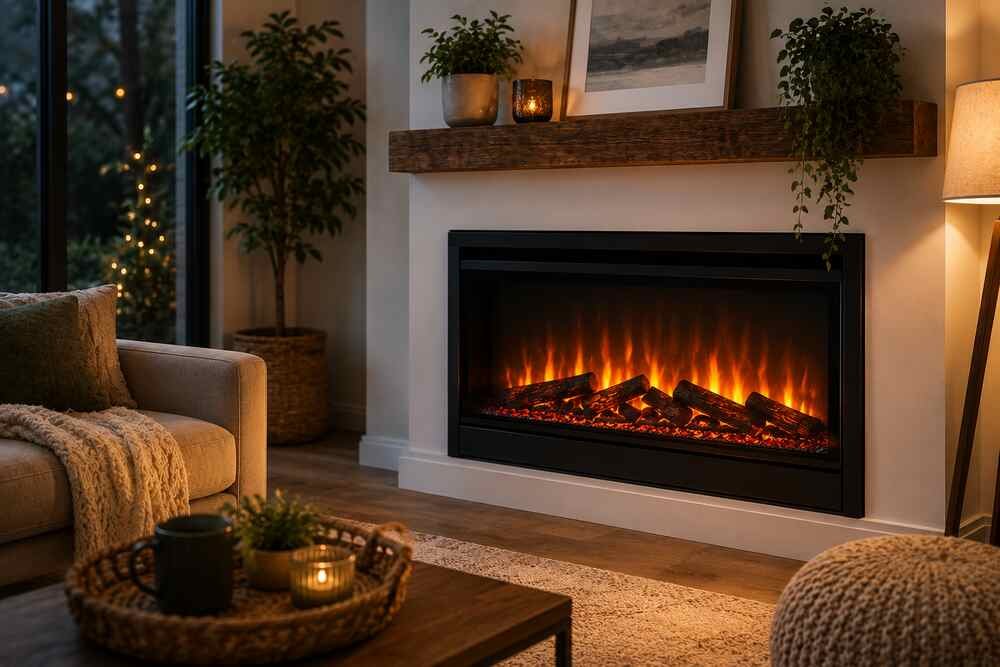
Many electric fireplaces include a timer so you can safely enjoy them at night.
Electric Fireplace Safety Tips
The Consumer Product Safety Commission’s guidance on portable electric heaters applies directly to electric fireplaces, since they use the same heating elements. Follow these habits every time you use one:
- Keep at least 3 feet of clearance from curtains, furniture, and anything else flammable on all sides of the unit.
- Plug it directly into a wall outlet. Never use an extension cord or power strip, per CPSC guidance.
- Don’t leave it running unsupervised for long stretches unless your model has a certified automatic shutoff.
- Check the outlet and cord periodically. If either feels hot to the touch, stop using the unit and have it inspected.
- Keep pets and children away from the vents and other areas that get warm during operation.
- Keep liquids away from the unit entirely. Electricity and water are a dangerous combination.
- Never run the power cord underneath a rug or carpet, where damage can go unnoticed.
- Don’t modify the unit in any way. Follow the manufacturer’s instructions exactly as written.
Common Mistakes to Avoid
A few habits show up again and again in electric fireplace complaints. All of them are easy to avoid once you know to watch for them.
Plugging the unit into a power strip shared with other appliances can overload the circuit. That can trip a breaker or, worse, damage the cord. Blocking the vents with furniture or decor restricts airflow and can cause the unit to overheat and shut down. Ignoring a recall notice is another one; it does happen with electric heating appliances, and it means running a unit that may have a known defect. Checking your model against CPSC recall listings takes a minute and is worth doing once after purchase. It’s a small step that can save you a lot of hassle, and possibly a fire, down the road.
Choosing the Right Electric Fireplace for Your Space
Not every electric fireplace is built the same way. Freestanding units are the most flexible, since you can move them from room to room and they need no installation beyond finding an outlet. Wall-mounted and insert models look more like a built-in fireplace, but many still require a bit of setup, including securing the unit to wall studs or fitting it into an existing mantel opening.
Heat output, measured in BTUs, is worth checking too, since it tells you roughly how large a room the unit can comfortably warm. Room size matters more than most people expect when picking a model. A unit rated for 1,000 square feet will feel underwhelming in a large open-concept living room, while an oversized unit in a small bedroom can make the space uncomfortably warm within minutes. If you’re still comparing options, our electric fireplace stove reviews break down specific models by room size, features, and price.
Watch: How to Install and Use an Electric Fireplace
Video: “How to Install an Electric Fireplace” by Family Handyman
Frequently Asked Questions: How to Use Electric Fireplace Units Safely
Do I need a professional to install an electric fireplace?
No, in most cases. Freestanding and insert models plug into a standard wall outlet with no venting required. Most homeowners can set one up themselves in a few minutes.
Can I use an electric fireplace as my main heat source?
It can heat a single room effectively, typically up to around 400 square feet. It isn’t designed to replace a central heating system for an entire home, though.
Why does my electric fireplace smell when I first use it?
A faint odor the first few times you run a new unit is normal. It usually comes from manufacturing residue burning off the heating coils. If the smell persists beyond the first few uses, that’s worth investigating further.
Is it normal for an electric fireplace to click or hum while running?
Yes. A soft clicking sound often comes from the flame-effect motor, and a low hum is typically the blower fan. Loud grinding or rattling noises are not normal, though, and they warrant a closer look.
Do electric fireplaces work during a power outage?
No. Since they rely entirely on electricity, an electric fireplace won’t produce any heat or flame effect if the power goes out. A wood-burning unit will keep working in that scenario.
Electric Fireplaces: A More Efficient, Safer Option
Once you know how to use electric fireplace units correctly, running one really is as simple as plugging it in, following a few sensible precautions, and enjoying the ambiance and warmth it adds to a room. It costs a fraction of what a gas or wood fireplace does to run. It also skips the venting, chimney maintenance, and carbon monoxide risk that come with those alternatives.
That said, treat it like the electric appliance it is. Give it clearance from anything flammable, plug it straight into the wall, and don’t leave it running unsupervised for long stretches. Follow those habits, and an electric fireplace becomes one of the lowest-risk ways to add heat and ambiance to any American home.

Hey, My name is MAMON. I am a SEO content creator and affiliate marketer with over 8 years of experience. I create honest product reviews, in-depth buying guides, and practical how-to articles to help readers make informed decisions. My mission is to provide trustworthy, research-backed content that delivers real value.
Leave a Reply