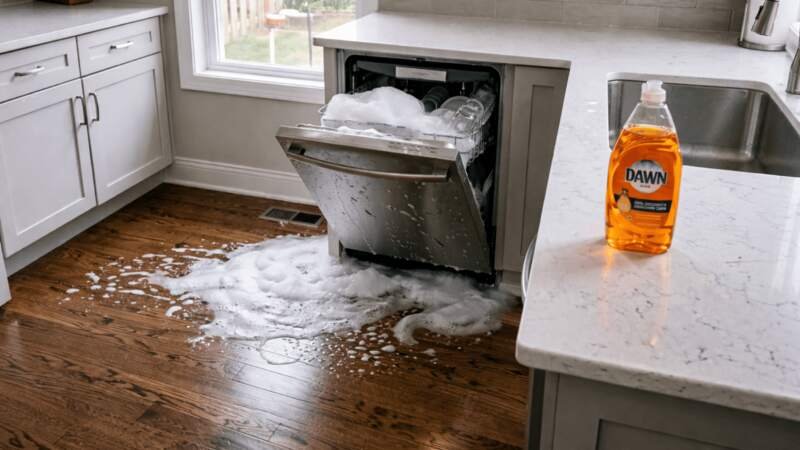
Grabbed the wrong bottle and squirted regular dish soap into your dishwasher instead of detergent? You’re not alone, and you’re not stuck with a kitchen full of bubbles for the rest of the day. Dish soap is built to foam when you agitate it by hand, and a dishwasher’s spray arms agitate it a lot more than your sink ever could. That’s why one squirt in the wrong compartment can turn into suds pouring out from under the door within minutes.
The good news: it’s a fixable, common mistake, not a repair-bill emergency, as long as you act quickly and skip a few tempting shortcuts (looking at you, “just run it again on hot”).
Key Takeaways
- Stop the cycle the moment you notice suds. Every extra minute of agitation makes more foam.
- Table salt and white vinegar break down suds fast and are safe on stainless steel and plastic dishwasher interiors.
- Never restart a normal wash cycle on top of a sudsy tub. Drain it first, or you risk pushing water past the door seal.
- Only detergent made specifically for automatic dishwashers is safe to use going forward. Dish soap, hand soap, and laundry detergent are not substitutes.
Why Dish Soap Causes This Problem in the First Place
Dishwasher detergent and dish soap are both cleaning agents, but they’re formulated for completely different jobs. Dish soap is a high-foaming surfactant, designed to lift grease off dishes while you scrub by hand. Dishwasher detergent, by contrast, is a low-foam or no-foam formula built around enzymes and rinse agents that work inside a sealed, high-pressure machine.
Put dish soap where detergent belongs and the mismatch shows up fast. The spray arms whip the soap into thick foam, the foam fills the tub faster than the pump can clear it, and it pushes past the door gasket and onto your floor. If your dishwasher is a double-drawer model, each drawer runs its own water and spray system, so soap in one drawer won’t affect the other, but it still needs to be cleared out of that drawer on its own.
Is It Safe to Keep Running the Dishwasher Right Now?
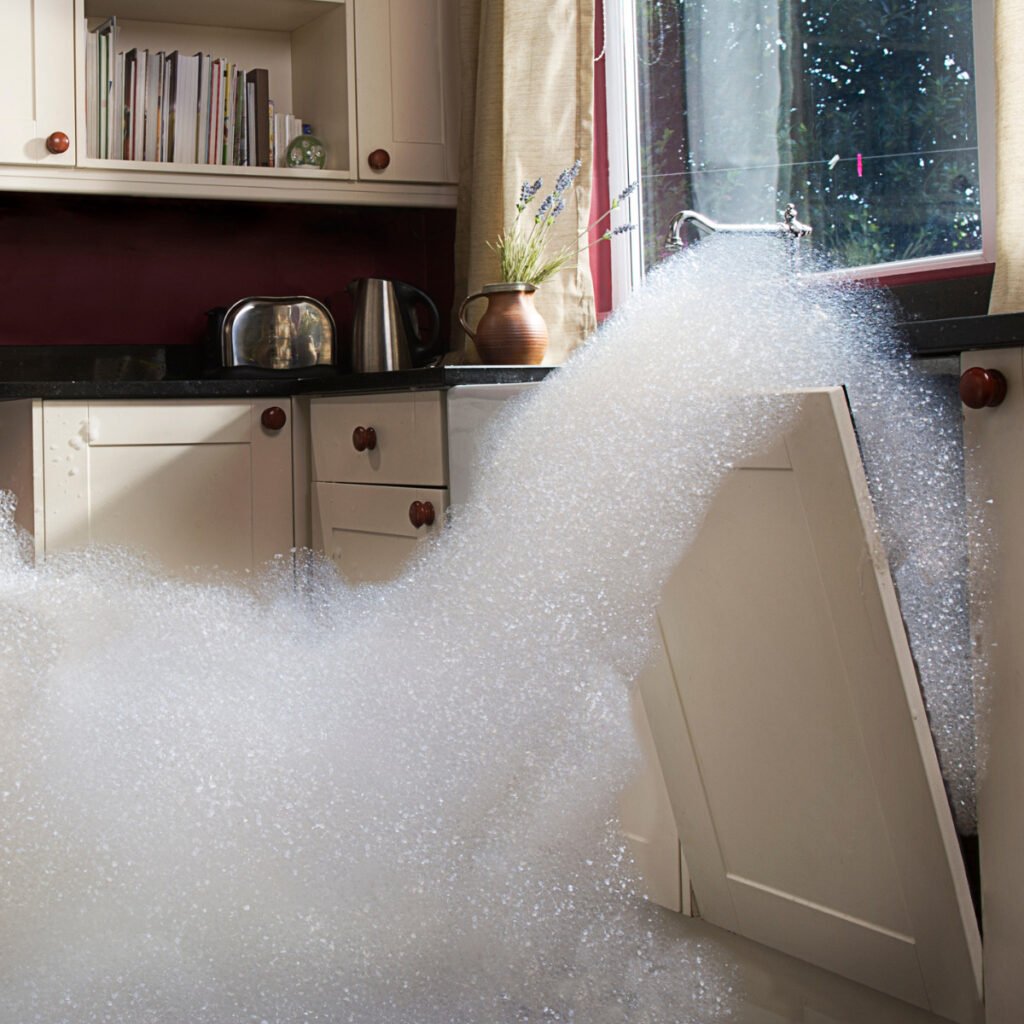
No. Turn it off before you do anything else. According to GE Appliances’ official troubleshooting guidance, when suds or soap foam are visible in the tub, you should shut the dishwasher down and let the foam dissipate before running any further cycles, since it can otherwise force water past the door seal and cause a leak or flood.
How to Get Dish Soap Out of a Dishwasher: Step-by-Step
Step 1: Stop the Cycle Immediately
Hit cancel or open the door as soon as you spot suds. Don’t wait for the cycle to finish “just in case it clears up.” Every additional minute of spray-arm agitation multiplies the foam, and a dishwasher that’s already close to overflowing can push suds out from under the door onto your kitchen floor.
Step 2: Remove the Dishes and Rinse Them
Once the machine is off, pull out the dish rack and rinse each item under running water at the kitchen sink to clear off any soap residue. This also gets your dishes out of the way so you can work in the tub without knocking things around.
Step 3: Scoop or Blot Out the Bulk of the Suds
Use a cup or a towel to remove as much foam and standing liquid as you can before adding anything else. This step matters because a tub that’s already full of suds and water has nowhere for a treatment mixture to go.
Step 4: Break Down the Remaining Suds with Salt and Vinegar
Pour about 1 cup of white vinegar and 2 tablespoons of table salt into the bottom of the tub. The salt helps deflate the bubble structure while the vinegar cuts through the soap film. If you don’t have vinegar on hand, a few tablespoons of non-dairy coffee creamer works too, since the fat content breaks down bubbles in roughly five minutes.
Step 5: Run a Drain Cycle, Not a Wash Cycle
This is the step people get wrong most often. Don’t start a normal wash. Instead, select a drain-only or rinse cycle so the machine pumps the liquid out without re-agitating it into fresh foam. Depending on your model, this may mean advancing the dial to the drain position (mechanical controls) or pressing Start/Reset partway into a cycle (electronic controls) to trigger the pump-out.
Step 6: Wipe Down the Interior
With the tub drained, wipe the door gasket, the bottom of the tub, and the underside of the racks with a towel. Suds tend to cling to rubber seals and can reappear during the next wash if they’re not fully removed. If your machine was recently in a heated dry cycle, let the interior cool first: the heating element can still be hot enough to burn you.
Step 7: Run One or Two Rinse Cycles
Finish with a plain rinse cycle (no detergent) to flush out anything left behind. If you still see foam when you open the door, repeat the vinegar-and-salt treatment and rinse again. Most dish-soap mishaps clear up within two rinse cycles.
What Not to Do When Your Dishwasher Is Full of Suds
- Don’t run a normal wash cycle over standing suds. It just re-whips the foam and pushes more of it past the seal.
- Don’t add more soap or detergent to “cut through” the suds. Any surfactant adds foam; only salt, vinegar, or fat-based additives like creamer break it down.
- Don’t ignore water pooling on the floor. Standing water near a dishwasher’s base can seep under cabinetry and flooring if it’s not wiped up promptly.
- Don’t assume it will just evaporate overnight and be fine. Leftover soap film can cause suds to return on your next real wash cycle if the tub isn’t rinsed clean.
Will Dish Soap Damage Your Dishwasher?
Usually not, if you catch it early. A single sudsy overflow is a cleanup problem, not a mechanical one. The bigger risk comes from repeated or ignored incidents: soap residue that isn’t fully rinsed out can leave a film on the pump filter and spray arm nozzles over time, and any water that escapes past the door seal can affect flooring or cabinetry if it isn’t dried promptly. Using the wrong type or too much detergent is the direct cause of excess sudsing, and the fix is always the same: pump the tub out completely rather than letting suds sit.
How to Prevent This from Happening Again
- Store dish soap and dishwasher detergent in visibly different spots. Keeping them in the same under-sink cabinet is the single biggest reason for mix-ups.
- Buy dishwasher detergent in pods or tablets. Pre-measured pods are harder to confuse with a squeeze bottle of liquid dish soap than a matching liquid detergent would be.
- Label the bottle if you decant products. If you ever transfer detergent into a different container, mark it clearly.
- Double-check before you load the dispenser, especially if someone else in the household usually handles it. A two-second glance at the label prevents a ten-minute cleanup.
- Clean the dishwasher itself on a regular schedule. Whirlpool’s own product support documentation recommends running a dishwasher-cleaner cycle about every 30 days to keep the interior free of residue and odors, which also makes any future suds problem easier to spot and clear.
Double and Two-Drawer Dishwashers: What’s Different
If you’re running a double drawer dishwasher, the fix is the same, just localized. Each drawer has its own water supply, spray system, and drain, so soap added to one drawer stays contained to that drawer. Treat the affected drawer with the vinegar-and-salt method above, run its drain cycle independently, and leave the second drawer alone since it isn’t affected. This is actually one advantage of drawer-style dishwashers over single-tub models: a soap mishap in one compartment doesn’t take your whole dishwasher out of commission.
Frequently Asked Questions
How long does it take for dishwasher suds to go away?
With the salt-and-vinegar method and a proper drain cycle, most suds clear within 15 to 20 minutes. Left untreated, foam can take several hours to dissipate on its own, and you’d still need to manually pump out the standing water.
Can I use laundry detergent or hand soap instead of dishwasher detergent in an emergency?
No. Both are high-foaming formulas, just like dish soap, and will cause the same sudsing problem. Only use detergent labeled specifically for automatic dishwashers.
Why does my dishwasher still smell soapy after I cleared the suds?
A lingering soap smell usually means residue is still sitting in the door gasket, filter basket, or spray arm holes. Run an additional rinse cycle and wipe the gasket by hand; if the smell persists, check the filter for trapped residue.
Is it normal for a little foam to appear even with real dishwasher detergent?
A very small amount of foam can appear if you use more detergent than the load needs, or if the water is unusually soft. Heavy, overflowing suds are a sign the wrong product was used, not a normal detergent reaction.
Can dish soap suds trip my dishwasher’s error codes or damage the pump?
It’s uncommon from a single incident. Excess foam can occasionally confuse water-level sensors on electronic models, which is part of why manufacturers recommend a full drain-and-rinse rather than letting the machine keep running through it.
Conclusion
Putting dish soap in a dishwasher is one of the most common kitchen mix-ups there is, and it’s almost always fixable in under half an hour. Stop the cycle the moment you see suds, clear the tub with salt and vinegar, drain it properly instead of restarting a wash, and finish with a rinse cycle or two. Store your dish soap and dishwasher detergent somewhere clearly separate, and this is one mistake you likely won’t repeat.

Hey, My name is MAMON. I am a SEO content creator and affiliate marketer with over 8 years of experience. I create honest product reviews, in-depth buying guides, and practical how-to articles to help readers make informed decisions. My mission is to provide trustworthy, research-backed content that delivers real value.
Leave a Reply