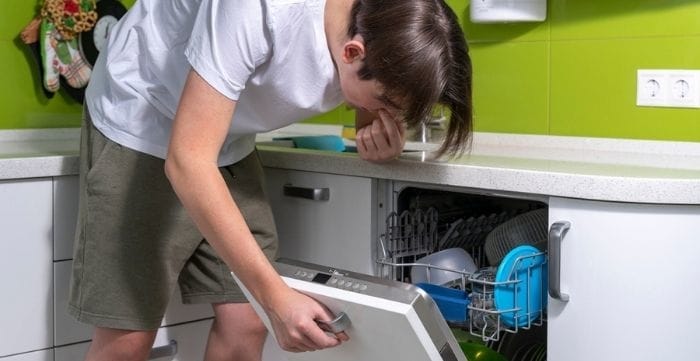
The fastest way to learn how to get burnt plastic smell out of dishwasher interiors is to unplug the unit, let it cool, find and remove the melted item, then run a hot empty cycle with white vinegar followed by baking soda. Nine times out of ten, a piece of plastic, a lid, or a utensil slipped through the rack and landed on the heating element at the bottom of the tub. That’s alarming to smell, but it’s usually harmless once the item is out, whether you’re working with a compact countertop model or a full-size dishwasher.
This guide walks through how to get burnt plastic smell out of dishwasher units safely, how to tell a simple plastic melt from a genuine electrical problem, and the cleaning steps that get rid of the smell for good.
Key Takeaways
- Always unplug or cut power at the breaker before inspecting a dishwasher for a burning smell, since the heating element and any exposed wiring can still be live.
- A melted utensil or container is smelly but not dangerous once removed. A burning smell paired with sparking, tripped breakers, scorch marks, or smoke is an electrical emergency that needs a licensed technician, not a DIY fix.
- White vinegar in a hot empty cycle followed by baking soda on the tub floor is the most commonly recommended combination for clearing lingering burnt plastic odor.
What Actually Causes the Smell?
Before you start cleaning, it helps to know what’s likely behind the odor, since the fix differs slightly depending on the cause. A few common triggers, based on appliance repair guidance, cover most cases:
- A melted plastic item. A container, lid, straw, or utensil that isn’t dishwasher-safe slipped down onto the heating element during the wash or dry cycle and partially melted. This is by far the most common cause and the easiest to fix.
- Burnt food residue. Food particles trapped in the filter or around the heating element can scorch during a hot cycle, producing a smell that can resemble burnt plastic even without any plastic involved.
- An overheating pump or motor. If the circulation or drain motor is struggling, whether from a clog, worn bearings, or age, it can generate a hot, slightly rubbery or smoky smell separate from anything plastic-related.
- A wiring or control board issue. Less common, but more serious. A shorting connection or overheating component in the control board or wiring harness can produce a burning smell that has nothing to do with items inside the tub.
The first three causes are things most homeowners can address themselves. The fourth is the one that warrants calling a professional rather than continuing to run the dishwasher.
How to Get Burnt Plastic Smell Out of Dishwasher: Step by Step
Here’s how to get burnt plastic smell out of dishwasher units the right way, in order.
- Cut the power first. Unplug the dishwasher or switch off its breaker before you touch anything inside. Live wiring in a wet appliance is a real shock risk, and you want the heating element to cool before you handle it anyway.
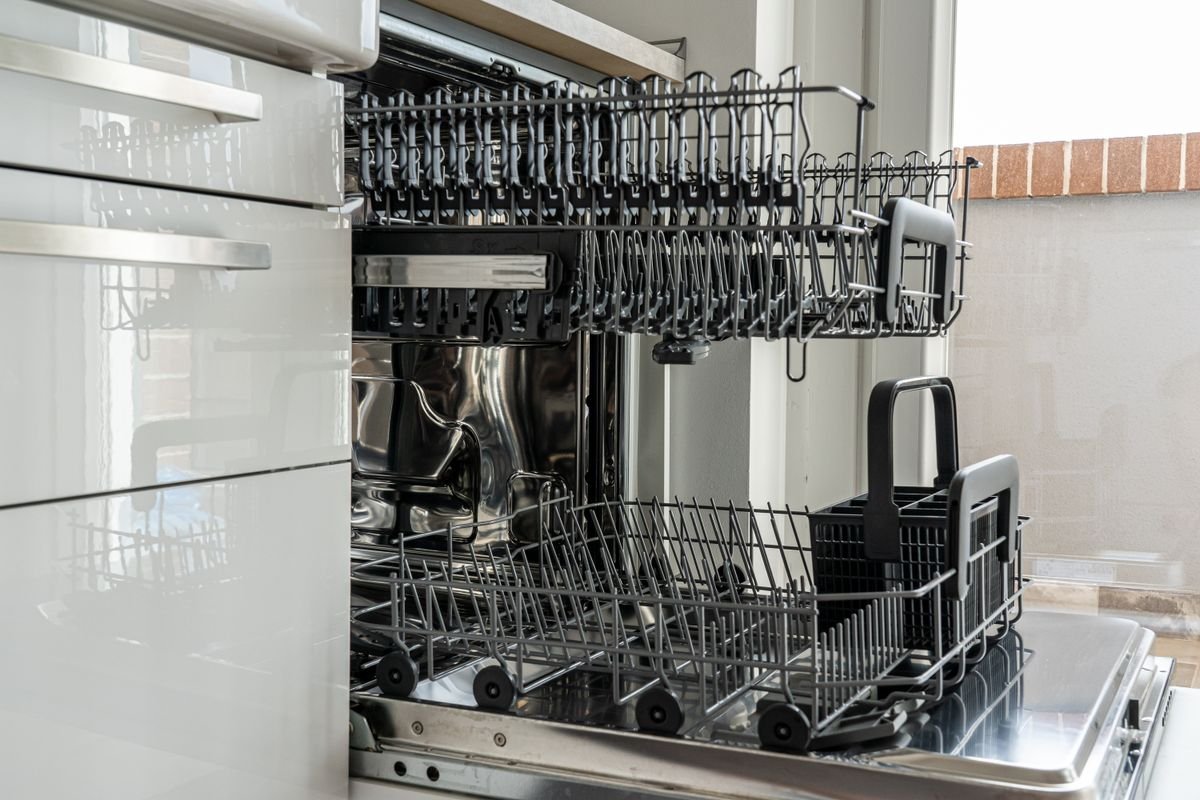
- Let it cool, then empty it. Wait until the interior is no longer hot to the touch. Remove all the dishes and both racks so you can see the tub floor and heating element clearly.
- Find the melted item. Check the bottom of the tub around the heating element, plus the upper and lower racks, for anything blackened, warped, or fused to a surface. A melted lid, straw, or small container is the most common culprit.
- Scrape off residue. Use a non-metallic tool, such as a wooden spoon or plastic scraper, to gently remove any plastic stuck to the heating element. Avoid metal tools that could scratch or damage the coil.
- Run a hot vinegar cycle. Place a bowl or dishwasher-safe cup with 1 to 2 cups of white vinegar on the top rack, then run the hottest empty cycle available. Vinegar breaks down residue and neutralizes lingering odor.
- Follow with baking soda. Sprinkle about a cup of baking soda across the tub floor and run a short hot cycle, or let it sit overnight in an open dishwasher for stubborn smells. Baking soda absorbs odor that vinegar alone doesn’t fully clear.
- Air it out. Once the cycle finishes, prop the door open for a couple of hours so the interior can fully dry and any last trace of odor can escape.
Is the Smell Dangerous? How to Tell Melted Plastic From an Electrical Problem
Most people asking how to get burnt plastic smell out of dishwasher interiors are dealing with a harmless melted item, but it’s worth ruling out anything more serious first. According to House Digest’s breakdown of dishwasher burning odors, a plastic-y smell usually points to overheating, a malfunctioning pump, or a non-dishwasher-safe item that melted against the heating element, while a smell tied to damaged or frayed wiring calls for a professional rather than a DIY fix.
A few signs point toward a genuine electrical issue rather than simple melted plastic:
- The smell shows up while the dishwasher is running, not just when you open it afterward.
- You notice sparking, a tripped breaker, or visible scorch marks near the control panel or wiring.
- The dishwasher is also running poorly, overheating, or making unusual grinding or humming noises.
- You see smoke, however faint.
If any of those apply, stop the cycle immediately, unplug the dishwasher or cut power at the breaker, and don’t run it again until a licensed appliance technician has inspected the wiring, motor, and control board. If it’s just a melted lid or container, the steps above should clear the odor within a cycle or two.
Cleaning the Filter and Interior
If the smell lingers after you’ve removed the melted item and run a vinegar and baking soda cycle, the filter is the next place to check. Food residue and grease trapped in the filter can hold onto burnt or musty smells long after the original cause is gone. Our guide on how to change or clean a dishwasher filter walks through removing, cleaning, and reinstalling it safely.
While you’re in there, wipe down the door gasket and the underside of the door, since grime tends to build up in both spots and can carry its own odor separate from the plastic smell. Pulling the lower rack out entirely gives you a clear view of the spray arm and the tub floor around the heating element, which is worth a quick wipe-down with a damp cloth even if you don’t find any additional melted plastic.
Watch: Dishwasher Burning Smell, What to Check First
A quick visual walkthrough makes it easier to spot melted plastic on the heating element and know what a normal versus concerning smell looks and sounds like.
Preventing Burnt Plastic Smell in the Future
Once you’ve worked out how to get burnt plastic smell out of dishwasher units, a few habits keep it from happening again:
- Check the “dishwasher-safe” label. Not all plastic is rated for the heat of a dishwasher’s dry cycle, especially thin takeout containers, plastic wrap, or single-use cutlery.
- Load plastic on the top rack. The top rack sits farther from the heating element at the bottom of most dishwashers, which lowers the odds of warping or melting.
- Skip the heated dry setting for plastics. Air drying is gentler on plastic items and reduces the risk of anything softening enough to shift and touch the element.
- Do a visual check before starting a cycle. A quick glance through the racks catches anything that’s shifted or fallen before it becomes a problem.
- Keep the filter and interior clean. Regular cleaning, similar to what’s covered in our guide on keeping the dishwasher from smelling between washes, prevents odors of all kinds from building up.
A practical guide from Appliance Analysts makes a similar point: the easiest way to avoid burned plastic altogether is to hand-wash anything you’re not sure is dishwasher-safe, and to keep plastic as far from the heating element as your model allows.
When to Call a Professional
Most burnt plastic smells resolve with the cleaning steps above, but a few situations call for outside help. If the smell keeps coming back after repeated cleaning cycles with no melted item in sight, the heating element itself may be damaged or a wiring connection may be loose. Repair sources note that a defective electronic control board is one of the more common culprits behind a persistent burning smell that isn’t tied to a visible melted item, since the board contains small components that can short out and produce an odor similar to burning plastic.
If you’re not confident inspecting or cleaning around the heating element and wiring, or if your dishwasher is still under warranty, a professional repair avoids voiding coverage or causing further damage. It’s also worth checking your model number and manual before attempting any repair yourself, since heating element access and filter designs vary quite a bit between brands. If the unit is older or has needed multiple fixes, it’s worth weighing a repair against a replacement. Our guide on troubleshooting double drawer dishwasher issues is useful if you’re working with a two-drawer unit and the smell seems isolated to one side.
Frequently Asked Questions
How do I get burnt plastic smell out of my dishwasher fast?
Unplug the dishwasher, find and remove any melted plastic once it’s cool, then run a hot empty cycle with white vinegar on the top rack followed by a cycle or overnight soak with baking soda on the tub floor. Prop the door open afterward to air it out.
Is a burnt plastic smell from the dishwasher dangerous?
Usually not, if it’s a melted lid or container that you can remove. It becomes a safety concern if the smell appears while the dishwasher is running, is paired with sparking or a tripped breaker, or you see any smoke, which points to an electrical issue rather than melted plastic.
Can I use vinegar and baking soda together in a dishwasher?
Yes, but typically in separate cycles rather than mixed together, since combining them directly neutralizes both. Run the vinegar cycle first, then follow with baking soda for the best odor-clearing results.
Will the burnt plastic smell go away on its own?
It can fade over time once the melted item is removed, but a vinegar and baking soda cycle clears it much faster and also disinfects the interior. If the smell doesn’t improve after cleaning, have the unit inspected.
Knowing how to get burnt plastic smell out of dishwasher units comes down to three things: cut the power, find and remove the source, then clean with vinegar and baking soda. Keep an eye on where you load plastic items going forward, and a burnt plastic smell should be a rare, easily solved problem rather than a recurring one.

Hey, My name is MAMON. I am a SEO content creator and affiliate marketer with over 8 years of experience. I create honest product reviews, in-depth buying guides, and practical how-to articles to help readers make informed decisions. My mission is to provide trustworthy, research-backed content that delivers real value.
Leave a Reply