Old kitchen knives don’t belong in a trash bag on their own, and they don’t belong in your curbside recycling bin either. A blade doesn’t stop being sharp just because it’s dull for cutting food. It can still slice through a garbage bag, a recycling worker’s glove, or your own hand while you’re getting rid of it. This guide walks through every safe option for how to dispose of kitchen knives, in the order you should actually consider them. It starts with the one that keeps the most value out of a landfill.
Key Takeaways
- Never drop a loose knife in the trash or curbside recycling. Wrapped or not, it’s a real risk for sanitation-worker injuries from household sharps.
- Donation and scrap-metal recycling both keep a usable blade in circulation instead of a landfill. Scrap value can even be worth real money for premium steel.
- If trash is genuinely your only option, wrap the blade in cardboard or thick cloth, tape it tightly, and set it apart from other trash.
- Check your city or county’s website first. Some municipalities have specific rules for how sharp objects go into household trash.
- U.S. “sharps disposal” laws generally cover medical sharps like needles, not kitchen knives. Don’t expect a dedicated legal pathway the way you would for a syringe.
How to Dispose of Kitchen Knives: Decide If It’s Actually Done First
Before you dispose of anything, check whether the knife is really beyond use. A loose handle, surface rust, or a dull edge often aren’t disposal-worthy problems. A trip to a sharpening service, or a look at the right whetstone grit for your knives, can bring a “done” blade back to useful life. Genuine disposal candidates look different. Think a snapped tip, a cracked handle that can’t be re-riveted, or a blade ground down so many times it’s lost its shape.
If you decide the knife has to go, here is how to dispose of kitchen knives the right way. Work through the options below roughly in order. Each one is better for the environment, your wallet, or someone else’s kitchen than the next.
Option 1: Donate a Knife That Still Works
A knife with a solid handle and a functional edge is worth more to someone else than it is in a landfill. Thrift stores, women’s shelters, soup kitchens, and school culinary programs regularly accept usable kitchen knives. It’s worth calling ahead, though, since some charities decline blades for liability reasons and only take them if a staff member specifically signs off. Wash the knife and dry it completely first. Then wrap the blade before dropping it off so nobody at the donation center gets cut sorting the bin.
Option 2: Recycle It as Scrap Metal
Most kitchen knives are metal, and metal doesn’t belong in a landfill if there’s a recycler nearby who’ll take it. Start with a simple magnet test: hold a magnet to the blade. If it sticks, you’ve got a ferrous metal like carbon or stainless steel, which most scrap yards accept readily. If the magnet doesn’t grab, the blade may be a non-ferrous alloy or a specialty steel. It’s worth asking the recycler directly rather than guessing. Higher-end steels, especially the kind used in premium Japanese-style blades, can sometimes fetch a small payout instead of just a free drop-off.
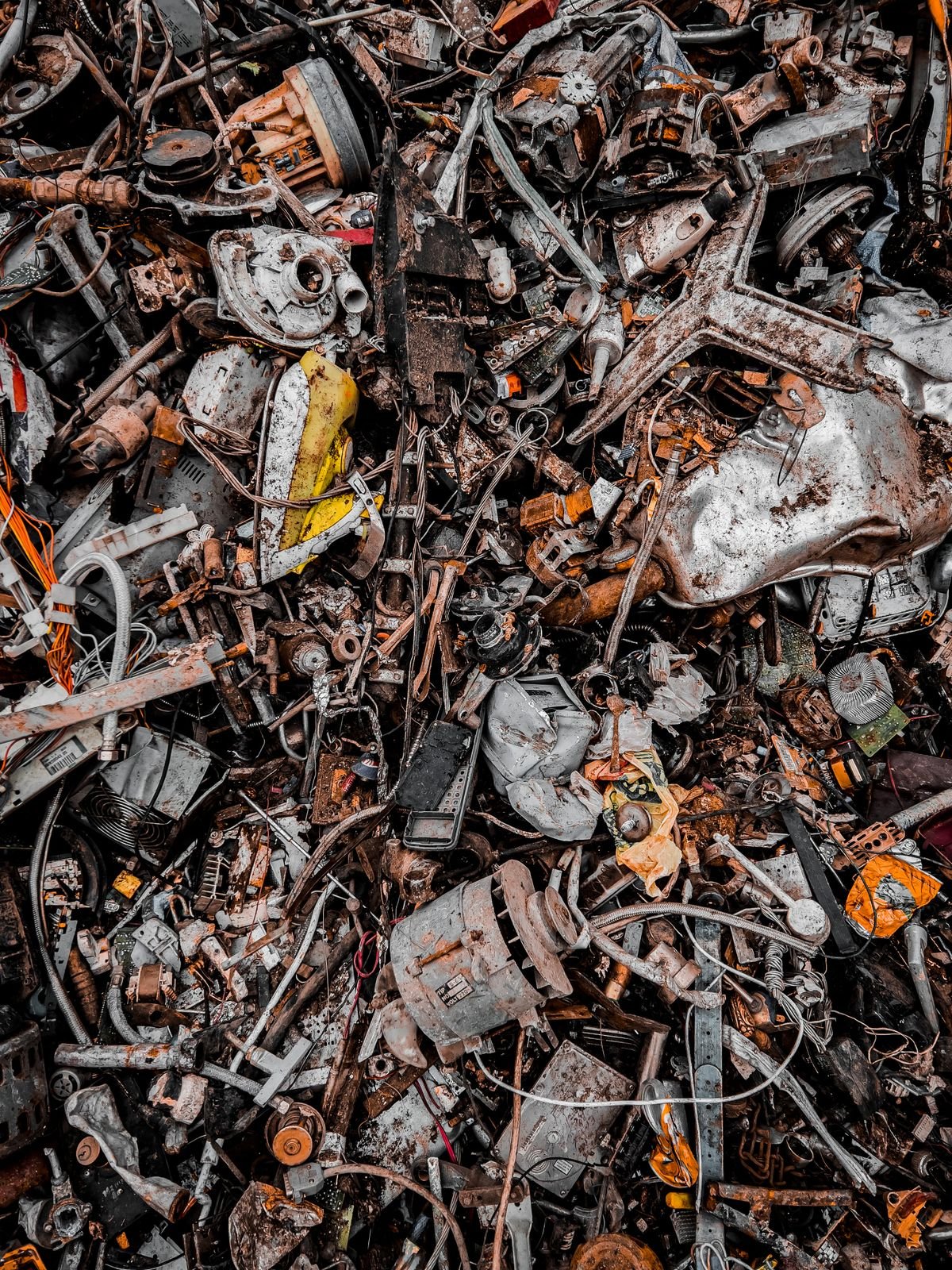
Not every curbside recycling program accepts loose metal like this, so call your local recycling center or check its website before you show up. Many require sharp items to be brought inside to a staff member rather than left in a bin. Some counties also run periodic household hazardous waste (HHW) collection events that accept sharp items like knives alongside batteries and chemicals. It’s worth checking your county’s solid waste department page for an upcoming date.
Option 3: Resell It If It’s Worth Something
If the knife isn’t damaged, just outdated in your kitchen, reselling can put a little money back in your pocket while keeping it in use. Knife sharpening shops, cutlery stores, and online resale marketplaces are all reasonable outlets. Name-brand or Japanese steel knives hold resale value especially well, even used. Photograph the blade clearly and disclose any wear honestly. Let a buyer who wants a project knife take it off your hands instead of a landfill.
If you’re shipping a sold knife, USPS, UPS, and FedEx all allow standard kitchen knives in the mail. USPS specifically advises against marking the outside of the package to indicate what’s inside, which is the opposite instinct many sellers have. Pack it securely in rigid packaging with the blade immobilized. Check that the knife is legal to own at the buyer’s destination before you ship, since a small number of blade types face local restrictions.
Option 4: Check for a Local Sharps or Amnesty Program
Some countries run dedicated knife amnesty programs. The UK, for example, has neighborhood knife amnesty bins in cities like London specifically so residents have somewhere safe and anonymous to surrender blades. Dedicated U.S. knife amnesty programs are far less common. For most American readers, the practical equivalent is a call to your local police non-emergency line or your municipal solid waste department. Either one can tell you whether your area has a sharps or hazardous-item drop-off that accepts knives.
It’s worth noting that U.S. state sharps disposal laws are generally written for medical sharps, like needles and syringes, rather than kitchen knives specifically. That means a kitchen knife usually falls under general household waste rules rather than a dedicated legal disposal pathway. That’s exactly why the precautions in this guide matter. Without a specialized program, safe wrapping and clear handling are what actually prevent injuries.
Trash Disposal: The Last Resort, Done Right
If donation, recycling, resale, and local drop-off programs are all off the table, household trash is the fallback, but it has to be done deliberately.
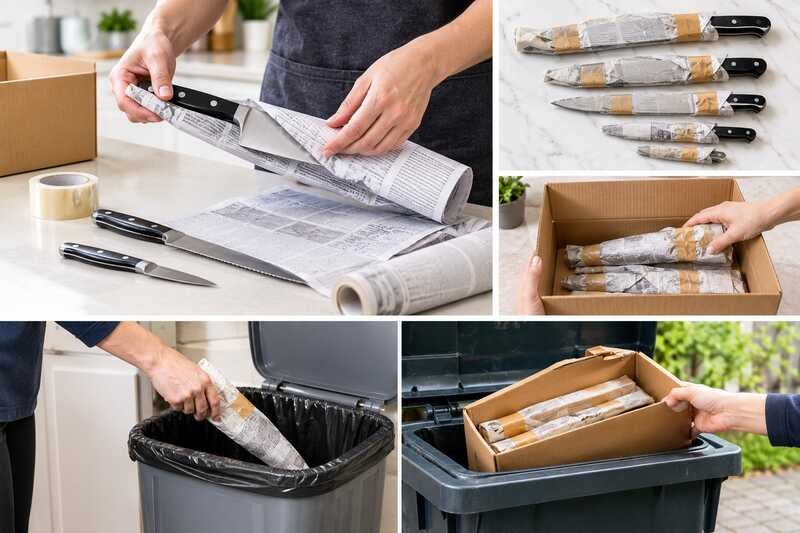
- Wrap the blade in several layers of cardboard, thick cloth, or newspaper. Cover the tip and the full length of the edge, not just the middle of the blade. Bob Vila’s knife disposal guide recommends the same approach, calling for multiple layers of newspaper taped so the blade can’t shift.
- Tape it down tightly. Heavy-duty packing tape or duct tape works; the goal is that nothing can shift or poke through during transport and handling.
- Consider labeling the package. Writing “SHARP OBJECT” on the outside in permanent marker is a precaution some municipal waste guides recommend for household trash. It’s not universal, though, so check your local sanitation department’s own guidance if you want to confirm their preference.
- Place it inside a rigid container if you have one, like an empty plastic bottle or small box, for an extra layer of protection against punctures.
- Put it on top of the trash, not buried at the bottom, and let other household members know it’s there.
This isn’t excessive caution. Sanitation workers handle dozens of trash bags an hour by feel, often without seeing what’s inside each one. An unwrapped blade is exactly the kind of hazard that causes real injuries. For anything more involved than a single kitchen knife, like clearing out a whole drawer of old cutlery, our guide to preventing kitchen cuts is worth a look. It covers safe handling techniques that apply just as well to sorting and disposing of knives as they do to using them.
Disposing of a Full Knife Set or Block
Clearing out an entire knife block is a bigger job than tossing a single blade, and it’s worth sorting before you touch any disposal method. Separate the set into three piles: knives worth donating or reselling, knives worth recycling as scrap, and knives that genuinely need to go in the trash.
Wrap each blade individually rather than bundling several together in one wrap. A bundle of blades can shift against each other during handling, and a wrap that holds one knife securely often isn’t enough padding for several. If you’re also getting rid of the block itself, most wooden or bamboo knife blocks can go in regular household trash or a wood-recycling stream. Handle them separately from the blades that were inside them.
Special Case: Ceramic Blades
Ceramic knives don’t behave like metal ones when they fail. They don’t bend or dull the way steel does, they shatter, and the fragments can be sharper and harder to see than broken glass. Ceramic blades can’t go through standard metal recycling, since scrap yards have no use for zirconium oxide. Wrap a broken or worn ceramic blade in multiple layers of thick padding, more than you’d use for steel. Then check with your local waste facility about whether it accepts ceramics as household trash or wants it handled as a specialty item. A dustpan and thick gloves are worth keeping nearby if the blade has already shattered, since fragments can scatter well past where the knife landed.
A Note on Electric and Serrated Knives
Electric knife blades and serrated bread knives follow the same core rules as a standard chef’s knife. Their shape makes wrapping a little trickier, though, since the serrations can catch on soft materials. Use a rigid wrap, like a folded piece of cardboard taped along both edges, rather than cloth alone. That keeps the teeth from working their way through during handling. If the blade itself is simply dull rather than damaged, it’s worth checking how to sharpen an electric knife blade first. Replacement should be a last resort, not the first move.
Frequently Asked Questions
A few questions come up often once people start looking into safe disposal.
Can I put a kitchen knife in my curbside recycling bin?
No. Most curbside programs don’t accept loose sharp objects at all. Take metal knives to a scrap yard or a recycling center that specifically accepts sharps. Some centers instead want them handed to staff directly rather than placed in a bin, so it’s worth asking first.
Is it illegal to throw away a knife?
Not usually, but some municipalities restrict how sharp objects can go into household trash and may fine residents who discard them loose or unlabeled. Check your local waste authority’s rules before assuming standard trash pickup is fine.
How do I know if my knife’s metal is recyclable?
Try the magnet test. If a magnet sticks to the blade, it’s a ferrous metal that most scrap recyclers accept. If it doesn’t stick, call ahead and ask, since non-ferrous or specialty alloys sometimes need a different recycling stream.
What’s the safest way to throw away just one old knife?
Wrap it in cardboard or thick cloth, tape it securely, and place it on top of your regular trash rather than at the bottom of the bag. Labeling it clearly is a good extra step where your local sanitation department recommends it.
Can I mail a knife to sell it online?
Generally yes, through USPS, UPS, or FedEx, as long as the knife itself is legal at the destination. Pack it securely and avoid marking the package’s contents on the outside, which USPS specifically advises against for shipped blades.
Do I need to remove the handle before throwing a knife away?
No, and it’s usually safer not to try. Prying a handle off a fixed-blade knife just adds another sharp edge to manage during disassembly. Wrap the whole knife as a single unit instead, following the same layered-wrapping steps for any other blade.
Conclusion
Knowing how to dispose of kitchen knives safely takes more thought than tossing one in the trash, but not much more. Check whether it’s actually beyond saving first. If safe handling is really the only thing standing between you and keeping it, it might not need to go at all. If it is, work through donation, scrap recycling, resale, or a local drop-off program before trash becomes the answer. And if trash really is the only option left, a few minutes of wrapping and careful placement is the difference between a routine disposal and someone getting hurt.

Hey, My name is MAMON. I am a SEO content creator and affiliate marketer with over 8 years of experience. I create honest product reviews, in-depth buying guides, and practical how-to articles to help readers make informed decisions. My mission is to provide trustworthy, research-backed content that delivers real value.
Leave a Reply