
Small kitchens, rental apartments, and older homes often don’t have room or plumbing for a built-in dishwasher. A portable dishwasher solves that without any permanent construction, but knowing how to connect a portable dishwasher correctly the first time saves you a wet floor and a frustrating return trip to the hardware store. This guide covers the full process, including one detail a lot of older guides get backward: which faucets actually work safely with a portable dishwasher.
The appeal for renters in particular is that nothing about this process involves altering the home’s existing plumbing. The faucet adapter is removable in seconds, which means you can take the dishwasher with you when you move and leave the kitchen exactly as you found it.
Key Takeaways
- A standard faucet with an exposed, threaded spout is the ideal hookup, not a pull-out or pull-down faucet.
- Major faucet manufacturers specifically warn against connecting a portable dishwasher to a pull-out or pull-down faucet, since pressure fluctuations during the wash cycle can rupture the flexible hose.
- Most portable dishwashers use a standardized 55/64″-27 female or 15/16″-27 male aerator thread, so a universal adapter kit works with the majority of standard faucets.
- The same faucet connection typically handles both fill and drain, since most portable dishwashers route wastewater back out through the sink.
What You Need Before Connecting a Portable Dishwasher
- The faucet adapter and aerator adapter that came with your dishwasher
- A pair of pliers, in case the aerator doesn’t loosen by hand
- A small plastic bag to store the original aerator
- A towel or two for any drips during the swap
- Your dishwasher’s owner’s manual, since exact hose and adapter designs vary by brand
Check Your Faucet Type First
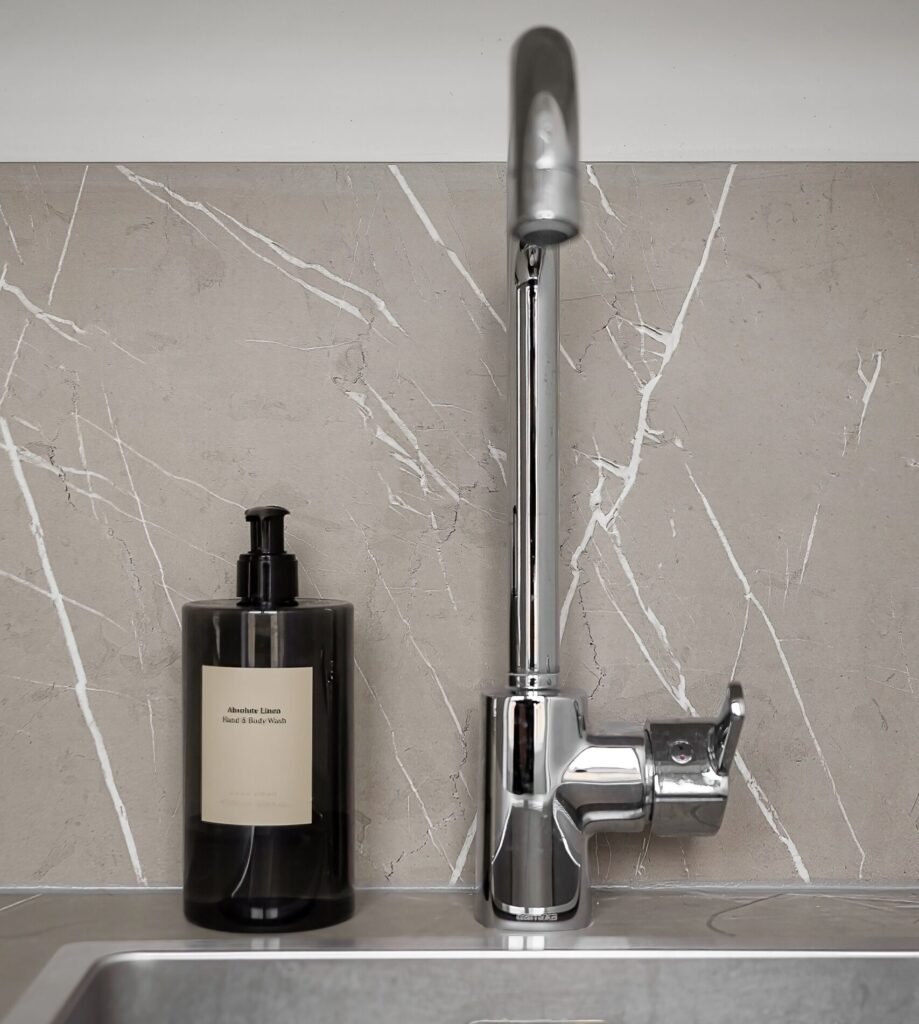
This is the step most older guides skip, and it matters more than any other part of the process. A standard kitchen faucet, one with a fixed spout and an exposed threaded aerator, is the ideal setup for a portable dishwasher. Pull-out and pull-down faucets, the kind with a retractable sprayer built into the spout, are a different story.
Delta Faucet’s own installation guidance is direct about this: portable dishwashers should never be connected to a pull-out or pull-down faucet, because pressure fluctuations during the wash cycle can cause the flexible hose inside the faucet to rupture. That flexible hose is built to feed a sprayer, not to handle the on-and-off pressure changes a dishwasher creates over a full cycle. If your kitchen only has a pull-out or pull-down faucet, don’t force a connection. The safer paths are installing a dedicated dishwasher valve under the sink, or, in a rental, checking with your landlord about a low-cost faucet swap.
How to Connect a Portable Dishwasher: Step-by-Step
1. Remove the faucet aerator
Locate the aerator at the tip of your faucet spout and unscrew it by hand, turning counterclockwise. If it’s stuck, wrap it in a cloth and use pliers, turning gently to avoid scratching the finish.
2. Store the aerator somewhere you’ll remember
Put it in a labeled plastic bag and keep it in a kitchen drawer. You’ll want it back if you ever remove the dishwasher hookup permanently or move.
3. Install the faucet adapter
Screw the adapter that came with your dishwasher onto the now-exposed faucet threads. Most portable dishwashers use a standardized 55/64″-27 female or 15/16″-27 male thread, which fits the majority of standard kitchen faucets without any additional parts. Hand-tighten until snug; you shouldn’t need tools for this step unless the fit feels loose.
4. Position the dishwasher next to the sink
Roll or carry the dishwasher into place beside the sink, leaving enough slack in its power cord to reach a nearby outlet without strain.
5. Pull the hoses from the storage compartment
Open the storage compartment on the back of the unit and pull out the water supply hose and coupler. Most models keep the hose neatly wound here between uses.
6. Connect the hose to the faucet adapter
Pull down on the hose’s locking collar, fit the connector onto the faucet adapter, and release the collar once it snaps into place. A properly seated connection should feel firm and not wiggle when tugged gently. Whirlpool’s own portable dishwasher installation instructions describe this same snap-and-release motion, since the coupler design is similar across most major brands.
7. Turn on the water and test for leaks
Turn the faucet on fully and let water run through the connection for a few seconds before starting a cycle. Check the adapter and hose connector closely; you shouldn’t see any dripping at either joint.
Portable vs. Countertop Dishwashers: What’s the Difference
Both styles connect to the faucet the same way, but they differ in size and how they live in your kitchen. A rolling portable dishwasher is close in capacity to a built-in model and stores under a counter or in a closet between uses, while a countertop dishwasher sits permanently on the counter and handles smaller loads. If you’re still deciding which fits your kitchen better, our portable dishwasher buyer’s guide compares the leading models side by side, and our breakdown of how a portable dishwasher works covers the internal mechanics if you’re curious what happens once the water starts flowing.
Water Pressure and Flow Considerations
Portable dishwashers are designed to run on standard household water pressure, typically 40 to 60 psi, without any adjustment on your part. That said, if your kitchen sink already has noticeably weak pressure, expect wash cycles to run longer than the manufacturer’s stated time, since the unit needs a certain fill rate to reach its target water level before heating and washing begin. This isn’t a sign anything is connected incorrectly, it’s simply a function of how much water your faucet can deliver per minute. If cycles are taking unusually long, it’s worth checking that the faucet is turned on fully rather than partway, since a partially open valve is a common and easy-to-miss cause.
What to Do If Your Faucet Isn’t Compatible
Some newer faucets, particularly ones with a hidden or cached aerator behind a decorative spout, don’t accept a standard adapter out of the box. If the adapter included with your dishwasher doesn’t thread on cleanly, a universal aerator adapter kit with multiple thread sizes solves the problem for most standard (non pull-out) faucets. When even that doesn’t work, or if your only faucet is a pull-out or pull-down style, the more reliable long-term fix is a dedicated dishwasher valve installed under the sink, which taps into the water supply line directly rather than relying on the faucet spout at all. That’s a bigger step than most people want to take for a portable appliance, but it’s worth it if you plan to use the dishwasher regularly.
How Draining Works on a Portable Dishwasher
One detail that surprises first-time users: most portable dishwashers don’t need a separate drain connection. The same coupler that supplies fresh water to the machine also carries wastewater back out through the faucet and into the sink drain during the pump-out portion of the cycle. That’s part of why the faucet connection needs to be secure in both directions, since it’s doing double duty. If you hear a distinct pumping sound partway through a cycle followed by draining water in the sink, that’s the dishwasher emptying itself exactly as designed.
Common Mistakes When Connecting a Portable Dishwasher
- Using a pull-out or pull-down faucet anyway. Even if the adapter physically threads on, the flexible internal hose isn’t rated for the pressure swings a wash cycle creates.
- Overtightening the adapter. Cross-threading or forcing the adapter can crack the fitting or damage your faucet’s threads. If it doesn’t thread on smoothly by hand, stop and check the size before reaching for pliers.
- Losing the original aerator. Without it, your faucet loses its flow regulation and splash control the moment you disconnect the dishwasher.
- Skipping the leak check. A slow drip at the adapter joint is easy to miss until it’s caused water damage to the cabinet below.
- Forgetting to reconnect the coupler firmly. A partially seated connector can pop loose mid-cycle under pressure, sending water across the kitchen floor.
Using and Storing Your Portable Dishwasher After Connecting
Once the connection is tested and leak-free, load your dishes and start a normal cycle to confirm everything performs as expected. Many portable models, including double drawer designs, hold nearly as many place settings as a built-in unit, so it’s worth running a full load the first time to see how your dishes fit. When you’re done, disconnect the hose from the faucet adapter, roll the dishwasher out of the way, and leave the adapter in place if you’ll be reconnecting again soon. If you won’t need the dishwasher for a while, unscrew the adapter and reinstall your original aerator so the faucet functions normally in the meantime.
Frequently Asked Questions
Can I connect a portable dishwasher to a pull-down faucet if I’m careful?
It’s not recommended regardless of care taken. The risk isn’t about technique, it’s that the faucet’s internal flexible hose isn’t built to handle a dishwasher’s pressure cycling, and a rupture can happen without warning.
Do all portable dishwashers use the same size adapter?
Most use a standardized 55/64″-27 or 15/16″-27 thread, but always check your specific model’s manual, since a small number of brands use proprietary fittings.
Can I leave the faucet adapter installed permanently?
Yes, many people do, especially if they run the dishwasher often. Just be aware that the adapter changes your faucet’s spray pattern and flow slightly compared to the original aerator.
Why is water leaking from the faucet adapter?
This usually means the adapter isn’t fully seated or the threads don’t quite match your faucet. Remove it, check for cross-threading, and make sure any included rubber washer is properly seated before reattaching.
Does a portable dishwasher need its own outlet?
It needs access to a standard 120-volt grounded outlet nearby. It doesn’t require a dedicated circuit the way a built-in dishwasher typically does, but avoid sharing the outlet with other high-draw appliances during a cycle.
How do I know if my faucet is a pull-out or pull-down style?
If the entire spray head detaches from the spout and extends on a hose, it’s a pull-out or pull-down design. A standard faucet has a fixed spout with the aerator threaded directly into the tip, with no detachable sprayer built in.
Final Thoughts
Connecting a portable dishwasher comes down to one main decision, confirming your faucet type, and one careful mechanical step, seating the adapter correctly. Skip the pull-out or pull-down faucet regardless of how tempting the fit looks, and always run a leak check before walking away. Get those two things right and the rest of the process, from positioning the unit to running your first cycle, is genuinely as simple as older guides always promised.

Hey, My name is MAMON. I am a SEO content creator and affiliate marketer with over 8 years of experience. I create honest product reviews, in-depth buying guides, and practical how-to articles to help readers make informed decisions. My mission is to provide trustworthy, research-backed content that delivers real value.
Leave a Reply