
A rotisserie chicken from your local store is one of the fastest ways to get dinner on the table. Pair it with mashed potatoes and vegetables, toss it cold over greens with a light dressing, or shred it into enchiladas, tacos, and soup. It’s one of the best deals in the grocery store, which is exactly why so many people buy one and only eat half.
So, how long can rotisserie chicken stay in the refrigerator? According to the USDA, cooked rotisserie chicken stays safe for 3 to 4 days in the refrigerator when it’s held at 40°F (4°C) or below.<cite index=”5-1″>If a ready-prepared rotisserie chicken is hot at the time of purchase and won’t be used within 2 hours, cut it into several pieces and refrigerate it</cite>. Get that timing wrong and the chicken moves out of the safe zone fast, no matter how good it still looks or smells.
Key Takeaways
- Cooked rotisserie chicken lasts 3-4 days in the fridge at 40°F or below, and up to 4 months in the freezer, according to USDA guidance.
- Refrigerate or eat rotisserie chicken within 2 hours of purchase (1 hour if it’s above 90°F outside), per FSIS.
- Bacteria multiply fastest between 40°F and 140°F, the “danger zone,” so cooling speed matters as much as total storage time.
- Smell, texture, and color aren’t reliable enough on their own. Combine them with the date you refrigerated the chicken.
- When in doubt, throw it out. Foodborne illness isn’t worth the last drumstick.
How Long Does Rotisserie Chicken Really Last in the Refrigerator?
Three to four days is the number to remember. That’s true whether the chicken is whole, carved into pieces, or shredded, and it applies to store-bought, homemade, and restaurant rotisserie chicken alike. The clock starts the moment the chicken goes into the fridge, not the moment you bought it or cooked it.
This guidance comes directly from the USDA Food Safety and Inspection Service (FSIS), which tracks how quickly bacteria like Salmonella, Campylobacter, and Listeria grow on cooked poultry held at refrigerator temperatures. Refrigeration slows bacterial growth. It doesn’t stop it. That’s the entire reason the 3-4 day window exists instead of a longer one.
A few things shorten that window in practice:
- A fridge warmer than 40°F. Even a few degrees matter. Keep an appliance thermometer in your fridge if the built-in display feels unreliable.
- A long gap between purchase and refrigeration. A chicken that sat on the counter for three hours has already lost time off its 3-4 day clock before it even reaches the shelf.
- Storing it whole instead of portioned. A whole bird cools more slowly than pieces, which means more time in the temperature danger zone.

The 2-Hour Rule: Why Cooling Time Matters
Bacteria grow fastest between 40°F and 140°F, a range food safety agencies call the “danger zone.” <cite index=”81-1″>Bacteria grow most rapidly in this range, doubling in number in as little as 20 minutes</cite>. A hot rotisserie chicken sitting on your counter is sitting right in the middle of that range.
That’s why the guidance is so specific: get the chicken refrigerated within 2 hours of cooking or purchase, or within 1 hour if the ambient temperature is above 90°F, such as a hot car in summer. If you’re not eating it right away, don’t wait for it to cool on the counter first. Carve it, portion it into shallow containers, and refrigerate it while it’s still warm. Shallow, uncovered-until-cool containers lose heat faster than a whole bird wrapped tight in its original plastic dome.
Here’s a short video that walks through the process step by step, including where to place the chicken in your fridge and how to portion it for faster cooling.
How to Store Rotisserie Chicken Properly
Getting the full 3-4 days out of your chicken comes down to a handful of habits, not any special equipment.
- Cool it fast. Remove the chicken from its original packaging and let steam escape for a few minutes. Don’t seal a hot bird into an airtight container right away. Trapped steam creates condensation, and moisture speeds up bacterial growth.
- Portion before you refrigerate. Pull the meat off the bone, or at least separate breasts, thighs, and wings. Smaller portions chill faster and reheat more evenly later.
- Use an airtight container or a sealed bag. Glass containers with locking lids and heavy-duty freezer bags both work. Squeeze out excess air to slow oxidation and limit how much the meat dries out.
- Store juices separately. If there’s pan juice or broth in the packaging, keep it in its own container. It’s useful for gravy or soup later, and mixing it with the meat can shorten shelf life.
- Label and date it. A piece of tape and a marker solve most “is this still good?” debates before they start.
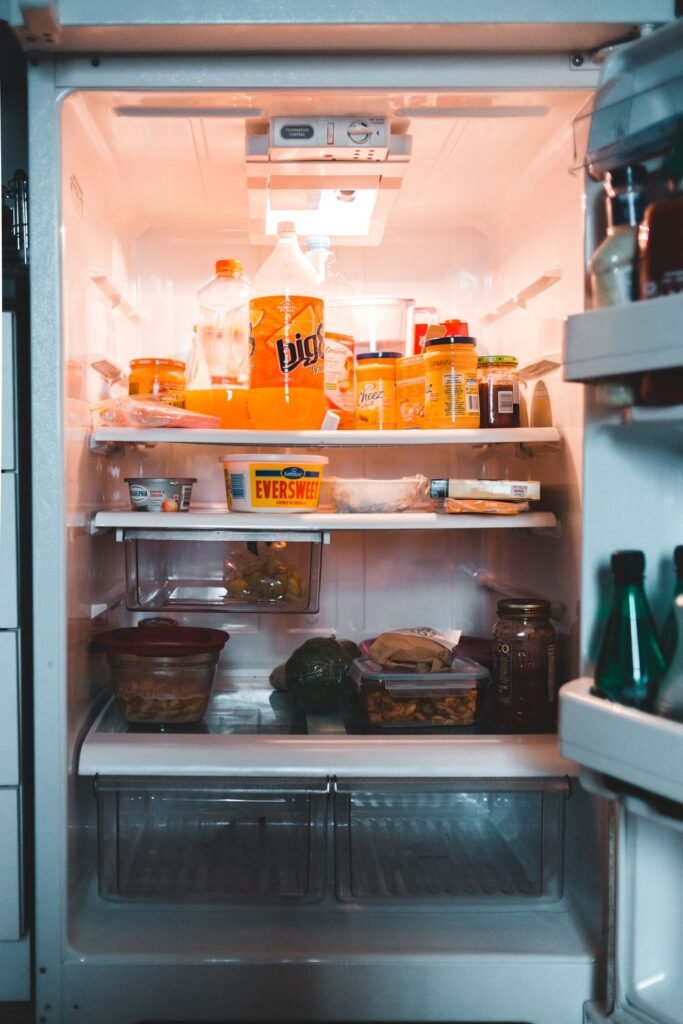
- Keep the fridge at 40°F or below. <cite index=”86-1″>Cooked leftover meats should be reheated to 165°F or kept safe to eat cold if properly cooled and stored</cite>, so temperature control matters at every stage, not just at the start.
Can You Refrigerate Rotisserie Chicken After Thawing?
Yes, but the same 3-4 day clock applies, and how you thawed it matters. If the chicken was thawed in the refrigerator, it’s safe to keep in the fridge for another 3-4 days before cooking or eating. If you thawed it in cold water or the microwave, the USDA recommends cooking or eating it immediately, since those faster thawing methods bring parts of the chicken into the danger zone.
Never thaw rotisserie chicken on the counter. It sounds convenient, but the outer layers reach unsafe temperatures long before the center is even close to thawed.
Freezing Rotisserie Chicken for Long-Term Storage
If four days isn’t enough time to use up the whole bird, the freezer is the better move over pushing the fridge timeline. Rotisserie chicken keeps well in the freezer for up to 4 months at a constant 0°F, and it stays technically safe indefinitely at that temperature, though quality (texture, moisture, flavor) starts to decline the longer it sits.
A few freezing tips that actually make a difference:
- Debone and portion first. Frozen chicken on the bone takes longer to thaw and is harder to divide into usable amounts later.
- Wrap tightly. Freezer bags with the air pressed out, or heavy-duty foil and freezer paper, both limit freezer burn far better than a loosely closed bag.
- Freeze in meal-sized portions. You’ll thaw only what you need instead of defrosting the whole batch for one recipe.
- Label everything. Write the freeze date on the bag. “Rotisserie chicken, frozen [date]” takes five seconds and saves guesswork three months from now.
Signs Your Rotisserie Chicken Has Gone Bad
Even chicken stored correctly can spoil, especially near the end of its 3-4 day window. Check for:
- A sour or unusual odor. Fresh cooked chicken smells neutral to slightly savory. A sour, ammonia-like, or otherwise “off” smell is a clear signal to toss it.
- A slimy or tacky texture. Fresh chicken should feel firm, not sticky or filmy.
- Visible mold. Any fuzzy spots, regardless of color, mean the chicken needs to go in the trash, not the reheat pile.
- Color changes. Fresh cooked chicken is white to light brown. A greyish or greenish tint is a spoilage sign, not a lighting trick.
If you notice any of these, don’t taste-test to confirm. Throw it away. The USDA’s rule of thumb applies here: when in doubt, throw it out.
Breaking Down Your Rotisserie Chicken
Breaking the chicken down right after purchase makes every later step easier, from cooling to portioning to reheating.
Start by removing the skin while the chicken is still warm; it comes off more easily than once the bird has cooled and the fat has firmed up. From there, pull the meat into breast, thigh, wing, and drumstick portions, or shred it directly if you’re planning to use it in soups, tacos, or salads. Keep the bones. A rotisserie chicken carcass makes a solid base for homemade stock, and it freezes well in its own bag until you’re ready to use it.
Frequently Asked Questions
How long can rotisserie chicken sit out before it’s unsafe? No more than 2 hours at room temperature, or 1 hour if the temperature is above 90°F. After that, the USDA recommends discarding it rather than refrigerating it.
Is it safe to eat cold rotisserie chicken straight from the fridge? Yes. Since it’s already fully cooked, cold rotisserie chicken is safe to eat directly from the fridge within the 3-4 day window, no reheating required.
Does rotisserie chicken last longer than home-cooked chicken? No. Store-bought rotisserie chicken follows the same 3-4 day refrigerator guideline as any other fully cooked chicken, homemade or restaurant leftovers included.
Can I refreeze rotisserie chicken after thawing it? Only if it was thawed in the refrigerator and hasn’t sat past its 3-4 day window. Chicken thawed in cold water or the microwave shouldn’t be refrozen raw or without cooking first.
What’s the best container for refrigerating rotisserie chicken? An airtight container or a sealed freezer bag with the air pressed out. Both limit moisture loss and keep odors from spreading to other food in the fridge.
Conclusion
Rotisserie chicken earns its reputation as a weeknight shortcut, but the clock on it starts the moment it leaves the store’s heat lamp. Refrigerate it within 2 hours, keep your fridge at 40°F or below, and plan to finish it within 3 to 4 days, or move it to the freezer for up to 4 months. Watch for smell, texture, and color changes near the end of that window, and when something seems off, don’t risk it. A few minutes of proper storage is a lot cheaper than a night of foodborne illness.
For more on keeping perishable food safe, see how long cooked broccoli lasts in the fridge, how to wrap meat for freezing, and how to test your refrigerator’s thermostat to make sure it’s actually holding 40°F.
Sources: USDA FSIS: Chicken from Farm to Table · USDA FSIS: “Danger Zone” (40°F-140°F)

Hey, My name is MAMON. I am a SEO content creator and affiliate marketer with over 8 years of experience. I create honest product reviews, in-depth buying guides, and practical how-to articles to help readers make informed decisions. My mission is to provide trustworthy, research-backed content that delivers real value.
Leave a Reply