
Introduction
If your fridge is running warm, freezing your vegetables, or cycling on and off constantly, the thermostat is usually the first suspect. Knowing how to test a refrigerator thermostat with a multimeter can save you a $150+ service call, or at least tell you exactly what to describe to a technician.
This guide covers what the thermostat does, the warning signs of failure, the exact multimeter steps, and what to check if the part tests fine but the fridge still isn’t cooling.
Key Takeaways
- A healthy thermostat shows continuity when cold and none when warm; anything else usually means replacement.
- The FDA recommends keeping your refrigerator at 40°F or below and your freezer at 0°F to slow bacterial growth (FDA).
- You’ll need a multimeter, a screwdriver set, and a bowl of ice water. No specialty tools required.
- If the thermostat passes the continuity test but the fridge still won’t cool, the problem is likely the compressor, evaporator fan, or start relay.
What Is a Refrigerator Thermostat?
The refrigerator thermostat is the component that decides when the compressor turns on and off to keep the interior at a set temperature. It works alongside a thermistor, a temperature-sensitive resistor that reports the current temperature so the control system can react.
How the Thermostat Controls Cooling
The thermostat watches the internal temperature constantly. When it climbs above the target, the thermostat closes an electrical circuit that starts the compressor. Once the fridge cools back down, the circuit opens and the compressor shuts off. That on-off cycle is what keeps your food in a safe range without running the compressor nonstop.
Where the fridge sits matters too. A unit placed somewhere unusually cold, like an unheated garage, can trick a mechanical thermostat into shutting the compressor off too early, letting the interior warm up. If you’re shopping for a unit that lives outside the kitchen, look for a garage-ready refrigerator built to handle ambient temperature swings.
Mechanical vs. Electronic Thermostats
Most refrigerators use one of two systems:
- Mechanical thermostat: A dial-and-sensing-bulb design common in older or budget refrigerators. You turn a knob; a bellows filled with gas expands or contracts to open and close the switch.
- Electronic control board: Standard on most refrigerators built in the last decade. A digital thermistor feeds temperature data to a control board, which switches the compressor relay.
Knowing which type you have changes how you test it. Mechanical thermostats respond well to the ice-water continuity test in this guide. Electronic control boards usually need the thermistor tested separately with a resistance chart from the manufacturer, since the control board itself isn’t something you test with a multimeter directly.
Signs of a Faulty Refrigerator Thermostat
A failing thermostat rarely fails silently. Watch for these three patterns before you reach for a screwdriver.
Inconsistent Temperature
Food spoiling on one shelf while ice forms on another is a classic sign. Uneven cooling forces the compressor to overcompensate, which wastes energy and shortens the appliance’s life. The FDA recommends keeping the refrigerator compartment at 40°F or below, checked with a standalone appliance thermometer rather than the dial setting alone, since dial numbers rarely match the actual internal temperature.
Frequent Cycling
If you notice the compressor kicking on and off every few minutes instead of running in longer, steady cycles, the thermostat may be misreading the temperature. Short-cycling adds wear to the compressor and can shorten its lifespan by years.
Frost Buildup
Excess frost in the freezer, especially around the back wall, often points to a thermostat or defrost timer problem rather than a simple door-seal issue. Freezer temperature should stay at 0°F or colder according to both the FDA and the Department of Energy’s efficiency guidelines.
| Symptom | Likely Cause |
|---|---|
| Inconsistent temperature | Faulty thermostat or blocked vent |
| Frequent short cycling | Misreading thermostat or failing relay |
| Frost buildup in freezer | Thermostat, defrost timer, or door seal |
Preparing to Test the Refrigerator Thermostat
Before touching anything electrical, unplug the refrigerator. Testing for continuity while the unit is powered can damage your multimeter or give you a false reading.
Tools and Equipment Needed
- Multimeter, set to the ohms (resistance) or continuity setting
- Screwdriver set to remove the control panel or knob housing
- A bowl of ice water to simulate cold conditions
- Insulated gloves for basic electrical safety
- A separate appliance thermometer to verify actual fridge temperature
- Your refrigerator’s user manual, since thermostat location varies by model
- A replacement thermostat (optional, in case testing confirms failure)
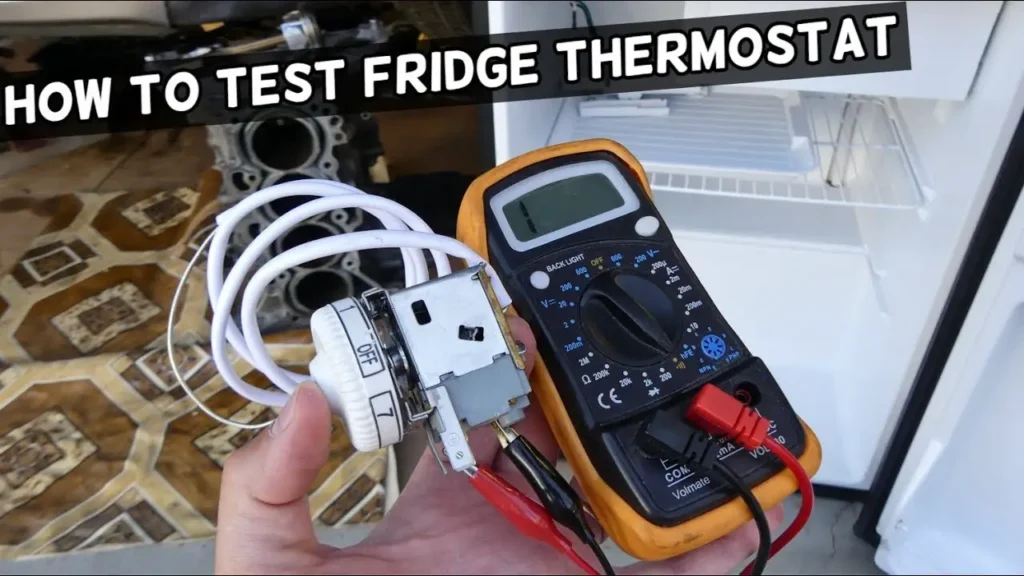
A multimeter set to the ohms/continuity range is really the only specialty tool this job requires.
How to Test a Refrigerator Thermostat: Step-by-Step
- Locate the thermostat. On most refrigerators, it sits behind the temperature control dial or knob inside the fresh-food compartment. Remove the knob or panel with your screwdriver to expose the terminals.
- Disconnect the wires. Note which wire goes where (a quick phone photo helps) before pulling the leads off the thermostat terminals.
- Set the multimeter to its lowest ohms range, or the continuity/beep setting if your meter has one. If you’re using an analog meter, touch the leads together first to zero it out.
- Submerge the sensing bulb in ice water. Clip the multimeter leads to the thermostat terminals and wait about a minute for the bulb to fully cool.
- Check for continuity. A working thermostat should show continuity (0 ohms, or a beep) while cold.
- Warm the bulb to room temperature and test again. This time you should see no continuity, meaning the circuit is open.
If the thermostat shows continuity cold and none warm, it’s functioning correctly and the cooling issue lies elsewhere. If the results are reversed, inconsistent, or show no continuity at all, the thermostat has failed and needs replacing.
A Real-World Example
A typical healthy reading looks like this: infinite resistance (open) at room temperature, and 0 ohms (closed, with a beep) once the sensing bulb sits in ice water for about a minute. If your thermostat matches that pattern but the fridge still isn’t cooling, check the thermistor and control board connections next, since either can cause the same symptoms as a bad thermostat.
Adjusting the Refrigerator Thermostat
Once you’ve confirmed the thermostat works, dial in the right setting. Find the temperature knob or slider, usually in the fresh-food compartment, and set it toward the middle of its range as a starting point.
Give the fridge a few hours to stabilize before judging the result. Place a standalone thermometer on the middle shelf, since that’s the most representative spot, and check it again after 24 hours for a full read on how the setting performs.
The Department of Energy recommends setting the refrigerator compartment between 36°F and 40°F. Going colder than that wastes energy without any food-safety benefit, while anything warmer raises spoilage risk.
| Compartment | Recommended Range |
|---|---|
| Refrigerator | 36°F to 40°F |
| Freezer | 0°F or lower |
Troubleshooting the Refrigerator Thermostat
If the thermostat tests fine but the fridge still isn’t cooling properly, work through these checks before assuming you need a new part.
Checking Power Supply and Wiring
Confirm the outlet has power and the breaker hasn’t tripped. Inspect wiring near the thermostat and control board for loose connections or corrosion, either of which can mimic a bad thermostat.
Inspecting Airflow and Ventilation
Blocked vents or a dust-clogged condenser coil will cause the same symptoms as thermostat failure: warm spots, frost buildup, and constant cycling. Clear any vents blocked by food, and vacuum the coils at least twice a year.
If everything above checks out and the fridge still won’t cool, the issue is likely a failing compressor, evaporator fan, or start relay, and that’s a good point to bring in a professional.
Maintaining the Refrigerator Thermostat
Regular Cleaning and Maintenance Tips
- Wipe the thermostat sensor area with a soft, dry brush every few months to keep dust from throwing off its readings.
- Recheck the temperature setting seasonally, since kitchen temperature swings between summer and winter affect how the fridge cycles.
- Keep containers a few inches from the sensor so it reads the actual compartment temperature, not a cold spot.
- If temperatures drift after cleaning, a professional calibration check is worth it before replacing the part outright.
When to Call a Professional
Call a technician if the thermostat fails the continuity test, if the fridge temperature keeps drifting despite a healthy thermostat, or if you’re not comfortable working near the compressor or wiring. A refrigerator that can’t hold a safe temperature puts food safety at risk fast, and misdiagnosing the part can turn a simple fix into an expensive one.
Signs it’s time to bring in help:
- Temperature swings persist after you’ve replaced or reset the thermostat
- The compressor short-cycles no matter how you adjust the dial
- You see heavy frost buildup even with clear vents
- You can’t safely access or test the thermostat yourself
A qualified appliance technician can confirm the diagnosis in minutes and knows what a fair repair should cost, which is often less than the price of guessing wrong on parts.
Conclusion
Testing a refrigerator thermostat comes down to five steps: locate it, isolate it, chill it, check continuity, then warm it and check again. That single test tells you whether the part is doing its job or whether the real issue is somewhere else in the cooling system.
Keep an appliance thermometer in the fridge year-round, clean the sensor area occasionally, and you’ll catch most temperature problems before they turn into spoiled groceries. For a deeper look at how often your compressor should actually be running, see our guide on how often a refrigerator should run, and if you’re wondering how long specific foods hold up once they’re properly chilled, check out how long rotisserie chicken lasts in the fridge.
FAQ
What is the purpose of a refrigerator thermostat?
It monitors the internal temperature and switches the compressor on or off to keep the fridge within a safe, energy-efficient range.
What are the common signs of a faulty refrigerator thermostat?
Inconsistent temperatures between shelves, a compressor that cycles too frequently, and frost buildup in the freezer are the three most common signs.
What tools do I need to test a refrigerator thermostat?
A multimeter, a screwdriver set, a bowl of ice water, insulated gloves, and your fridge’s manual are all you need.
How do you test a refrigerator thermostat with a multimeter?
Set the multimeter to its lowest ohms or continuity range, submerge the thermostat’s sensing bulb in ice water, and check for continuity. Warm the bulb and test again; it should show no continuity when warm.
How do you adjust the refrigerator thermostat control?
Turn the dial or slider toward the middle setting, wait a few hours, then check the temperature with a standalone thermometer and fine-tune from there.
What should I check if the thermostat tests fine but the fridge still isn’t cooling?
Check the power supply, wiring connections, and airflow around the vents and condenser coils before assuming a bigger component like the compressor has failed.
How can I maintain the thermostat to prevent future issues?
Clean the sensor area every few months, keep vents clear, and avoid placing food containers directly against the sensor.
When should I call a professional for thermostat repair?
Call a pro if the thermostat fails the continuity test, if temperatures keep drifting after adjustment, or if you’re not comfortable working near electrical components or the compressor.
Sources: FDA, Refrigerator Thermometers – Cold Facts About Food Safety; U.S. Department of Energy, Purchasing Energy-Efficient Residential Refrigerators

Hey, My name is MAMON. I am a SEO content creator and affiliate marketer with over 8 years of experience. I create honest product reviews, in-depth buying guides, and practical how-to articles to help readers make informed decisions. My mission is to provide trustworthy, research-backed content that delivers real value.
Leave a Reply