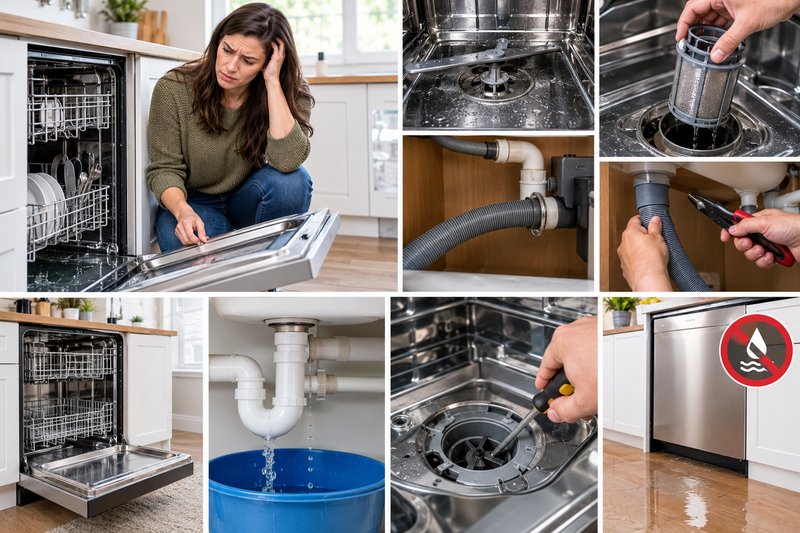
Opening the door to a pool of dirty water is frustrating. The good news is that a dishwasher not draining is usually a simple fix. Most cases come down to a clogged filter, a blocked hose, or a garbage disposal issue. You can often fix it yourself in under an hour with basic tools. This guide walks through the 9 most common causes in the order you should check them. It draws on manufacturer troubleshooting guides.
Key Takeaways
- A small amount of water near the filter after a cycle is normal. It keeps the pump seals lubricated.
- The most common cause of a dishwasher not draining is a clogged filter or debris in the sump.
- If you just installed a new garbage disposal, the knockout plug is the likely culprit.
- A kinked hose, missing high loop, or clogged air gap can also stop drainage.
- A humming sound with no water moving often points to a jammed drain pump.
- Professional repair typically costs $100 to $300. A drain pump replacement runs about $100 to $400 installed.
Safety First
Before you work on your dishwasher, protect yourself and the machine:
- Turn off power at the circuit breaker or unplug the unit.
- Let hot water cool before you reach into the tub.
- Lay towels on the floor to catch spills.
- Remove the bottom rack so you can reach the filter and sump.
Tools You Will Need
- A cup, sponge, and old towels for bailing water.
- A turkey baster for the last bit of water.
- A soft brush, such as an old toothbrush.
- Rubber gloves.
- A flathead screwdriver and pliers for hose clamps.
- A flashlight to see under the sink.
- A bucket for draining the hose.
Step 1: Remove the Standing Water
You need a dry tub to see what is wrong. Scoop out the water with a cup, then soak up the rest with a sponge or towel. Whirlpool also suggests a turkey baster for the last bit around the sump.
Is Some Water in the Bottom Normal?
Yes, a little. Haier Appliances, which owns GE Appliances, says a small amount of water around the filter after a wash is normal. Its support guide explains why. This water keeps the pump seals lubricated.
A problem exists when water covers the tub floor or sits above the filter area. That means your dishwasher not draining is a real fault, not normal design.
9 Causes of a Dishwasher Not Draining (and Fixes)
Work through these causes from easiest to hardest. Most people find the problem in the first three.
1. Clogged Filter
The filter traps food so it does not reach the pump. When it clogs, water cannot flow out. This is the number one cause.
Fix: Twist out the filter, usually found under the bottom rack. Rinse it under warm water and scrub it with a soft brush. Reinstall it firmly. Our guide on how to change a dishwasher filter shows the steps for most models.
2. Debris in the Sump
With the filter out, look into the sump below it. Whirlpool lists food particles, labels, seeds, toothpicks, and broken glass as common blockages.
Fix: Remove debris by hand, carefully. Wear gloves if you suspect broken glass. Rinse the area and reinstall the filter.
3. Clogged Garbage Disposal
Most built-in dishwashers drain through the garbage disposal. If the disposal is full or jammed, the dishwasher cannot drain.
Fix: Run the disposal with cold water for 30 seconds to clear it. Then run a short dishwasher rinse or drain cycle. Wondering how the two work together? Read about running a garbage disposal while the dishwasher runs.
4. Knockout Plug Still in a New Disposal
New garbage disposals come with a plastic knockout plug inside the dishwasher inlet. Whirlpool calls removing it critical for draining. If you recently installed or replaced a disposal, this is the most likely cause.
Fix: Turn off power to the disposal. Disconnect the dishwasher hose from the disposal inlet. Use a screwdriver and hammer to knock the plug out into the disposal. Then reach in and remove the loose plug.
5. Kinked or Clogged Drain Hose
The drain hose runs from the dishwasher to the sink drain or disposal. A kink, sharp bend, or clog blocks water flow. Hoses can get pinched when a dishwasher is pushed back into its cabinet.
Fix: Check the hose under the sink for kinks. Disconnect it and flush it with warm water to clear clogs. Our guide on cleaning a dishwasher drain hose covers each step.
6. Missing High Loop
The drain hose should rise in a high loop secured under the counter. Without it, Whirlpool warns that wastewater can flow back into the dishwasher. This leaves dirty water in the tub.
Fix: Lift the hose into a loop and fasten it high under the countertop with a clamp or strap. Follow your model’s installation guide and local plumbing codes.
7. Clogged Air Gap
Some homes have an air gap, a small cap on the sink deck next to the faucet. It stops dirty sink water from backing into the dishwasher. When it clogs, the dishwasher may not drain.
Fix: Remove the air gap cap and clean out debris inside. If water spills from the air gap into the sink, Whirlpool notes the blockage is further down the hose-to-drain path.
8. Clogged Sink Drain
If your dishwasher drains into a clogged kitchen sink, the water has nowhere to go. A slow sink drain is a clear sign.
Fix: Clear the sink drain with a plunger or drain snake. Avoid harsh chemical drain cleaners near the dishwasher hose connection.
9. Jammed or Failed Drain Pump
The drain pump pushes water out of the dishwasher. According to Whirlpool’s troubleshooting guide, a steady hum with no water movement points to a jammed pump.
Fix: Check the pump area for trapped debris, such as glass or a fruit pit. If it is clear and still hums, the pump may need replacement. This job suits confident DIYers or a technician. Learn more in our guide on cleaning a dishwasher pump.
How to Check the Drain Hose Step by Step
The drain hose causes many cases of a dishwasher not draining. Here is how to check it safely:
- Turn off power to the dishwasher and the garbage disposal.
- Place a bucket and towels under the sink.
- Find where the hose connects to the disposal or sink drain. Loosen the clamp with a screwdriver or pliers.
- Pull the hose off and let any trapped water drain into the bucket.
- Blow gently through the hose or flush it with warm water. If water will not pass, there is a clog.
- Clear the clog with a long flexible brush, or replace the hose if it is cracked.
- Reconnect the hose, tighten the clamp, and check for a high loop.
- Restore power and run a short cycle to test.
Other Reasons Water Stays in the Tub
- The cycle was interrupted. Opening the door or a power blip can stop the cycle before it drains. Run a short cycle to finish.
- Too many suds. Hand dish soap in a dishwasher makes heavy foam that can block draining. See how to get dish soap out of a dishwasher.
- A control or sensor fault. Error codes on the display can point to drain faults. For example, Bosch E24 and E25 codes both signal a drainage problem.
After a fix, a reset can clear leftover error codes. Our guide on how to reset a dishwasher explains how.
Quick Troubleshooting Table
| Symptom | Likely Cause | First Thing to Try |
|---|---|---|
| Standing water after every cycle | Clogged filter or sump | Clean the filter |
| Problem started after new disposal | Knockout plug | Remove the plug |
| Water spills from sink air gap | Blocked hose or drain | Clear the hose and air gap |
| Dirty sink water backs into tub | No high loop | Add a high loop |
| Humming, no draining | Jammed drain pump | Check pump for debris |
| Lots of foam in tub | Wrong soap | Remove suds, use dishwasher detergent |
How Much Does It Cost to Fix?
Many fixes for a dishwasher not draining cost nothing but time. If you need a pro, HomeGuide lists these national averages:
- Average dishwasher repair: $100 to $300.
- Service call minimum: $70 to $130 per visit.
- Drain pump replacement: $100 to $400 installed. The part alone costs about $20 to $100.
- Drain hose replacement: $80 to $180.
If your dishwasher is old and needs a costly repair, replacing it may make more sense. See our guide on what to do with an old dishwasher.
How to Prevent Drain Problems
- Scrape food off plates before loading. You do not need to pre-rinse, but remove large scraps.
- Clean the filter every month, or more often with heavy use.
- Run the garbage disposal before starting the dishwasher.
- Use only dishwasher detergent, never hand dish soap.
- Check that the drain hose has a high loop and no kinks.
- Run hot water at the sink before starting a cycle.
When to Call a Professional
Call a technician if your dishwasher not draining continues after the basic checks. That means you have cleaned the filter, cleared the hose, and checked the disposal. Also call if you see error codes that return, smell burning, or find water leaking onto the floor. Electrical and control board problems are best left to a pro.
Frequently Asked Questions
Why is my dishwasher not draining all the way?
The most common reason is a clogged filter or debris in the sump. A kinked hose or clogged disposal can also cause partial draining. A small puddle near the filter is normal.
How do I force my dishwasher to drain?
Many models drain when you cancel the cycle. Check your manual for the exact button steps. If it still will not drain, bail out the water and check the filter.
Can a clogged sink cause a dishwasher not draining?
Yes. Most dishwashers drain into the sink drain or garbage disposal. If those are clogged, the dishwasher cannot drain.
Should I use a chemical drain cleaner in my dishwasher?
No. Harsh drain cleaners can damage dishwasher parts. Clean the filter and hose by hand instead.
Can I keep using my dishwasher if it is not draining?
No. Running more cycles adds more water to the tub and can cause leaks or odors. Fix the drain problem first, then run a short test cycle with the rack empty.
How long does a dishwasher drain pump last?
It varies by brand and use. Keeping the filter clean reduces strain on the pump and helps it last longer.
Final Thoughts
A dishwasher not draining is rarely a disaster. Start with the easy checks: remove the water, clean the filter, and clear the sump. Then look at the disposal, the knockout plug, and the drain hose. Most drain problems end there. If the pump hums or error codes return, call a technician. With monthly filter cleaning, you can keep the problem from coming back.

Hey, My name is MAMON. I am a SEO content creator and affiliate marketer with over 8 years of experience. I create honest product reviews, in-depth buying guides, and practical how-to articles to help readers make informed decisions. My mission is to provide trustworthy, research-backed content that delivers real value.
Leave a Reply