If you moved to the U.S. from the U.K., Europe, or Australia, or you simply miss how fast kettles boil abroad, you may wonder whether you can bring a 240V kettle with you. The short answer is: not on a regular U.S. kitchen outlet. American homes supply 120 volts at standard outlets, while most of the world uses about 220 to 240 volts. As a result, a 240V kettle will either barely work, need a large transformer, or require a dedicated 240-volt circuit installed by an electrician. In this guide, we explain the options, the math behind each one, and the safety rules that matter.
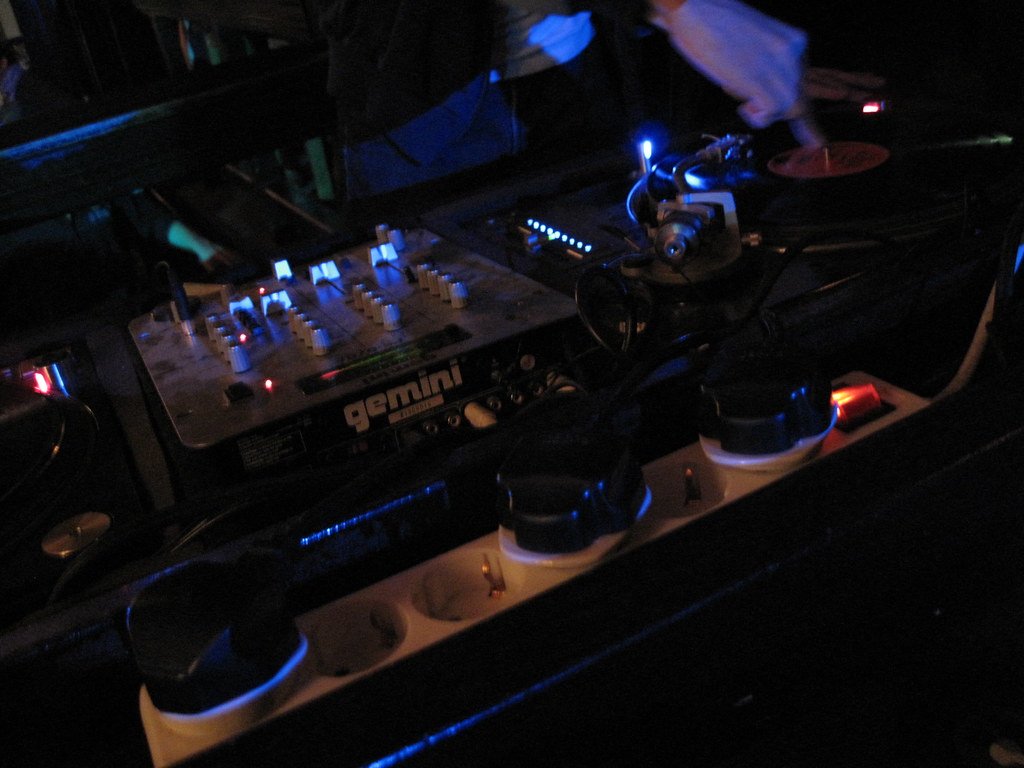
Photo: Kai Hendry via Flickr (CC BY 2.0).
Key Takeaways
- Standard U.S. outlets supply 120 volts at 60 Hz, while the U.K. and most of Europe use about 230 volts at 50 Hz.
- A 3,000-watt 230V kettle plugged into 120 volts would produce only about 820 watts, based on basic electrical math, if it worked at all.
- A plug adapter changes the plug shape only. It does not change the voltage.
- U.S. homes do have 240-volt circuits for dryers and ranges, but using one for a kettle requires the correct receptacle and an electrician.
- Above all, look for a kettle certified by a Nationally Recognized Testing Laboratory for use in the U.S.
Why Kettles Abroad Boil Faster
The main reason is voltage, because power equals voltage times current. For example, a typical U.K. outlet supplies about 230 volts and allows up to 13 amps, which supports kettles around 3,000 watts. In contrast, a standard U.S. kitchen outlet supplies 120 volts on a 15-amp or 20-amp circuit, so most U.S. kettles stop around 1,500 watts.
| Region | Typical Voltage | Frequency | Common Kettle Wattage |
|---|---|---|---|
| United States | 120 V | 60 Hz | 1,000–1,500 W |
| United Kingdom | 230 V | 50 Hz | 2,200–3,000 W |
| Most of Europe | 230 V | 50 Hz | 2,000–3,000 W |
| Australia | 230 V | 50 Hz | 2,000–2,400 W |
Note that the wattage ranges are typical for each market rather than legal limits. For a full country-by-country list of voltages and plug types, see this reference on mains electricity by country.
To show the difference, we calculated ideal boil times for 1 liter of room-temperature water to show the difference.
| Kettle | Power | Ideal Time for 1 Liter |
|---|---|---|
| U.K. kettle at 230 V | 3,000 W | About 1.9 minutes |
| U.S. kettle at 120 V | 1,500 W | About 3.7 minutes |
| U.K. 3,000 W kettle on U.S. 120 V | About 820 W | About 6.8 minutes |
Video: Everyday Cutaway explains why kettles boil more slowly in the U.S.
Can You Plug a 240V Kettle into a U.S. Outlet?
First of all, you would physically need an adapter, because U.K. and European plugs do not fit U.S. outlets. However, an adapter only changes the plug shape. It does not change the voltage. So, what happens if you use a 240V kettle on 120 volts with just an adapter?
For a simple heating element, however, power drops with the square of the voltage. In other words, halving the voltage cuts power to about one quarter. Using a 3,000-watt kettle rated at 230 volts as an example, we calculated:
- Element resistance: First, about 17.6 ohms, based on 230 volts and 3,000 watts.
- Power at 120 volts: Then about 820 watts, or roughly 27% of its rated power.
- Result: Finally, the kettle would heat very slowly, if at all.
In practice, many modern kettles also have electronic controls, thermostats, or temperature sensors that may not work correctly at the wrong voltage. Some may not switch on, while others may behave unpredictably. In addition, the kettle will not carry U.S. safety certification. Therefore, using a 240V kettle with only a plug adapter is not recommended.
Option 1: Use a Step-Up Voltage Transformer
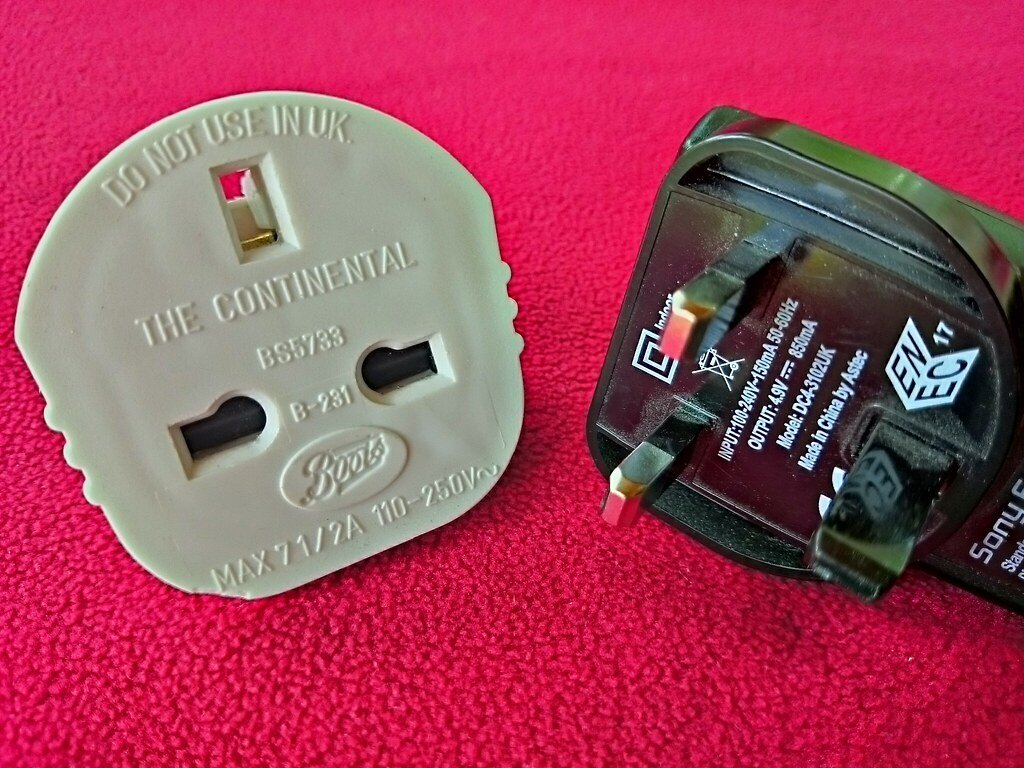
Photo: kbrumann via Flickr (Public Domain).
Next, a step-up transformer converts 120 volts to about 230 volts. In theory, it lets a 240V kettle run at its intended voltage. However, there is a big catch: the transformer still draws power from a 120-volt outlet.
For instance, a 3,000-watt kettle would need a transformer rated above 3,000 watts. On the 120-volt side, that load would draw about 25 amps, which is far more than a standard 15-amp or 20-amp outlet can supply. As a result, the breaker would trip, or the transformer would be undersized. Even a 2,200-watt kettle would draw more than 18 amps at 120 volts, which exceeds a 15-amp circuit.
| 240V Kettle Wattage | Current Drawn at 120 V Through a Transformer | Fits a 15 A Circuit? | Fits a 20 A Circuit? |
|---|---|---|---|
| 1,200 W | 10 A plus transformer losses | Yes | Yes |
| 2,200 W | About 18 A plus losses | No | Barely |
| 3,000 W | 25 A plus losses | No | No |
In other words, a transformer only makes sense for low-wattage 240V appliances. For a full-power kettle, it defeats the purpose, since you would still be limited by your 120-volt circuit.
Option 2: Install a 240-Volt Circuit
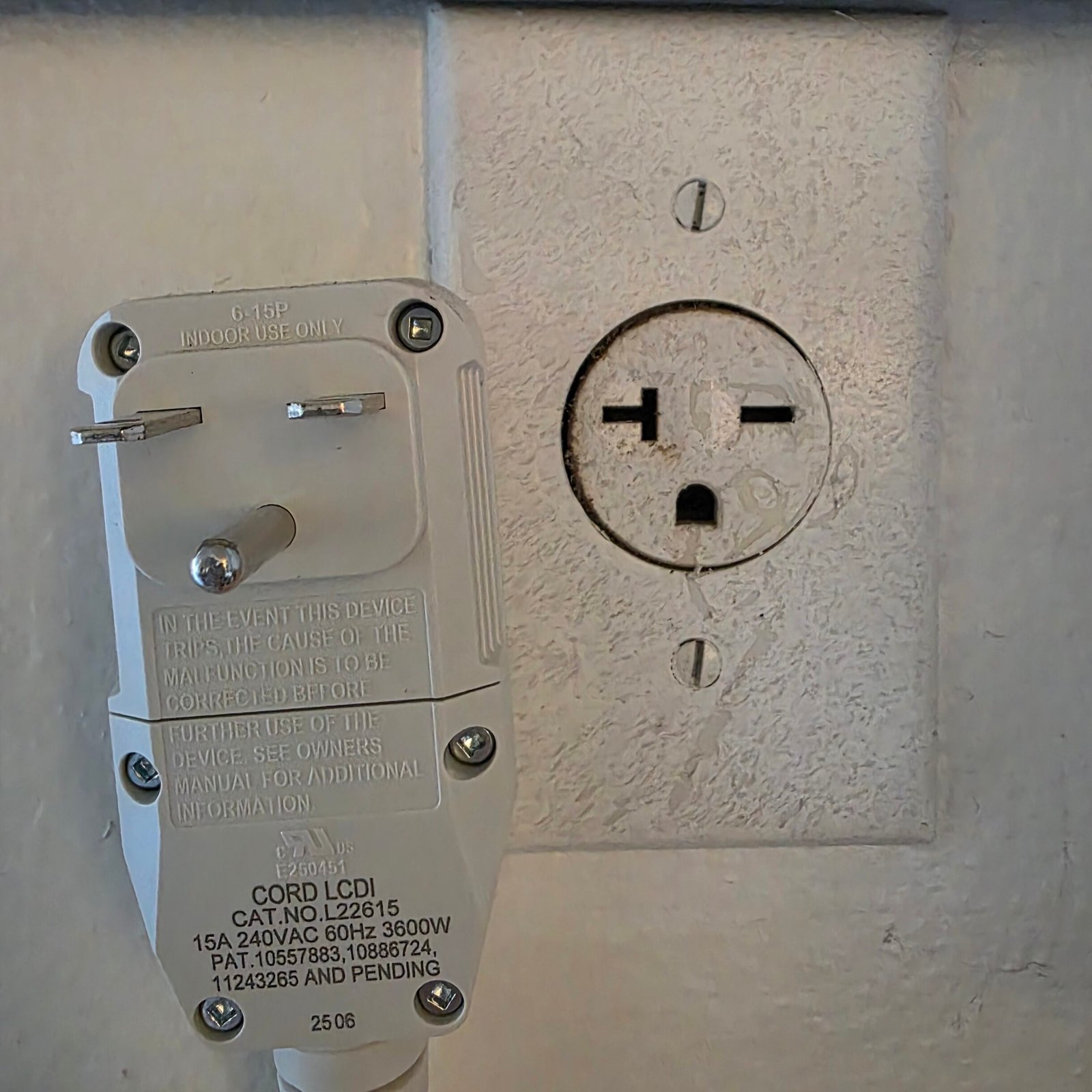
Photo: Cazzy82 via Wikimedia Commons (CC BY-SA 4.0).
Interestingly, here is a fact that surprises many people: most U.S. homes already have 240-volt power. It is used for electric dryers, ranges, water heaters, and some air conditioners. As a result, it is technically possible to run a 240V kettle at full speed in the U.S.
To do it properly, however, a licensed electrician would install a dedicated 240-volt circuit with an appropriate receptacle, such as a NEMA 6-15 or 6-20. The kettle would then need a matching U.S. plug. At 240 volts, a 3,000-watt kettle would draw about 12.5 amps, which fits within a 20-amp circuit.
However, there are important trade-offs:
- Cost: First, a new circuit and receptacle require an electrician and may require a permit.
- Frequency: Also, U.S. power runs at 60 Hz instead of 50 Hz. Simple heating elements usually do not care, but some electronic controls might.
- Certification: In addition, a kettle built for the U.K. or Europe is generally not listed by a U.S. testing laboratory.
- Plug changes: Moreover, replacing the plug yourself may void the warranty and should be done by a qualified person.
- Insurance and code: Finally, non-listed appliances can raise questions with inspectors or insurers.
For these reasons, this option is mainly for enthusiasts who are willing to invest in proper installation and accept the risks of using a non-listed appliance.
Option 3: Buy a Fast U.S. Kettle Instead
Overall, for most people, the simplest solution is a high-quality 1,500-watt U.S. kettle. It will not match a 3,000-watt U.K. kettle, but it is certified for U.S. outlets, uses the correct plug, and boils 1 liter in roughly 4 to 5 minutes in real use. In addition, you can speed things up by boiling only the water you need.
Also, when you shop, look for a certification mark from a Nationally Recognized Testing Laboratory, such as UL, ETL, or CSA. The OSHA NRTL Program recognizes these labs to test products against U.S. safety standards. Our guide to the best electric kettle lists fast, certified U.S. models.
Real-World Scenarios
You Just Moved from the U.K.
If you packed your favorite kettle, the practical move is to sell it or keep it for a future trip home. Then buy a certified 1,500-watt U.S. kettle on arrival. As a result, you avoid adapters, transformers, and electrical work.
You Are Visiting the U.S. for a Few Weeks
In this case, bring a dual-voltage travel kettle and a plug adapter, or simply use the hotel kettle or coffee maker. Meanwhile, avoid packing a full-size 240V kettle, since it will not work well on U.S. outlets.
You Are Renovating Your Kitchen
If you are already hiring an electrician, adding a 240-volt receptacle is easier and cheaper during a remodel. However, think about whether you really want to use a non-listed appliance before you commit. Many homeowners decide the extra speed is not worth the hassle.
Comparing Your Options
| Option | Speed | Cost and Effort | Safety and Certification |
|---|---|---|---|
| 240V kettle with plug adapter only | Very slow or not working | Low | Not recommended |
| 240V kettle with step-up transformer | Limited by 120 V circuit | Moderate; heavy transformer | Not ideal for high-wattage kettles |
| 240V kettle on a new 240 V circuit | Fast | High; electrician required | Kettle usually not U.S.-listed |
| 1,500 W U.S. kettle | Good | Low | Certified for U.S. use |
What About 220V Kettles from Other Countries?
Similarly, kettles labeled 220V, common in parts of Asia, South America, and Eastern Europe, face the same problem as 240V kettles. They are designed for roughly double the U.S. outlet voltage. Therefore, the same three options apply: a transformer for low-wattage models, a dedicated 240-volt circuit, or a U.S.-rated replacement. However, some travel kettles are dual-voltage, marked something like “100–240V,” which means they can switch or adapt automatically. Always check the label before plugging in.
How to Tell If Your Kettle Is Dual-Voltage
Before you give up on an imported 240V kettle, check whether it is actually dual-voltage. Some travel and compact models are designed to work worldwide.
- Read the rating label. First, look under the base for text such as “100–240V, 50/60Hz.” That range means it can work in the U.S.
- Look for a voltage switch. Next, some kettles have a small selector marked 120V and 230V.
- Check the manual. Also, the specifications page usually lists the supported voltages.
- Beware of single values. Finally, a label that says only “220–240V” means the kettle is not designed for U.S. outlets.
Even with a dual-voltage kettle, you still need a plug adapter for the U.S. outlet shape. In addition, expect slower heating at 120 volts, because the outlet limits the available power.
Safety Risks of Using a Foreign Kettle
Using a 240V kettle in the U.S. carries more risk than many people expect. For example, a mismatched voltage can confuse thermostats, so the kettle may fail to shut off or may cut out early. Similarly, a transformer that is too small can overheat, especially under a heavy, steady load like a heating element. Moreover, foreign plugs and cheap adapters may not grip U.S. outlets firmly, which can cause loose connections and heat at the plug. Finally, a kettle without U.S. certification has not been tested against U.S. standards, so its safety features may not match local expectations.
Common Mistakes to Avoid
- Using a travel adapter as a converter. In fact, most travel adapters do not convert voltage at all.
- Buying an undersized transformer. Instead, the transformer must exceed the kettle’s full wattage.
- Cutting off the plug and wiring a new one yourself. However, this can create shock risks and void warranties.
- Plugging into a dryer outlet with an improvised cord. Similarly, dryer receptacles are designed for specific appliances and higher currents.
- Ignoring the rating label. Above all, always check volts and watts before plugging in.
Tips for Travelers and New U.S. Residents
- Check the rating label. First, look for the voltage range on the kettle base.
- Do not rely on adapters. Also, adapters change only the plug shape.
- Sell or store your old kettle. In addition, many expats simply buy a U.S. kettle on arrival.
- Consider dual-voltage travel kettles. Meanwhile, these work in both countries but are usually low-wattage.
- Use a dedicated outlet in the U.S. Finally, a 1,500-watt kettle draws 12.5 amps, so avoid sharing the circuit.
For more on how much power kitchen appliances draw, see our guides on how many watts a coffee maker uses and how many watts a toaster uses.
FAQ
Can I use a 240V kettle in the U.S.?
Not on a standard 120-volt outlet. You would need a dedicated 240-volt circuit installed by an electrician, or a transformer that only works well for low-wattage kettles.
Will a 240V kettle work on 120V?
A simple kettle would run at about a quarter of its rated power, so it would heat very slowly. Electronic models may not work at all.
Is a plug adapter enough?
No. A plug adapter changes the plug shape but not the voltage.
Why are U.K. kettles so much faster?
U.K. outlets supply about 230 volts, so kettles can use around 3,000 watts. U.S. outlets supply 120 volts, which limits most kettles to about 1,500 watts.
Does the 50 Hz vs. 60 Hz difference matter for a kettle?
For a simple heating element, usually not, because resistance heating works the same at either frequency. However, electronic controls, displays, or timers may be designed for one frequency, so check the label.
Do U.S. homes have 240-volt outlets?
Yes, for large appliances such as dryers and ranges. However, these use special receptacles and are not standard kitchen outlets.
Can I use a 240V kettle with a power converter from a travel store?
Usually not. Most travel converters are rated for low-power devices such as chargers, so a 2,000- to 3,000-watt kettle would overload them. As a result, the converter could overheat or fail.
Is it legal to use a 240V kettle in the U.S.?
Generally, using a personal appliance is not illegal. However, any new 240-volt circuit should follow local electrical codes and permit rules, and a non-listed appliance may raise concerns with inspectors or insurers. Therefore, talk with a licensed electrician before making changes.
Final Thoughts
So, can you use a 240V kettle in the U.S.? Technically yes, but only with the right setup. In short, a plug adapter alone will not work well, a step-up transformer is impractical for full-power kettles, and a dedicated 240-volt circuit requires an electrician and a non-listed appliance. For most households, a certified 1,500-watt U.S. kettle is the safest and simplest choice. Boil only what you need, and you will get your tea or coffee nearly as fast.

Hey, My name is MAMON. I am a SEO content creator and affiliate marketer with over 8 years of experience. I create honest product reviews, in-depth buying guides, and practical how-to articles to help readers make informed decisions. My mission is to provide trustworthy, research-backed content that delivers real value.
Leave a Reply