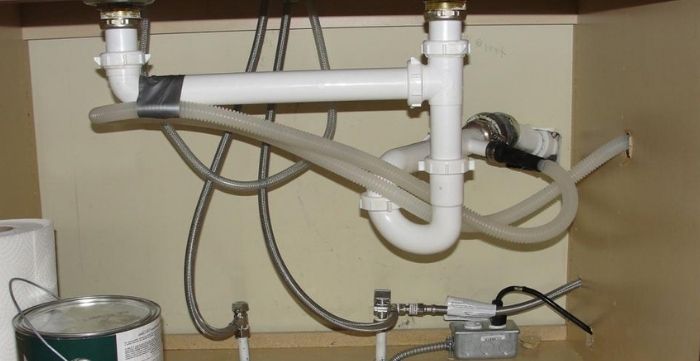
If your dishwasher finishes a cycle and leaves a puddle of cloudy water sitting in the bottom, the drain hose is the first place to check. If you’re wondering how to clean a dishwasher drain hose, start by inspecting it for grease, food debris, or mineral buildup that could restrict water flow. This flexible tube carries wastewater from the tub out to your home’s plumbing, and it’s one of the most common failure points on an otherwise healthy machine. Whirlpool’s own troubleshooting guide lists a kinked or blocked drain hose as one of the most frequent causes of a dishwasher that won’t drain, right alongside a dirty filter and a clogged garbage disposal. Regularly learning how to clean your dishwasher drain hose can help prevent clogs and keep your dishwasher draining properly.
Below, we’ll walk through how to clean a dishwasher drain hose two ways: by removing it for a deep clean, and by clearing it in place when you’re short on time. We’ll also cover what not to pour down there and a few habits that keep the clog from coming back. This guide is written for U.S. dishwashers and standard under-sink plumbing, but the steps apply to most brands and models.
Key Takeaways
- A kinked or blocked drain hose is one of the most common reasons a dishwasher won’t drain, per Whirlpool’s official troubleshooting guide.
- Removing the hose gives you the most thorough clean, but a vinegar-and-baking-soda rinse works well when you don’t have time to disconnect it.
- Skip chemical drain cleaners like Drano. Sodium hydroxide can eat through the thin plastic hose and leave residue that ends up back on your dishes.
- Running the garbage disposal first, scraping plates before loading, and running full loads all reduce how often the hose clogs.
Signs Your Drain Hose Needs Cleaning
A few warning signs usually show up before a dishwasher stops draining completely. Standing water pooling around the filter at the end of a cycle is the clearest one. A gurgling or straining noise during the drain phase is another, since it means the pump is working harder to push water through a narrowed hose. Watch for a musty or sour smell when you open the door, cloudy residue left on glasses, or a wash cycle that runs longer than usual. Any one of these on its own isn’t a big deal, but two or more together are a good reason to clean the hose before it clogs completely.
Why Dishwasher Drain Hoses Get Clogged
A dishwasher drain hose usually clogs from the same three culprits: grease that congeals as it cools, small food particles that slip past the filter, and mineral buildup from hard water. None of it happens overnight. It builds up gradually along the inside walls of the hose, layer by layer, until the opening narrows enough to slow or stop the water. The corrugated ridges inside many drain hoses make this worse, since they give debris more surface area to catch on than a smooth pipe would. Most people reach for a chemical unclogger the first time this happens. That’s usually a short-term fix at best, since it clears a path through the clog without removing it. The most reliable method is still the hands-on one: disconnect the hose, clean it out completely, and put it back.
Tools you’ll need: a Phillips or flathead screwdriver, a shallow pan or old towel, a flexible bottle brush or a length of stiff wire, and (for the no-removal method) a cup each of white vinegar and baking soda.
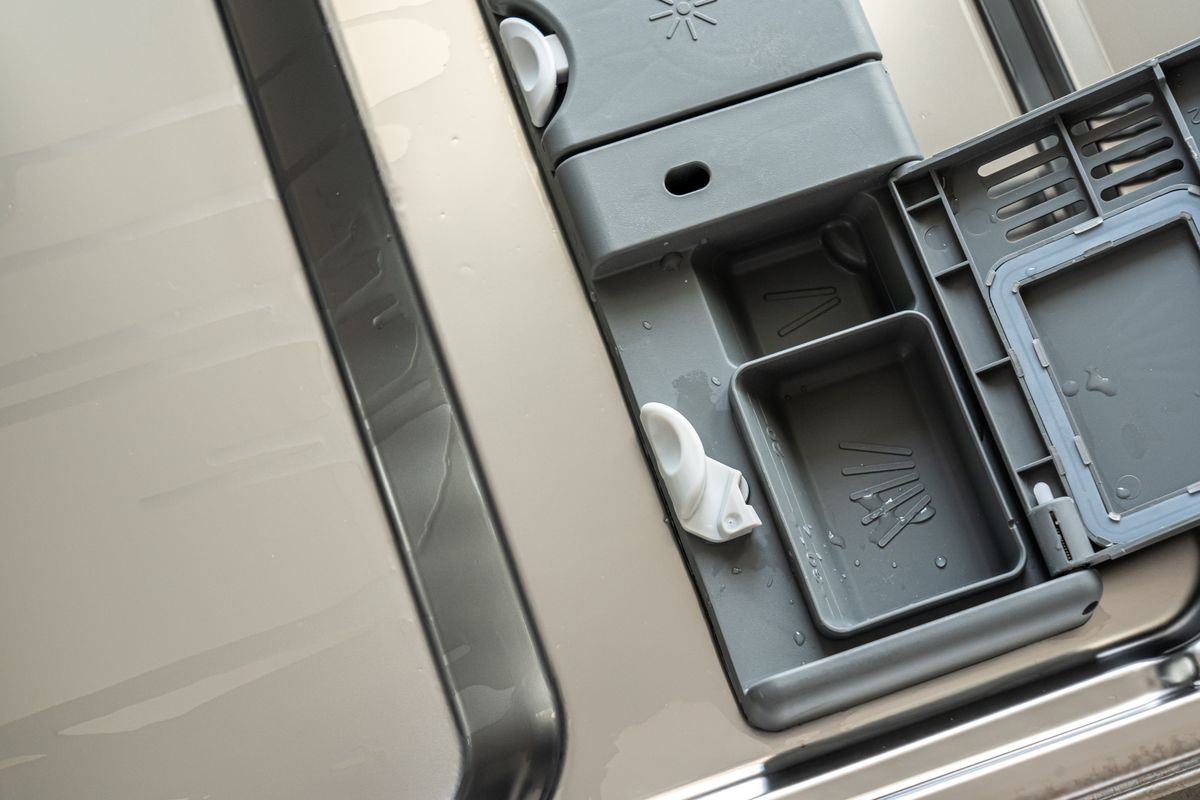
How to Clean a Dishwasher Drain Hose by Removing It
Step 1: Disconnect the Dishwasher from the Power Supply
Before you touch anything, unplug the dishwasher or shut off its breaker. This isn’t optional. Water and electricity together are a real shock hazard, so treat this as step zero every time. While you’re at it, turn off the water supply valve under the sink too, so you’re not dealing with an active leak while you work.
Step 2: Disconnect the Drain Hose from Your Dishwasher
With power and water off, pull the dishwasher forward enough to reach the back panel. Use a screwdriver to loosen the clamp holding the drain hose in place, then gently pull the hose free. Expect some water to spill out. Keep a shallow pan or old towel underneath to catch it. If the hose runs to a garbage disposal or an air gap under the sink, disconnect that end too so you can pull the whole hose free.
Step 3: Clean the Drain Hose
Once the hose is out, hold it up to the light and check for kinks, flat spots, or visible buildup. Run warm water through it first to flush out loose debris. For anything stuck to the inner walls, feed a long, flexible bottle brush or a length of stiff wire through the hose and work it back and forth. A wet/dry vacuum on the low-suction setting can also pull out stubborn clumps. Finish with another warm-water rinse until the water runs clear on the other end.
Step 4: Reconnect the Drain Hose
Slide the hose back onto its fitting on the dishwasher and tighten the clamp so it’s snug, not overtightened. Reconnect the other end under the sink, making sure the hose still has its high loop (or connects to an air gap) so wastewater can’t siphon back into the tub. Once it’s back in place, restore the water and power, then run a short cycle to check for leaks before you load any dishes.
Watch: Cleaning a Clogged Dishwasher Drain Hose
If you’d rather see the process in action before you start, this walkthrough covers the same removal and cleaning steps on camera.
How to Clean a Dishwasher Drain Hose Without Removing It
Pulling the hose out gives you the deepest clean, but it’s not always practical on a weeknight. This shorter method won’t clear a severe blockage, but it works well for routine maintenance and mild buildup.
Step 1: Remove Dishes Inside if Any
Take out any dishes and empty the bottom rack. Also confirm the dishwasher is unplugged or switched off at the breaker before you start.
Step 2: Prepare a Vinegar and Baking Soda Solution
Mix equal parts white vinegar and baking soda, roughly one cup of each for a standard dishwasher. Pour the solution into the basin at the bottom of the tub and let it sit for about 10 minutes. The fizzing reaction helps loosen grease and debris clinging to the hose and drain pump. Follow with a cup of hot water to help wash the loosened residue through, then run a normal wash cycle (with no dishes) to flush the system.
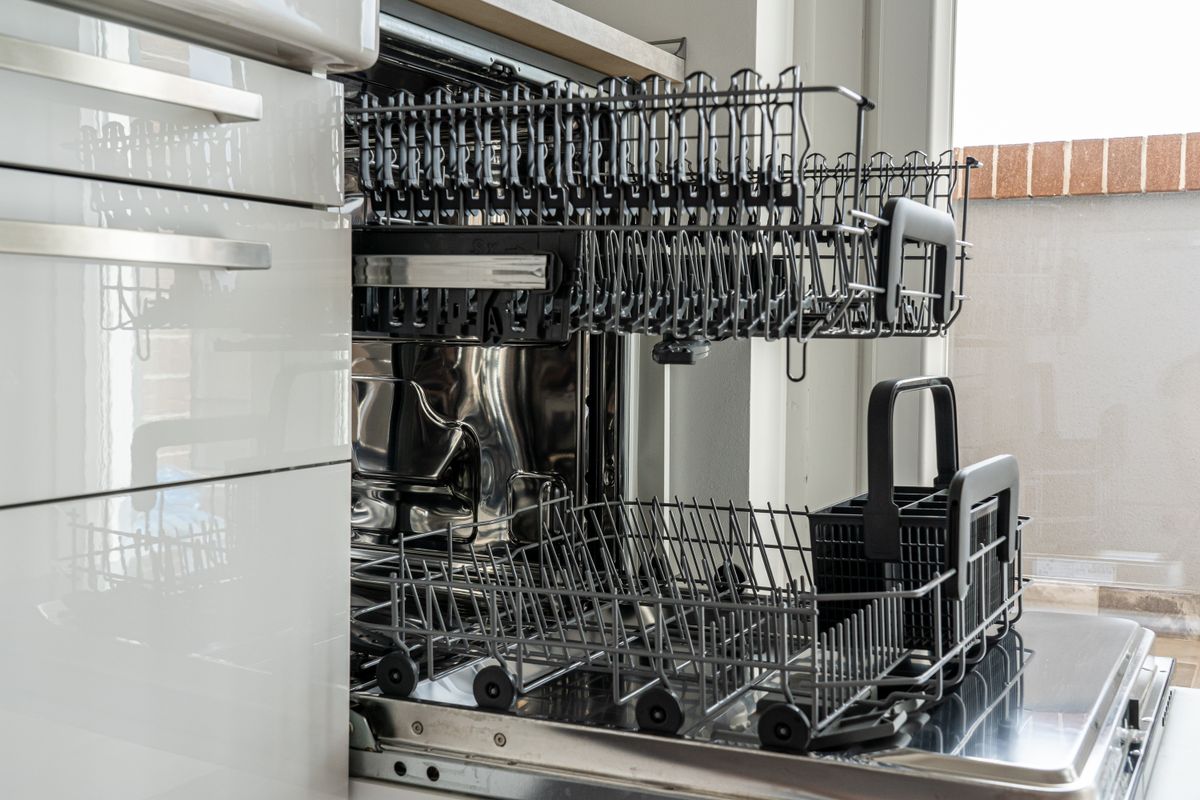
What to Avoid When Cleaning a Dishwasher Drain Hose
Skip the chemical drain cleaner. Products like Drano rely on sodium hydroxide, a strong alkaline compound that generates heat as it breaks down clogs. The CDC’s Agency for Toxic Substances and Disease Registry classifies sodium hydroxide as corrosive to skin, eyes, and the respiratory tract, which is exactly why it’s effective on organic clogs and exactly why it’s risky to use inside an appliance that touches your dishes.
A dishwasher drain hose is made of thinner plastic than the PVC pipes under your sink, and it wasn’t built to handle that level of corrosion. Repeated exposure can soften or crack the hose over time. There’s also a practical concern: any chemical residue left in the drain pump can splash back onto your dishes during the next cycle. Stick to the mechanical cleaning or the vinegar-and-baking-soda method above instead.
How to Prevent Your Drain Hose From Clogging Again
Run Your Garbage Disposal Before Using the Dishwasher
If your dishwasher shares a drain line with a garbage disposal, run the disposal for a few seconds before starting a wash cycle. This clears out anything already sitting in the shared line so the dishwasher isn’t pushing water through a partial blockage.
Scrape Food Off Dishes Before Loading Them
Most drain hose clogs start with large food scraps that get stuck instead of breaking down. You don’t need to fully rinse plates first (most modern detergents are designed to work on some residue), but scraping off bones, seeds, and large chunks before loading makes a real difference.
Only Run Full Loads
Running your dishwasher on a half-empty load more often means more cycles overall, and more cycles means more opportunities for debris to travel into the hose. Waiting until the dishwasher is full, within reason, cuts down on that traffic.
Address Hard Water If It’s an Issue in Your Area
If you’re in a region with hard water, mineral deposits can build up inside the hose alongside grease and food debris, narrowing it faster than in a soft-water home. A monthly rinse-agent cycle or an occasional citric acid wash (following your dishwasher’s manual) helps keep mineral scale from adding to the problem. It won’t replace the cleaning steps above, but it does stretch out how long you can go between them.
Frequently Asked Questions
How often should I clean my dishwasher drain hose?
Once every three to six months is enough for most households. If you notice slow draining, standing water, or odors sooner than that, clean it right away rather than waiting for the next scheduled check.
Can I just use vinegar and baking soda instead of removing the hose?
For light, routine buildup, yes. It’s a good maintenance step between deeper cleanings. If the dishwasher still isn’t draining properly afterward, that’s a sign of a more solid blockage that needs the hands-on removal method.
Is it normal for a dishwasher to smell after cleaning the drain hose?
A faint smell for a cycle or two is normal as leftover residue washes out. If the odor is sharp or persistent, especially anything resembling burnt plastic, the cause is likely unrelated to the drain hose. Our guide on how to get burnt plastic smell out of a dishwasher covers that specific issue.
What tools do I need?
A Phillips or flathead screwdriver for the hose clamp, a shallow pan or towel for spills, a flexible bottle brush or stiff wire, and basic pantry staples (white vinegar and baking soda) if you’re using the no-removal method.
Does a garbage disposal connection make clogging more likely?
It can. When a dishwasher drains through a garbage disposal, anything left sitting in the disposal chamber has a direct path back up into the dishwasher’s drain hose. Running the disposal briefly before each wash cycle, as mentioned above, is the simplest way to keep that shared line clear.
Cleaning your dishwasher’s drain hose regularly is a small task that prevents a much bigger one: a dishwasher that won’t drain at all. Whichever method you use, the goal is the same, keep water moving freely from the tub to your plumbing so the machine can do its job efficiently and quietly, cycle after cycle.

Hey, My name is MAMON. I am a SEO content creator and affiliate marketer with over 8 years of experience. I create honest product reviews, in-depth buying guides, and practical how-to articles to help readers make informed decisions. My mission is to provide trustworthy, research-backed content that delivers real value.
Leave a Reply