
Gas stoves send heat straight up from an open flame, which is exactly why the question of what type of cookware is best for gas stoves comes up so often. Unlike electric coils or induction, gas gives instant, adjustable heat, but that responsiveness only pays off if your pots and pans can handle direct flame contact without warping, developing hot spots, or reacting with your food.
Key Takeaways
- Stainless steel, cast iron, carbon steel, and copper are all strong choices for gas stoves; each trades off heat conduction, weight, and maintenance differently.
- Cast iron is genuinely one of the best materials for gas cooking, not something to avoid, thanks to its heat retention and resistance to warping.
- Thin, cheap aluminum and glass cookware are the real materials to avoid on gas, since they warp or crack under direct flame.
- A flat, thick base matters more than material alone: warped or thin-bottomed cookware won’t heat evenly no matter what it’s made of.
The Best Cookware for Gas Stoves
Gas stoves give you fast, adjustable temperature control, which is a big part of why so many home cooks and chefs prefer them. But because a flame heats the center of a pan more intensely than the edges, the materials that work best are the ones that either conduct heat quickly and evenly or hold heat steadily enough to smooth out that unevenness on their own. The strongest options are:
- Stainless Steel Cookware
- Cast Iron Cookware
- Carbon Steel Cookware
- Copper Cookware
1. Stainless steel cookware
Stainless steel is one of the most reliable materials for gas stoves. It’s durable, non-reactive, so it won’t alter the flavor of acidic or delicate foods, and it resists corrosion from stovetop moisture and spills.
On its own, stainless steel is a mediocre heat conductor, which is why quality cookware is rarely made from a single layer of it. Look for clad construction, where a core of aluminum or copper sits between layers of stainless steel. That core does the actual work of spreading heat evenly, while the stainless steel exterior stays durable, easy to clean, and safe for metal utensils. For more on why this material performs well health-wise too, see our guide on whether cooking in stainless steel is good for your health.
2. Cast iron cookware
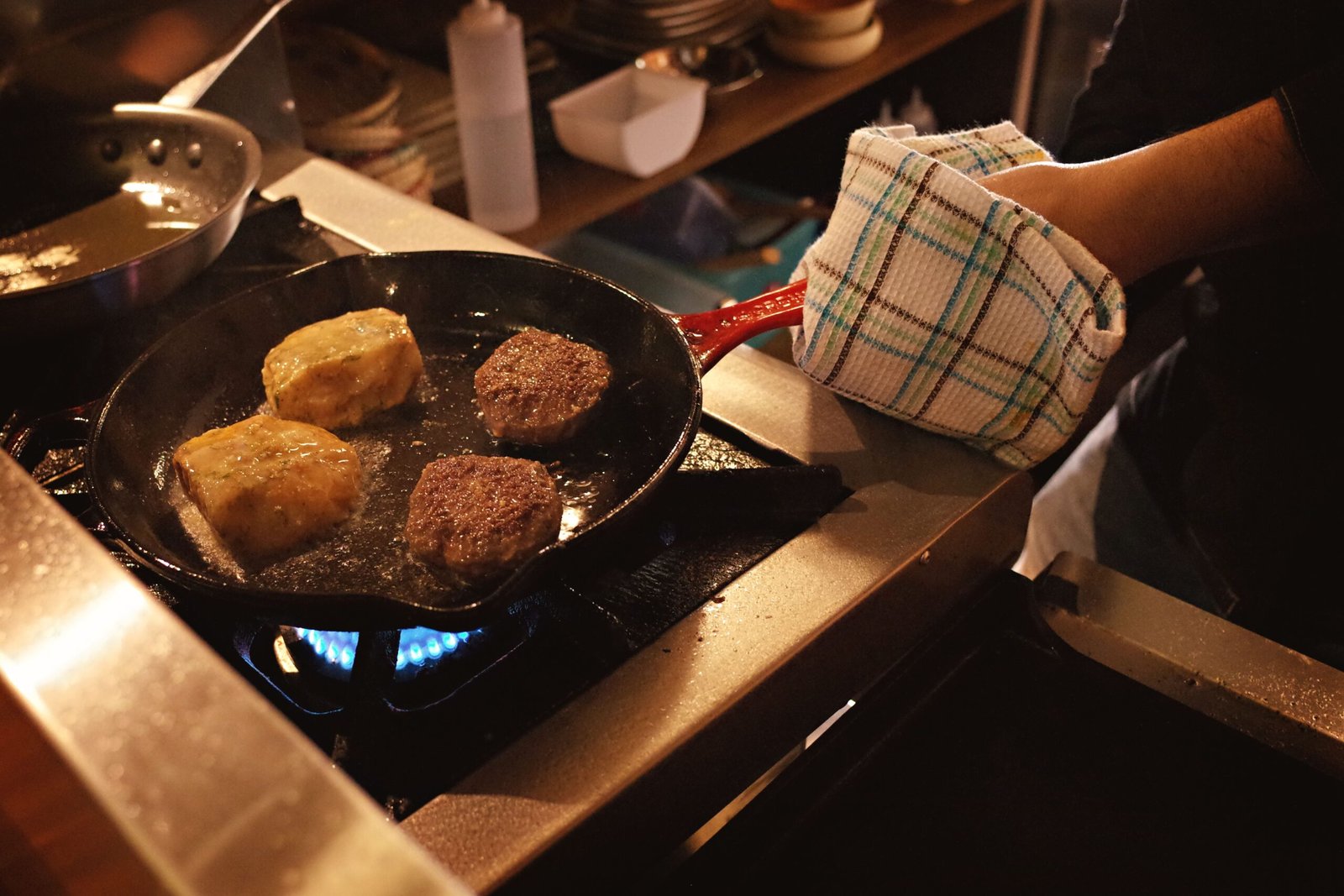
Cast iron deserves a firm correction here: it is genuinely one of the best materials for gas cooking, not something to steer away from. Its thick, dense construction holds an enormous amount of heat, which helps smooth out the uneven flame pattern that gas burners produce. Cookware manufacturers like Lodge, Smithey, and Field Company all list gas as a recommended heat source for their cast iron skillets, and it’s a favorite for searing steaks and getting a hard, even crust that’s harder to achieve with lighter pans.
The trade-offs are real, just not disqualifying. Cast iron takes longer to heat up than stainless steel or aluminum, it’s heavy, and it needs occasional reseasoning to maintain its natural non-stick surface. If you’re rotating the pan a quarter-turn occasionally during a long sear, you can also compensate for the fact that a gas flame is smaller than the pan’s base, which otherwise creates a slightly hotter center. None of that makes cast iron a poor fit for gas; it makes it a material with a learning curve, which is different.
3. Carbon steel cookware
Carbon steel is essentially a lighter, faster-heating cousin of cast iron, made from roughly 99% iron and 1% carbon. It builds a natural non-stick patina with seasoning, just like cast iron, but heats up quicker and responds faster to flame adjustments, which makes it a favorite for stir-frying, searing, and quick sautés on gas.
It’s more warp-resistant than thin aluminum but not entirely immune, so look for a gauge of at least 2mm if you want a pan that will hold its shape reliably over years of gas cooking. Like cast iron, it needs to be kept dry and occasionally reseasoned to prevent rust.
4. Copper cookware
Copper is the best heat conductor of the common cookware materials, and on a gas stove that translates to extremely fast, precise temperature control, ideal for sauces and delicate dishes where a few seconds of extra heat can matter. It’s often the pick professional chefs reach for when asked what type of cookware is best for gas stoves in a restaurant setting, where speed and control matter more than upkeep.
The trade-offs are cost and reactivity. Copper is expensive, scratches relatively easily, and can react with acidic foods if the cooking surface is bare copper rather than lined. Most quality copper cookware is lined with stainless steel or tin specifically to prevent this. Its color can also gradually change with heat exposure, which is cosmetic but worth knowing going in. If cost is the deciding factor, a well-made clad stainless steel pan gets you most of copper’s responsiveness at a fraction of the price, which is why it remains the default answer to what type of cookware is best for gas stoves for most home kitchens.
Quick Comparison: Cookware Materials for Gas Stoves
Since the question of what type of cookware is best for gas stoves really comes down to trade-offs, here’s how the main contenders stack up side by side.
| Material | Heat Conduction | Weight | Maintenance | Best For |
|---|---|---|---|---|
| Clad Stainless Steel | Excellent (with aluminum/copper core) | Medium | Low, dishwasher-safe in most cases | All-purpose cooking, sauces, browning |
| Cast Iron | Slow to heat, excellent retention | Heavy | Moderate, needs seasoning | Searing, long braises, high-heat cooking |
| Carbon Steel | Fast, responsive | Light to medium | Moderate, needs seasoning | Stir-frying, quick sautés, eggs |
| Copper (lined) | Best available, extremely responsive | Medium | High, needs polishing | Sauces, precision cooking |
What Actually Doesn’t Work Well on Gas Stoves
The old advice to avoid cast iron and ceramic on gas stoves gets it backwards. Both work fine, with some caveats. The materials that genuinely struggle on a gas burner are different:
Thin, cheap aluminum
Bare, uncoated aluminum without a hard-anodized or clad construction is soft, warps easily under high, uneven flame heat, and reacts with acidic ingredients. If you like aluminum’s excellent heat conductivity, look for hard-anodized versions instead: the anodizing process changes the metal’s surface chemistry, creating a hard, scratch-resistant, non-reactive coating that holds up far better under direct flame. Our guide to what anodized cookware means covers this in more detail.
Glass and other thermal-shock-prone materials
Standard glass cookware isn’t designed for stovetop use at all, let alone direct flame; the rapid, uneven heating from a gas burner can cause it to crack. Stick to metal or enameled cast iron for stovetop cooking, and save glass for the oven or microwave.
Warped or thin-bottomed pans, regardless of material
Any pan with a warped or overly thin base will rock on the burner grate and heat unevenly, no matter what it’s made of. A flat, thick base matters as much as the material itself. If a pan doesn’t sit flush and stable on your grates, it’s going to underperform on gas even if the material is otherwise excellent.
A Note on Ceramic-Coated Cookware
Ceramic-coated non-stick cookware, discussed in more detail in our ceramic cookware pros and cons guide, works fine on gas stoves as long as you keep the heat moderate. The coating handles low-to-medium flame well for eggs, fish, and other delicate foods that would otherwise stick. Where it runs into trouble is sustained high heat, which degrades the non-stick surface over time regardless of stove type. That’s a heat-management issue, not a gas-specific incompatibility.
Practical Tips for Cooking on Gas
Beyond picking the right material, a few habits make a bigger difference on gas than on other stove types, since the flame is more direct and less forgiving than a flat electric or induction surface.
- Match the burner to the pan. A small pan on a large burner wastes heat around the edges and can scorch the pan’s exterior; a large pan on a small burner heats unevenly in the center.
- Preheat gradually. Starting on medium heat rather than jumping straight to high helps any material, especially cast iron and carbon steel, heat more evenly before you add oil or food.
- Keep the flame under the pan. If flames are licking up the sides of your cookware, you’re wasting gas and risking damage to handles, especially plastic or wood ones that aren’t rated for that kind of exposure.
- Let pans cool before rinsing with cold water. Sudden temperature swings are hard on cast iron, carbon steel, and ceramic-coated surfaces alike.
Watch: Choosing Cookware for a Gas Stove
This video walks through several materials side by side and how they perform under direct gas flame, a useful visual companion to the material breakdown above.
Frequently Asked Questions
Is cast iron really safe to use on a gas stove every day?
Yes. Major cast iron manufacturers list gas as a fully supported heat source, and daily use is common practice, as long as you’re not leaving an empty pan on high heat for extended periods.
What is the single best all-around choice if I only want one type of cookware?
Clad stainless steel is the most versatile choice for most kitchens: it’s non-reactive, handles a wide range of heat levels well, and works for nearly everything except very delicate non-stick applications like omelets.
Do I need special cookware for a glass-top stove?
Yes, and that’s a separate topic from standard gas burners covered here. Glass-top stoves are typically electric or induction rather than gas, and they have their own flat-bottom, scratch-sensitive requirements; see our guide to the best cookware for glass top stoves for specifics.
Can non-stick pans handle a gas flame?
Yes, at low to medium heat. High, sustained heat is what damages non-stick coatings, whether the pan is on gas, electric, or induction, so the stove type itself isn’t the limiting factor.
Does cookware need to be magnetic to work on a gas stove?
No. Magnetic bases only matter for induction cooktops. Any material discussed here, magnetic or not, works fine on gas since the flame heats the pan directly rather than through electromagnetic induction.
What size pot or pan works best on a standard gas burner?
Match the pan’s diameter roughly to the burner’s flame ring. A pan noticeably larger than the flame will have cooler edges; one noticeably smaller wastes heat and can scorch the pan where the flame extends past its base.
Conclusion
So, what type of cookware is best for gas stoves? Stainless steel, cast iron, carbon steel, and copper all perform well, each with a different balance of heat conduction, weight, and upkeep. What actually struggles on gas is thin, uncoated aluminum, glass cookware, and any pan with a warped or overly thin base, regardless of material. Match your cookware to your cooking style, keep the flame contained under the pan, and any of these materials will serve a gas stove well for years.

Hey, My name is MAMON. I am a SEO content creator and affiliate marketer with over 8 years of experience. I create honest product reviews, in-depth buying guides, and practical how-to articles to help readers make informed decisions. My mission is to provide trustworthy, research-backed content that delivers real value.
Leave a Reply