
Yes, you can wash bottles in the dishwasher safely, and for most plastic, glass, and silicone bottles it actually cleans better than hand washing. The key is knowing which bottles are dishwasher safe, how to load them so water reaches every surface, and which cycle to run. Get any one of those wrong and you end up with a bottle that looks clean but still has bacteria hiding in the threads, or a warped bottle that no longer seals.
This guide covers the full process, the CDC-recommended method for baby bottles, materials that should never go in a dishwasher, and how much water a dishwasher uses compared to washing by hand.
Key Takeaways
- Bottles made of BPA-free plastic, glass, or silicone are generally dishwasher safe; aluminum, uncoated stainless steel, and most double-wall insulated bottles are not.
- The CDC recommends disassembling every bottle part, rinsing under running water, then washing on a hot cycle with a heated dry or sanitize setting for baby feeding items.
- A standard ENERGY STAR dishwasher uses about 3.2 gallons of water per cycle, compared to roughly 9 to 27 gallons for hand washing a full load under a running tap, according to federal efficiency data.
- Always place bottles and small parts on the top rack, away from the heating element, to prevent warping.
Can You Wash Bottles in the Dishwasher?
Most bottles can go in the dishwasher, including everyday water bottles and baby bottles, as long as the manufacturer labels them dishwasher safe. The heat and water pressure inside a dishwasher reach temperatures most people can’t tolerate at the sink, which means it often does a more thorough job of dissolving oils and killing bacteria than hand washing.
That said, not every bottle is built for it. Manufacturers stamp a small dishwasher-safe icon, usually plates or glasses under water droplets, on the bottom of the bottle or inside the packaging. If you can’t find it, check the product page on the manufacturer’s website before running a cycle. When in doubt, hand wash instead. A cracked bottle or a warped lid is a cheaper mistake than finding out the hard way.
Which Bottle Materials Are Dishwasher Safe?
- BPA-free plastic (Tritan, polypropylene): Usually safe on the top rack. Avoid “sanitize” if the label doesn’t confirm it; the extra heat can warp thinner plastics over time.
- Glass: Safe on either rack; it tolerates direct heat well.
- Silicone (sleeves, nipples, straws): Dishwasher safe but wears out faster with frequent high-heat cycles.
- Stainless steel, uncoated: Generally not dishwasher safe. Detergent can dull the finish and cause pitting.
- Double-wall vacuum-insulated bottles (Hydro Flask, Yeti, Stanley): Hand-wash only. The heat can break the vacuum seal between the walls and ruin the insulation.
- Aluminum: Not dishwasher safe. Detergent reacts with the metal and strips the protective coating.
How to Wash Bottles in the Dishwasher Safely: 7 Steps
Step 1: Check the Dishwasher-Safe Label
Before anything else, confirm the bottle is rated for dishwasher use. Look on the bottom of the bottle or the original packaging for the dishwasher-safe symbol. Skipping this step is the single most common reason people damage a bottle in the dishwasher, especially with insulated or aluminum bottles that look similar to dishwasher-safe plastic ones.
Step 2: Disassemble Every Part
A fully assembled bottle traps water and detergent inside the cap and doesn’t get clean. Take apart every removable piece: the main body, lid, straw, gasket or seal, and for baby bottles, the nipple, collar, and valve. Each piece needs to face the spray arm directly to actually get washed rather than just rinsed.
Step 3: Rinse Before Loading
Give every part a quick rinse under running water to knock loose any residue, milk, juice, or protein powder, before it bakes onto the surface during the wash cycle. This step matters more than people think. Baked-on residue is much harder for a dishwasher to remove than fresh residue, and it’s the main reason a “clean” bottle can still smell off.
Step 4: Load the Bottle Correctly
Place bottles and larger parts upside down on the top rack, away from the dishwasher’s heating element at the bottom. If your model has a dedicated bottle-wash jet or a fold-down bottle rack, use it; these jets shoot water directly up into narrow openings that the main spray arms can’t always reach. Small parts like lids, nipples, and valves should go in a closed-top basket or a mesh laundry bag so they don’t fall through the rack and land in the filter or heating element.
Step 5: Add the Right Detergent
Use a clear, unscented detergent rather than one with dyes, fragrance, or added moisturizers, since bottles hold onto residue more than plates do. Skip dishwasher tablets and pods for bottle-only loads. They dissolve slowly and can leave a filmy residue inside narrow bottle openings that a plate never retains. A liquid or gel detergent measured by hand gives you more control over how much reaches tight spaces.
Step 6: Select the Right Cycle
Choose the sanitize cycle if your dishwasher has one; it runs at a higher sustained temperature (typically 150°F or above) that kills more bacteria than a normal cycle. If your machine doesn’t have a sanitize setting, the hot water or “heavy” cycle is the next best option. Avoid eco or quick-wash cycles for bottles specifically, since they run cooler and shorter to save water and energy, which works fine for lightly soiled dishes but not for narrow-necked bottles.
Step 7: Dry and Store Properly
Use the heated dry setting if your bottles are dishwasher safe at high heat, or a rinse aid to speed up air drying without the extra heat. Once the cycle ends, let parts finish air-drying fully before reassembling and storing them; trapped moisture in a sealed bottle is exactly the environment mold needs to grow.
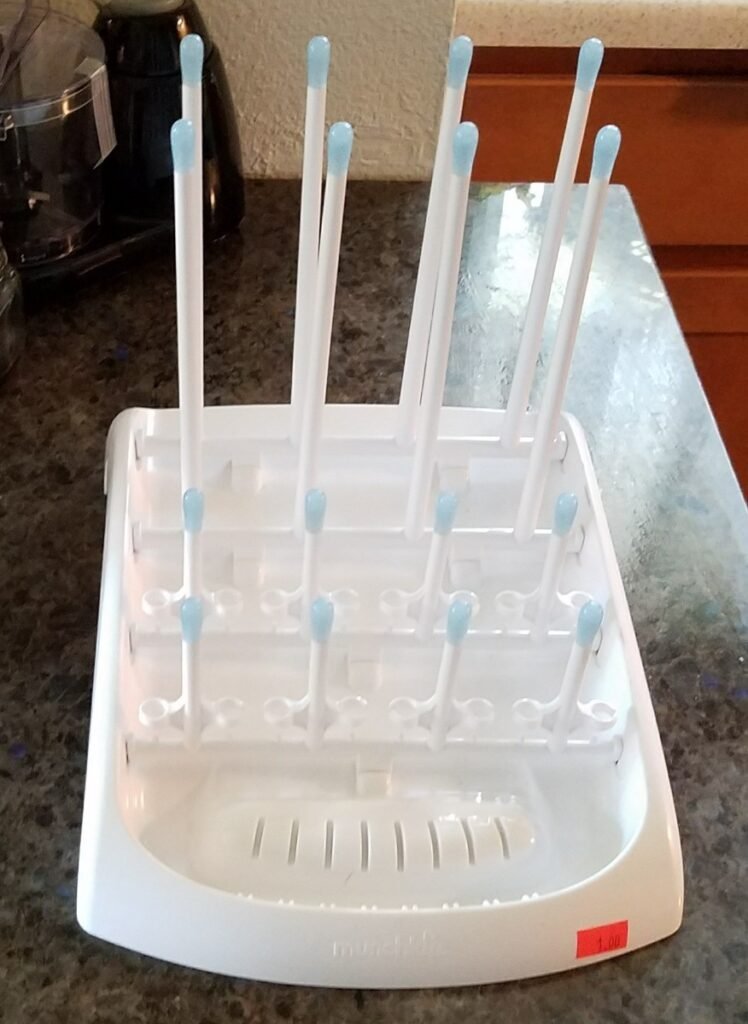
How to Wash Baby Bottles in the Dishwasher (CDC-Backed Method)
Baby bottles need a slightly stricter process than a standard water bottle, because infants under two months, premature babies, and babies with weakened immune systems are more vulnerable to the bacteria that can survive incomplete cleaning. The <cite index=”7-1,7-2″>CDC recommends separating every bottle part (bottle, nipple, cap, ring, valve) and rinsing them under running water before washing, rather than setting items directly in the sink, which can carry its own germs</cite>.
From there, place the parts in the dishwasher, ideally inside a closed-top basket so small pieces don’t fall into the filter, and <cite index=”7-1″>run the dishwasher with hot water and a heated drying cycle, or a sanitizing setting, since the added heat helps kill more germs</cite>. <cite index=”3-1″>If you use a dishwasher with hot water and a heating dry cycle, or a sanitizing setting, a separate sanitizing step generally isn’t necessary for feeding items</cite>.
After the cycle, <cite index=”7-1″>wash your hands before removing and storing the cleaned items, and if anything is still damp, lay it on a clean, unused towel or paper towel to air-dry fully rather than toweling it dry</cite>, which can transfer germs right back onto a clean bottle. For parents managing very young or immunocompromised infants, pediatricians sometimes recommend an added heat- or bleach-based sanitizing step on top of the dishwasher cycle; check with your child’s doctor if you’re unsure which routine fits your situation.
Watch: How to Wash Baby Bottles in the Dishwasher
Seeing the loading and rack placement in action makes the process easier to follow than photos alone. This short walkthrough shows the disassembly, rack placement, and cycle selection covered above.
Dishwasher vs. Hand Washing: Which Actually Uses Less Water?
Most people assume hand washing uses less water than a dishwasher because the cycle runs for over an hour. The opposite is usually true. <cite index=”13-1″>A standard ENERGY STAR certified dishwasher is rated at roughly 3.2 to 3.5 gallons of water per cycle</cite>, recirculating that same water rather than sending a continuous stream down the drain.
Hand washing a full load under a running tap, by contrast, uses closer to <cite index=”10-1″>9 to 27 gallons</cite> depending on how long the water runs. Over a year, <cite index=”18-1″>a new ENERGY STAR certified dishwasher uses less than half the energy of hand washing and saves around 8,400 gallons of water annually</cite>. For a household running bottles through the dishwasher daily, that difference adds up fast.
Common Mistakes That Damage Bottles or Leave Them Dirty
- Loading bottles fully assembled. Water can’t reach the inside of a capped bottle, so it looks clean on the outside and stays dirty inside.
- Placing bottles on the bottom rack near the heating element. The most common cause of warped plastic and melted silicone parts.
- Using scented or dyed detergent. Fragrance and dye residue can linger in bottle threads and transfer to the next drink.
- Running a quick or eco cycle for baked-on residue. Less heat and less water isn’t enough for anything dried onto a bottle’s interior.
- Skipping the pre-rinse. Protein shakes, milk, and juice bake onto plastic during the wash’s heat cycle if not rinsed first.
- Ignoring the dishwasher-safe label. Insulated, aluminum, and uncoated steel bottles are the ones most often ruined this way.
If your dishwasher itself is leaving bottles with a filmy residue or a lingering odor even when you follow every step above, the issue may be the machine rather than your process; How to Get Burnt Plastic Smell Out of Dishwasher and How to Change a Dishwasher Filter both cover the maintenance side of that problem.
Frequently Asked Questions
Can you put baby bottles in the dishwasher every day? Yes, as long as the bottles are labeled dishwasher safe. Daily dishwasher use is standard practice for most families and is generally gentler on bottles than daily hand scrubbing.
Do you need to sanitize bottles separately after the dishwasher? Not usually. <cite index=”3-1″>If your dishwasher uses hot water and a heated drying cycle or a sanitizing setting, a separate sanitizing step isn’t necessary for most infant feeding items</cite>. Ask your pediatrician if your baby is under two months old, premature, or has a weakened immune system.
Why do my bottles still smell after a dishwasher cycle? Usually a skipped pre-rinse, a scented pod instead of clear liquid detergent, or a dirty dishwasher filter redepositing odor onto the whole load. Check the filter first.
Can insulated water bottles like Hydro Flask go in the dishwasher? Most double-wall vacuum-insulated bottles are hand-wash only. Sustained dishwasher heat can break the vacuum seal between the walls, killing the insulation even if the bottle still looks fine.
What temperature does a dishwasher need to reach to properly clean a bottle? A sanitize cycle typically runs at 150°F or higher, well above what’s safe for hands but well within what dishwasher-safe plastics, glass, and silicone can tolerate.
Final Thoughts
Washing bottles in the dishwasher safely comes down to three things: confirming the bottle is actually dishwasher safe, taking it apart so water reaches every surface, and choosing a cycle hot enough to finish the job. Follow the CDC’s disassemble-rinse-wash routine for baby bottles specifically, keep insulated and aluminum bottles off the rack entirely, and you’ll get bottles that are genuinely clean, not just rinsed, load after load.
pper rack to protect them from heat damage.

Hey, My name is MAMON. I am a SEO content creator and affiliate marketer with over 8 years of experience. I create honest product reviews, in-depth buying guides, and practical how-to articles to help readers make informed decisions. My mission is to provide trustworthy, research-backed content that delivers real value.
Leave a Reply