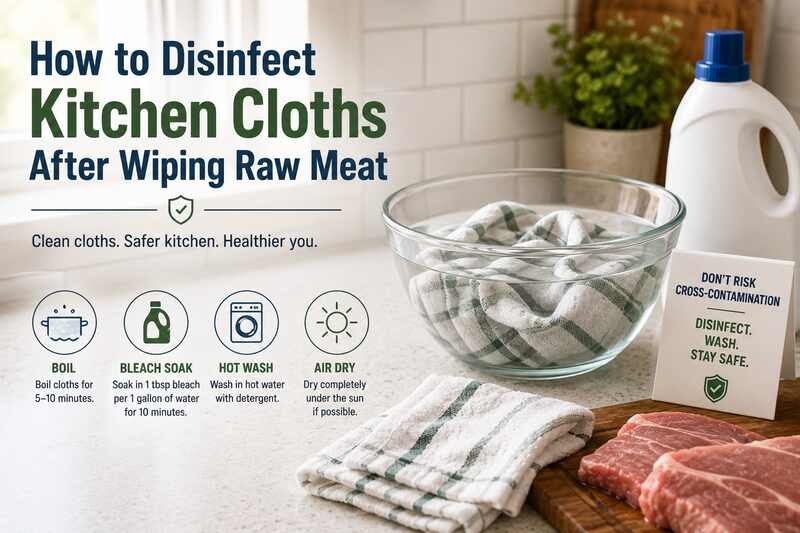
It’s very important to clean kitchen cloths well after they touch raw meat. Just wiping or rinsing them isn’t enough. Knowing how to disinfect kitchen cloths after wiping raw meat is essential to eliminate harmful bacteria effectively, so your kitchen stays safe to cook in.
Key Takeaways
- Washing or rinsing raw meat or poultry actually increases cross-contamination risk, since splashing water can spread bacteria around the sink and counters.
- A bleach solution of one tablespoon of unscented liquid chlorine bleach per gallon of water can disinfect kitchen cloths after handling raw meat.
- Proper handwashing for at least 20 seconds is crucial before and after handling raw meat.
- Cooking meat and poultry to the correct internal temperature kills bacteria a cloth alone can’t remove.
- Storing raw meat on the bottom refrigerator shelf helps prevent drips from contaminating other foods.
Why Disinfection Matters When Handling Raw Meat
Bacteria like Campylobacter and Salmonella can survive on damp cloths and surfaces for hours, then spread to other foods during ordinary kitchen tasks.
Understanding Cross-Contamination
Cross-contamination happens when bacteria move from one surface to another, often through a dirty kitchen cloth. Using the same cloth to wipe a cutting board that touched raw meat and then a ready-to-eat food surface can spread bacteria in seconds. Separating cutting boards for raw and ready-to-eat foods is a natural companion habit to knowing how to disinfect kitchen cloths after wiping raw meat.
Health Risks Associated with Raw Meat
Raw meat, poultry, and eggs carry more bacteria than most kitchen ingredients. Eating undercooked food, or food touched by a dirty cloth, can cause symptoms from diarrhea and vomiting to hospitalization in severe cases.
Importance of Kitchen Hygiene
The CDC estimates 48 million Americans get sick from foodborne illness each year, with about 128,000 hospitalized and 3,000 deaths. A contaminated kitchen cloth is a common, preventable link in that chain.
Signs Your Cloths Need Disinfecting
Kitchen cloths can harbor harmful bacteria if not cleaned right. Watch for these signs:
Visible Stains and Odors
Stains and strong smells mean a cloth is holding onto food, grease, and bacteria. Wash and disinfect it right away.
Frequent Use and Wear
Cloths used a lot after raw meat get dirty faster and wear out sooner, so rotate them out often.
Color Changes or Damage
Discoloration or damage usually means a cloth can’t be cleaned effectively anymore, and it’s time for a new one.
Checking cloths regularly and addressing these issues keeps food prep surfaces genuinely clean, not just clean-looking.
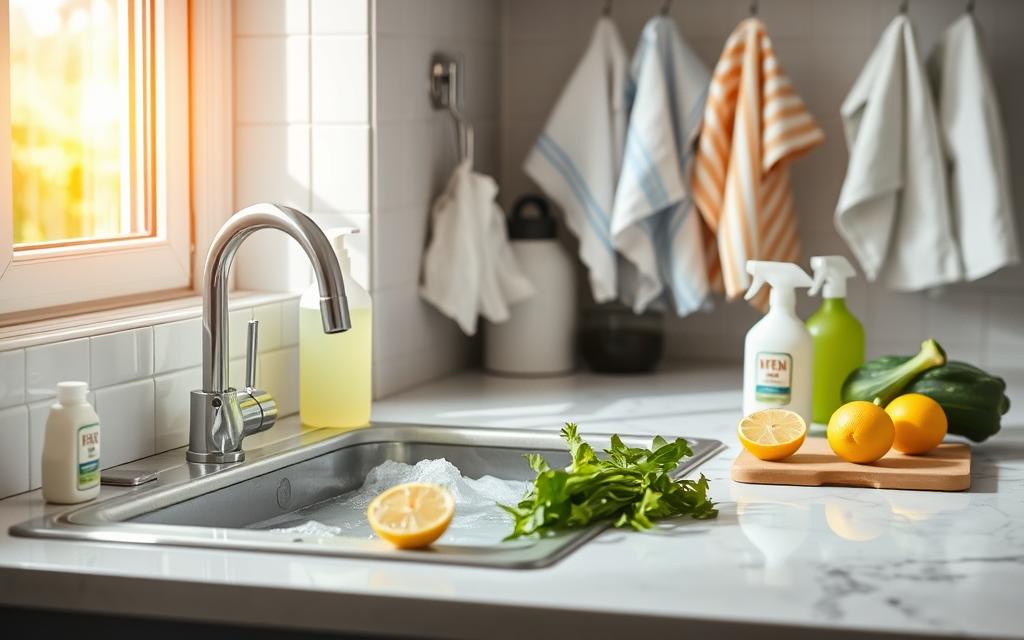
How to Disinfect Kitchen Cloths After Wiping Raw Meat: Best Practices
Using separate cloths for raw and cooked foods is one of the simplest ways to stop harmful bacteria from spreading.
Separating Cloths for Raw and Cooked Foods
Keep one set of cloths for raw meat, poultry, or seafood, and a different set for surfaces that only touch cooked or ready-to-eat foods.
Washing vs. Disinfecting: What’s the Difference?
Washing cloths in warm, soapy water is a good start, but soap and water alone won’t kill all the bacteria. To finish the job, disinfect with a food-safe disinfectant or a bleach solution.
| Washing | Disinfecting |
|---|---|
| Physically removes dirt and some bacteria | Kills remaining harmful pathogens |
| Necessary for basic cleaning | Essential for complete disinfection |
| Leaves some bacteria behind | Effectively eliminates bacteria and viruses |
Good washing habits and disinfection work together for a genuinely safe cooking space, and skipping either step leaves an opening for bacteria to linger.
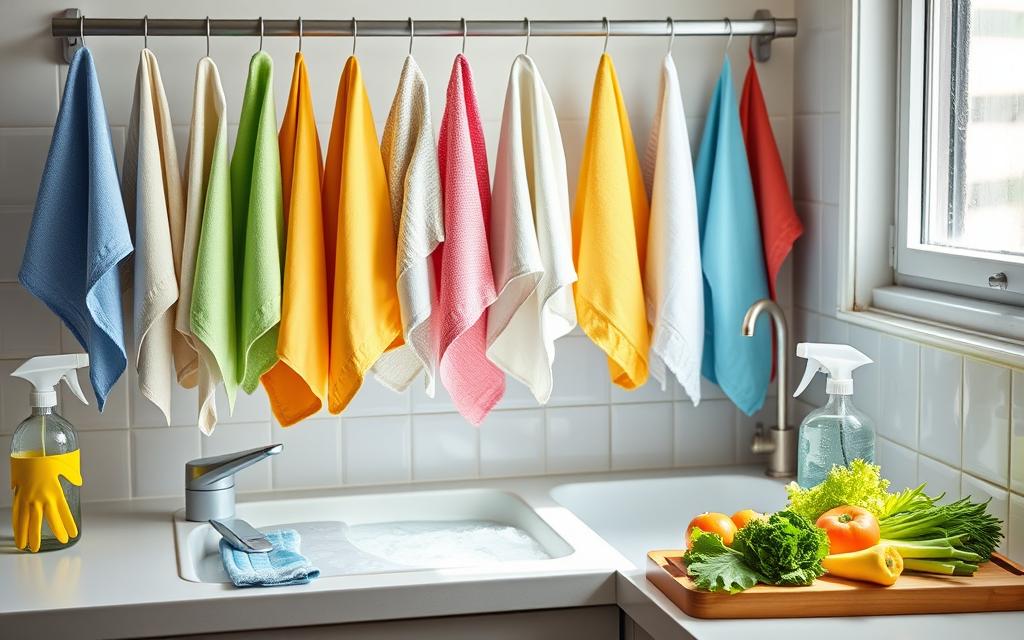
Cleaning Cloths with Soap and Water
Start by washing kitchen cloths in warm, soapy water before moving on to disinfection.
Choosing the Right Soap
Choose a dish soap that cuts through grease well, ideally one with antibacterial properties, to help lift meat residue and bacteria off the fabric.
Effective Washing Techniques
- Fill a sink or large bowl with warm, soapy water.
- Submerge the cloths and soak a few minutes to loosen stuck-on food.
- Gently scrub, paying extra attention to areas that touched raw meat.
- Rinse thoroughly under running water to remove all soap and dirt.
- Wring out excess water so the cloths aren’t dripping wet.
Plain soap and water removes most surface germs and loose debris, but it’s a preliminary step, not full disinfection, once raw meat has been involved. That’s exactly why the next step, a proper bleach soak, still matters even after a thorough wash.
Disinfecting Kitchen Cloths with Bleach Solutions
Learning how to disinfect kitchen cloths after wiping raw meat almost always comes back to bleach, since it remains the most reliable option available at home.
Diluting Bleach for Safety
The USDA recommends mixing 1 tablespoon of unscented liquid chlorine bleach with 1 gallon of water for sanitizing food-contact surfaces and cloths. This kills bacteria like Salmonella and E. coli while staying gentle enough for fabric and skin.
Soaking Cloths in Bleach Solution
Soak cloths in the bleach solution for a few minutes so it can reach deep into the fabric, then rinse well and let them dry fully before reuse.
Disinfecting with bleach regularly is one of the most dependable ways to prevent cross-contamination and keep your family safe.
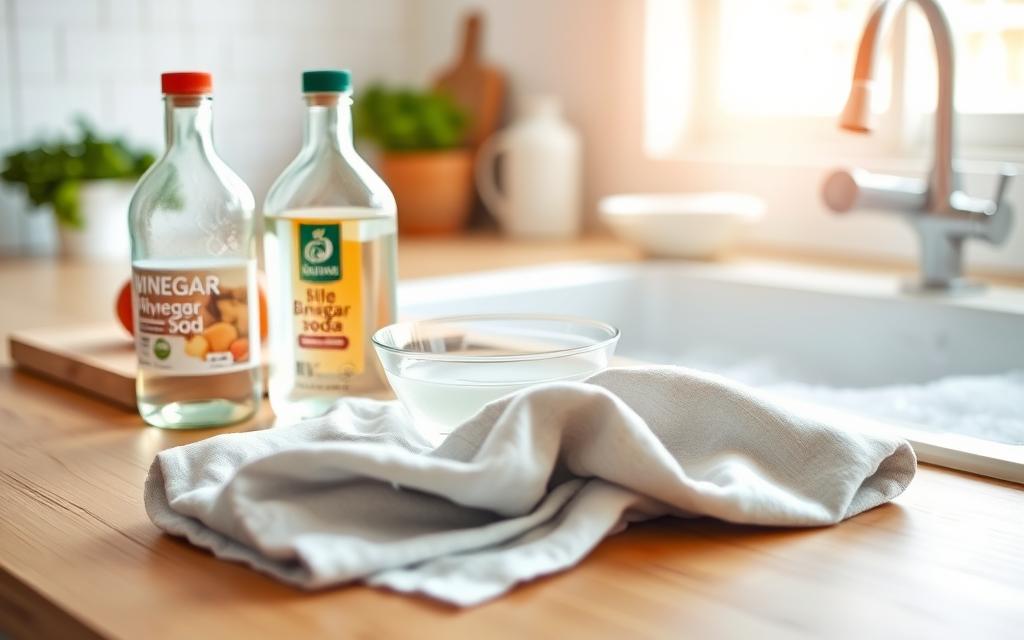
Using Vinegar and Baking Soda as a Lighter Alternative
White vinegar and baking soda are useful for everyday kitchen upkeep, gentler on fabric and the wallet than bleach. It’s worth being clear about their limits right after raw meat contact, though.
What Vinegar Can and Can’t Do
White vinegar can cut grease and lift odors, but research comparing it to bleach shows it’s a much weaker, less consistent disinfectant against Salmonella, E. coli, and Listeria. Diluting it further only weakens it more. Vinegar suits routine cloth cleaning, but it shouldn’t replace a bleach soak after raw meat contact. If you’d rather avoid bleach altogether, this guide on cleaning kitchen towels without bleach covers gentler methods that still hold up against everyday grime. Bleach still remains the more dependable choice right after raw meat, though.
Using Vinegar and Baking Soda Together
- Soak cloths in equal parts water and white vinegar for general freshening between heavier cleanings.
- Rinse and sprinkle on baking soda to lift mild stains and neutralize odors.
- Treat this as light maintenance, not a substitute for bleach whenever raw meat is involved.
Washing Machine Disinfection Techniques
Your washing machine can do much of the disinfecting work for you with the right settings and additives.
Hot Water Wash Settings
Always use the hottest water cycle safe for the fabric. Hot water kills more bacteria, cuts grease better, and helps detergent work harder.
Adding Disinfectants to Your Wash
- Adding bleach to the wash kills bacteria and viruses that plain detergent leaves behind.
- For a gentler option between bleach loads, try white vinegar or hydrogen peroxide.
- Always follow the disinfectant product label for the correct amount to use.
Combining hot water with the right disinfectant is one of the most reliable ways to get a genuinely safe cloth. Visibly clean isn’t the same thing as disinfected.
Proper Drying Methods for Disinfected Cloths
Drying cloths well after washing matters just as much as the wash itself, since a damp cloth can undo a lot of the disinfecting work already done.
Machine Drying vs. Air Drying
A hot dryer cycle is generally the more effective choice, since sustained heat kills residual microbes a wash alone might miss. Left to air dry indoors, a damp cloth can stay wet for hours, giving surviving bacteria a chance to multiply. If you do air dry, use strong airflow or direct sunlight, since UV light and fast evaporation both limit bacterial regrowth.
Importance of Fully Drying Cloths
- Damp cloths can grow bacteria and mold, undoing the disinfecting work.
- Fully dry cloths confirm the disinfectant had time to work.
- Leftover moisture in a folded, stacked cloth lets bacteria multiply quickly.
| Drying Method | Advantages | Disadvantages |
|---|---|---|
| Machine Drying (High Heat) |
|
|
| Air Drying |
|
|
Regular Maintenance and Replacement Tips
Replacing cloths on schedule matters just as much as cleaning them well. Over time, cloths get worn, stained, and less effective at actually lifting bacteria, which quietly undermines even a good cleaning routine.
When to Replace Kitchen Cloths
Replace kitchen cloths every few months, sooner if they show real wear. Watch for frayed edges, thin spots, or smells that don’t come out in the wash. A set of quality, durable kitchen cloths can make this rotation less of a hassle.
Signs of Wear and Tear to Watch For
- Visible stains or discoloration that won’t come out, even after washing
- Frayed or worn edges that can’t be effectively cleaned
- Thinning fabric that compromises absorbency and cleaning power
- Persistent, lingering odors that suggest bacteria have taken hold
Watching your cloths and replacing them on a regular schedule keeps your kitchen genuinely hygienic for food prep, not just tidy-looking.
| Replacement Recommendations | Estimated Cost |
|---|---|
| 2 dozen huck towels | $20-$40 |
| 1 dozen cotton dishcloths | $10-$20 |
| 3-4 dozen cloth napkins | $30-$60 |
Storing Clean Cloths Safely
After washing and disinfecting, cloths need a genuinely clean spot to live between uses.
Designating a Clean Storage Area
Choose a dry, clean drawer or container just for kitchen cloths. Never store damp cloths, since trapped moisture lets bacteria grow.
Hygiene Tips for Storing Cloths
- Keep kitchen cloths away from other household linens.
- Make sure the storage area itself is clean and free from dirt and dust.
- Don’t stack or fold cloths while they’re still damp.
- Check the storage area regularly for mold or mildew.
Good storage habits pair naturally with the odor-prevention tips in this guide to keeping kitchen towels from smelling, since a dry, well-ventilated storage spot solves both problems at once.
| Best Practices for Storing Clean Kitchen Cloths | Explanation |
|---|---|
| Use a dedicated storage container | Choose a clean, dry spot just for your disinfected kitchen cloths to stop germs. |
| Avoid storing damp cloths | Wet cloths can grow bacteria, so keep them dry. |
| Regularly clean the storage area | Disinfect the area often to keep it clean for your cloths. |
| Store kitchen cloths separately | Keep them away from other household linens to prevent germs. |
Frequently Asked Questions
How to disinfect kitchen cloths after wiping raw meat quickly, without bleach on hand?
Wash in hot, soapy water first, then run the cloth through a hot dryer cycle. It’s not as reliable as bleach, but the heat meaningfully reduces bacteria until you can do a full bleach soak.
Is a bleach solution safe to use on colorful kitchen cloths?
A properly diluted solution is generally safe for a quick soak, though it can fade some dyes over repeated use. Test an inconspicuous spot first.
How often should raw-meat cloths be disinfected?
Disinfect a cloth right after it touches raw meat, rather than saving it for laundry day. Bacteria can multiply on a damp, contaminated cloth within hours.
Can hydrogen peroxide replace bleach for disinfecting kitchen cloths?
Diluted hydrogen peroxide is a reasonable middle-ground disinfectant, gentler than bleach, though it needs a longer contact time to be as effective.
Do dishwasher-safe cloths get properly disinfected in a dishwasher?
A hot dishwasher cycle can help sanitize sturdy cloths, but it shouldn’t be the only method for cloths that directly wiped up raw meat juices.
What’s the single most important habit for preventing cross-contamination from kitchen cloths?
Keeping separate cloths for raw meat and everything else, and disinfecting the raw-meat cloth right away, prevents more illness than any single product choice.
Conclusion: Maintaining a Safe Kitchen Environment
Knowing how to disinfect kitchen cloths after wiping raw meat comes down to a few habits. Wash with soap and water first, follow with a proper bleach solution, dry thoroughly with heat, and store cloths somewhere clean and dry. Vinegar and baking soda have a place in everyday maintenance, but they’re not a substitute for bleach right after raw meat contact.
Recap of Best Practices
Disinfect kitchen cloths after every raw-meat encounter, not just on laundry day. Wash with soap and water, soak in a proper bleach solution, and dry fully with heat whenever possible. Pair that with thorough handwashing, cooking meat and poultry to a safe temperature, and a genuinely clean kitchen.
Encouragement for Ongoing Kitchen Hygiene
Being consistent about kitchen hygiene is worth the small extra effort for your family’s health. Once it becomes routine, it stops feeling like a chore and just becomes how your kitchen runs.

Hey, My name is MAMON. I am a SEO content creator and affiliate marketer with over 8 years of experience. I create honest product reviews, in-depth buying guides, and practical how-to articles to help readers make informed decisions. My mission is to provide trustworthy, research-backed content that delivers real value.
Leave a Reply