
Kitchen towels are essential for cleaning and drying, but they can develop unpleasant odors if not cared for properly. Knowing how to keep kitchen towels from smelling can make a big difference. This guide covers what causes towel odor and the washing, drying, and storage habits that keep towels genuinely fresh, not just scented.
Key Takeaways
- Proper air-drying of kitchen towels before storing helps prevent the bacterial growth that causes odors.
- Rotating towels daily and washing them at least once a week with enzyme-based detergent effectively combats odor-causing bacteria.
- Deodorizing with natural solutions like baking soda or vinegar works better long-term than scent boosters, which just mask the smell.
- Regular cleaning of the washing machine and replacing worn-out towels are both crucial for lasting freshness.
- Overusing detergent and fabric softener leaves residue behind that actually contributes to musty smells.
Understand Why Kitchen Towels Smell
Figuring out how to keep kitchen towels from smelling starts with the cause: trapped moisture and bacterial growth, which usually go hand in hand.
Common Causes of Odors
Wet towels are the biggest reason for bad smells. A towel that doesn’t dry fully between uses becomes an easy target for bacteria, and mixing in food residue and grease produces that familiar musty smell.
Too much detergent or fabric softener adds to the problem, since leftover residue traps odors instead of rinsing away. Not washing towels often enough lets bacteria and odor compounds build up over time.
The Role of Moisture and Bacteria
Kitchen towels absorb protein from food, grease, and water, making them an ideal environment for bacteria. A University of Arizona study tested 82 kitchen hand towels across five U.S. and Canadian cities and found coliform bacteria in 89% of them, with E. coli present in 25.6%, linked directly to washing frequency.
- Changing dishcloths often helps stop mold and odor-causing bacteria before they take hold.
- Boiling dish rags in water with a splash of vinegar for about 15 minutes helps kill off bacteria and mold buildup.
Moisture is the single biggest driver of bacterial growth on towels. A damp towel left bunched up is effectively a breeding ground for odor, and drying and storing towels correctly is what keeps that from happening.
Understanding why towels smell makes it easier to keep them fresh. Good washing, drying, and storage habits do most of the work.
Proper Storage of Kitchen Towels
Keeping kitchen towels smelling fresh depends heavily on where and how you store them. The right spot prevents musty smells before they start, and folding technique matters more than most people realize.
Choosing the Right Location
Pick a storage spot with good airflow. Avoid dark, damp places like a closed drawer or cabinet, since those trap moisture and let bacteria grow. Instead, hang towels to dry fully before moving them to a cool, dry spot with decent air circulation.
Folding and Organizing for Airflow
- Fold towels loosely so air can still move around them. Folding too tightly traps moisture inside the fabric.
- Use a countertop drying rack or hang towels over the oven handle to let them dry before storing.
- Rotate your towels regularly so no single one stays damp and overused for too long.
- Keep 8 to 10 towels on hand so you can rotate daily without smells building up.
These storage habits go a long way toward keeping kitchen towels clean and smelling fresh.
| Product | Typical Price |
|---|---|
| Jitejoe Countertop Dishcloth Drying Rack | $10-$15 |
| Zeppoli Classic Kitchen Towels, 15-Pack | $20-$25 |
| HAPPY SiNKS Magnetic Cloth Holder | $50-$60 |

Washing Techniques That Combat Odors
Getting the wash right is central to how to keep kitchen towels from smelling. Choose a detergent built to fight tough odors, like an enzyme-based formula. Don’t use more than about two tablespoons per load; extra detergent just leaves residue that smells.
For a deep clean, use hot water and a longer cycle, and wash towels on their own rather than mixed with other laundry. Add a cup of white vinegar or baking soda for extra freshness.
Selecting the Right Detergent
An enzyme-based detergent breaks down organic residue rather than just covering it up. Going heavier on regular detergent usually backfires, leaving behind the exact residue you’re trying to avoid.
Optimal Washing Settings
- Wash kitchen towels separately from the rest of your laundry.
- Use hot water and a longer wash cycle for a genuinely deep clean.
- Add a cup of white vinegar or baking soda for extra deodorizing power.
- Consider a laundry sanitizer for particularly stubborn odors.
If bleach isn’t an option, our guide to cleaning kitchen dish towels without bleach covers alternatives that still knock out odor-causing bacteria.
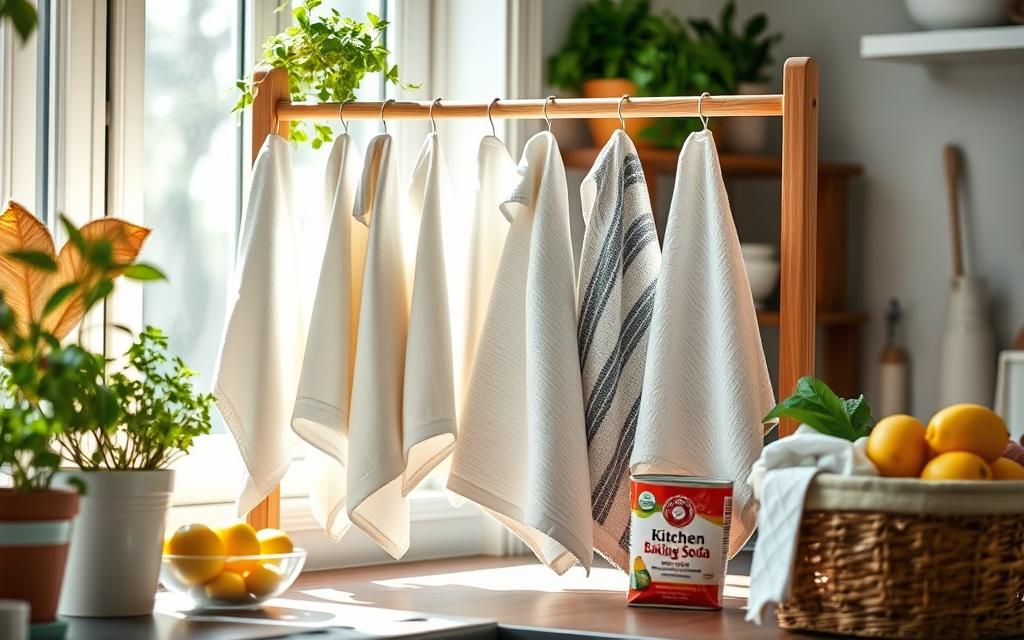
The Importance of Drying Thoroughly
Drying kitchen towels correctly matters just as much as washing them well, since it’s what stops bacteria and mildew from taking hold. Air drying and machine drying both work, as long as the towel ends up fully dry.
Air Drying vs. Machine Drying
Line drying is gentler on the fabric since it uses no heat, keeping towels soft and letting moisture escape naturally. If you use a machine, run it on high heat for 30 to 45 minutes to be sure towels dry all the way through.
Ideal Drying Times for Towels
- Air drying: let towels air dry for at least 24 hours somewhere well-ventilated.
- Machine drying: dry on high heat for 30 to 45 minutes for a full, even dry.
Never leave towels sitting damp in the washer or dryer, since that’s a fast track to mold and bad smells.
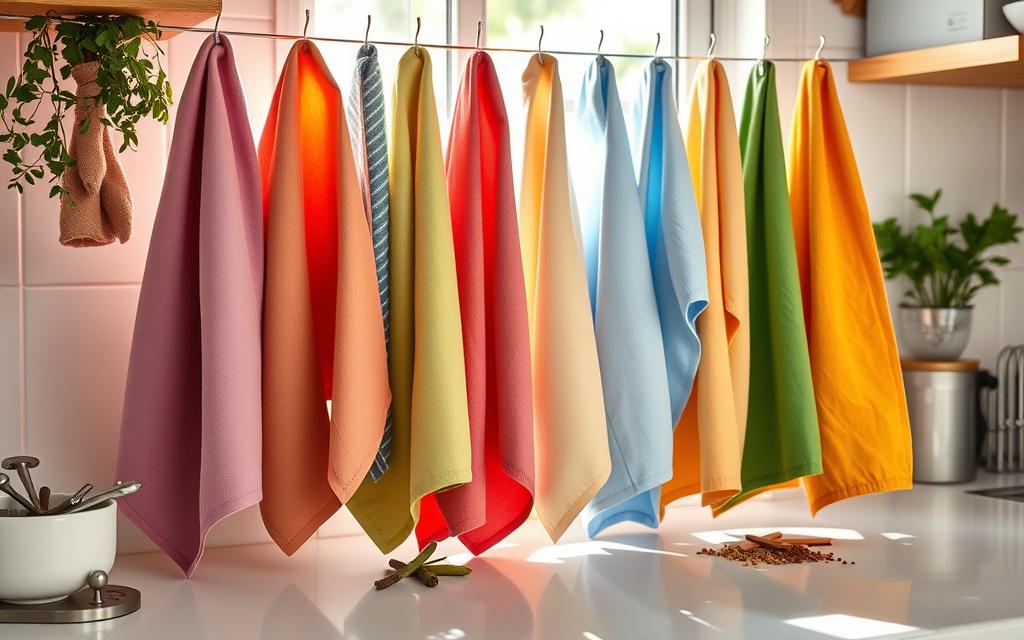
Consistent, gentle drying also extends how long a set of towels lasts before the fabric breaks down.
| Drying Method | Recommended Drying Time |
|---|---|
| Air Drying | At least 24 hours |
| Machine Drying | 30-45 minutes on high heat |
Natural Remedies to Freshen Towels
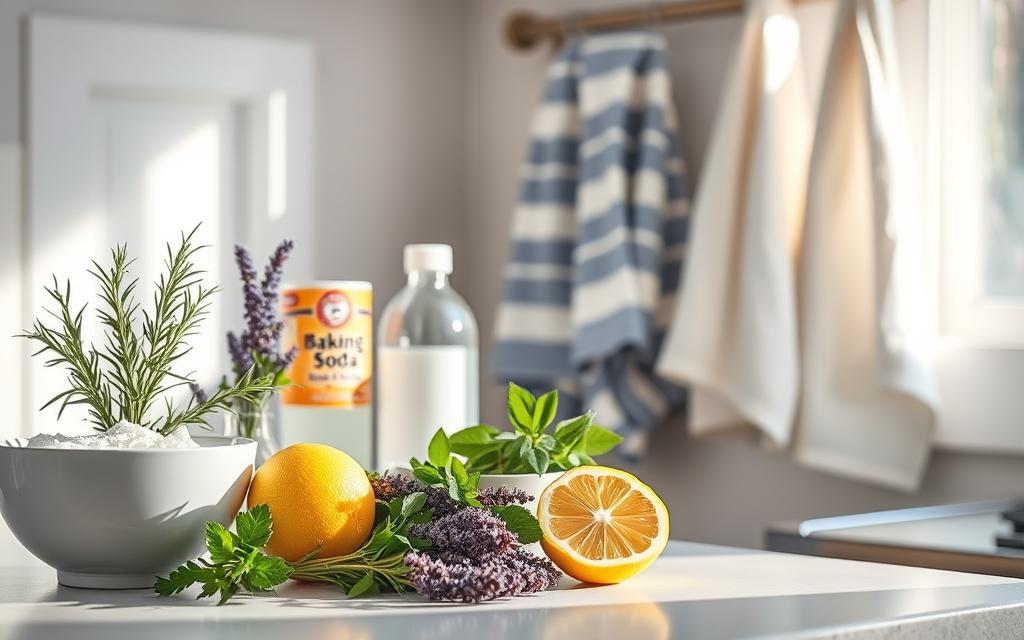
Learning how to keep kitchen towels from smelling doesn’t require harsh chemicals. White vinegar is a strong natural deodorizer: add a cup to the rinse cycle, or soak towels in a vinegar solution for 30 minutes before washing.
Baking soda works well too. Add a cup to the wash cycle, or make a paste with water to spot-treat stains directly. For stubborn odors, mix half a cup of baking soda with 1.5 cups of white vinegar in hot water, soak for two hours, then wash as usual.
- Use white vinegar in the rinse cycle, or soak towels in a vinegar solution for 30 minutes before washing.
- Add a cup of baking soda to the wash cycle, or make a paste to spot-treat stains and odors directly.
- For tough odors, soak towels in a mix of half a cup of baking soda and 1.5 cups of white vinegar for two hours, then wash.
These natural methods clear odors from kitchen towels without relying on harsh chemicals or fabric softener.
Avoiding Fabric Softener Mishaps
Fabric softener might seem like an easy way to keep towels soft, but it often causes lingering odors and reduced absorbency instead. Leftover residue holds onto moisture and bacteria, making towels smell musty and harder to get truly clean.
Why Fabric Softeners Can Contribute to Odors
Fabric softener coats towel fibers in a thin layer of chemicals that keeps towels from drying properly, trapping moisture and bacteria in a way that’s hard to reverse. Cutting back on detergent volume helps too, since more isn’t automatically cleaner: excess detergent traps odors and leaves fibers feeling stiff.
Alternatives to Fabric Softeners
- Use white vinegar in the rinse cycle instead of fabric softener. It softens fabric naturally without leaving residue behind.
- Try wool dryer balls, which soften towels and improve airflow during the drying cycle.
- If you do use a commercial fabric softener, choose one made for towels and use it sparingly, or skip it on kitchen towels altogether.
Skipping fabric softener keeps kitchen towels fresh and absorbent for longer. If your towels have already lost absorbency from softener buildup, our guide to making kitchen towels absorbent again covers how to strip that residue out.
| Fabric Softener Alternative | Benefit |
|---|---|
| White Vinegar | Natural fabric softener, no residue |
| Wool Dryer Balls | Softens towels, improves airflow |
| Towel-Specific Softener | Formulated for towels, use sparingly |
Frequency of Washing Kitchen Towels
Washing frequency plays a big role here, and it depends on the towel type and how heavily it gets used.
How Often Should You Wash Them?
Wash kitchen towels at least once a week, more often with heavy daily use. Cotton towels are highly absorbent and hold onto moisture, so washing them daily or after each use keeps odor from developing.
Microfiber towels can handle frequent washing without losing their cleaning power, though fabric softener should still be avoided. Linen towels dry quickly and can typically go one to two weeks between washes.
Signs It’s Time to Wash Your Towels
- Visible stains or discoloration
- Dampness or a noticeable musty odor
- Heavy use for a mix of tasks, like drying hands, wiping counters, and cleaning up spills
In a busy kitchen, keeping 8 to 10 towels on hand means there’s always a fresh one ready. Cleaning the washing machine regularly matters too, since a dirty machine can reintroduce odor to towels that just came out clean.

When to Replace Your Kitchen Towels
Even with a solid care routine, towels wear out eventually, and knowing when to retire one matters too.
Identifying Worn or Stinky Towels
Watch for these signs that a towel needs replacing:
- Fraying edges or noticeably thin spots
- Persistent odor that doesn’t go away after washing
- Discoloration or stains that won’t lift no matter what you try
Once a towel shows these signs, it’s genuinely time for a replacement rather than another wash cycle. This matters more than it might seem. NSF International’s household germ research found coliform bacteria on more than 75% of dish sponges and rags tested. A worn, heavily used towel is even harder to fully sanitize than a newer one.
Choosing Quality Towels for Longevity
Look for towels made from high-quality materials like 100% cotton or microfiber, with reinforced edges that hold up over time. Antimicrobial towels are worth considering too, since they resist bacteria and odor buildup better than standard cotton. Our cotton dish towel buyer’s guide and kitchen hand towel buyer’s guide cover specific picks worth considering.
Tips for Maintaining Freshness
A simple daily routine does more here than any single product will. Start by rotating towels every day so bacteria and odor never get the chance to build up.
Regularly Rotate Towels
Use separate towels for drying hands, drying dishes, and general cleanup, and don’t cross-contaminate between them. Hang or dry towels somewhere with good airflow, like a rack or the oven handle.
Keep Towels in a Well-Ventilated Area
Store dirty towels in a ventilated laundry hamper rather than a sealed bin, since that keeps moisture and smell from building up between washes. Clean the towels, and the machine that launders them, on a regular schedule to keep odors from creeping back in.
Frequently Asked Questions
Is it hard to figure out how to keep kitchen towels from smelling?
Not really. It comes down to three habits: drying towels fully before storing, washing weekly with the right amount of detergent, and rotating enough towels that none sit damp for long.
Why do my kitchen towels smell bad even after washing?
This usually means detergent residue or bacteria survived the wash. Try an enzyme-based detergent, wash on hot, add vinegar or baking soda, and make sure towels dry completely afterward rather than sitting damp in the machine.
Is vinegar or baking soda better for towel odor?
Both work well for different jobs. Vinegar cuts through residue and disinfects during the rinse cycle, while baking soda is better for spot-treating specific stains and lingering smells directly.
How many kitchen towels should I own?
Somewhere around 8 to 10 is a good target for most households. That’s enough to rotate daily, always have a dry one on hand, and keep up with a weekly wash schedule without running short.
Can I use bleach on smelly kitchen towels?
You can, but it’s not required and can wear down fabric over time. If you’d rather skip it, our guide to cleaning kitchen towels without bleach covers alternatives that are just as effective against odor-causing bacteria.
Does fabric softener really make towels smell worse?
Yes, in most cases. The residue it leaves behind traps moisture and bacteria in the fibers. That’s the opposite of what a towel needs to dry fast and stay odor-free.
Final Thoughts on How to Keep Kitchen Towels from Smelling
Fresh-smelling kitchen towels come down to a few consistent habits: drying them fully, washing them often enough with the right detergent, rotating a large enough supply, and replacing towels once they’re genuinely worn out. Skip the fabric softener and lean on vinegar and baking soda instead. A musty towel drawer will stay fresh once those habits stick.

Hey, My name is MAMON. I am a SEO content creator and affiliate marketer with over 8 years of experience. I create honest product reviews, in-depth buying guides, and practical how-to articles to help readers make informed decisions. My mission is to provide trustworthy, research-backed content that delivers real value.
Leave a Reply