Having a wok in your kitchen is a big plus. It lets you stir-fry, steam, boil, and sear many tasty dishes. Whether you have a classic carbon steel wok or a modern nonstick option like Dalstrong’s Oberon Series, learning how to clean a wok after use is what keeps it working great and lasting longer.
To keep your wok in top condition, clean it well after each use. This ensures your food is safe and your wok stays in good shape. By following a few easy steps, you can keep your wok ready for your next cooking project.

Key Takeaways
- Hand wash your wok to protect the seasoning and prevent rusting.
- Avoid using the dishwasher, which can strip away the wok’s seasoning and cause corrosion.
- Dry the wok thoroughly after cleaning to prevent water spots and rust.
- Apply a thin layer of oil after each use to maintain the wok’s non-stick properties.
- Seasoning your wok regularly helps create a natural, durable non-stick surface.
Why Proper Wok Care is Essential
Keeping your wok in good shape is key to its long life and great cooking. Cleaning it often preserves the seasoning and stops rust.
Benefits of Cleaning Your Wok Regularly
Cleaning your wok after each use keeps the seasoning, or patina, in top shape. That layer builds up over time, helps food cook better, and keeps flavors from mixing between meals.
Impact on Cooking Performance
A seasoned wok cooks food amazingly well. The patina lets food slide out easily, makes cleanup simple, and spreads heat evenly for a proper sear.
Preventing Rust and Damage
Drying and storing your wok correctly stops rust and damage, since moisture or food left on the surface can rust the metal.
| Wok Material | Cleaning Recommendations |
|---|---|
| Carbon Steel | Rinse with hot water and a soft sponge; reach for a small amount of mild dish soap only if it’s heavily soiled. |
| Cast Iron | Avoid soap, which can remove seasoning. Rinse with hot water and dry well instead. |
| Stainless Steel | Use mild dish soap and a soft sponge for cleaning, but avoid harsh scrubbers. |
This video from chef Marion Grasby walks through seasoning and maintaining a carbon steel wok, which pairs well with the cleaning steps below.
How to Clean a Wok After Use: Basic Cleaning Steps
To keep your wok in top shape, clean it right after cooking. Let it cool down a bit first. This prevents damage to the seasoning and avoids burns.
Rinsing with Water
After cooling, rinse your wok with warm water. Use your hands or a soft sponge to remove food bits. Don’t use harsh cleaners or scrubbers, since they can damage the wok’s seasoning.
Using a Soft Sponge
For tougher spots, use a soft sponge or cloth. Gently scrub the wok’s interior to get rid of stuck food. If needed, a little mild soap is okay, but rinse well to keep the seasoning intact. Be gentle whenever you’re cleaning a wok after use, since a light touch keeps it nonstick and helps it last for years. As The Kitchn notes in its own wok-cleaning guide, a well-seasoned wok often needs little more than hot water and a quick wash, without soap at all.
Dealing with Stubborn Food Residue
Part of learning how to clean a wok after use is figuring out what to do when food residue won’t budge with a simple rinse. You can get rid of stubborn grime without harming your cookware. Here are some tips for tackling tough spots.
Soaking Techniques
Soaking the wok in hot water is a great way to loosen stuck-on food. Fill it with hot water and let it sit for a few minutes. This softens the stuck-on particles, making them easier to clean.
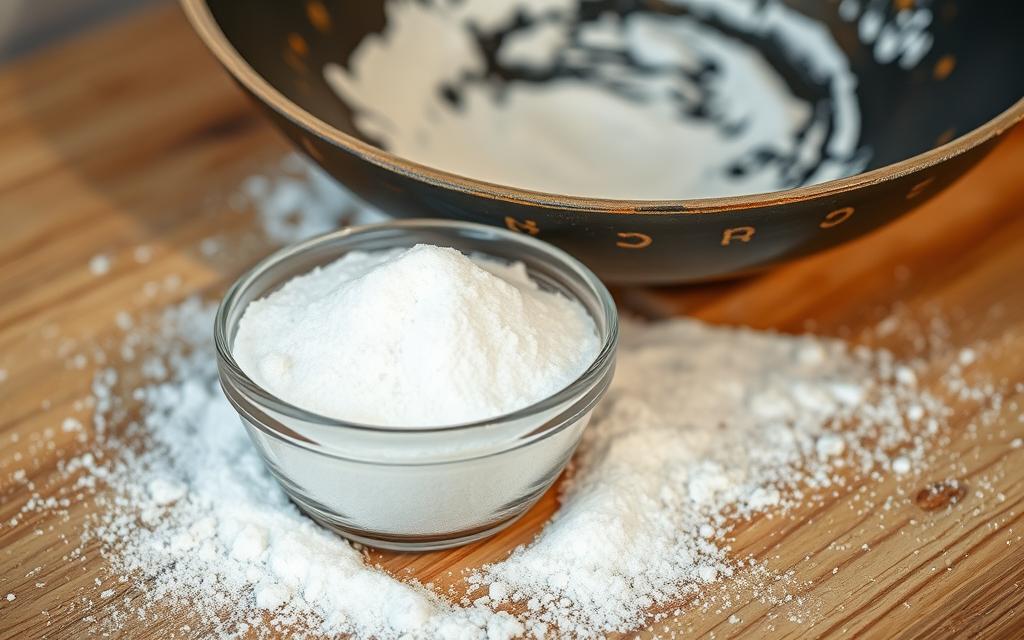
For really tough spots, add some dish soap or baking soda to the water. This boosts the cleaning power.
Using Baking Soda for Tough Spots
Baking soda is great for tough stains. Mix it with water to make a paste. Then use a soft-bristled brush or sponge to gently scrub the spots.
Avoiding Harsh Chemicals
It’s tempting to reach for strong chemical cleaners, but it’s best to avoid them. They can damage your wok’s seasoning and nonstick surface. Stick to gentle, natural methods to keep your wok in good shape.
Using these methods removes stubborn food residue while keeping your wok in great condition. Always dry your wok well after cleaning to prevent rust and keep it working well.
Deep Cleaning Your Wok
Keeping your wok in top shape is key for great cooking and lasting use. Regular cleaning matters, but deep cleaning now and then is just as important. It makes your wok shine and stops tough stains from forming. Whether you have a carbon steel or nonstick wok, cleaning it well is easy.
What You Need for Deep Cleaning
- Hot water
- Mild dish soap (optional)
- Soft sponge or wok brush
- Dry cloth or paper towels
Steps for a Thorough Clean
- Let your wok cool down after cooking.
- Fill it with hot water and soak for 5-10 minutes to break down food and grease.
- Scrub the wok with a soft sponge or brush, covering all areas. Don’t use anything abrasive that might scratch it.
- If tough spots remain, mix a bit of mild soap with the water and scrub again.
- Rinse the wok well with hot water to remove all the soap.
- Wipe it dry with a clean cloth or paper towels.
Tips for Maintaining Nonstick Woks
Nonstick woks need special care when cleaning. Don’t use rough pads or metal tools, since they can harm the surface. Use a soft sponge or brush instead. Also, never put a nonstick wok in the dishwasher, as it can ruin the coating. After cleaning, re-season the wok to keep it nonstick and protect it from damage.

Drying Your Wok Properly After Cleaning
Proper drying is key to keeping your wok in top shape. After washing, use a clean, soft towel or paper towels to dry the wok. This step prevents rust and water spots, keeping your wok looking and working great.
Importance of Drying Immediately
Don’t let your wok sit damp or air-dry. It can lead to rust spots, since carbon steel and cast iron both start reacting with moisture almost right away. Dry it right after cleaning to extend its life.
Best Methods for Drying
- Use a clean, soft towel or paper towels to gently pat the wok dry, making sure every surface is wiped.
- For extra assurance, place the wok over low heat on your stovetop for a few minutes. This evaporates any remaining water droplets, leaving your wok completely dry.
- Avoid air-drying, since it can lead to water spots and give rust a chance to form.
Preventing Water Spots
Preventing water spots is also important for your wok’s appearance. The stovetop-drying method dries the wok fully and prevents those spots from forming. This keeps your wok looking sharp and ready for cooking.
Drying your wok the right way, and using these methods consistently, keeps it in great shape. As America’s Test Kitchen points out, a quick pass over a warm burner is one of the more reliable ways to fully dry a wok before oiling and storing it. Proper care and maintenance are really the whole secret to a long-lasting, high-performing wok.

Storing Your Wok
Storing your wok right is key to keeping it in top shape, whether it’s a traditional carbon steel wok or a modern nonstick one.
How to Store Without Damage
Always store your wok in a dry, cool spot. Don’t pile heavy things on it, since that can cause dents or warping. If you stack cookware, use a paper towel or cloth between pieces to prevent scratches.
Using a Protective Layer
For long-term storage, apply a thin layer of high-heat cooking oil inside the wok. This protects the seasoning and stops rust. Use a clean, lint-free cloth to spread the oil evenly.
Ideal Storage Conditions
The best place for your wok is a cool, dry area, away from stoves, ovens, and other heat sources. Hanging your wok is a great way to protect it and keep it easy to grab.

Seasoning Your Wok
Seasoning is the other half of how to clean a wok after use properly, since a stripped or thin seasoning layer makes every future cleanup harder. It creates a protective layer that stops rust and makes cooking easier, and it’s vital if you want your wok to last for many years.
Why Seasoning is Important
Seasoning your wok matters for a few reasons. It creates a natural layer that guards against rust. That layer also makes the wok nonstick, which makes cooking and cleaning easier. Without seasoning, food sticks, and the wok wears down faster.
How to Season Your Wok
- Clean the wok well, removing any factory coatings or dirt.
- Dry the wok completely, either by hand or by heating it until dry.
- Add a thin layer of oil, like vegetable or peanut oil, all over the interior.
- Heat the wok over high heat until the oil smokes, then let it cool.
- Repeat the oil-and-heat process a few times to build up a strong seasoning layer.
Seasoning your wok takes time, but it’s worth it. Good seasoning also supports healthier cooking, since a properly seasoned surface needs far less oil to keep food from sticking. Over a handful of sessions, this process builds a smooth, genuinely nonstick surface.
Signs Your Wok Needs Reseasoning
As time goes by, your wok’s seasoning may wear off. This can happen if you don’t use it often or if you clean it too aggressively. Look out for these signs:
- Food starts sticking to the wok
- You notice rust spots or a dull appearance
- It’s hard to keep the heat steady or cook well
Using oil regularly and cleaning lightly helps preserve the seasoning. But once it starts to fade, it’s time to re-season. This keeps your wok in great shape.
How to Clean a Wok After Use When Problems Come Up
Knowing how to clean a wok after use also means knowing how to fix the common problems that show up over time, like rust, corrosion, and sticking food.
Identifying Rust and Corrosion
Rust shows up as reddish-brown spots on your wok. It’s important to clean it off quickly. Use a soft sponge and baking soda to remove the rust, then dry the wok well and re-season it.
Regular care can stop rust and corrosion before they start.
Fixing Sticking Problems
Food sticking to your wok? Make sure it’s hot enough and use the right amount of oil. If it still sticks, your wok might need fresh seasoning, which makes the surface smooth and nonstick again.
Maintaining the Wok’s Appearance
To keep your wok looking great, avoid sudden temperature changes, which can cause warping or cracking, and use wooden or silicone tools to avoid scratching the surface.
| Issue | Cause | Solution |
|---|---|---|
| Rust on Wok | Exposure to moisture and lack of proper care | Gently scrub with baking soda, dry thoroughly, and re-season the wok |
| Food Sticking | Insufficient preheating, not enough oil, or need for re-seasoning | Preheat the wok properly, use the right amount of oil, and re-season if the issue persists |
| Warping or Cracking | Sudden temperature changes | Avoid exposing the wok to extreme temperature swings and use appropriate utensils |
Fixing these common wok problems keeps it working well for years. Cleaning, seasoning, and careful use are what really keep your wok in great condition long-term.
Environmental Considerations in Cleaning
Caring for your wok can also line up with caring for the planet, since the greener cleaning choices are often the same ones that protect your cookware best.
Eco-friendly Cleaning Products
Choose natural cleaners like baking soda or white vinegar over harsh chemicals. Baking soda lifts tough food bits, and vinegar tackles grease and odors, all without harsh chemicals going down the drain.
Recycling or Disposing of Old Woks
When your wok finally wears out, look into recycling it. Carbon steel is a widely recycled scrap metal, so an old wok doesn’t have to end up in a landfill.
Sustainable Practices in Cookware Care
Use only the water you actually need for cleaning, and skip harsh chemicals that harm waterways. Regularly re-seasoning your wok helps it last longer, cutting down on the need to replace it.
Conclusion
Learning how to clean a wok after use really comes down to a short list of habits: rinse it while it’s still warm, skip the harsh scrubbers and dishwasher, dry it completely, and keep a thin layer of oil on the surface between uses. Add in the occasional deep clean, a proper reseasoning when the surface starts to dull, and dry storage away from heat, and your wok will keep performing the way it did on day one. A few extra minutes after every meal is a small trade for a pan that can realistically last decades.

Hey, My name is MAMON. I am a SEO content creator and affiliate marketer with over 8 years of experience. I create honest product reviews, in-depth buying guides, and practical how-to articles to help readers make informed decisions. My mission is to provide trustworthy, research-backed content that delivers real value.
Leave a Reply