Learning how to use a wok for stir fry like a pro starts with the pan itself. A wok’s tall, sloped sides let you toss ingredients over intense heat without spilling them onto the burner. Food cooks fast. It stays crisp. It picks up a smoky char that a flat skillet can’t easily match.
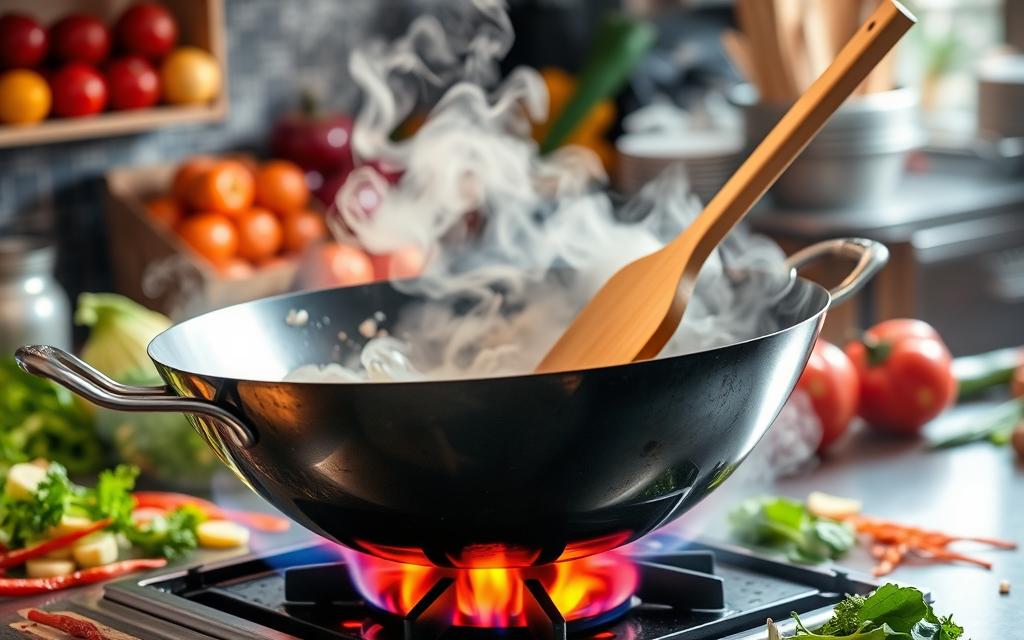
Wok cooking traces back a long way in Chinese culinary history, though the exact timeline is genuinely murky. Food historians generally trace the wok, and the stir-frying method known as chao, to around the Song Dynasty. That’s roughly a thousand years ago. The technique spread gradually over the centuries that followed. The English term “stir-fry” is credited to Buwei Yang Chao. She introduced it in her 1945 cookbook How to Cook and Eat in Chinese. That gave Western cooks a simple name for a technique Chinese cooks had already refined for generations. In this guide, we’ll walk through how to use a wok for stir fry like a pro, from choosing the right pan to mastering heat control and building layered flavor.
Key Takeaways
- A carbon steel or cast iron wok holds and distributes high heat far better than non-stick alternatives, which matters for a proper stir fry sear.
- Cutting ingredients into uniform pieces and prepping everything before you start (a technique called mise en place) matters more than any single ingredient.
- Cooking in small batches over very high heat, rather than crowding the wok, fixes most soggy, steamed stir fry.
- Add aromatics like garlic, ginger, and chilies at the right moment. Save sauces for the end to keep flavors bright.
What is a Wok, and Why Does It Work So Well?
Understanding the Wok Shape
A wok is a round-bottomed cooking vessel with deep, sloped sides. Those sides curve up from a small, concentrated cooking area at the base. That shape isn’t just tradition. The center of the pan gets blisteringly hot. The sloped sides stay a bit cooler. You get a built-in temperature gradient. Sear ingredients hard in the center, then push them up the sides to rest. This is exactly how professional cooks manage several ingredients that cook at different rates.
Benefits of Using a Wok for Stir Fry
A wok’s design brings several real advantages over a standard skillet:
- Rapid, uniform cooking: the wide surface and sloped sides spread heat fast, so smaller cuts finish in minutes.
- Versatility: a wok also handles steaming, deep-frying, braising, and even smoking. It can replace several pieces of cookware.
- Flavor enhancement: intense, direct heat encourages a light char, often called wok hei in Cantonese cooking. It’s hard to reproduce that depth in a flat pan.
- Minimal oil needed: concentrated heat and constant motion mean a wok needs far less oil than pan-frying.
This video from Woo Can Cook covers wok cooking basics, including heat control, and pairs well with the steps below.
How to Use a Wok for Stir Fry Like a Pro: Choosing the Right Wok
Not every wok is built the same way. Material and size shape how well it performs.
Carbon steel woks are the choice most professional cooks reach for. They heat up fast and handle very high temperatures without warping. They also develop a natural non-stick seasoning over time. Cast iron woks hold heat exceptionally well once hot, though they take longer to heat up and are noticeably heavier to maneuver. Non-stick woks are the easiest option for beginners, since food releases easily and cleanup is simple. Most non-stick coatings can’t tolerate the high heat a good sear needs, though. The coating also wears down faster under the vigorous tossing stir frying requires. A new pan behaves differently than a well-seasoned one. Before that first cook, most bare carbon steel woks also need an initial seasoning: scrub off the factory coating, heat the wok until it just starts to smoke, then wipe on a thin layer of high smoke point oil and let it heat through. Repeating that a couple of times builds a base layer of seasoning that later cooking will keep improving.
Size matters just as much as material. A 14-inch wok is the most practical choice for a typical home kitchen and stovetop. It’s big enough to cook for a family of four, but not so large that it overwhelms a standard burner. Here’s a general guide to sizing and typical pricing:
| Wok Size | Best For | Typical Price Range |
|---|---|---|
| 12-inch | Individuals or couples, smaller stovetops | $25-$50 |
| 14-inch | Families of 3-4, most home kitchens | $30-$70 |
| 16-inch | Larger households, frequent entertaining | $45-$100 |
Essential Tools for Stir Frying
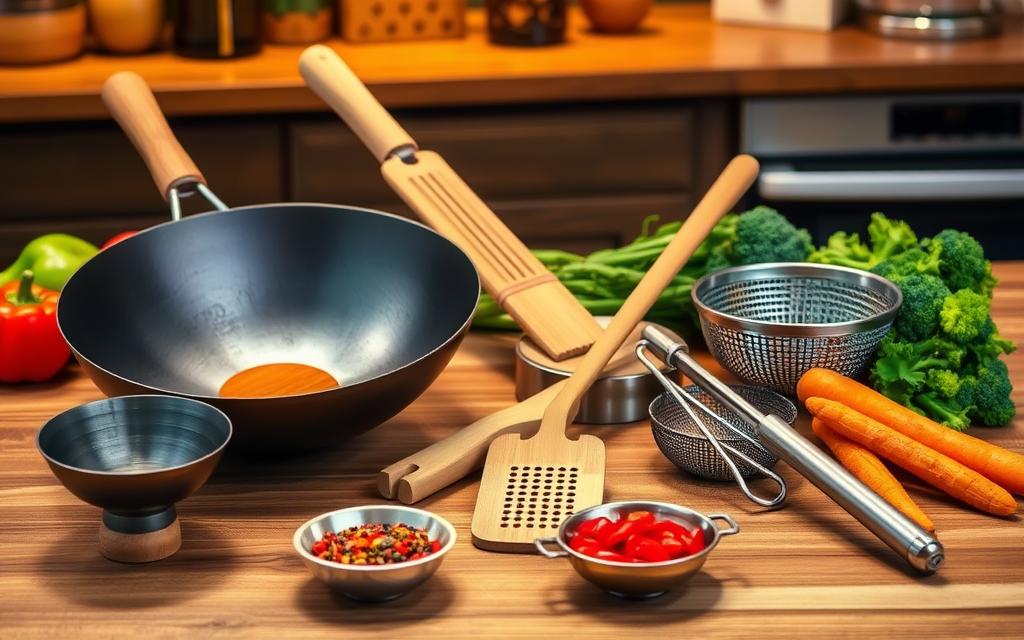
A few dedicated tools make wok cooking noticeably easier, though none are strictly required to get started.
| Tool | Purpose |
|---|---|
| Spatula | A long-handled, curved spatula matches the wok’s shape. It lets you scoop and flip fast without scraping off the seasoning. |
| Ladle | Useful for adding sauces, stocks, or oil in controlled amounts mid-cook, and for serving once the dish is done. |
| Lid | A domed lid helps for steaming vegetables or finishing thicker cuts that need a few extra minutes of gentler heat. |
Preparing Ingredients for Stir Fry
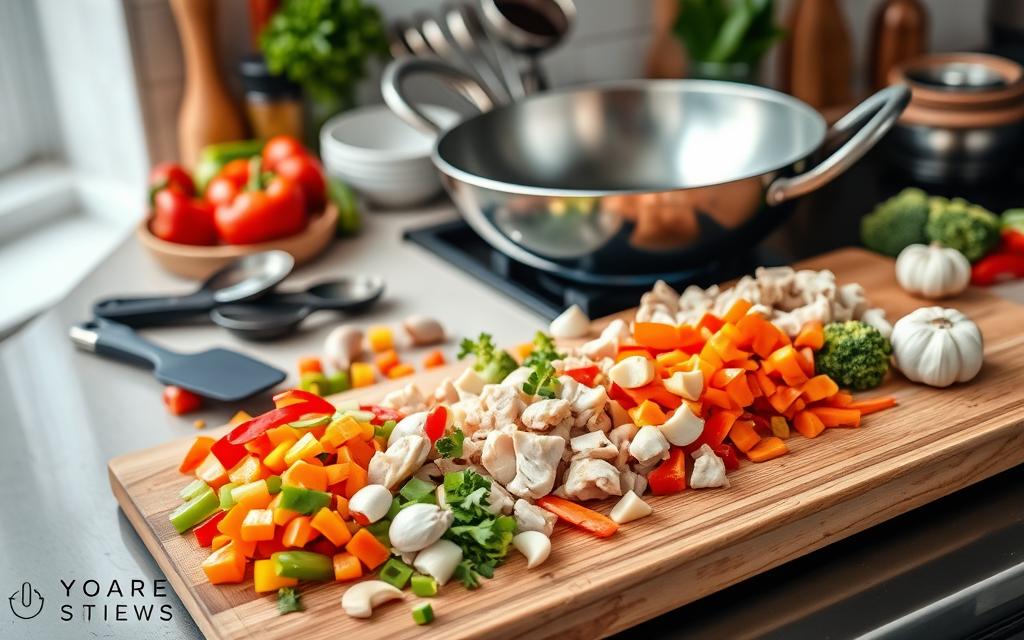
Good stir fry is won or lost before the wok touches the burner. The actual cooking takes five to ten minutes total. There’s no time to stop and chop once you’ve started. Cut every ingredient into similarly sized pieces so they cook at the same rate. Group them by cooking time: dense vegetables and proteins first, delicate greens and aromatics last.
Slicing meat thinly and against the grain is one of the simplest ways to guarantee a tender result, since it shortens the muscle fibers you’re biting through. A sharp chef’s knife built for cutting meat makes thin, even slicing far easier than a dull blade. A stable cutting board gives you the control consistent cuts need.
Marinate proteins for 15 to 30 minutes before cooking. This helps season the meat and can improve tenderness, particularly for leaner cuts like chicken breast or flank steak. A simple marinade of soy sauce, a splash of rice wine, and a little cornstarch noticeably improves texture without overpowering the dish.
Mastering the Stir Frying Technique: How to Use a Wok for Stir Fry Like a Pro
Preheating the wok is the step most home cooks skip, and it’s the one that matters most. Heat the empty wok over high heat for one to two minutes before adding any oil. You’ll know it’s ready when a drop of water flicked onto the surface skitters and evaporates almost instantly. Add oil only once the wok is hot. Swirl it to coat the surface, then let it heat a few more seconds until it shimmers.
Cooking order matters as much as heat. Add aromatics briefly, then proteins, then dense vegetables, then quick-cooking vegetables. Sauces and delicate greens go in last. Keep ingredients moving constantly with a scooping, tossing motion so nothing sits long enough to burn. Experienced cooks treat stir-frying less like a single technique and more like a fast sequence of small decisions about timing, heat, and movement.

Adding Aromatics for Flavor Depth
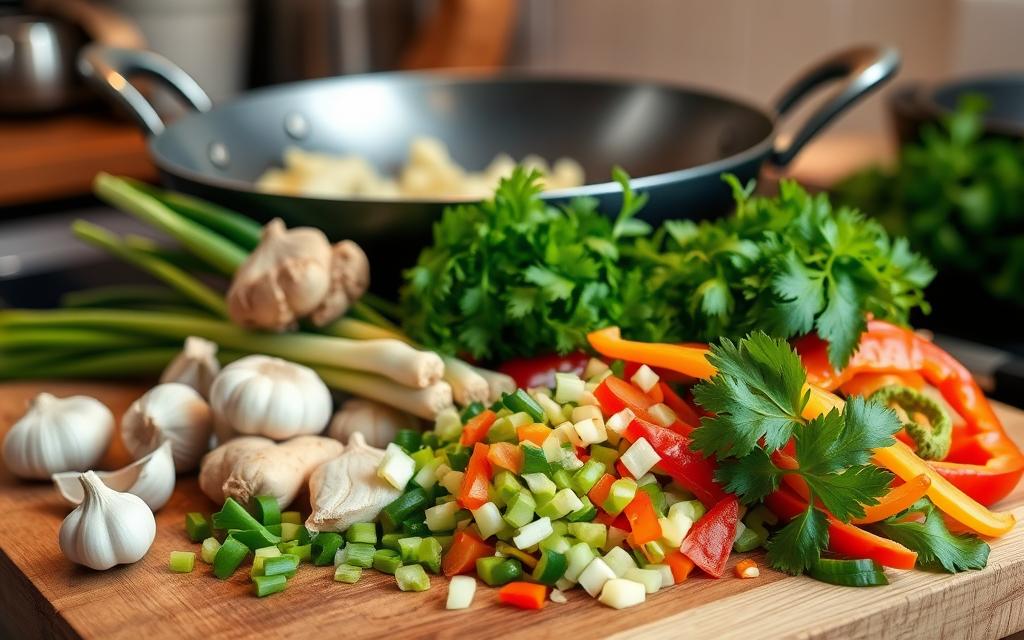
Garlic, ginger, and scallions form the backbone of most stir fry dishes. How you handle them changes the whole flavor of the meal. Add them to hot oil for only 10 to 15 seconds, just long enough to release their fragrance, before they burn and turn bitter. Chili peppers can go in at the same stage for heat throughout the dish, or later for heat that stays closer to the surface.
Sesame oil is best treated as a finishing touch, not a cooking oil. Its low smoke point means it scorches quickly over high heat. A small drizzle stirred in right before serving delivers its nutty aroma without bitterness. Balancing salty, sweet, sour, and umami elements, usually through soy sauce, a touch of sugar, rice vinegar, and something fermented like oyster sauce, is what gives a good stir fry its complexity. Pan heat, ingredient moisture, and timing vary every time you cook, so small adjustments matter more than following a recipe exactly.
Achieving the Perfect Heat Level
Stir fry depends on sustained, very high heat, so your choice of oil matters. Refined oils with high smoke points hold up best. Avocado oil has a smoke point around 520°F. Refined or light olive oil sits around 465-470°F. Extra virgin olive oil and other unrefined oils are poor choices here. They start smoking, and breaking down, well before the wok gets hot enough for a proper sear.
Once you’re cooking, keep an eye on residual heat. A wok stays extremely hot even after you turn down the burner. Ingredients can keep cooking, and easily overcook, if you don’t account for that carryover. Pull food off a beat or two earlier than you think necessary. It usually lands at the right doneness by the time it’s plated.
Common Mistakes to Avoid
Overcrowding the wok is the most common mistake home cooks make. It’s the reason so many stir fries turn out steamed and soggy instead of seared. Add too much food at once, and the wok’s temperature drops sharply. The ingredients release moisture that has nowhere to evaporate quickly. Everything ends up simmering in its own liquid rather than searing. Cooking in smaller batches gets you a far better result, even if it takes a couple of extra rounds. As a general guideline, keep each batch to roughly half a pound of protein at a time in a standard-size home wok, then combine everything at the end.
Other frequent missteps include not preheating the wok long enough, letting ingredients sit still instead of tossing them, and adding sauce too early. Early sauce steams everything else before it has a chance to sear. Using a burner that’s too weak is another common issue, since most home stovetops can’t match the output of a professional wok range. A cast iron or carbon steel wok, preheated a little longer than you think you need, helps close that gap.
Essential Stir Fry Recipes to Try
A classic vegetable stir fry is a good place to start. Cook broccoli, bell peppers, carrots, and snap peas in that order, densest to most delicate, then finish with a simple garlic-soy sauce. Chicken chow mein builds on the same technique, adding thin egg noodles and sliced chicken breast. Add the noodles near the end so they heat through and absorb the sauce instead of turning mushy.
As celebrity chef Ching-He Huang put it in an interview with Food Republic, stir-frying is “the healthiest way to sear food at high heat.” It “retains the nutrients in food for maximum flavor, with minimum effort required.” That mix of speed, nutrition, and flavor is really the whole appeal of learning how to use a wok for stir fry like a pro.
Tips for Clean-Up and Maintenance
Clean a well-seasoned carbon steel or cast iron wok with hot water and a soft brush or sponge, without soap. Soap can strip away the seasoning you’ve built up. Dry it thoroughly right after washing, since these materials can flash-rust within minutes if left wet. Then rub a very thin layer of oil over the surface before storing it.
New woks go through an early, temperamental stage of seasoning that The Kitchn calls the “Teenage Wok.” The surface looks splotchy, and food sticks more than it should, before the seasoning fully matures. This is normal. Continued use, plus regular light oiling, gradually builds a smoother, more non-stick patina over weeks of cooking, the same way a well-used cast iron pan improves with age. For the full routine between cooking sessions, see our guide on how to clean a wok after use.
Put together, these habits are really the whole answer to how to use a wok for stir fry like a pro. Pick a wok material suited to high heat. Prep every ingredient before you start. Keep the pan hot and the food moving, and clean it properly afterward so the seasoning keeps improving. Once those habits become second nature, stir fry turns into one of the fastest, most flexible ways to get a genuinely great meal on the table on a weeknight.

Hey, My name is MAMON. I am a SEO content creator and affiliate marketer with over 8 years of experience. I create honest product reviews, in-depth buying guides, and practical how-to articles to help readers make informed decisions. My mission is to provide trustworthy, research-backed content that delivers real value.
Leave a Reply