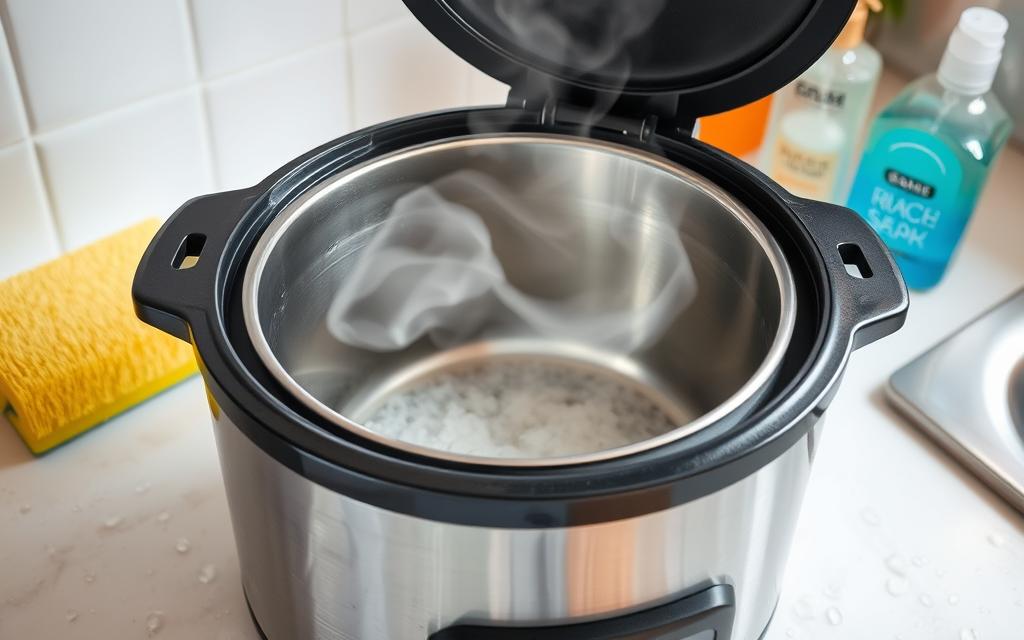
Learning how to clean a rice cooker effectively is what stands between a pot that quietly does its job for years and one that starts smelling off, sticking, or cooking unevenly. That difference usually shows up after just a few months of neglect. It only takes a few extra minutes after each use to avoid it.
This guide covers daily care and a proper deep clean. It also walks through removing stubborn residue and odors, plus the maintenance habits that keep your rice cooker working well for years.
Most of the advice floating around online treats every rice cooker the same. A basic on/off model and a fuzzy-logic pot with a nonstick bowl don’t need identical care, though. Knowing how to clean a rice cooker effectively for your specific model starts with understanding which parts are meant to get wet. It also means knowing what your particular non-stick coating can handle.
Key Takeaways
- Clean the inner pot after every use; don’t let rice residue sit and dry on overnight
- Soak stuck-on rice in warm, soapy water for 20-30 minutes before scrubbing
- Never soak or submerge the base unit; the heating element and electronics must stay dry
- Skip metal scouring pads on non-stick pots, but ultrafine sandpaper can restore a metal heating plate
- A vinegar-and-water boil clears cooked-in odors without harsh chemicals
Why Cleaning Your Rice Cooker Matters
Leftover rice isn’t just an inconvenience if it sits in the pot. According to FoodSafety.gov, cooked rice can carry Bacillus cereus spores that survive the cooking process. Those spores can multiply if food is left at room temperature. A rice cooker that never gets a real cleaning gives them a steady supply of starchy residue to grow on between uses.
Beyond food safety, old residue affects taste. Stuck-on rice from last week doesn’t just sit there quietly. It can scorch the next time you cook, tainting a fresh batch with a burnt or stale flavor. Regular cleaning also protects the non-stick coating and heating element. Both are the most expensive parts to replace if they fail early.
The same USDA guidance behind that FoodSafety.gov entry recommends refrigerating cooked rice within an hour of cooking. It also calls for reheating leftovers to 165°F and using them up within 3-4 days. None of that is about the cooker itself. But it explains why a pot that’s cleaned promptly, rather than left with rice cooling inside it, is doing double duty for both flavor and safety.
What Your Manual Already Tells You
Before you clean anything, check your specific model’s manual. Rice cookers vary in which parts are dishwasher-safe, whether the lid detaches fully, and what the manufacturer recommends for descaling. A few minutes with the manual now saves you from accidentally voiding a warranty later.
How the Type of Rice Cooker Changes the Cleaning
A basic on/off rice cooker is the simplest to clean. It’s usually just one switch, one heating plate, and a fully removable pot. A fuzzy-logic or induction model adds sensors, and sometimes a sealed lid with its own gasket and steam valve. Both of those extra parts need their own gentle cleaning pass since they’re easy to overlook.
Non-stick pots need the softest tools you own. Stainless steel inner pots tolerate a bit more scrubbing, but they still shouldn’t see steel wool. If you’re not sure which category your model falls into, the manual will say. That answer shapes how to clean a rice cooker effectively for your specific unit day to day.
Premium models with touchscreens or digital displays add one more consideration: keep liquid away from the control panel entirely. A damp cloth wrung out until it’s barely moist is still safer than a wet sponge anywhere near buttons or a screen.
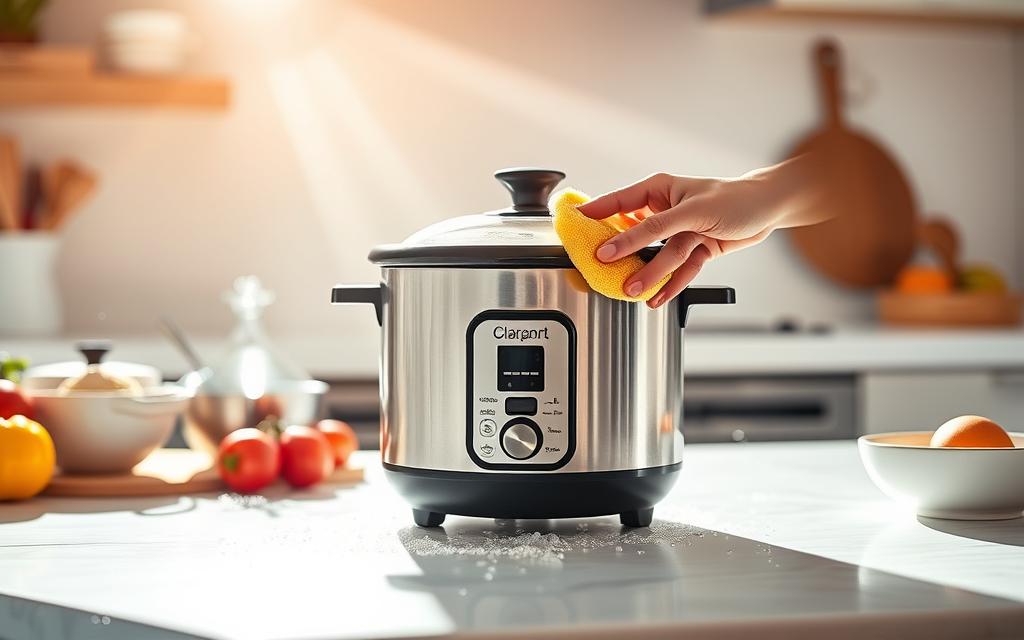
What You’ll Need
- A soft, non-abrasive sponge or cloth
- Microfiber cloth for the exterior and drying
- A rubber or plastic spatula (never metal)
- Mild dish soap
- White vinegar and baking soda for deeper cleaning
Skip harsh chemical cleaners and anything abrasive. Both can wear through a non-stick coating far faster than normal cooking does.
How to Clean a Rice Cooker Effectively: Step-by-Step
Unplug and Let It Cool
Always unplug the cooker and let it cool completely before you start. This protects you from burns and keeps water away from live electrical parts.
Disassemble What You Can
Remove the inner pot, lid, steam vent, and condensation collector, following your manual’s instructions. Cleaning each piece separately gets soap into every corner. That’s simply not possible with the unit still assembled.
Clean the Inner Pot
Soak the inner pot in warm, soapy water for 20-30 minutes to loosen stuck-on rice. Wipe it out with a soft sponge, rinse thoroughly, and dry it before reassembling. Avoid letting it sit in water for hours at a time. Prolonged soaking can encourage rust on the pot’s exterior coating.
Wipe the Heating Element and Base
Use a barely damp cloth on the heating plate and sensor, never a wet sponge and never submerged water. The base houses the electronics, so water here is a real hazard rather than just a maintenance inconvenience.
The Sandpaper Trick for a Metal Heating Plate
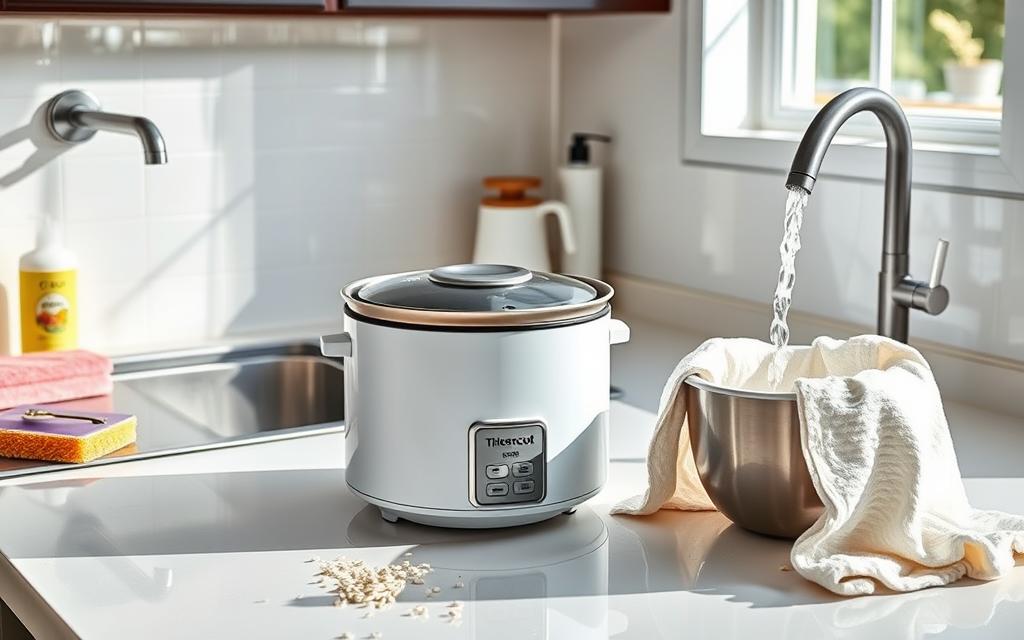
Here’s a method most people never hear about. America’s Test Kitchen reports that manufacturers of rice cookers with metal heating plates recommend a specific fix for stubborn buildup on the plate and temperature sensor: ultrafine sandpaper, around #320 grit, dipped in water and squeezed nearly dry.
This only applies to metal heating plates and sensors. If your model has a ceramic heating plate or sensor, skip this step entirely. Ceramic scratches permanently under abrasion that a metal surface would shrug off.
If you’re not sure which material your cooker uses, look at the color and finish of the plate itself: a dull, uniformly gray or silver surface is usually metal, while a smooth, glossy, often black or dark surface is more likely ceramic. When in doubt, the manual or manufacturer’s support line will confirm it before you risk a scratch.
Dealing with Tough Stains and Odors
Baking Soda for Stuck-On Stains
Mix baking soda with a little lemon juice or water into a paste. Spread it over the stained area, let it sit for about 10 minutes, then scrub gently with a soft brush. Rinse well and dry before putting the pot back together.
Vinegar for Lingering Smells
Boil equal parts white vinegar and water directly in the inner pot for a few minutes. This clears out cooked-in odors from strong-smelling meals. Let it cool, then wipe the inside with a damp cloth to remove any residual smell.
Removing Burnt Rice
If rice cooked too long and left a burnt layer, soak the pot in hot, soapy water for 2-3 hours to loosen it. Scrape gently with a plastic spatula, never metal. Metal tools can scratch through a non-stick coating in a single pass.
Descaling Against Hard Water Buildup
If you’re in a hard water area, you may notice a chalky white film on the inner pot or steam vent over time. A simple citric acid or vinegar rinse, similar to the odor-clearing boil above, dissolves those mineral deposits. Doing this every month or two keeps scale from ever affecting how evenly your cooker heats.
A Simple Maintenance Routine
After Every Use
- Wipe the exterior with a damp cloth to remove spills and fingerprints
- Clean the inner lid and steam vent with a soft sponge
- Empty and rinse the condensation collector
Weekly or Monthly, Depending on Use
- Give the inner pot a longer soak to lift anything the daily wipe-down missed
- Run the vinegar-and-water boil to keep odors from building up
- Check the lid gasket and seals for wear
Common Mistakes to Avoid
- Skipping the manual. Every model has slightly different guidance on dishwasher-safe parts and descaling, and guessing can void a warranty.
- Reaching for harsh chemicals or abrasive pads. A mild soap and a soft sponge handle almost everything a rice cooker needs.
- Submerging the base unit. Water and the heating element’s electronics don’t mix; wipe the base, never soak it.
- Letting the inner pot sit dirty overnight. Dried-on rice takes far longer to remove than residue that’s still soft.
- Getting water anywhere near the control panel. On digital or touchscreen models, that’s a much more expensive mistake than a scratched pot.
Safe Storage
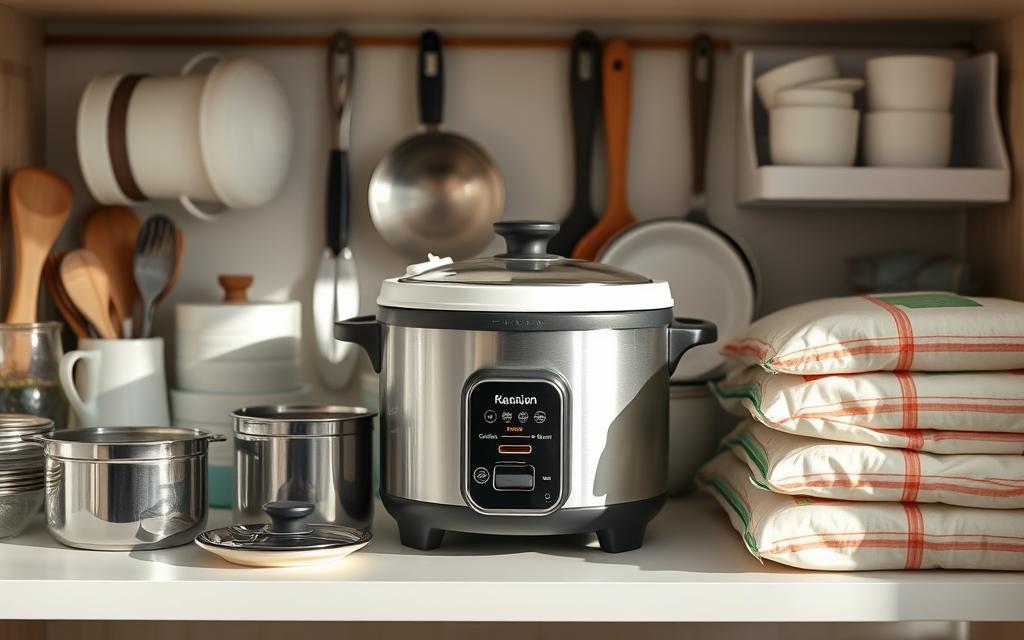
Make sure every part is completely dry before you put the rice cooker away. Trapped moisture leads to odors and can encourage mold in the seals. Store it with the lid propped slightly open so air can circulate. Keep the rice paddle in its own spot, too, rather than tossed inside the pot. If you have the original box or a fitted dust cover, using it in a cabinet keeps grease and dust off the exterior between uses, which cuts down on how often the outside needs a real scrub.
When to Call in a Professional
Regular cleaning solves most problems, but a few issues are beyond a sponge and some vinegar. Watch for persistent burning smells after a full clean, buttons or a display that stop responding, or rice that consistently cooks unevenly despite proper care. Any of those is a sign to check your warranty and contact the manufacturer rather than keep troubleshooting on your own.
Frequently Asked Questions
Can I put rice cooker parts in the dishwasher?
Many inner pots and lids are dishwasher-safe, but check your model’s manual first. Some non-stick coatings hold up better with hand-washing.
How often should I clean my rice cooker?
Give it a quick wipe-down after every use. Add a deeper clean, including the vinegar boil, once a week or once a month, depending on how often you cook with it.
Is it safe to leave cooked rice in the cooker on the “keep warm” setting?
For a few hours, generally yes, since the warm setting keeps rice above the temperature range where bacteria multiply fastest. For anything longer, refrigerate the leftovers instead of relying on the warm setting indefinitely.
What’s the best way to remove a burnt smell?
Boiling equal parts white vinegar and water in the pot for a few minutes does the trick. It clears most cooked-in odors without needing harsh chemical cleaners.
Can I use steel wool on a stuck-on stain?
No. Steel wool and other metal scrubbers can scratch through a non-stick coating in seconds. Use a soft sponge, and reach for the ultrafine sandpaper trick only if your heating plate is metal, not ceramic.
Why does my rice cooker smell even after washing?
Trapped moisture in the lid gasket, steam vent, or condensation collector is the usual cause. A longer soak of the removable parts, followed by thorough drying before storage, almost always fixes it.
Does hard water damage a rice cooker over time?
It can, if mineral scale is never addressed. A periodic vinegar or citric acid rinse prevents that buildup, keeping heating even and the steam vent clear.
My rice cooker still smells like the last thing I cooked. What am I missing?
Check the lid gasket and steam vent specifically. Those two spots trap odors far more than the pot itself, and they’re easy to skip during a quick wipe-down.
Does knowing how to clean a rice cooker effectively really extend its lifespan?
Yes. Most rice cookers fail because of a damaged non-stick coating, a burnt-out heating element from repeated dry residue buildup, or water damage to the electronics, and all three are largely preventable with the routine described above.
Final Thoughts
Knowing how to clean a rice cooker effectively really comes down to a short list of habits. Wipe it down after every use, give the inner pot a proper soak and scrub weekly, keep water away from the base, and reach for vinegar and baking soda instead of harsh chemicals. None of it takes long once it becomes routine, and the payoff is a cooker that keeps making good rice for years instead of months.
If you’re shopping for a new one, our rice cooker buying guide covers current options. If you’re wondering how long cooked rice actually stays good, see our guide on how long you can keep rice in a rice cooker. For a foolproof way to put a freshly cleaned cooker to work, our sushi rice guide is a good place to start.

Hey, My name is MAMON. I am a SEO content creator and affiliate marketer with over 8 years of experience. I create honest product reviews, in-depth buying guides, and practical how-to articles to help readers make informed decisions. My mission is to provide trustworthy, research-backed content that delivers real value.
Leave a Reply