Imagine a Sunday morning filled with the smell of freshly sliced ham and Swiss cheese, cut exactly as thin as you like it. Learning how to choose a meat slicer for home use turns that scene from a special occasion into a regular one. The right machine handles deli meats, cheeses, and even vegetables far more evenly than a knife ever will.
Whether you love cooking at home or just want easier meal prep, a good meat slicer can make a real difference. This guide covers the features, safety points, and budget questions that matter most so you can pick the best machine for your own kitchen.
Key Takeaways
- Meat slicers make precise, consistent cuts of meats, cheeses, and vegetables, improving both presentation and portion control.
- Blade size, motor power, adjustability, and safety features all matter when picking a home meat slicer.
- Home models typically use 7- to 10-inch blades; anything larger than 10 inches usually signals a commercial-grade unit.
- Set a realistic budget and match it to the features your cooking actually needs, not the ones a listing highlights.
- Choose a slicer that’s easy to clean and maintain, since upkeep affects both food safety and how long it lasts.
Understanding the Basics of Meat Slicers
Getting familiar with home kitchen meat slicers pays off quickly, since a good one changes how you slice deli meats, cut vegetables, and build charcuterie boards.
What is a Meat Slicer?
A meat slicer is a kitchen appliance for slicing meats, cheeses, and vegetables. Its adjustable blade lets you control thickness and keep every slice consistent.
Types of Meat Slicers Available
- Manual meat slicers: hand-operated, giving full control for a hands-on approach.
- Semi-automatic slicers: blend manual control with a motor-driven blade, suiting home kitchens and small businesses alike.
- Fully automatic slicers: built for large commercial kitchens, better suited to busy delis than home use.
Benefits of Using a Meat Slicer at Home
A home meat slicer brings a few real benefits:
- Precision cutting: thin, even slices that improve both look and taste.
- Time savings: far faster than slicing by hand.
- Versatility: handles meats, cheeses, and vegetables alike.
Key Features to Consider
Learning how to choose a meat slicer for home use comes down to a few features: blade size and material, motor power, and overall build quality, since these decide performance, versatility, and lifespan.
Blade Size and Material
Home meat slicers typically use 7- to 10-inch blades; 12- to 14-inch blades are commercial-grade equipment better suited to a deli. Blade material matters too: carbon steel, stainless steel, or Teflon-coated stainless. An 8- to 9-inch stainless blade is a common sweet spot for durability without commercial bulk.
Adjustability and Thickness Control
Adjustable slice thickness is essential, letting you go from paper-thin prosciutto to a thicker sandwich cut with one dial turn.
Motor Power and Performance
Motor power on home units usually falls between 120 and 240 watts, roughly 1/8 to 1/3 horsepower. A stronger motor cuts faster and runs cooler during longer sessions, which matters most for party prep or batch-slicing.
| Slicer Type | Blade Size | Motor Power | Typical Price |
|---|---|---|---|
| Entry-level | 7″ to 8.5″ | 120-180W | $60-$150 |
| Mid-tier | 8.5″ to 10″ | 180-240W | $150-$350 |
| Premium (home) | 9″ to 10″ | 240W+ | $350-$900 |
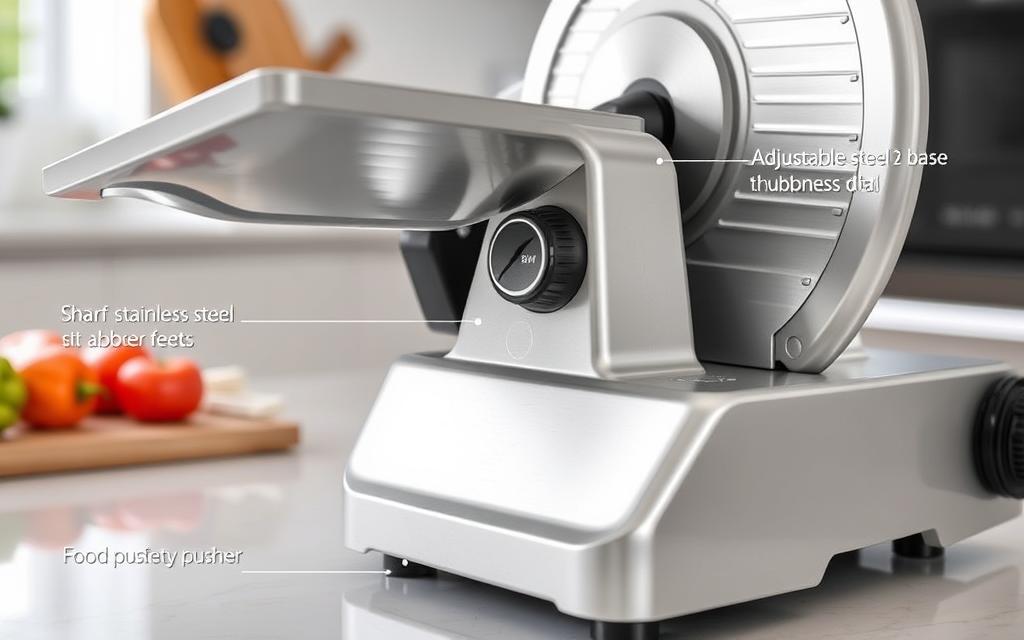
The BESWOOD 10″ BESWOOD250 is a 240-watt slicer with a chromium-plated blade, priced around $270-$330. It shows where the upper end of “home use” sits: sturdy for regular batches, priced well under true commercial equipment.
Safety Features and Considerations
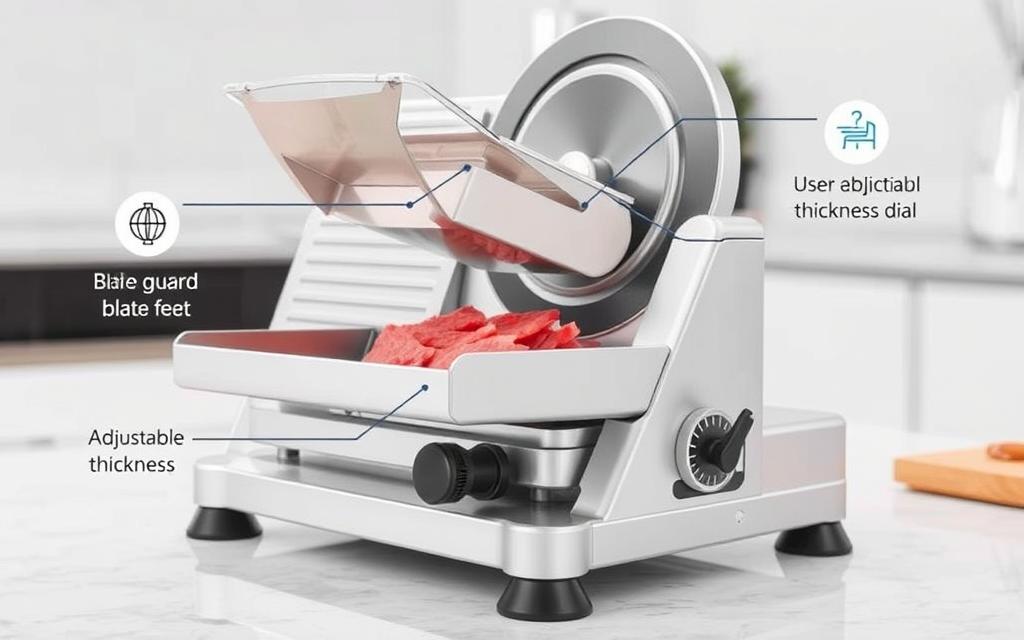
Safety matters as much as performance here. These are powerful tools that need careful handling, so look for strong blade guards, non-slip feet, and a reliable safety lock.
Blade Guarding Systems
Meat slicer blades are extremely sharp and can cut deeply if left unguarded. Choose models with a full blade guard, and ideally an interlock that stops the blade unless the guard is in place.
Non-Slip Feet and Stability
A stable, non-slip base is vital. Look for sturdy, rubberized feet that grip the countertop, since a slicer that shifts mid-cut is a real hazard.
Safety Lock Mechanisms
Many slicers include a safety lock, such as a power switch that must be manually reset after a power loss, so the blade can’t restart on its own. Some models also add interlocks that stop the blade whenever the food carriage is open.
Look for models carrying ETL or NSF certification, which confirm independent testing rather than just a manufacturer’s own claims. Follow the manufacturer’s instructions and you’ll get a safe, enjoyable experience for years.
Budgeting for Your Meat Slicer
Working out how to choose a meat slicer for home use also means balancing cost against features. Prices vary quite a bit, so it helps to know what you’re paying for.
Price Ranges Explained
Entry-level slicers, like compact Chefman and Nesco models with 8- to 8.6-inch blades, typically run $60 to $150. They cover the basics but have smaller capacity, suiting light, occasional slicing.
Mid-tier slicers run roughly $150 to $350. Models in this range, including 9- to 10-inch Beswood units, balance performance and value with stronger motors and finer thickness adjustment.
Premium home slicers generally run $350 to $900, bringing commercial-inspired build quality, like the die-cast bodies in Berkel’s home line, without true commercial pricing.
Cost vs. Features Analysis
- Entry-level: smaller capacity and fewer features, lower cost.
- Mid-tier: a solid mix of performance and price for regular use.
- Premium: better durability and finish, at a higher upfront cost.
Where to Find the Best Deals
Look for slicers at reputable kitchen equipment suppliers, online and in-store. Online marketplaces also run seasonal discounts, which can help you land a solid slicer for less.
Size and Storage Options
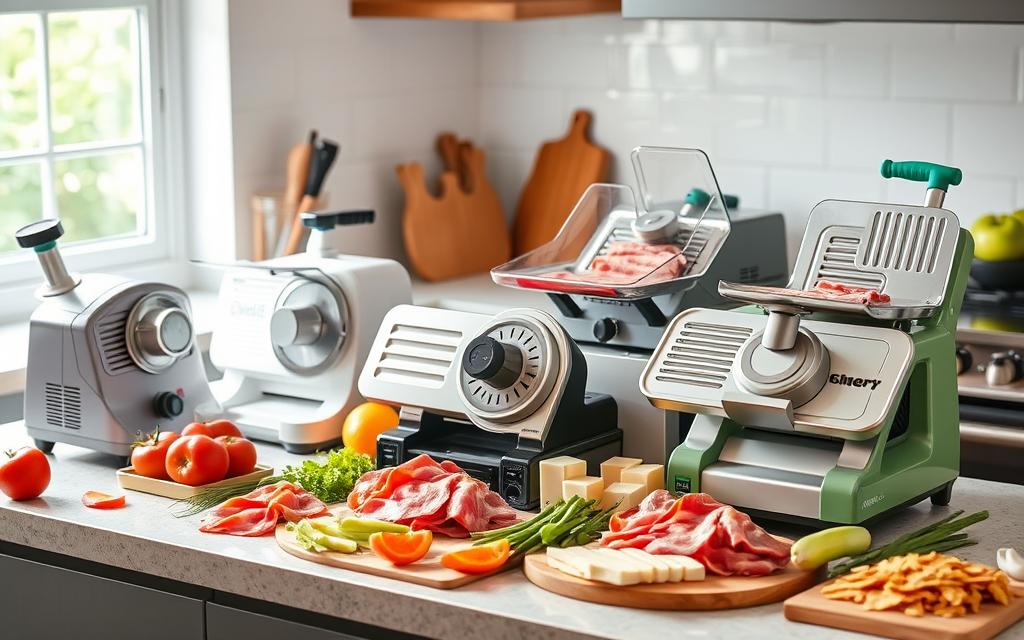
Figuring out how to choose a meat slicer for home use also means thinking about size and storage. Compact models like the LEM Mighty Bite 8.5-inch slicer are great for small kitchens, saving counter space and storing away easily. Full-size units slice more per pass but need permanent counter real estate.
Compact vs. Full-Size Models
Weight affects how easy a slicer is to move. Home models typically weigh 10 to 35 pounds, and lighter units are simpler to shift in and out of storage.
Storage Solutions for Small Kitchens
If counter space is tight, look for slicers designed with storage in mind. Some fold down or come with a bracket, while others simply fit in a cabinet between uses. A slicer that tucks away easily gets used more than a bulky one left on a shelf.
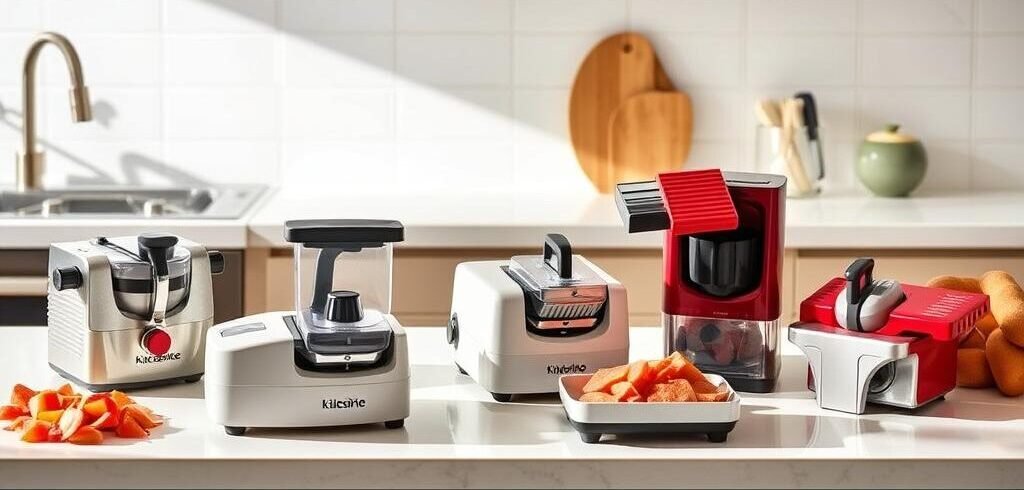
For small kitchens especially, a compact slicer earns its keep: minimal counter space in use, and it disappears into a cabinet the rest of the time.
Brand Comparison
Finding the right meat slicer for your home often comes down to brand track record. A handful of names show up again and again in home-kitchen reviews.
Reliable Meat Slicer Brands
- Beswood: commercial-style slicers sized for home use, with durable stainless bodies and stronger motors.
- LEM: compact, lightweight slicers for small kitchens, easy to use out of the box.
- Ostba: the budget end of the market; won’t match pricier brands feature-for-feature, but holds up for occasional slicing.
- KWS: bridges home and light commercial use, favored by cooks who want more headroom than entry-level.
Brand Reputation and Customer Reviews
Reputation and real customer feedback matter more than spec sheets alone. Beswood, LEM, Ostba, and KWS all draw consistently positive reviews for build quality and ease of cleaning.
Choosing the right brand depends on your needs, budget, and kitchen space. Weigh blade size, motor power, and safety features together, and you’ll end up with a slicer built to last.
Maintenance and Cleaning
Keeping a meat slicer in good shape matters for lifespan and food safety alike. Regular care protects your investment and keeps your kitchen genuinely clean.
Cleaning Tips for Longevity
The FDA Food Code calls for cleaning food-contact surfaces on slicing equipment at least every four hours during continuous use. That’s worth doing even for a machine that only comes out on weekends. For the full breakdown, see our guide to cleaning a meat slicer safely.
A deeper clean each day of use removes oils and residue that can harbor bacteria. Wear gloves, follow the manufacturer’s instructions, and skip steel wool, which can scratch food-contact surfaces.
Parts Replacement and Upkeep
Keeping the blade sharp is one of the most overlooked parts of ownership; a dull blade forces more pressure and more risk for the same cut. Our guide to sharpening a meat slicer blade safely covers the process step by step. For home units, a manufacturer’s service center or local appliance repair shop is the right call beyond routine sharpening; commercial-equipment repair companies typically don’t take residential jobs.
Storing Your Meat Slicer Safely
Always turn off and unplug the slicer after use, and store it in a dry spot to avoid rust. If a slicer is old, feels unsafe, or no longer cuts cleanly, it’s time to shop for a replacement.
Common Uses for a Meat Slicer
A meat slicer earns its keep well beyond deli meats, with home cooks using them for a wide range of tasks.
Slicing Different Types of Meat
Meat slicers produce thin, even slices of roasts, salami, and other cuts, with thickness dialed in from paper-thin to heartier.
Preparing Vegetables and Cheeses
Slicers aren’t limited to meat; they make quick work of cucumbers, onions, and firm cheeses that are tedious to cut evenly by hand.
Other Culinary Applications
- Slicing bread: some slicers include a bread attachment for consistent slices.
- Charcuterie boards: easy to fan out thin, uniform slices for an attractive spread.
- Firm fruit: tomatoes and citrus slice cleanly with the right setting.
A capable meat slicer earns a permanent spot in a kitchen this versatile, turning out restaurant-quality slices for everyday meals or special occasions alike.
Making the Final Decision on How to Choose a Meat Slicer for Home Use
Once you’ve narrowed things down, compare your top picks side by side against your household’s needs, budget, kitchen space, and how often you’ll actually use the machine.
Comparing Your Top Choices
Check that your finalists carry ETL, NSF, and FDA-aligned safety credentials, then compare blade size, motor power, and adjustability to find the right balance. If you’d rather start from product picks, our home meat slicer buying guide reviews individual models. Our guide on using a meat slicer safely is worth reading before your first cut.
Watch How a Home Slicer Performs
Seeing a slicer in action makes the trade-offs easier to judge than spec sheets alone. In this video, a butcher walks through whether a home deli slicer is worth the investment:
Final Checklist Before Purchase
Before buying, confirm the slicer fits your actual needs. Check the warranty terms, expected maintenance, and parts availability, and make sure its footprint fits your kitchen realistically.
Where to Buy Your Meat Slicer
Kitchen equipment suppliers, specialty cookware stores, and online marketplaces all carry a solid range of home slicers, generally with competitive pricing and helpful return policies.
Frequently Asked Questions
Is it hard to figure out how to choose a meat slicer for home use?
Not really, once you narrow it to a few criteria: blade size (7 to 10 inches for most homes), motor power, safety features, and budget. Most shoppers land on the right model after comparing two or three options.
What blade size is best for home use?
Most home cooks do well with an 8- to 9-inch blade: large enough for regular deli-style slicing without the bulk and price of a commercial 12- to 14-inch model.
Can a home meat slicer handle frozen meat?
Only lightly. Meat should be partially thawed before slicing; fully frozen meat can strain the motor and damage the blade on most home-grade units.
How often should a home meat slicer be cleaned?
Wipe it down after every use and give it a deeper clean at least once a day in regular rotation, following the FDA’s four-hour guidance for food-contact surfaces.
Is a manual or electric slicer better for home use?
Electric slicers handle repetitive, high-volume slicing far more comfortably. A manual slicer can still make sense for occasional use in a very small kitchen.
Do I need a commercial-grade slicer at home?
Almost never. A well-built home model with an 8- to 10-inch blade covers nearly every scenario; true commercial units are built for hours of continuous restaurant or deli use, not weekend batches.
Final Thoughts on How to Choose a Meat Slicer for Home Use
The right meat slicer comes down to matching blade size, motor power, safety features, and price to how your household actually cooks. Focus on those fundamentals rather than extra features you won’t use, and check certifications and reviews before you buy. A slicer picked this way earns its counter space for years to come.

Hey, My name is MAMON. I am a SEO content creator and affiliate marketer with over 8 years of experience. I create honest product reviews, in-depth buying guides, and practical how-to articles to help readers make informed decisions. My mission is to provide trustworthy, research-backed content that delivers real value.
Leave a Reply