If you have ever cut into a boiled egg expecting a soft, golden center and found a chalky gray yolk instead, you already know that timing is everything. So, how long to boil eggs for the result you want? For large eggs started in cold water, the American Egg Board recommends bringing the water just to a boil, then letting the eggs stand off the heat for about 12 minutes. If you drop eggs into water that is already boiling, 5 to 7 minutes gives a soft yolk. This guide breaks down exact times by doneness, egg size, method, and altitude, so you can get the same result every time.
Key Takeaways
- Cold-water start: bring to a boil, cover, and let eggs stand off the heat for 9 minutes (medium), 12 minutes (large), or 15 minutes (extra-large).
- Boiling-water start: 5 minutes gives a very runny yolk, and up to 7 minutes gives a barely set yolk.
- Very fresh eggs are harder to peel, so buy eggs 7 to 10 days before you plan to boil them.
- Water boils at about 203°F at 5,000 feet instead of 212°F at sea level, so eggs take longer at altitude.
- Hard-boiled eggs keep in the shell in the refrigerator for up to one week.

Photo: Edsel L via Flickr (CC BY-SA 2.0).
Boiled Egg Time Chart: How Long to Boil Eggs by Doneness
The quickest way to answer how long to boil eggs is to pick your method first. There are two common approaches, and each one uses a different clock. Below is a chart for large eggs, which are the standard size in most U.S. recipes.
| Doneness | Boiling-Water Start | What the Yolk Looks Like |
|---|---|---|
| Very soft | 5 minutes | Fully liquid, perfect for dipping toast |
| Soft, barely set | 7 minutes | Thick and spoonable at the center |
| Jammy to medium | About 8 to 10 minutes* | Mostly set with a soft, fudgy middle |
| Hard | 12 minutes | Firm, bright yellow all the way through |
Sources: 5, 7, and 12 minutes come from Eggland’s Best cooking guidance. *The jammy range is our estimate between those published points, so test one egg first.
Because stoves and pots vary, use this chart as a starting point. In other words, cook one test egg, note the result, and adjust by 30 to 60 seconds next time.
Method 1: The Cold-Water Start (Best for Hard-Boiled Eggs)
The cold-water start is the method the American Egg Board recommends on its Incredible Egg site. It is forgiving, because the eggs heat gradually and finish cooking in residual heat. As a result, the whites stay tender and the yolks rarely turn green.
- First, place the eggs in a single layer in a saucepan.
- Next, add cold water to cover the eggs by about 1 inch.
- Then heat over high heat just until the water reaches a boil.
- Immediately remove the pan from the burner and cover it.
- Let the eggs stand in the hot water for the time in the chart below.
- Finally, drain the eggs and cool them in ice water or under cold running water.
| Egg Size | Standing Time (Covered, Off Heat) |
|---|---|
| Medium | About 9 minutes |
| Large | About 12 minutes |
| Extra-large | About 15 minutes |
Notably, the University of Arkansas Cooperative Extension Service gives the same 9, 12, and 15-minute standing times. So, if you only remember one number for how long to boil eggs, make it 12 minutes for large eggs.
Method 2: The Boiling-Water Start (Best for Soft-Boiled Eggs)
When you want a runny or jammy yolk, starting with boiling water gives you more control. That is because the clock starts the moment the eggs hit the water, so you are not guessing how fast your burner heats a full pot.
- First, bring a pot of water to a boil, then lower it to a rapid simmer.
- Next, gently lower cold eggs into the water with a slotted spoon.
- Then start your timer right away. Use 5 minutes for a very runny yolk or up to 7 minutes for a barely set yolk.
- After that, move the eggs to an ice bath for at least 2 minutes to stop the cooking.
- Finally, tap the shell gently and peel, or serve in an egg cup.
To save time, heat your water in an electric kettle before pouring it into the pot. Our guide to the best electric kettle compares fast models for this exact job.
Video: Joshua Weissman compares different ways to boil eggs.
How Long to Boil Eggs by Size
Egg size changes cook time more than most people expect. Larger eggs hold more mass, so heat takes longer to reach the center of the yolk. According to USDA grading rules, size classes are based on the minimum weight per dozen. For example, a dozen large eggs must weigh at least 24 ounces, while a dozen extra-large eggs must weigh at least 27 ounces.
In practice, that means you should add about 3 minutes of standing time when you move from large to extra-large eggs with the cold-water method. Likewise, subtract about 3 minutes for medium eggs. If a recipe does not say which size it uses, assume large.
Does Egg Temperature Matter?
Yes. In fact, eggs straight from the refrigerator take longer to cook than eggs at room temperature. All of the times in this guide assume cold eggs, since U.S. eggs are washed and should be kept refrigerated.
However, cold eggs are also more likely to crack when they hit boiling water. To reduce cracking, lower them gently with a spoon instead of dropping them. Some cooks also pierce the wide end with a pin, which lets air escape from the air cell.
How Long to Boil Eggs at High Altitude
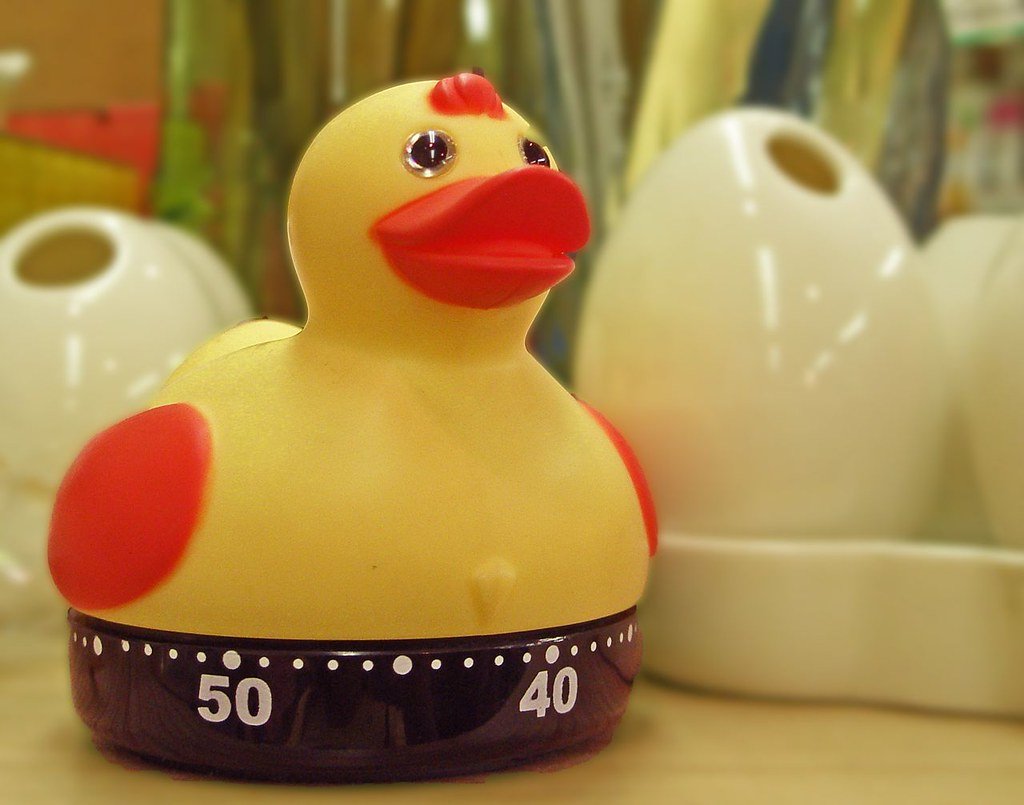
Photo: tanakawho via Flickr (CC BY 2.0).
Altitude is one of the most overlooked factors in egg timing. As elevation rises, air pressure drops, and water boils at a lower temperature. According to Colorado State University Extension, the boiling point falls steadily with height:
| Elevation | Boiling Point of Water | Effect on Eggs |
|---|---|---|
| Sea level | 212°F | Standard times apply |
| 5,000 feet | 203°F | Eggs cook more slowly |
| 7,500 feet | 198°F | Noticeably longer times |
| 10,000 feet | 193°F | Significantly longer times |
Since the water is cooler, the eggs absorb heat more slowly. Therefore, if you live in Denver, Salt Lake City, or another high-elevation city, add a few minutes and test one egg before cooking a full batch. For the cold-water method, you can also keep the pot at a gentle simmer instead of removing it from the heat.
How Long to Boil Eggs in an Egg Cooker or Other Appliances
Electric egg cookers use a different system. Instead of a timer, they rely on the amount of water you add. The water turns to steam, and a thermal sensor shuts the cooker off once the water is gone. As a result, the measuring cup is your clock: the soft line uses the least water, and the hard line uses the most.
| Method | How Time Is Set | Best For |
|---|---|---|
| Stovetop, cold start | Standing time by egg size | Big batches of hard-boiled eggs |
| Stovetop, boiling start | Timer from the moment eggs go in | Soft and jammy eggs |
| Electric egg cooker | Water level in the measuring cup | Hands-off daily eggs |
| Microwave egg boiler | Brand directions, often about 9 to 10 minutes | Dorms and offices |
Never microwave a plain egg in its shell. Steam builds up inside and the egg can burst, so use only a microwave egg boiler designed for whole eggs. If you prefer the oven, our guide on how to cook eggs in a toaster oven covers baked eggs. The same steam principle used by egg cookers is explained in our guide on how to use a microwave steamer.
How Long to Boil Eggs for Popular Dishes
Different recipes call for different yolks. So, before you start the timer, think about how you plan to serve the eggs. Here is a quick guide to how long to boil eggs for common dishes, using large eggs and the methods above.
| Dish | Ideal Yolk | Suggested Time |
|---|---|---|
| Toast soldiers or egg cups | Very runny | 5 minutes, boiling start |
| Ramen and grain bowls | Soft and jammy | 7 to 8 minutes, boiling start |
| Salads and avocado toast | Mostly set | About 9 to 10 minutes, boiling start |
| Deviled eggs | Fully firm | 12-minute stand, cold start |
| Egg salad and potato salad | Fully firm | 12-minute stand, cold start |
| Easter egg dyeing | Fully firm | 12-minute stand, cold start |
For deviled eggs and egg salad, a fully set yolk mashes smoothly and holds its shape. On the other hand, ramen and grain bowls benefit from a jammy center that blends into the broth or sauce. In addition, if you dye eggs for Easter and plan to eat them, keep them refrigerated and follow the same one-week rule.
As a final tip, cook a few extra eggs when you make a hard-boiled batch. That way, you will have quick protein for snacks and lunches all week, without having to think about how long to boil eggs again until the weekend.
Why the Ice Bath Matters
Removing eggs from the heat does not stop the cooking right away. Instead, heat stored in the egg keeps moving toward the center for several minutes. That is why an egg that looked perfect at 7 minutes can turn firm by the time you eat it.
An ice bath solves this problem. Fill a bowl with ice and cold water, then move the eggs in as soon as the timer goes off. In addition, rapid cooling helps prevent the gray-green ring around the yolk. According to the University of Arkansas Extension, that ring comes from a reaction between sulfur in the white and iron in the yolk, and it shows up most often in overcooked eggs.
How to Peel Boiled Eggs Easily

Photo: John Loo via Flickr (CC BY 2.0).
Even perfectly timed eggs are frustrating if the shell sticks. Fortunately, a few habits make peeling much easier:
- Use older eggs: The American Egg Board suggests buying and refrigerating eggs 7 to 10 days before cooking, since very fresh eggs are harder to peel.
- Peel after cooling: Peel right after the eggs cool, when the shell has contracted slightly.
- Crack all over: Tap the egg on the counter until the shell is finely cracked, then roll it gently between your hands.
- Start at the wide end: Begin where the air pocket sits, and peel under cold running water.
How Long Do Boiled Eggs Last?
Once your eggs are cooked, storage matters just as much as timing. According to the American Egg Board, hard-boiled eggs in the shell keep safely in the refrigerator for up to one week. However, peeled eggs should be eaten the same day.
- Refrigerate promptly: Cool the eggs and chill them soon after cooking.
- Keep them in the carton: The carton helps prevent the eggs from absorbing fridge odors.
- Label the date: Write the cook date on the carton so you use them in time.
- Eat soft eggs fresh: Soft- and medium-boiled eggs are best eaten right away.
For safety, the Egg Safety Center notes that cooking eggs until the white and yolk are firm helps destroy bacteria. So, serve fully cooked eggs to young children, older adults, pregnant people, and anyone with a weakened immune system.
Common Boiled Egg Mistakes
- Overcrowding the pot. Instead, cook eggs in a single layer so they heat evenly.
- Boiling too hard. In fact, a violent boil knocks eggs together and cracks shells.
- Skipping the ice bath. Otherwise, carryover heat overcooks the yolk.
- Ignoring egg size. As a result, extra-large eggs end up undercooked on a large-egg timer.
- Forgetting altitude. Similarly, mountain kitchens need extra time.
Over time, boiling eggs in hard water can also leave a chalky film on your pot. Our guide on cleaning discolored stainless steel pots shows how to remove it.
Frequently Asked Questions
How long to boil eggs for hard-boiled?
For large eggs started in cold water, bring the water to a boil, cover, and let them stand off the heat for about 12 minutes. If you start in boiling water, cook them for about 12 minutes.
How long to boil eggs for soft-boiled?
Lower cold eggs into simmering water and cook for 5 minutes for a very runny yolk, or up to 7 minutes for a barely set yolk. Then move them to an ice bath.
Should I start eggs in cold or boiling water?
Generally, use a cold start for hard-boiled eggs, because it is gentle and consistent. Use a boiling start for soft eggs, since the timing is more precise.
Why do my boiled eggs have a green ring?
The ring forms when sulfur in the white reacts with iron in the yolk, usually from overcooking or slow cooling. It is safe to eat, but an ice bath helps prevent it.
Does boiling more eggs change the time?
Not much, as long as the eggs sit in a single layer and are covered by about 1 inch of water. However, a larger pot of water takes longer to reach a boil, so the total time from stove-on to finished eggs will be longer. With the cold-water method, the standing time stays the same, since it starts only after the water boils.
How long do boiled eggs need to cool before peeling?
Generally, a few minutes in ice water is enough to cool the shell and stop the cooking. Then peel right away, since the American Egg Board notes that the shell contracts slightly as it cools, which helps it release.
What if I want a fried egg instead?
Of course, if you would rather have a fried egg, our guide on cooking eggs in a cast iron skillet without sticking walks through every step.
Final Thoughts
Knowing how long to boil eggs comes down to three things: your method, your egg size, and your altitude. For hard-boiled large eggs, use the cold-water start with a 12-minute stand. For soft eggs, start in boiling water and cook for 5 to 7 minutes. Then chill every batch in ice water, peel from the wide end, and store unpeeled eggs in the fridge for up to a week. With those numbers, you will get the same perfect egg every time.

Hey, My name is MAMON. I am a SEO content creator and affiliate marketer with over 8 years of experience. I create honest product reviews, in-depth buying guides, and practical how-to articles to help readers make informed decisions. My mission is to provide trustworthy, research-backed content that delivers real value.
Leave a Reply