
Steaming is one of the fastest ways to cook vegetables without sacrificing nutrients. Knowing how to use a microwave steamer is the easiest way to do it on a weeknight. Compared to dry-heat cooking, steaming limits the loss of minerals and vitamins. You don’t need to add oil or salt to get good flavor. It sounds simple, but most people who own a microwave steamer never learn how to use it correctly. That’s why food often comes out either soggy or undercooked.
Key Takeaways
- Add just 1-2 inches of water to a microwave-safe steamer basket. Too much waterlogs the food; too little scorches the container.
- Arrange harder vegetables like carrots toward the outside and softer ones toward the center. That way, everything finishes at the same time.
- Poultry needs to reach 165°F and fish needs to reach 145°F internally, per FDA and USDA guidance, not just “looks done.”
- Let the steamer rest, sealed, for 1-3 minutes after the microwave stops so trapped steam doesn’t burn you when you open it.
What Is a Microwave Steamer?
A microwave steamer is a vented, microwave-safe container, usually plastic or silicone. It’s built with a perforated basket that holds food above a small pool of water. As the water heats and turns to steam, it cooks the food gently from all sides. That’s a very different result from direct microwave heating, which can dry food out or cook it unevenly. Most brands work the same basic way. That’s true whether you own a dedicated steamer like a Sistema Klip It or a simple two-piece steaming dish from a discount store.
The appeal is speed without sacrificing texture. A stovetop steamer takes several minutes just to bring water to a boil before it even starts cooking. A microwave steamer skips that wait, since the microwave heats the water and the food cavity at the same time. That’s exactly why so many people want to learn how to use a microwave steamer instead of dragging out a full steaming basket and saucepan.
How to Use a Microwave Steamer: Step by Step
Step 1: Wash and Cut Your Vegetables
The FDA recommends washing produce thoroughly before you cut, peel, or cook it. Bacteria on the surface can transfer inside once you slice through it, so rinsing after cutting isn’t enough. Rinse everything under running water, and use a vegetable brush on anything with thick skin, like potatoes or squash. Vegetables full of nooks, like broccoli or cauliflower, need a different approach. Soak them in cold water for a minute or two instead of just rinsing under the tap.
Cut vegetables into roughly equal pieces so they steam at the same rate. A carrot chopped into large chunks next to bite-size broccoli florets will finish at very different times. You’ll end up with mushy broccoli by the time the carrot catches up.
Step 2: Add Water
Add about 1-2 inches of water to the steamer’s base, below the level of the basket. Too much water splashes up into the food, turning it soggy instead of steamed. Too little water lets the container scorch before the cycle finishes. A splash of lemon juice or a dash of soy sauce in the water adds flavor without adding fat. The steam carries it into the food as it cooks.
Step 3: Microwave the Food
Cover the steamer with its vented lid and place it in the microwave. The vent matters. It lets steam escape in a controlled way instead of building up pressure inside a sealed container. Set the microwave to medium power rather than high. High power cooks the outside of the food faster than steam can penetrate to the center. That leads to overcooked edges and an undercooked middle, which is the opposite of what steaming is supposed to fix.
Cook times vary by food type, size, and quantity, so treat any recipe’s time as a starting point rather than a guarantee. If you’re steaming a mix of vegetables, put the denser ones, like carrots or potatoes, toward the outer edge of the basket. Put the more delicate ones, like spinach or zucchini, toward the center, where the steam is gentler.
| Food | Approximate Microwave Steam Time |
|---|---|
| Broccoli florets | 3-4 minutes |
| Carrots, sliced | 4-5 minutes |
| Green beans | 3-4 minutes |
| Spinach or leafy greens | 1-2 minutes |
| Fish fillet (about 1 inch thick) | 4-6 minutes |
| Boneless chicken breast | 6-8 minutes |
These times assume a standard 1,000-watt microwave. Adjust up or down if yours runs weaker or stronger, and check a minute early the first time you try a new food.
Step 4: Check for Doneness the Right Way
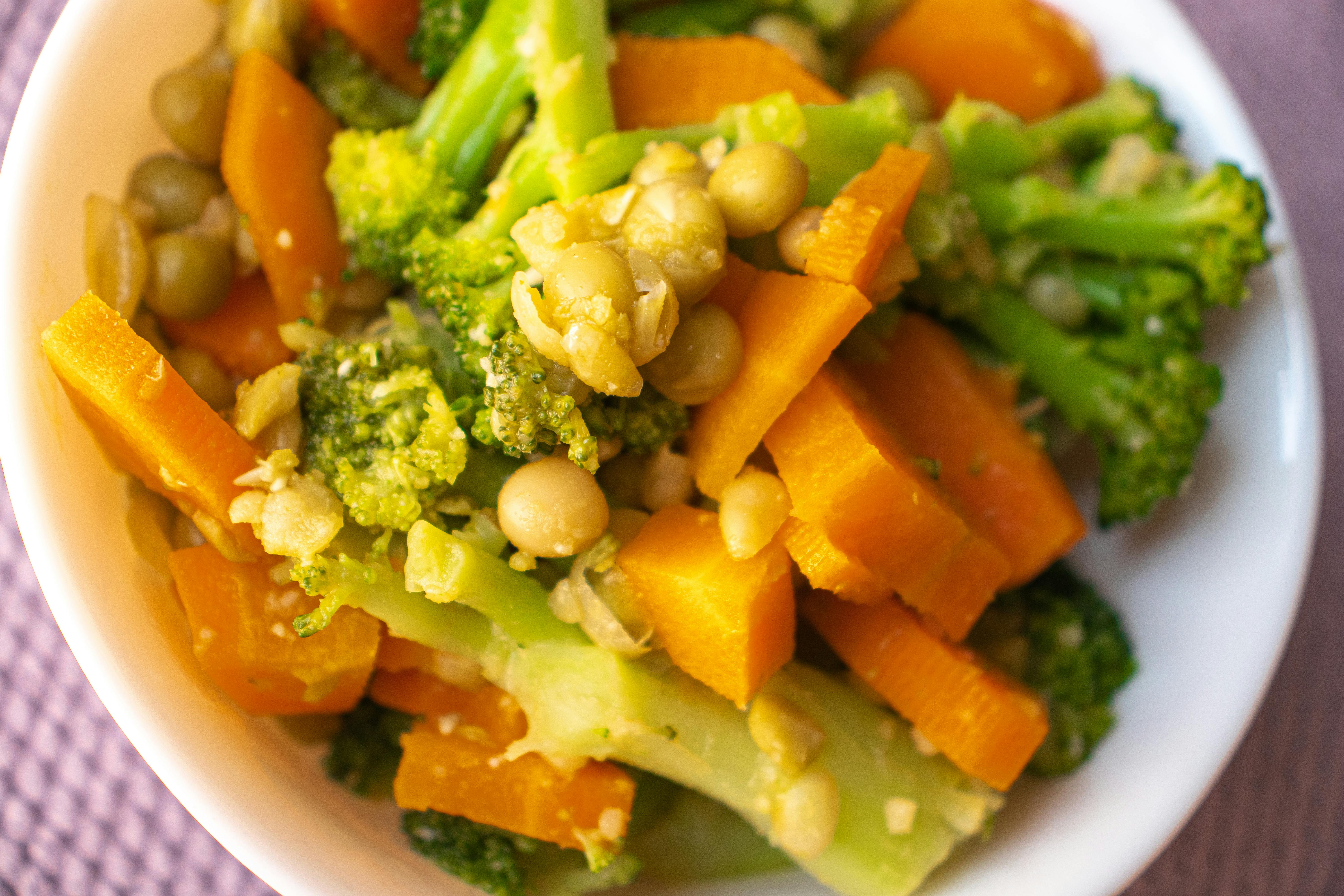
Vegetables are ready when a fork slides in with just a little resistance. They should be tender but still slightly crisp, not mushy. Fish is a little different: insert a fork at the thickest point and twist gently. It’s done when it flakes easily and is no longer translucent in the center.
Poultry is where looks can genuinely deceive you, so skip the guesswork and use a meat thermometer instead. Per FoodSafety.gov’s official chart, poultry needs to reach 165°F internally, and fish needs to reach 145°F, regardless of how done it looks on the outside. Undercooked chicken can carry campylobacter or salmonella. Both cause food poisoning that ranges from an unpleasant day to a genuinely serious illness. A $10 instant-read thermometer removes the guesswork entirely, and it’s worth keeping in the kitchen drawer specifically for this.
Step 5: Make Sure the Seal Is Airtight (But Vented)
Steam needs to circulate around the food and stay inside the container to cook it properly. A loose-fitting lid lets steam escape, which stretches out cooking time. In the worst case, it can leave poultry undercooked even after the timer goes off. The container simply never reached full steam. Check that your lid seats fully before starting, while still leaving the vent itself open.
Step 6: Remove the Steamer Carefully
Once the microwave stops, let the steamer sit, still sealed, for 1-3 minutes. This gives trapped steam time to settle before you open it. Use pot holders, and lift the lid away from your face and hands rather than toward them. A faceful of 212°F steam is one of the more common, and more avoidable, kitchen burns.
Step 7: Serve the Food
Skip cutting food directly inside the steamer with a knife. Sharp utensils scratch the interior, which shortens the container’s lifespan and can trap bacteria in the grooves over time. Transfer food to a ceramic, glass, or stone plate to portion and serve it instead.
What Not to Steam in a Microwave Steamer
A few foods don’t hold up well to this method. Curries and anything with a heavy, oily sauce can stain plastic containers permanently. Beetroot does the same thing. Foods high in sugar or fat can scorch or blister the plastic if they get too concentrated near the container walls during cooking. When in doubt, stick to plain vegetables, fish, and lean poultry, which is what microwave steamers handle best anyway.
Benefits of Steaming Over Other Microwave Cooking Methods
Part of why it’s worth learning how to use a microwave steamer is the real edge it has over microwaving food directly on a plate. Direct microwaving heats unevenly and can leave vegetables rubbery at the edges while the center stays cold. A steamer’s enclosed, humid environment spreads heat more evenly around the food. The moisture also keeps vegetables from drying out. That’s a common problem in a plain microwave-safe bowl covered loosely with a paper towel.
There’s a nutritional angle too. Boiling vegetables in a full pot of water leaches vitamins and minerals into the water. That water usually gets poured straight down the drain. Steaming uses only a couple inches of water and never fully submerges the food, so far fewer nutrients are lost in the process.
Cleaning and Storing Your Microwave Steamer
Most microwave steamers are dishwasher-safe. Check the underside for a symbol confirming it before assuming so. Place it on the top rack, away from the heating element at the bottom. Intense heat there can warp plastic over repeated cycles. If food residue or odor lingers, a soak in warm water with a splash of white vinegar usually loosens it.
Never put a microwave steamer in a conventional oven, on a stovetop, or on a hot plate. These containers are engineered specifically for microwave use and aren’t rated for direct heat. Doing so can melt or warp the plastic within seconds.
Watch: How to Steam Vegetables in a Microwave Steamer
This walkthrough covers water level and timing basics in real time, which is useful if you’d rather watch the process than read through it. For a deeper dive into a single vegetable, our guide to steaming broccoli in a microwave covers timing and seasoning specifics.
Frequently Asked Questions
How long do you use a microwave steamer for vegetables?
Most vegetables take 3-5 minutes on medium power, depending on density and how small you’ve cut them. Leafy greens cook in 1-2 minutes; root vegetables like carrots need closer to 5.
Do you need special cookware to use a microwave steamer?
You need a microwave-safe steamer with a vented lid, plus a basket or insert that keeps food above the water line. Regular glass or ceramic dishes without a raised basket won’t steam food properly; they’ll just boil it.
Can you steam meat in a microwave steamer?
Yes, boneless chicken breast and fish fillets both steam well. Always confirm doneness with a meat thermometer rather than appearance alone, since poultry needs to hit 165°F internally to be safe.
Why is my food soggy after using a microwave steamer?
Usually it’s too much water in the base, or a basket that sits too low and lets the food touch the water directly. Keep water to 1-2 inches and confirm the basket holds food clear of it.
Can you use a microwave steamer in a convection microwave?
Yes, but stick to the microwave-only setting. Convection mode uses a hot-air heating element that isn’t designed to work with a water-filled plastic container. It can warp or melt the steamer.
Conclusion
Once you know how to use a microwave steamer properly, it becomes one of the fastest, most nutrient-friendly ways to cook a weeknight side dish or a full meal. That starts with the right water level and runs through the correct internal temperature for meat and fish. The technique stays the same no matter which brand of steamer you own: water, vent, medium power, and a thermometer for anything that isn’t a vegetable. Get those four things right, and your food comes out evenly cooked every time.

Hey, My name is MAMON. I am a SEO content creator and affiliate marketer with over 8 years of experience. I create honest product reviews, in-depth buying guides, and practical how-to articles to help readers make informed decisions. My mission is to provide trustworthy, research-backed content that delivers real value.
Leave a Reply