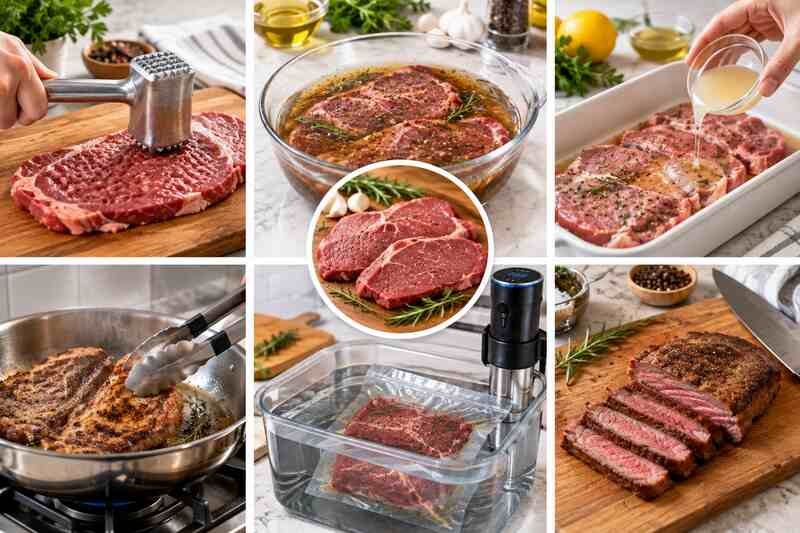
There’s no single best way to tenderize meat that works for every cut and every cook. The right method depends on what you’re cooking and how much time you have. This guide covers every proven technique for how to tenderize meat, including which ones actually deliver results in side-by-side testing. Use it to pick the right method for tonight’s dinner.
Key Takeaways
- Enzyme-based tenderizing powder and knife scoring outperformed a meat mallet and salt brining in controlled kitchen testing.
- Baking soda tenderizes meat by raising its surface pH, which stops proteins from bonding too tightly. Use about 1% of the meat’s weight for a dry brine.
- Acidic marinades add flavor and some tenderizing, but always marinate in the refrigerator, never on the counter.
- Low-and-slow cooking is still the most reliable way to tenderize genuinely tough cuts like chuck roast or brisket.
Why Tenderizing Meat Matters
Meat toughness comes down to two things: muscle fiber structure and connective tissue. Cuts from a muscle that works hard, like the shoulder or leg, contain more collagen. That collagen stays tough unless you break it down with heat, acid, enzymes, or mechanical force. Tender cuts like tenderloin need little help, but tougher, more affordable cuts turn into something genuinely delicious once you tenderize them properly.
That’s really the appeal of finding the best way to tenderize meat for a given cut. A $6-per-pound chuck roast, treated correctly, can taste just as satisfying as a $20-per-pound ribeye. The difference is almost entirely technique and time, not the price tag on the package.

Which Tenderizing Method Actually Works Best?
The Kitchn tested seven tenderizing methods side by side on flank steak, and the results weren’t what most people expect. Enzyme-based meat tenderizing powder scored highest, breaking down muscle fibers in just 15-20 minutes. Scoring the surface in a crosshatch pattern came in a close second. Baking soda placed third. It ranked well ahead of an overnight acidic marinade, fork poking, a meat mallet, and a plain salt brine, which came in last of all seven methods tested.
That doesn’t mean pounding or marinating are wasted effort. They work better as flavor and texture tools than as your primary tenderizing method for a genuinely tough cut.
What’s Actually in Enzyme Meat Tenderizer Powder?
The powder that topped The Kitchn’s test isn’t magic. It’s usually papain, an enzyme extracted from papaya, or bromelain, extracted from pineapple. According to Louisiana Kitchen & Culture, these enzymes break down collagen, the connective tissue that makes meat tough in the first place.
There’s a real limitation worth knowing. These enzymes only tenderize the outer layers of a thick cut effectively. For a thin steak, that’s not a problem. For a thick roast, you’d need to slice it thinner first or rely on a different method entirely, like low-and-slow cooking. If you’d rather skip the store-bought powder, fresh papaya, pineapple, or kiwi all contain the same enzymes naturally. Just don’t leave fresh pineapple on too long, since it can turn meat mushy.
Marinate the Meat With Acid
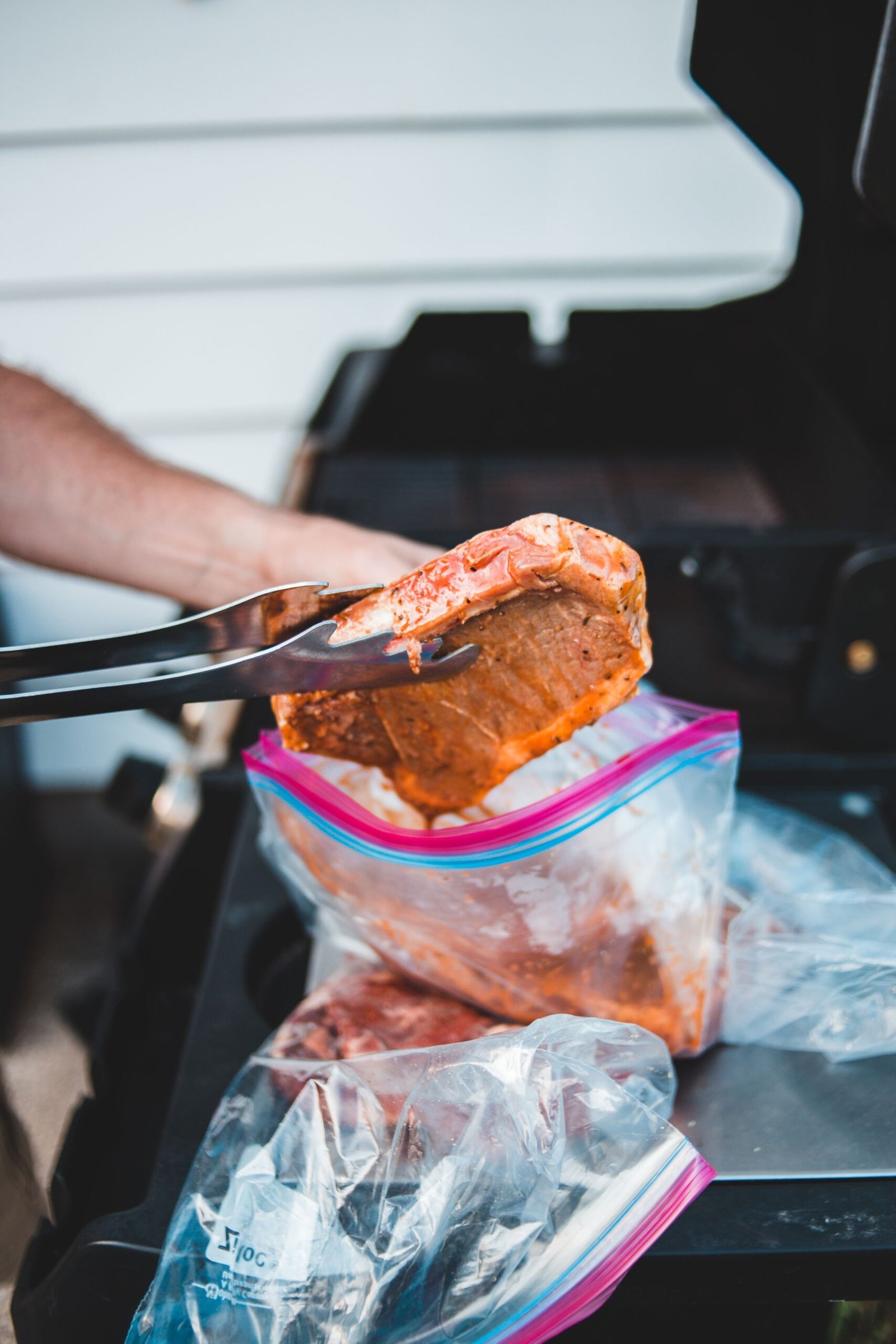
Acids help tenderize tougher cuts while adding flavor at the same time. Everyday kitchen staples like lemon juice, vinegar, yogurt, or buttermilk all work. Marinate the meat for 30 minutes up to 2 hours for thinner cuts, or up to 24 hours for genuinely tough ones. Stop once the edges of the meat start to look opaque, which is a sign the acid has already started “cooking” the surface.
Always marinate meat in the refrigerator, never on the counter. According to University of Illinois Extension, marinades aren’t strong enough to reliably kill bacteria on their own. If you want to reuse marinade that touched raw meat, bring it to a full boil first.
Salt and Dry Brining: Does It Help?
Salting meat before cooking is genuinely debated among cooks. In The Kitchn’s testing, a short 20-minute salt brine ranked as the least effective of the seven methods tried. Salt still has real value for flavor. A longer dry brine, meaning salting the meat and refrigerating it uncovered for several hours, draws out moisture that then reabsorbs along with the salt. That’s a flavor and moisture technique more than a tenderizing one, so don’t count on a quick salting to fix a tough cut on its own.
Tenderize With Baking Soda (Velveting)
Baking soda is one of the more reliable tenderizing methods you probably already have in your pantry. According to Arm & Hammer, baking soda raises the pH at the meat’s surface, which makes it harder for proteins to bond tightly together. That keeps the meat from seizing up and turning tough when it hits high heat.
For a dry method, rub about 1% of the meat’s weight in baking soda over the surface. That’s roughly 3 tablespoons for 10 pounds of meat. Refrigerate for 3-5 hours, or overnight for tougher cuts, then rinse thoroughly before cooking. For a faster wet method, dissolve 1 teaspoon of baking soda in ½ cup of water for every 12 ounces of meat. Soak for at least 15 minutes, then rinse well. This wet version is essentially the same “velveting” technique used in Chinese stir-fry cooking. It’s worth trying the next time you’re making a stir-fry in a wok.
Score or Pound the Meat
Cutting a shallow crosshatch pattern into the surface of a steak, about a quarter-inch deep, physically shortens the muscle fibers you’ll bite through. It performed almost as well as enzyme powder in independent testing, and it takes seconds with a sharp knife. Our guide to handling kitchen knives safely covers the grip and cutting technique to do this without risking your fingers.
A meat mallet is the more familiar method, but it tested as one of the least effective options for flank steak specifically. It still has a place for cutlets and thin cuts you want to flatten for even cooking, like chicken breast or veal. Use the textured side of the mallet, not the flat side, and pound gently rather than hard enough to tear the meat.
Cook Low and Slow for Genuinely Tough Cuts
For cuts like chuck roast, brisket, or short ribs, no marinade or powder replaces time and heat. Collagen starts converting into gelatin around 160°F and keeps breaking down until roughly 180°F. A brisket typically needs to reach about 210°F internally before it’s tender enough to pull apart with gentle pressure. That’s well past the temperature most people associate with “done.” It’s exactly why tough cuts need hours at low heat instead of a quick sear.
This is also why the same cut can taste completely different depending on how you cook it. A chuck roast pulled at 145°F will taste tough and stringy, while the same roast held at 205-210°F for several hours turns soft and shreddable. If you’re working with a grill or smoker, our guide to reverse searing on a pellet grill covers a related low-heat-first approach. It also helps thicker steaks cook more evenly.
Does the Cut of Meat Change Which Method Works Best?
Yes, and matching the method to the cut matters more than picking a single favorite technique. Thin, quick-cooking cuts like flank, skirt, or flat iron respond well to scoring, enzyme powder, or a short acid marinade, since heat only needs to travel a short distance through the meat. Thick roasts and cuts loaded with connective tissue, like chuck, brisket, or short ribs, barely notice a marinade or a mallet. They need the slow, sustained heat that actually converts collagen into gelatin. Matching the technique to the cut, rather than defaulting to whatever method is fastest, is really the difference between a good result and a forgettable one.
Let Meat Come to Room Temperature First
Most meat from the grocery store comes straight out of a refrigerated case. Letting it sit at room temperature for about 30 minutes before cooking helps it cook more evenly. This matters most for leaner cuts, since they have less fat to buffer against overcooking. This step doesn’t tenderize meat on its own, but it does help prevent the tough, dry edges that come from cooking a cold center too aggressively.
Food Safety While Tenderizing Meat
Every tenderizing method here still requires basic food safety. Keep raw meat refrigerated until you’re ready to prep it, and use separate cutting boards for meat and produce. Wash your hands, tools, and any cloths that touched raw meat before they touch anything else. Our guide on disinfecting kitchen cloths after handling raw meat covers the exact steps. Always cook meat to a safe internal temperature, since tenderizing changes texture, not the temperature needed to kill harmful bacteria.
Common Tenderizing Mistakes to Avoid
A few habits quietly undo all the work above:
- Marinating too long in a strong acid. Beyond about 24 hours, acidic marinades can start breaking down the surface into a mushy texture instead of a tender one.
- Skipping the rinse after baking soda. Leftover baking soda residue leaves a soapy, bitter taste if you don’t rinse it off before cooking.
- Pounding too hard with a mallet. Tearing the muscle fibers instead of flattening them dries the meat out as it cooks, rather than making it more tender.
- Skipping the rest after cooking. Cutting into meat right off the heat pushes out the juices you just worked to keep in. Let it rest for 5-10 minutes first.
Quick Comparison: Which Method Should You Use?
Here’s a fast reference for matching the best way to tenderize meat to what you’re actually cooking:
- Thin steaks like flank or skirt: Score the surface, or use an enzyme-based tenderizing powder.
- Stir-fry strips: Baking soda velveting, 15 minutes.
- Chicken breast or veal cutlets: A meat mallet to flatten for even cooking.
- Chuck roast, brisket, short ribs: Low-and-slow braising or smoking.
- Any cut, for flavor first: An acidic marinade, refrigerated, for 30 minutes to 24 hours.
Watch: Testing Different Meat Tenderizing Methods
Frequently Asked Questions
So what’s genuinely the best way to tenderize meat?
For thin steaks, scoring the surface or using an enzyme-based tenderizing powder tested best in side-by-side comparisons. For tough roasts and braising cuts, low-and-slow cooking still beats every quick tenderizing trick.
Does baking soda really tenderize meat?
Yes. It raises the pH at the meat’s surface, which keeps proteins from bonding too tightly. That’s the same science behind Chinese velveting, and it works on both beef and chicken.
How long should I marinate meat to tenderize it?
Thin cuts need only 30 minutes to 2 hours. Tougher cuts can marinate up to 24 hours. Always marinate in the refrigerator, and stop once the meat’s edges start to look opaque.
Does pounding meat with a mallet actually work?
It flattens meat for even cooking better than it tenderizes it. In controlled testing, a mallet ranked below scoring, baking soda, and enzyme powder for actual tenderness.
Is salting meat before cooking the same as tenderizing it?
Not really. A short salt brine mainly adds flavor and helps meat hold onto moisture. It ranked as the least effective tenderizing method in recent testing, though a longer dry brine still has real value for seasoning.
What’s the safest way to handle a marinade that touched raw meat?
Either discard it or bring it to a full boil before reusing it on cooked food. Never brush raw marinade onto meat that’s almost done cooking without boiling it first.
Can I combine tenderizing methods for better results?
Yes, and many cooks do. Scoring the surface before an acidic marinade helps the marinade penetrate deeper, and letting meat rest at room temperature after any tenderizing method still helps it cook evenly.
Why did my tenderized meat turn out mushy instead of tender?
That’s usually a sign of too much acid or enzyme exposure for too long. Both papain-based powders and strong acidic marinades can overshoot from “tender” to “mushy” if you leave them on a thin cut for several hours instead of the recommended 15-30 minutes.
Conclusion
There’s no single best way to tenderize meat for every situation, but there is a right method for what’s on your cutting board tonight. Score or use enzyme powder on thin steaks, reach for baking soda before a stir-fry, and give tough roasts the time they need over low heat. Match the method to the cut, and you’ll get a tender, juicy result every time.

Hey, My name is MAMON. I am a SEO content creator and affiliate marketer with over 8 years of experience. I create honest product reviews, in-depth buying guides, and practical how-to articles to help readers make informed decisions. My mission is to provide trustworthy, research-backed content that delivers real value.
Leave a Reply