
Key Takeaways
- Check outlet access first. As of the 2023 electrical code, every kitchen countertop receptacle needs GFCI protection. Confirm your spot has one nearby.
- Keep your coffee maker away from direct sunlight, stovetop heat, and the sink. Heat and moisture both affect flavor and shorten the machine’s lifespan.
- Leave at least 15 inches of landing space beside the machine for mugs, filters, and grounds. That’s the standard kitchen design guideline.
- No extra counter space? A pantry shelf, rolling cart, or above-stove cabinet zone all work as dedicated coffee stations.
- Match the spot to your morning routine. The best location is the one you’ll actually walk to every day.
Choosing where to put a coffee maker in the kitchen sounds simple until you actually try it. Coffee makers range from small single-serve machines to bulky grinder-and-brewer combos. The right spot depends on what you own and how your kitchen is laid out. Most people default to the counter near the sink, but that’s not always the best call. Direct sunlight can heat the machine and dull the coffee’s flavor. A cramped counter leaves no room for mugs or filters. This guide covers the factors worth checking first, along with several placement ideas for where to put coffee maker in kitchen layouts big and small.
Factors to Consider Before You Choose a Spot
A good location balances safety, convenience, and the practical realities of your kitchen’s layout. Walk through these five factors before settling on a permanent spot.
1. Electrical Outlet Access
Your coffee maker needs a nearby outlet, and increasingly, that outlet needs to be GFCI-protected. Under the 2023 National Electrical Code, Section 210.8(A)(6) requires GFCI protection for essentially all 120-volt kitchen receptacles. That’s true regardless of whether the outlet sits near the sink or across the room. Older homes may not fully meet this standard yet. It’s worth checking if your kitchen’s outlets have been updated, especially if you’re placing a coffee maker somewhere new, like a pantry or a cabinet nook.
2. Heat and Sunlight Exposure
Avoid spots that get direct sun for part of the day, and keep some distance from the stovetop or oven. Both heat sources can affect how your coffee maker performs. Prolonged heat exposure can also fade plastic components over time. In machines with a water reservoir, it can encourage algae growth if water sits for a while between uses.
3. Counter Space and Landing Room
Your coffee maker needs more than a footprint. It needs a landing zone for mugs, filters, and grounds within easy reach. Standard kitchen design guidance calls for roughly 15 inches of counter space adjacent to a countertop appliance for this purpose. If your counter can’t offer that much, a wall shelf, rolling cart, or dedicated nook can fill the gap instead.
4. Kitchen Design and Flow
Pick a spot that fits how you actually move through your kitchen in the morning. Don’t just default to wherever there’s an open outlet. A coffee maker tucked in a corner you rarely pass will get used less than one sitting along your normal path from the fridge to the counter. It should also fit the room visually. A matte black coffee maker on a bright white farmhouse counter can look out of place next to stainless steel or pastel small appliances.
5. Distance from Water and Wet Areas
Keep the machine a reasonable distance from the sink and any spot prone to splashes. Interior designer Violeta Stoyanova, quoted in Woman & Home, warns that water splashes near a plugged-in appliance raise the risk of a short circuit. GFCI protection helps, but distance from the wet zone is still the simplest safeguard.
Best Places to Put a Coffee Maker in the Kitchen
Once you’ve checked those factors, here are the best answers for where to put coffee maker in kitchen layouts of any size.
Pantry Coffee Station
A pantry with open shelving or a built-in counter makes an excellent coffee station. It keeps your machine, grounds, mugs, and stirrers together in one enclosed space, out of the main kitchen’s sightline. Two variations work especially well:
- On the wall: Install a floating shelf if your pantry has open wall space. This keeps the counter below free while putting your coffee maker within easy reach.
- On a tray: Corral mugs, creamer, and sugar packets on a single tray. It keeps small items from spreading across the shelf and makes cleanup faster.
Rolling Coffee Cart
A rolling cart, sometimes called a coffee bar, solves the counter-space problem directly. You can wheel it out of the way when it’s not in use. It can also move into another room entirely for a party. Many carts include drawers and shelves. Your filters, syrups, and mugs can travel with the machine instead of staying scattered around the kitchen.
The Cabinet-Above-Stove Zone
If your kitchen has a cabinet above the stovetop, and you’re tight on counter space elsewhere, consider adding a shelf inside it for your coffee maker. This keeps the machine close at hand while freeing up prime counter real estate. Just make sure the cabinet isn’t the one you use for pots and pans daily. Digging around a coffee maker to grab a saucepan gets old fast.
Near Your Food Prep Area
If you already have a stretch of counter dedicated to food prep, placing the coffee maker nearby keeps your morning routine efficient. You’ll have the sink, cutting board, and coffee maker all within a few steps. That’s convenient if you’re also making breakfast at the same time.
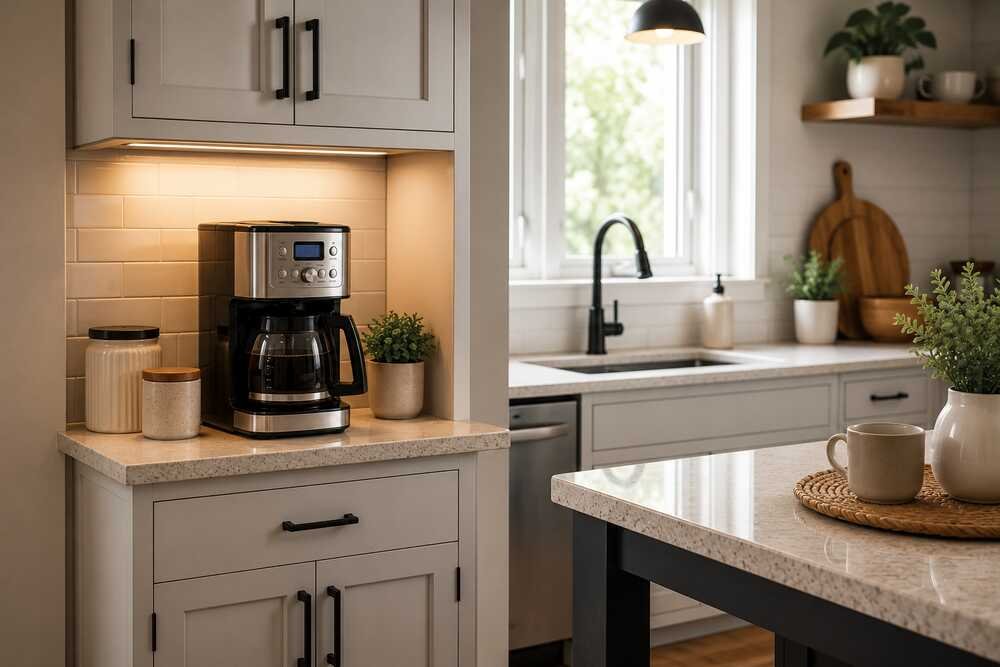
A Dedicated Coffee Nook or Built-In Station
If you’re renovating or have an awkward corner to fill, a built-in coffee nook is worth considering. These typically include a small section of counter and open or closed storage above and below. Some even include a dedicated outlet and water line for machines that need one. It’s a bigger investment than a shelf or a cart, but it keeps coffee gear fully out of your main prep and cooking space.

Matching the Spot to Your Coffee Maker Type
Not every coffee maker has the same needs, so the ideal spot can shift depending on what’s sitting on your counter. A standard drip machine is the most flexible option. It’s light, doesn’t need much ventilation, and fits almost anywhere with an outlet. Espresso machines run hotter and often weigh more. They do best on a sturdy, heat-tolerant surface with a bit of breathing room on all sides. Machines with a built-in grinder need airflow around the grinding chamber, which makes a tight, closed cabinet a poor fit for them. Single-serve pod machines are usually the most compact option of the bunch. They work well on a pantry shelf or cart where a full-size drip machine wouldn’t fit as neatly.
Weight matters too, especially for anything mounted on a wall shelf or a cart with wheels. A basic drip machine rarely tops five or six pounds, so most shelves handle it without issue. A large grinder-and-brewer combo, or a countertop espresso machine with a built-in tank, can weigh considerably more. Check the shelf or cart’s weight rating before committing to that spot, particularly if you’re mounting anything to drywall rather than into a stud.
Coffee Station Ideas for Small Kitchens
Small kitchens make deciding where to put coffee maker in kitchen corners especially tricky, since there’s less room to work with in the first place. A few space-saving approaches help. Stack a shelf above an existing appliance instead of adding new counter footprint. Use a bar cart that tucks against a wall when it’s not brewing. Or choose a corner of the counter near an existing outlet rather than running a new one. Vertical storage, like a hanging rack for mugs, also frees up counter space that would otherwise go to holding cups.
For more visual inspiration on pulling together a full setup, the video below walks through several coffee station layouts. It also covers the small details that make them functional.
Common Mistakes to Avoid
- Placing it directly beside the sink. Splashes and steam both increase the risk of electrical issues over time.
- Skipping the landing space. A coffee maker with nowhere nearby to set a mug or filter gets awkward to use daily.
- Using a non-GFCI outlet. Older kitchens especially should be checked, since current code requires GFCI protection throughout.
- Choosing looks over function. A beautiful spot you rarely walk past won’t get used as often as a convenient one.
- Ignoring ventilation. Machines with built-in grinders or steam wands need airflow, so avoid tight, enclosed cabinets for those models.
Frequently Asked Questions
Can I put a coffee maker on the counter near the sink?
It’s possible, but not ideal. Splashes from the sink raise the risk of electrical issues, even with a GFCI outlet. A few feet of distance is a simple, effective safeguard.
Does a coffee maker need a GFCI outlet?
Under the current National Electrical Code, essentially all kitchen countertop receptacles need GFCI protection, regardless of what’s plugged into them. Have an electrician check your outlets if your kitchen hasn’t been updated recently.
Where to put coffee maker in kitchen when space is tight?
A wall-mounted shelf, a rolling cart, or a repurposed cabinet above the stove all work well when counter space is tight. Pick whichever option keeps the machine closest to your everyday path through the kitchen.
Can I keep my coffee maker in a cabinet?
Yes, as long as there’s ventilation and an accessible outlet. Machines with a built-in grinder or steam function need more airflow than a simple drip coffee maker does.
Does sunlight really affect a coffee maker?
Yes. Direct sun can fade plastic housing over time and heat the machine. That can affect brewing and encourage algae growth in a water reservoir that sits between uses.
How much counter space does a coffee maker actually need?
Beyond its own footprint, aim for about 15 inches of adjacent landing space for mugs, filters, and grounds. That’s the standard guideline used in most kitchen design planning.
Is a rolling coffee cart a good permanent solution?
It can be. Carts work especially well in small kitchens or rentals. You can move them out of the way, or take them along if you relocate.
Final Thoughts
There’s no single right answer for where to put coffee maker in kitchen designs, since every layout is different. The best spot balances outlet access, distance from heat and water, and enough landing space for your morning supplies. It also needs to be a location you’ll actually use every day. Whether that ends up being a pantry shelf, a rolling cart, or a spot right on your main counter, the factors above will help you land somewhere that works. Once you’ve settled on a spot, our guide on making coffee in a Cuisinart coffee maker covers the brewing side. Our breakdown of how many watts a coffee maker uses is also worth a look if you’re thinking about which outlet or circuit to use.

Hey, My name is MAMON. I am a SEO content creator and affiliate marketer with over 8 years of experience. I create honest product reviews, in-depth buying guides, and practical how-to articles to help readers make informed decisions. My mission is to provide trustworthy, research-backed content that delivers real value.
Leave a Reply