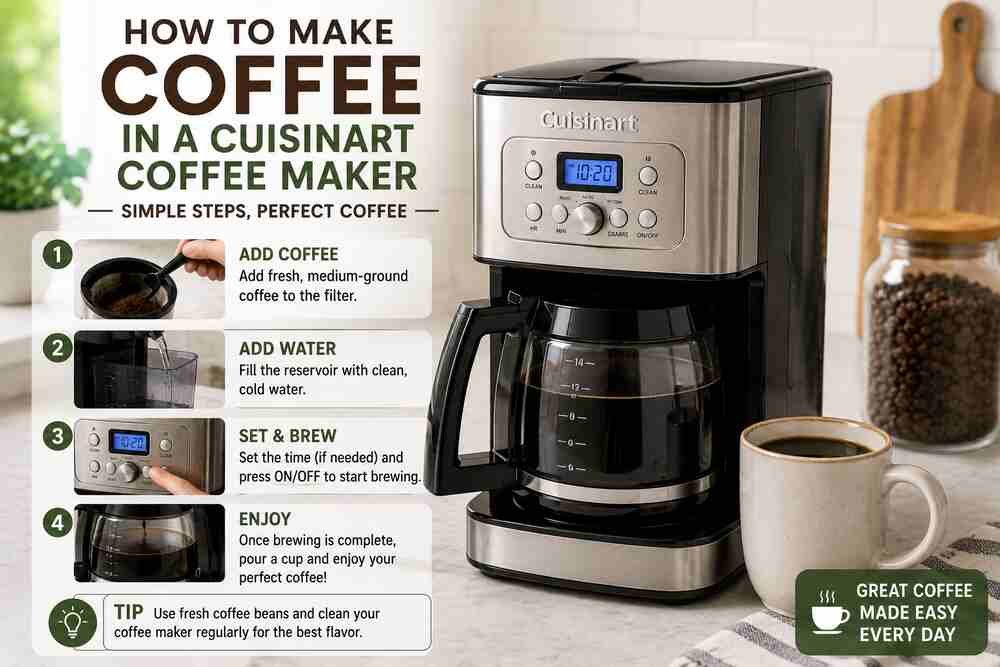
Key Takeaways
- Cold, filtered water makes the biggest difference in taste. The National Coffee Association specifically advises against distilled or softened water for brewing.
- The “Golden Ratio” for drip coffee is 1 to 2 tablespoons of ground coffee for every 6 ounces of water. Adjust from there to match your taste.
- Most Cuisinart machines heat water to the ideal 195–205°F range automatically. That means the ratio and grind size matter more than anything you do by hand.
- Bitter coffee usually means your grind is too fine. Sour or watery coffee usually means it’s too coarse.
- Cuisinart makes dozens of coffee maker models. Check your specific manual for capacity and filter details before your first brew.
Cuisinart coffee makers are a fixture in American kitchens, and for good reason. They’re reliable, reasonably priced, and simple enough for a first-time owner to use right out of the box. Maybe you just brought one home, or you’re revisiting the basics after a break. Either way, this guide walks through every step from filling the reservoir to troubleshooting a bitter cup. It also covers the small details that separate an average pot from a genuinely good one, like water quality and grind size.
Types of Cuisinart Coffee Makers
Before diving into the steps, it helps to know which type you own, since a few details shift depending on the model. Cuisinart sells three main styles.
- Classic drip machines (like the Brew Central or DCC series) brew a full carafe at once. They’re the most common type in American homes.
- Grind & Brew models have a built-in burr grinder. Whole beans go in, and fresh grounds come out automatically right before brewing.
- Single-serve and Coffee Center models brew one cup at a time, often alongside a K-Cup compatible pod system.
The core steps below apply to all three, though grind-and-brew and single-serve models handle a couple of steps automatically. If you’re still deciding which type fits your kitchen, our coffee grinder and brewer buyer’s guide compares the options in more depth.
What You’ll Need
Gather a few basics before your first brew. Most of these came with your machine, but it’s worth confirming since specs vary across Cuisinart’s lineup.
- Your Cuisinart coffee maker and its included manual
- Cold, filtered water
- A paper filter or the reusable mesh filter that came with your machine
- Freshly ground coffee, ideally ground just before brewing
- A tablespoon or the scoop included with your machine
Lost your printed manual? Cuisinart’s manuals page has digital copies for nearly every coffee maker model the brand has sold, searchable by model number.
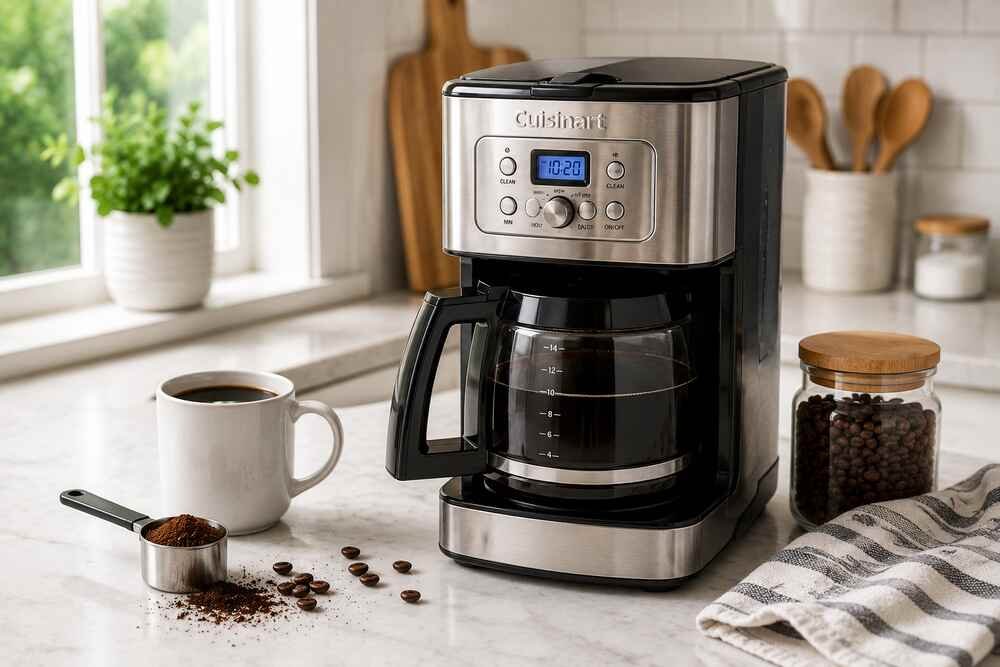
Step 1: Fill the Reservoir with Fresh, Filtered Water
Open the reservoir lid and add cold water up to your target line. Use the markings on the tank, or a separate measuring cup if you want more precision. Water quality matters more than most people expect here. The National Coffee Association’s brewing guidance recommends cold water that’s filtered if possible. It specifically warns against distilled or softened water. Distilled water lacks the minerals that help coffee extract properly. That’s why coffee brewed with it often tastes flat or strangely sharp. Tap water works fine in most parts of the country. Still, a basic pitcher filter or your machine’s built-in filter, if it has one, will noticeably improve the cup.
Step 2: Insert Your Coffee Filter
Drop a filter into the basket before adding any grounds. If your model uses a cone-shaped paper filter, fold along the seams first. That keeps it sitting flat against the basket instead of collapsing. Cheap, off-brand filters can run thin and let fine grounds slip through into your cup. Stick with the filter type your specific Cuisinart model was designed for whenever you can. Many current models also include a reusable gold-tone or mesh filter. It skips paper entirely and just needs a rinse between uses.
Step 3: Measure and Add Your Coffee Grounds
Add your ground coffee to the filter basket, measuring rather than eyeballing it. The NCA’s Golden Ratio calls for 1 to 2 tablespoons of ground coffee for every 6 ounces of water. That’s a solid starting point regardless of which Cuisinart model you own. Some manuals get more specific. The Brew Central DCC-1200 series, for example, caps ground coffee at 15 tablespoons for a full 12-cup, 60-ounce pot. Check your own manual if you’re brewing a full carafe. Going over the recommended maximum can cause the basket to overflow during brewing.
Freshness affects this step just as much as measurement does. Coffee that’s been sitting opened for weeks loses aromatic oils and brews flatter, no matter how precisely you measure it.
Step 4: Start the Brew Cycle
Close the lid, place the carafe on the warming plate, and start the brew cycle. Newer Cuisinart models typically have a one-touch or programmable start button. Older models may need you to flip a switch and time the cycle yourself instead. Either way, the machine handles water temperature automatically. It heats to roughly 195–205°F (90–96°C), the range the NCA identifies as ideal for extracting flavor without scorching the grounds. That’s part of what makes a drip machine convenient. You don’t have to monitor temperature the way you would with a manual pour-over setup. Curious what’s happening inside the machine during this stage? See our explainer on how a coffee maker actually works.
Step 5: Serve and Enjoy
Once brewing finishes, most Cuisinart models shut off automatically or switch to keep-warm mode. Remove and discard a paper filter right away. Letting used grounds sit releases bitter compounds back into the carafe. If you used a reusable filter, rinse it promptly so it’s ready for next time. Pour and enjoy while the coffee is fresh. If you have leftovers, transfer them to a thermos rather than leaving the pot on the warming plate. A hot plate keeps coffee at serving temperature, but it also keeps cooking it. That’s why coffee left out for an hour often tastes noticeably more bitter than it did fresh off the brew cycle.
Prefer to watch the whole process from start to finish? The video below walks through brewing a full pot on a Cuisinart drip machine.
Dialing In the Taste: Grind and Ratio Adjustments
If your first few pots don’t taste quite right, the fix is almost always the grind size rather than the machine itself. Coffee that tastes bitter or overly strong usually means the grind is too fine. Finer grounds extract faster and pull out more of the bitter compounds along with the good flavor. Coffee that tastes sour, weak, or watery usually means the opposite problem. The grind is too coarse, and water passes through too quickly to extract enough flavor. Aim for a medium grind, about the texture of kosher salt, as your baseline. From there, adjust in small steps and taste as you go. Our guide on tips for the perfect cup of coffee covers more ways to fine-tune your results beyond grind size.
Cleaning and Maintaining Your Coffee Maker
A clean machine is just as important as good beans. Wipe down the exterior and empty the grounds basket after every use. Wash removable parts like the carafe and filter basket in warm, soapy water regularly. Mineral deposits from tap water build up inside the internal tubing over weeks of regular use. That buildup slows brewing and can eventually affect taste. Run a descaling solution, or a mixture of water and white vinegar, through an empty brew cycle every one to three months. How often depends on how hard your local water is. Follow that with two or three cycles of plain water to clear out any residue. If you also grind your own beans at home, our guide on cleaning a Cuisinart coffee grinder covers that side of the routine too.
Common Mistakes to Avoid
- Using distilled or softened water. Both lack the minerals coffee needs for proper extraction and tend to produce a flat or unbalanced cup.
- Eyeballing the coffee-to-water ratio. Guessing leads to inconsistent results. Stick to the Golden Ratio and adjust from a known starting point.
- Leaving used grounds or a wet filter in the basket. This encourages mold growth between brews and can leave a stale smell in the machine.
- Skipping regular descaling. Mineral buildup slows brew cycles over time and can shorten your machine’s lifespan.
- Leaving coffee on the warming plate too long. It keeps cooking the coffee, which turns a good pot bitter within an hour.
Frequently Asked Questions
Can I use regular tap water in my Cuisinart coffee maker?
Yes, in most areas tap water works fine. A basic pitcher filter or your machine’s built-in filter, if it has one, will improve the taste further. Just avoid distilled or softened water, since both lack the minerals coffee needs to extract properly.
What’s the correct coffee-to-water ratio for a Cuisinart coffee maker?
Start with the NCA’s Golden Ratio of 1 to 2 tablespoons of ground coffee per 6 ounces of water. From there, adjust up for a stronger cup or down for a milder one. Check your specific model’s manual for its maximum grounds capacity too.
Why does my Cuisinart coffee taste bitter?
Bitterness is most often caused by a grind that’s too fine. Coffee left too long on the warming plate, or a machine overdue for descaling, can also be the culprit. Try a slightly coarser grind first, since that’s the most common fix.
Can I use any brand of paper filter?
You can, but results vary. Cheap or off-brand filters can be thinner and let more fine grounds through into your cup. Filters sized and shaped for your specific Cuisinart model give the most consistent results.
How often should I descale my Cuisinart coffee maker?
Every one to three months for most households, depending on how hard your tap water is. If you notice a slower brew cycle or white mineral flecks in the reservoir, it’s time to descale sooner.
Do these steps work the same across all Cuisinart coffee maker models?
The core process is consistent, but details like reservoir capacity, filter type, and button layout vary by model. Grind & Brew and single-serve models also automate a step or two. Check your manual on Cuisinart’s manuals page for anything specific to your machine.
Is it safe to leave brewed coffee on the warming plate all morning?
It’s safe, but not ideal for flavor. The warming plate keeps cooking the coffee slowly, which makes it taste increasingly bitter after about an hour. A thermos preserves both temperature and taste much better.
Final Thoughts
Making a great pot of coffee in a Cuisinart coffee maker comes down to a few fundamentals. Filtered water, an accurate ratio, and a grind size dialed in to your taste are the ones that matter most. Get those right, and the machine takes care of the rest. It even manages water temperature automatically, keeping it within the range coffee needs to extract properly. If you’re still deciding which Cuisinart model fits your kitchen, our coffee grinder and brewer buyer’s guide can help you compare options. Our breakdown of how many watts a coffee maker uses is also worth a look if energy use factors into your decision.

Hey, My name is MAMON. I am a SEO content creator and affiliate marketer with over 8 years of experience. I create honest product reviews, in-depth buying guides, and practical how-to articles to help readers make informed decisions. My mission is to provide trustworthy, research-backed content that delivers real value.
Leave a Reply