If you’re a busy home chef, you know how important a dishwasher is. It saves you hours of scrubbing dishes. But before you buy, you need to know what is the standard dishwasher size and how they fit into your kitchen. This guide covers the dimensions, capacity, and features of different dishwasher models. That way, you can measure with confidence and find the right one for your space.
Key Takeaways
- Standard dishwasher dimensions run about 24 inches wide and 24 inches deep. The cabinet opening itself is usually 34½ to 36 inches tall.
- Dishwashers come in a range of sizes, from compact 18-inch models to oversized 30- to 42-inch double-drawer options.
- Measure your kitchen opening carefully. Use the empty cabinet space, not your old dishwasher, to make sure the new one fits.
- Most standard dishwashers hold 10 to 16 place settings. Door swing, rack configuration, and third-rack options all affect how much actually fits inside.
- Proper clearance around the dishwasher, in front and on the sides, is essential for loading, unloading, and door swing.
Understanding Standard Dishwasher Dimensions
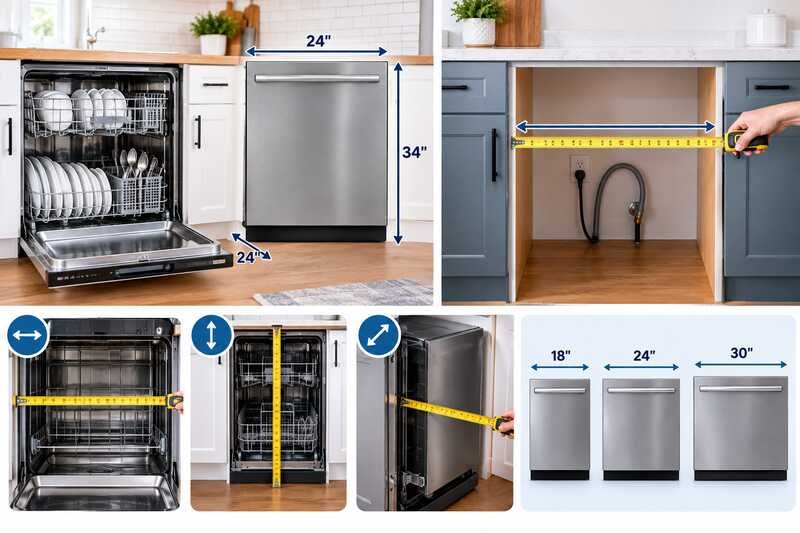
When you’re shopping for a new dishwasher, knowing the standard dishwasher dimensions is the first step. Most full-size, built-in dishwashers are about 24 inches wide and 24 inches deep. That fits a standard 24-inch kitchen cabinet opening. Height is where things get a little less exact. Manufacturers typically list 35 inches as the rounded figure, but the actual cabinet opening most installation guides call for runs from about 34½ to 36 inches. That’s because the unit’s leveling legs adjust the final height.
Width and Depth Specifications
Standard dishwashers usually measure 23½ to 24 inches wide, leaving a bit of room on each side for easier installation. They’re also about 24 inches deep, which lines up with most kitchen base cabinets.
Height Requirements
Instead of a single fixed number, treat dishwasher height as a range. Whirlpool’s own dimensions guide recommends leaving 34½ to 36 inches of vertical clearance in the cabinet opening. The unit itself may sit lower until its adjustable legs are extended. This range ensures the door can open and close without hitting your countertop or blocking nearby cabinets.
Common Installation Measurements
When installing a dishwasher, remember to leave enough space in front, too. You’ll need at least 27 inches of open floor space for the door to swing down. That also gives you easy access inside while loading and unloading.
| Dishwasher Type | Width | Depth | Height |
|---|---|---|---|
| Standard Built-in | 24 inches | 24 inches | 34½–36 inches |
| Compact/Small Space | 18 inches | 24 inches | 34½–36 inches |
| Oversized | 30 to 42 inches | 24 inches | 34½–36 inches |

Standard Dishwasher Dimensions by Type
Knowing the standard dishwasher dimensions for each category is key to kitchen design and appliance shopping. Most built-in dishwashers are 24 inches wide, 24 inches deep, and fall in that 34½- to 36-inch height range. They fit well in most kitchen cabinet openings. That’s why this size is the default for both homeowners and kitchen designers.
Tall-tub dishwashers share the same outer dimensions but use a different interior layout. That lets them hold more dishes without taking up any extra floor space. Big brands like KitchenAid, Whirlpool, and Bosch all sell multiple standard-sized models with different interior configurations and features. So you can usually find one that fits your kitchen and your cleaning needs without changing your cabinet opening at all.
| Dishwasher Type | Width | Depth | Height |
|---|---|---|---|
| Standard Built-in | 24 inches | 24 inches | 34½–36 inches |
| Compact/Apartment-sized | 18 inches | 24 inches | 34½–36 inches |
| Countertop | About 22 inches | 20 to 22 inches | About 17 inches |
| Portable | 18 to 24 inches | 26 to 30 inches | 36 to 37 inches |
Portable models look deeper than they are tall relative to their width, and that’s not a typo. The extra depth comes from the worktop overhang on top and the water-reservoir hardware at the back, according to KitchenAid’s own sizing guide. Understanding these dimensions upfront helps you avoid a mismatch between the appliance and the opening you actually have.
Types of Dishwasher Sizes Available
Choosing the right dishwasher size starts with knowing what’s actually out there. Standard, compact, oversized, portable, and countertop models cover most kitchens, so here’s a closer look at each.
Standard Built-in Models
The standard dishwasher size, 24 inches wide by 24 inches deep, works well for most households. These models have enough room for a full set of dishes, pots, and pans in a single load.
Compact and Small Space Options
Compact dishwashers are built for tight kitchens. At about 18 inches wide, they still keep the same 24-inch depth and roughly 35-inch height as full-size models. That means they clean nearly as much despite the smaller footprint. They’re a common choice for apartments and galley kitchens.
Oversized Dishwasher Variations
Oversized and double-drawer dishwashers are for households that need more room. They can run 30 to 42 inches wide but still keep the standard 24-inch depth and 34½- to 36-inch height. That means they slot into a wider cabinet run without needing extra vertical space. If a double-drawer unit is on your list, our double-drawer dishwasher buyer’s guide breaks down the top models. It also covers how their two independent drawers actually work.
There are also portable and countertop dishwashers for renters and tight spaces. These models don’t need a permanent hookup, and you can roll them away or store them when not in use. Our portable dishwasher buyer’s guide and countertop dishwasher buyer’s guide cover the best options in each category. And our guide to how a portable dishwasher works explains what’s different about hooking one up at the sink.
How to Measure for a New Dishwasher
Upgrading your kitchen appliances starts with measuring for a new dishwasher correctly. Getting accurate measurements is what makes sure the dishwasher fits into your space and keeps installation simple. That holds whether you’re remodeling the whole kitchen or just replacing one appliance.
First, measure the width between your cabinets. Most dishwashers are 24 inches wide, but smaller and larger options exist too. Next, check the height from the floor to the underside of your countertop. Most openings fall in that 34½- to 36-inch range, but watch for plumbing or electrical lines that could get in the way.
Don’t skip depth, either. Measure from the back of the cabinet opening to the front edge. Most dishwashers are about 24 inches deep. Make sure there’s enough room for the door to open fully once the unit is installed.
- Measure the width between your cabinets.
- Check the height from the floor to the underside of your countertop.
- Note the depth from the back of the cabinet opening to the front edge.
Remember, you’ll need at least 27 inches of floor space for door clearance. Check the empty cabinet opening rather than your old dishwasher for the most accurate numbers, since utilities and trim can eat into that space. Whirlpool’s own measuring walkthrough is a useful second reference if you want to see the process start to finish:
By measuring your dishwasher space accurately, you’re on the right track for a smooth kitchen remodel or appliance upgrade. Getting the numbers right the first time saves you the trouble of a return trip to the store.
Understanding Dishwasher Capacity and Load Size
Choosing the right dishwasher is about more than the outside dimensions; capacity and load size matter just as much. Most built-in models hold 10 to 16 place settings per wash, according to Consumer Reports’ dishwasher buying guide. The ENERGY STAR program defines a standard-capacity model as one that fits more than 8 place settings plus 6 serving pieces. A place setting typically includes a dinner plate, a salad plate, and a bowl. It also includes a cup and saucer plus a full set of silverware.
The interior design of a dishwasher matters more than its outer size when it comes to capacity. Features like adjustable racks and a third rack let you fit more dishes and utensils into the same footprint. So two dishwashers with identical outside dimensions can hold noticeably different amounts.
Place Setting Measurements
A standard place setting typically includes:
- 1 dinner plate
- 1 salad plate
- 1 bowl
- 1 cup and saucer
- 1 knife, 1 fork, and 1 teaspoon
Interior Space Configuration
Interior design has a bigger effect on capacity than exterior size does. Models with adjustable racks and third racks can hold more items. That means you can clean more dishes and utensils in a single cycle without upsizing the appliance itself.
Rack Design and Flexibility
Rack design is central to a dishwasher’s real-world capacity. Adjustable tines and fold-down shelves help fit oddly shaped items. It’s worth comparing interior layouts, not just the published place-setting count, before you buy.
Installation Clearance Requirements
When you install a new dishwasher, think about the space around it, not just the appliance’s own footprint. The right clearance ensures the dishwasher fits well and actually works the way it’s designed to.
For a standard dishwasher, plan on at least 27 inches of open floor space in front. That’s what lets the door swing down fully. You’ll also want at least 2 inches of clearance on the sides. That matters most for corner installations, where the open door could hit an adjacent cabinet or wall.
A small gap on the sides and top is normal and expected. Still, always check the manufacturer’s installation guide for your specific model’s requirements. A panel-ready or fully integrated model can have slightly different clearance needs than a standard unit. It explains how a custom panel changes both the look and the clearance math.
| Clearance Requirement | Minimum Specification |
|---|---|
| Front Clearance | 27 inches |
| Side Clearance | 2 inches |
| Top/Bottom Clearance | Per manufacturer’s instructions |
Proper clearance does more than let the door open. It also keeps airflow around the unit’s vents unobstructed, which affects how well it dries dishes. Planning and measuring your dishwasher installation space carefully now saves you a frustrating return trip later. It pays to follow the manufacturer’s clearance guidance from the start.
Features That Impact Dishwasher Dimensions
Certain features change a dishwasher’s real-world size even when the published dimensions look the same. Third racks and custom door panels are the two biggest factors. It helps to know how each one affects fit.
Third Rack Considerations
Many dishwashers include a third rack for extra capacity. This rack adds storage without making the dishwasher any wider. It can add a small amount of depth in some models.
Door Panel Options
Custom door panels can change a dishwasher’s depth. A panel-ready model is designed to match your cabinetry. The added panel typically adds a few inches to the front-to-back measurement, which matters most in a small kitchen.
Control Panel Placement
Where the control panel sits affects both the dishwasher’s look and its use. Top controls give a cleaner, hidden look, while front controls are easier to see and use at a glance. Either placement can shift the unit’s overall height or depth by a small amount. Check the spec sheet rather than assuming.
Knowing how these features affect size helps you choose confidently. Whether you want a custom built-in look, extra capacity, or simple day-to-day ease of use, now you’ll know what to expect.
| Dishwasher Feature | Impact on Dimensions |
|---|---|
| Third Rack | Slightly increases depth in some models |
| Custom Door Panels | Adds a few extra inches to depth |
| Control Panel Placement | Can affect height or depth slightly |
Common Space Planning Mistakes to Avoid
When you’re planning a kitchen remodel or a straightforward appliance swap, a few common measuring mistakes can derail the project. Here’s what to watch for:
- Measuring with the existing dishwasher in place: don’t rely on your current unit’s dimensions. Measure the empty cabinet space before picking a new dishwasher.
- Overlooking the impact of new flooring: new flooring adds height, which can shrink your available clearance.
- Insufficient door clearance: make sure the dishwasher door can open fully without blocking foot traffic or another appliance.
- Utility placement incompatibility: check that your new dishwasher’s water and electrical connections actually match your kitchen’s existing setup.
- Assuming standard dimensions: not every “standard” dishwasher is exactly the same size. Don’t assume a new model will fit without measuring.
Avoiding these mistakes and planning carefully makes for a much smoother dishwasher installation, and a far less stressful remodel overall.
Conclusion
Choosing the right dishwasher comes down to a few factors: available space, household size, and budget. Standard dishwasher dimensions, roughly 24 inches wide by 24 inches deep by 34½ to 36 inches tall, cover most kitchens. But 18-inch compact models, oversized double-drawer units, and portable or countertop options all exist for kitchens that don’t fit the standard mold.
Before you buy, measure your kitchen carefully so the new dishwasher fits the first time. Think through the interior capacity and features you actually need, whether that’s maximizing place settings or prioritizing energy efficiency. Understanding standard dishwasher dimensions is what turns the process from a guessing game into a confident purchase. The clearance and capacity details that go with them matter just as much.

Hey, My name is MAMON. I am a SEO content creator and affiliate marketer with over 8 years of experience. I create honest product reviews, in-depth buying guides, and practical how-to articles to help readers make informed decisions. My mission is to provide trustworthy, research-backed content that delivers real value.
Leave a Reply