What is an electric kettle, and why do so many U.S. kitchens now have one next to the coffee maker? An electric kettle is a small appliance that heats water quickly using its own built-in heating element, then shuts off automatically when the water boils. It is faster than a stovetop pot for small amounts, it frees up a burner, and many models let you choose exact temperatures for tea and coffee. In this guide, we explain how an electric kettle works, the main types you can buy, common uses, and what to look for if you are shopping for your first one.
Key Takeaways
- An electric kettle is a self-heating water pot with a built-in element, a thermostat or steam switch, and usually a cordless power base.
- Most U.S. kettles run at 1,000 to 1,500 watts, and a 1,500-watt kettle can bring 1 liter of water to a boil in about 3.7 minutes in ideal conditions.
- Main types include standard, gooseneck, temperature-control, glass, stainless steel, travel, and smart kettles.
- According to ENERGY STAR, induction cooking is about 85% efficient, while gas cooking is about one-third efficient. Electric kettles share the same advantage of heating water directly.
- Above all, look for automatic shut-off, boil-dry protection, and a safety certification mark.
What Is an Electric Kettle?
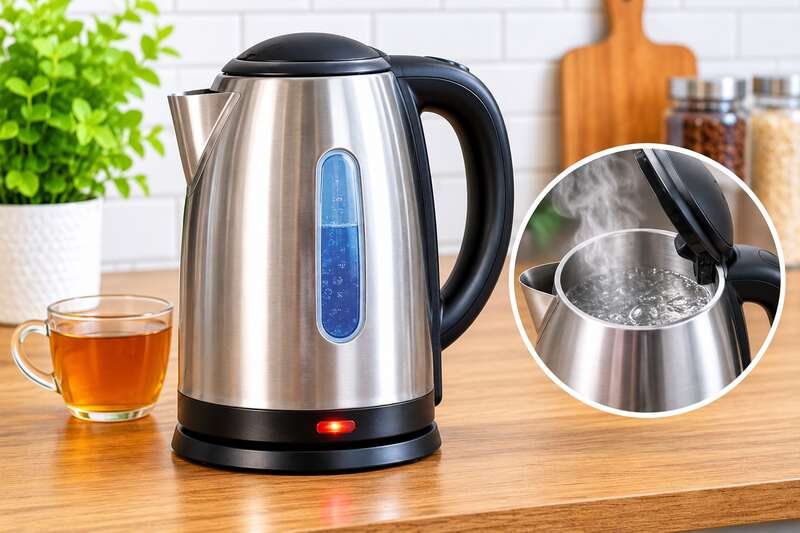
So, what is an electric kettle exactly? It is a pitcher-shaped container with a heating element in the base. Typically, you fill it with water, set it on its power base, and press a switch. Then the element heats the water directly, and a built-in control turns the power off once the water boils or reaches a chosen temperature.
Unlike a stovetop kettle, an electric kettle does not need a burner. Instead, it plugs into a standard wall outlet. In addition, most modern models are cordless, which means the kettle lifts off a separate base that holds the power cord. As a result, you can pour freely without a cord trailing behind the kettle.
| Part | What It Does |
|---|---|
| Body or carafe | Holds the water; made of plastic, stainless steel, or glass |
| Heating element | Converts electricity into heat, usually hidden under a flat plate |
| Thermostat or steam switch | Turns the kettle off at a boil or set temperature |
| Power base | Connects to the outlet and passes power to the kettle |
| Lid and filter | Keep heat in and catch scale flakes when pouring |
| Water level marks | Show how much water is inside |
A Brief History of the Electric Kettle
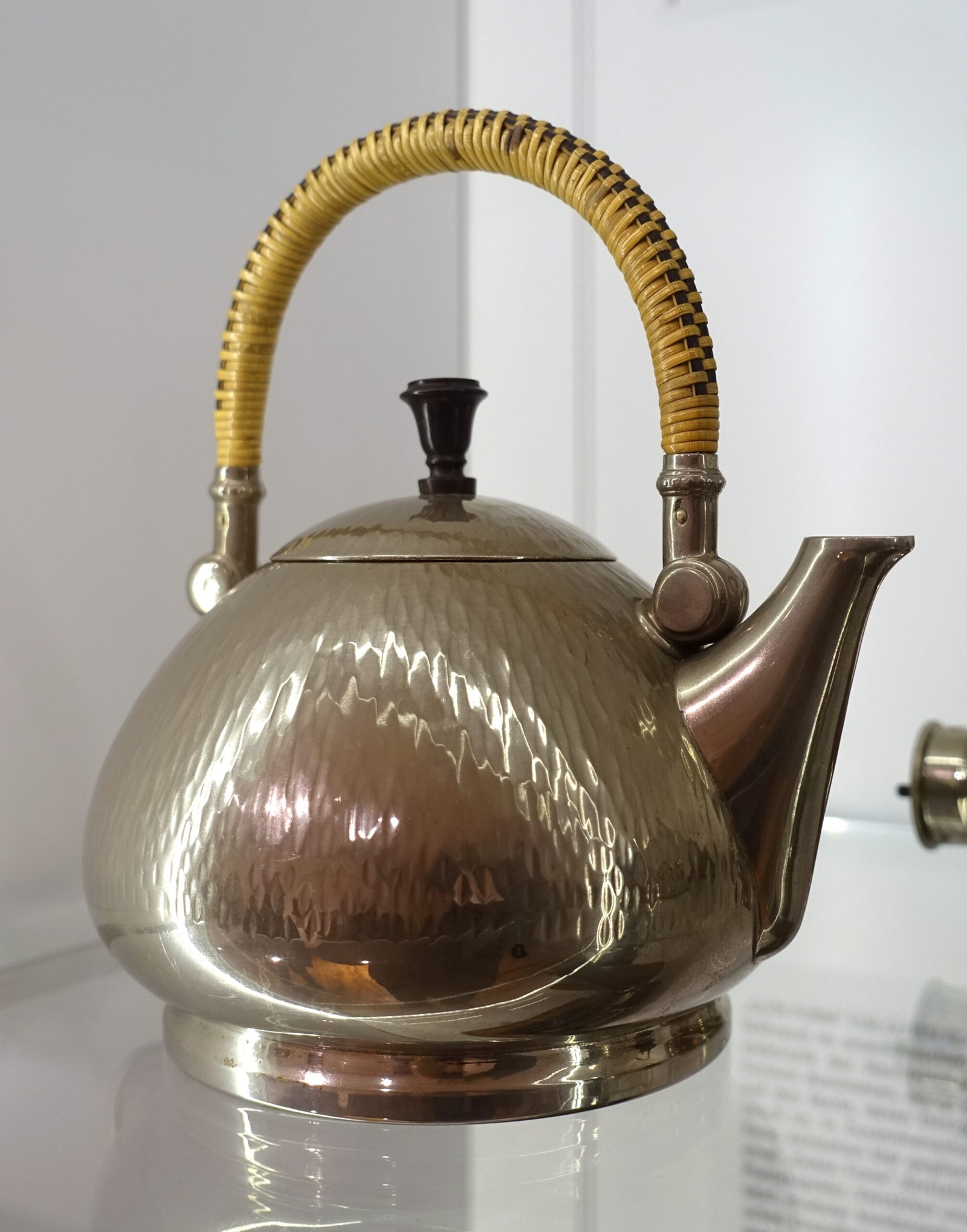
Photo: Daderot via Wikimedia Commons (CC0).
To fully understand what is an electric kettle, it helps to know its history. In fact, electric kettles have been around for well over a century. Early models appeared in the late 1800s, soon after homes began getting electricity. However, those first kettles were slow, because the heating element sat in a separate chamber rather than in the water.
Fortunately, design improved quickly in the early 1900s. For example, the German company AEG sold electric kettles designed by architect Peter Behrens around 1907, and some of those designs now sit in museum collections. Later, elements moved directly into the water, which made heating much faster. Eventually, automatic shut-off switches became standard, and cordless bases followed. Today’s kettles add digital temperature control, keep-warm modes, and even smartphone apps.
How Does an Electric Kettle Work?
Understanding what is an electric kettle is easier once you see the three steps it follows every time you press the switch.
Step 1: Heating
First, electricity flows from the outlet through the base into the heating element. Because the element resists the current, it heats up. Most modern kettles hide the element under a flat stainless steel plate, which is easier to clean than an exposed coil.
Step 2: Sensing
Next, the kettle needs to know when to stop. In basic kettles, a tube carries steam to a small bimetallic disc near the handle. When the water boils, steam heats the disc, and it snaps into a new shape. That movement trips the switch. In contrast, digital kettles use an electronic temperature sensor and a control board.
Step 3: Shutting Off
Finally, the switch cuts power. Many kettles also include boil-dry protection, a second safety device that shuts off the heater if the kettle runs empty. In addition, temperature-control models can hold the water at your chosen setting with a keep-warm mode.
Video: Into The Ordinary explains how an electric kettle works.
How Fast Does an Electric Kettle Boil Water?
In general, speed depends mostly on wattage and how much water you heat. We calculated ideal boiling times from the physics of heating water, assuming room-temperature tap water and no heat loss. Real kettles take somewhat longer.
| Water Amount | Ideal Time at 1,000 W | Ideal Time at 1,500 W |
|---|---|---|
| 2 cups (about 0.5 L) | About 2.8 minutes | About 1.9 minutes |
| 4 cups (about 1 L) | About 5.6 minutes | About 3.7 minutes |
| 7 cups (about 1.7 L) | About 9.5 minutes | About 6.3 minutes |
Most U.S. kitchen outlets run on 120-volt, 15-amp circuits, which supply up to 1,800 watts. For that reason, most kettles sold in the U.S. top out around 1,500 watts. For a deeper look at appliance wattage, see our guide on how many watts a coffee maker uses.
Types of Electric Kettles
Once you know what is an electric kettle in general, the next step is choosing a type. Each style suits a different need.
| Type | Best For | Key Feature |
|---|---|---|
| Standard kettle | Everyday hot water | Simple boil-only switch |
| Temperature-control kettle | Green, white, and oolong tea | Presets or exact temperature settings |
| Gooseneck kettle | Pour-over coffee | Long, thin spout for precise pouring |
| Glass kettle | Watching the boil, spotting scale | Clear borosilicate body |
| Stainless steel kettle | Durability, fewer plastic parts | Metal body and interior |
| Double-wall kettle | Homes with kids | Cool-touch exterior |
| Travel kettle | Hotels, dorms, small spaces | Compact size, low capacity |
| Smart kettle | Tech fans | App or voice control |
If you want help choosing a specific model, our guide to the best electric kettle compares top picks in several of these categories.
What Is a Cordless Kettle?
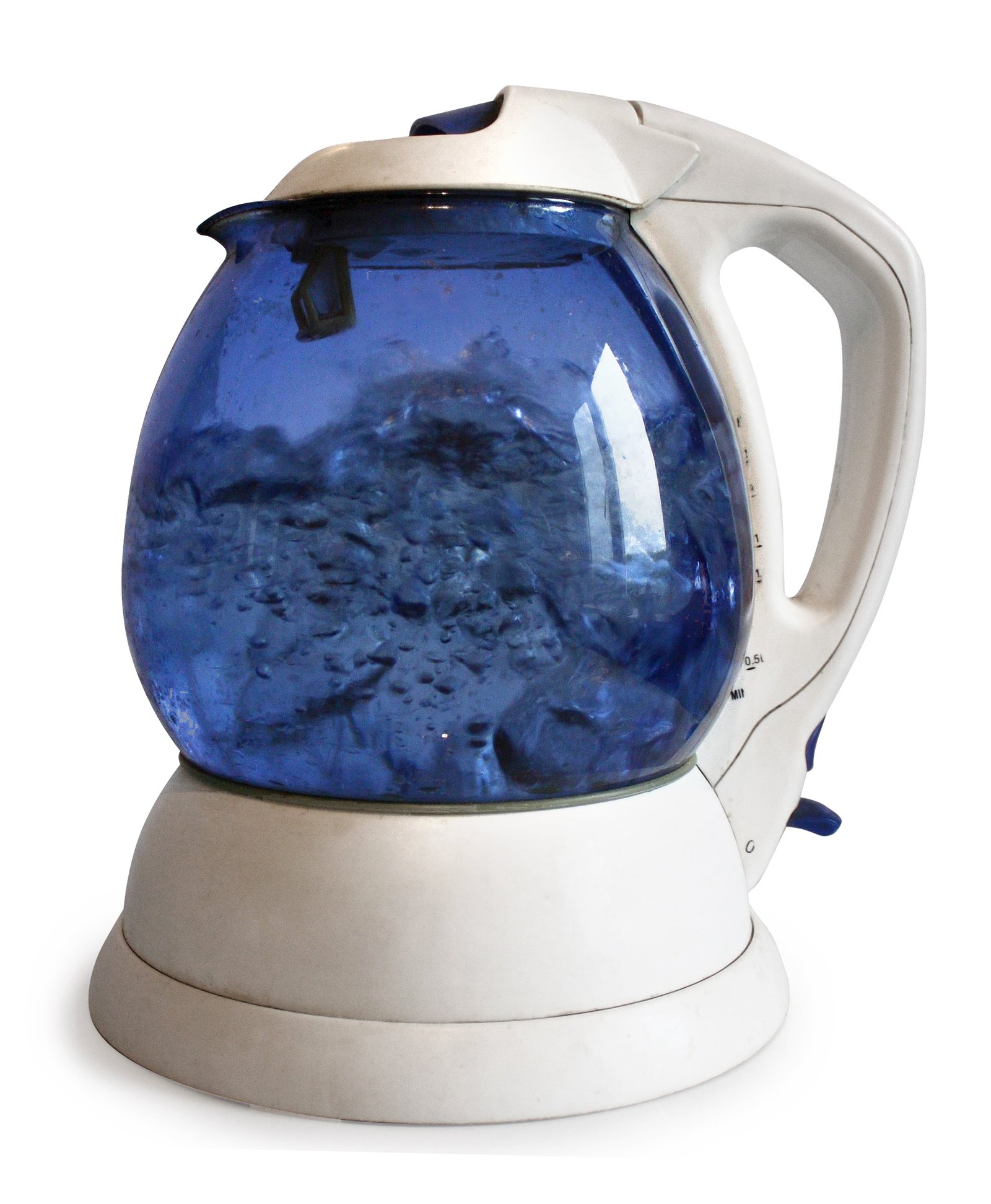
Photo: Schekinov Alexey Victorovich via Wikimedia Commons (CC BY-SA 3.0).
Put simply, a cordless kettle is an electric kettle that separates from its power base. The cord connects only to the base, and the kettle sits on a center connector to draw power. When you lift it, the power disconnects automatically.
Many cordless kettles use a 360-degree connector, so you can set the kettle down at any angle. This design is convenient for left- and right-handed users. Furthermore, it makes pouring safer, because there is no cord to tangle or tug. Nearly all modern kettles sold in the U.S. are cordless.
Common Uses for an Electric Kettle
Of course, an electric kettle is not just for tea. Here are some of the most popular uses:
- Tea: First, boiling water is ideal for black and herbal tea, while temperature-control models handle green and white tea.
- Coffee: Also, French press and pour-over coffee need hot water just below a boil.
- Instant foods: In addition, oatmeal, instant noodles, and soup cups need only hot water.
- Cooking shortcuts: For example, pre-boiling water in a kettle can speed up pasta on the stove.
- Hot drinks: Meanwhile, hot cocoa and cider are quick with kettle water.
- Cleaning: Finally, hot water helps loosen sticky residue in pans and jars.
For tea, water temperature matters. According to the Tea Association of the USA, green tea brews best at 165–185°F, while black tea needs a full boil. If you sometimes brew on the stove instead, our guide on how to make tea in a pot on the stove covers that method.
However, one caution applies: most manufacturers say to use kettles for water only. Heating milk, soup, or other liquids can scorch the element and void the warranty.
Electric Kettle vs. Other Ways to Heat Water
How does an electric kettle compare with a stovetop pot or a microwave? Above all, the main difference is efficiency. According to an ENERGY STAR cooking products guide, induction cooking is about 85% efficient, while gas cooking is only about one-third efficient. An electric kettle shares induction’s advantage: the heat goes straight into the water instead of escaping around the pot.
| Method | Speed for 2 Cups | Convenience | Auto Shut-Off |
|---|---|---|---|
| Electric kettle | Fast | High | Yes |
| Gas stovetop kettle | Moderate | Medium | No |
| Electric coil stovetop | Slower | Medium | No |
| Microwave | Moderate | Medium, uneven heating | Timer only |
The speed column is a general comparison for typical home setups rather than a lab measurement.
What to Look For When Buying an Electric Kettle
- Capacity: First, 1 liter suits one or two people, while 1.7 liters suits most families.
- Wattage: Next, 1,500 watts gives the fastest heating on a U.S. outlet.
- Material: Then choose stainless steel, glass, or plastic based on durability and plastic contact.
- Temperature control: Also, consider presets if you drink green or white tea.
- Safety features: In addition, look for auto shut-off, boil-dry protection, and a cool-touch handle.
- Certification: Finally, check for a mark from a recognized testing lab such as UL, ETL, or CSA.
If you are outfitting a new kitchen, our checklist of kitchen appliances you need for a new kitchen shows where a kettle fits. For budgeting, see our kitchen appliance pricing guide.
Pros and Cons of Electric Kettles
Like any appliance, an electric kettle has trade-offs. Here is a balanced look.
Pros
- Speed: First, it heats small amounts of water faster than most stovetops.
- Safety: Also, automatic shut-off prevents forgotten pots from boiling dry.
- Efficiency: In addition, heat goes directly into the water.
- Precision: Meanwhile, temperature-control models make better tea and coffee.
- Convenience: Finally, it frees a burner and works anywhere with an outlet.
Cons
- Counter space: First, it takes up room on the counter.
- Scale buildup: Also, hard water means regular descaling.
- Water only: In addition, most models are not meant for milk or soup.
- High power draw: As a result, it can trip a shared 15-amp circuit.
Electric Kettle Terms to Know
When you read product listings, these terms come up often. Knowing them makes it easier to understand what is an electric kettle offering beyond the basics.
| Term | Meaning |
|---|---|
| Concealed element | Heating element hidden under a flat plate |
| Boil-dry protection | Cuts power if the kettle runs empty |
| Keep-warm | Holds water at a set temperature for a period of time |
| 360-degree base | Lets the kettle sit on its base at any angle |
| Borosilicate glass | Heat-resistant glass used in glass kettles |
| Double-wall | Two layers that keep the outside cooler |
| Gooseneck spout | Long, thin spout for controlled pouring |
How to Care for an Electric Kettle
A little care keeps a kettle working well for years. First, empty it after each use so water does not sit and leave minerals behind. Second, descale it with vinegar or citric acid every few weeks in hard-water areas, or every few months with soft water. Third, wipe the outside with a soft, damp cloth, and never put the kettle or base under running water. Finally, check the cord and handle from time to time, and replace the kettle if either one shows damage.
How to Use an Electric Kettle
- First, fill the kettle with fresh, cold water between the minimum and maximum lines.
- Then close the lid firmly and place the kettle on its base.
- Next, press the switch or choose a temperature setting.
- After that, wait for the kettle to click off or beep.
- Finally, lift it from the base and pour slowly.
Also, after use, empty any leftover water and leave the lid open so the inside dries. This simple habit slows scale and prevents stale odors.
FAQ
What is an electric kettle used for?
An electric kettle heats water quickly for tea, coffee, instant foods, and other hot drinks. Many models also let you choose exact temperatures.
Is an electric kettle better than a stovetop kettle?
For most people, yes. It is usually faster for small amounts, it shuts off automatically, and it does not use a burner.
How long does an electric kettle take to boil?
A 1,500-watt kettle can boil about 4 cups in roughly 4 to 5 minutes in real use. Smaller amounts boil faster.
Can I boil milk in an electric kettle?
Most manufacturers advise against it. Milk can scorch on the element, foam over, and damage the kettle.
Do electric kettles use a lot of electricity?
They draw high power for a short time. Because boiling takes only a few minutes, the total energy per use is small.
What is an electric kettle made of?
Most kettles use plastic, stainless steel, or borosilicate glass for the body, with a stainless steel heating plate. In addition, lids, handles, and filters are often plastic, so check the materials if you want to limit plastic contact.
Do I need a special outlet for an electric kettle?
No, a standard 120-volt kitchen outlet works. However, avoid running the kettle on the same circuit as other high-wattage appliances, since a 1,500-watt kettle draws about 12.5 amps.
Can an electric kettle boil water faster than a microwave?
For a mug or more of water, usually yes. A kettle heats the whole volume evenly and shuts off on its own, while a microwave can heat unevenly and needs you to watch the timer. As a result, the kettle is typically the more convenient choice for tea and coffee.
Final Thoughts
Now you know what is an electric kettle: a fast, self-contained water heater with a built-in element, an automatic shut-off, and usually a cordless base. In short, it boils water quickly, saves a burner, and makes tea and coffee easier. In addition, types range from simple boil-only models to gooseneck, glass, and temperature-control kettles. When you shop, focus on capacity, wattage, materials, and safety features, and you will find a kettle that fits your kitchen.

Hey, My name is MAMON. I am a SEO content creator and affiliate marketer with over 8 years of experience. I create honest product reviews, in-depth buying guides, and practical how-to articles to help readers make informed decisions. My mission is to provide trustworthy, research-backed content that delivers real value.
Leave a Reply