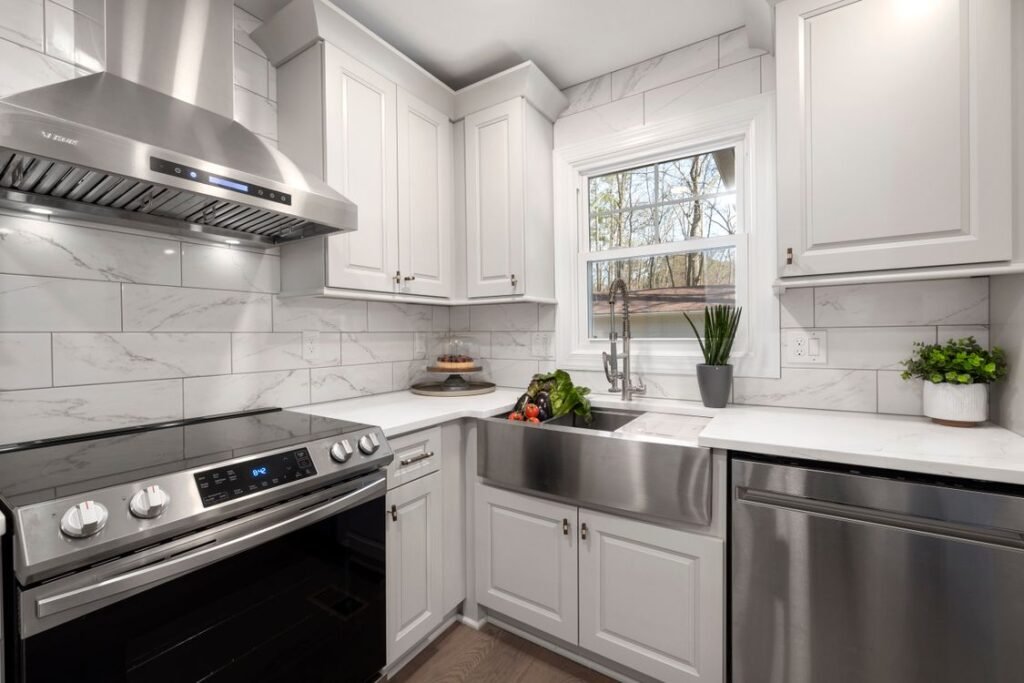
Do gas ranges need to be vented? In most cases, yes. Gas combustion releases pollutants you can’t see or smell. A range hood is the main defense your kitchen has against them. But whether venting is legally required, and how much, depends on where you live. Rules vary by state, and sometimes by city.
This guide breaks down why gas ranges need to be vented, what U.S. building codes actually require, and how to pick the right ventilation type for your kitchen.
Key Takeaways
- Gas ranges release nitrogen dioxide (NO2), carbon monoxide, and fine particulates. A vented range hood is the most effective way to clear them.
- California requires kitchen ventilation of at least 100 CFM intermittent or 5 air exchanges per hour under the state’s mechanical and building codes.
- Not every state mandates gas range venting by law, but nearly every appliance manufacturer and public health agency recommends it regardless.
Why Gas Ranges Need to Be Vented
A gas burner doesn’t combust fuel perfectly. That incomplete combustion releases nitrogen dioxide, carbon monoxide, and fine particulate matter (PM2.5) directly into your kitchen air. The U.S. EPA notes that a persistent yellow-tipped flame signals poor adjustment and increased pollutant emissions. This is one of the clearest signs that gas ranges need to be vented properly, not just occasionally.
A 2023 study published in Science Advances found something striking. Without an outside-venting range hood running, gas and propane stove use pushed nitrogen dioxide concentrations above the EPA’s 1-hour exposure benchmark. That happened in more than half of the kitchens, living rooms, and bedrooms tested. That’s a meaningful health signal, especially for households with children or anyone with asthma or another respiratory condition.
Health Effects of Poor Ventilation
- Respiratory irritation. Nitrogen dioxide irritates the eyes, nose, and throat. It can worsen asthma symptoms with repeated exposure.
- Carbon monoxide exposure. CO is colorless and odorless, which makes it especially dangerous. Per the EPA, fetuses, infants, older adults, and people with anemia or heart or respiratory disease are especially sensitive to it.
- Lingering odors and moisture. Beyond the health angle, unvented cooking lets grease, steam, and food odors build up in the kitchen. From there, they drift into the rest of the home.


Do You Legally Need to Vent a Gas Range?
There’s no single national code that mandates range hoods in every U.S. home. Requirements come down to your state’s adopted building code. Sometimes your city adds local amendments on top of that. A few examples show how much this varies.
California
California is among the strictest states on kitchen ventilation, which is exactly why gas ranges need to be vented to code here more than almost anywhere else in the country. Under the California Building Code and Title 24 energy standards, residential kitchens generally need ventilation providing at least 100 CFM on an intermittent basis. Alternatively, the system needs to achieve 5 air exchanges per hour. The state updated its building standards code effective January 1, 2026. If you’re pulling a permit for new construction or a remodel, confirm you’re working from the current version. Cities can also add their own amendments. San Francisco, for example, has historically applied stricter local rules than the statewide code.
States Without a Blanket Requirement
Not every state mandates a vented range hood by law. In places without a specific requirement, code officials and HVAC professionals still strongly recommend one. The health case for venting doesn’t depend on whether your state has written it into code. If you’re unsure what applies where you live, your city or county building department can confirm current local requirements. Municipal codes often supersede state minimums.
What the Owner’s Manual Says
Beyond the legal question, check your range’s owner’s manual. Manufacturers size their ventilation recommendations to the specific BTU output of the model. Following that guidance keeps you within the appliance’s intended operating conditions. As a rule of thumb, many manufacturers recommend roughly 1 CFM of range hood capacity for every 100 BTUs of total burner output. Still, your exact model’s manual is the authoritative source.
Common Range Hood Ventilation Types
Ducted (Vented) Range Hoods
A ducted range hood pulls smoke, grease, and gases through ductwork. It expels them outside the home. This is the most effective option for actually removing pollutants, rather than just filtering and recirculating them. Ducted hoods do require ductwork. That can mean a more involved installation, especially in a kitchen without existing venting.
Ductless (Recirculating) Range Hoods
A ductless range hood pulls air through a hood but doesn’t send it outside. Instead, it filters the air through charcoal or grease filters and recirculates it back into the kitchen. Ductless hoods are easier to install since they don’t need exterior ductwork. That makes them a common choice in apartments or kitchens where running a duct isn’t practical. But the tradeoff is real. Recirculating filters can’t remove combustion gases like nitrogen dioxide or carbon monoxide the way a ducted system can. They’re only designed to trap grease and some odors, which is a key reason gas ranges need to be vented outdoors rather than just filtered in place whenever it’s possible.
Downdraft Ventilation
Some ranges use a downdraft system instead of an overhead hood. It pulls air down and out through ductwork below or behind the cooktop. This works well for kitchen islands where an overhead hood isn’t practical. Downdraft systems generally aren’t as effective at capturing rising heat and steam as an overhead hood, though.
How to Choose the Right CFM for Your Gas Range
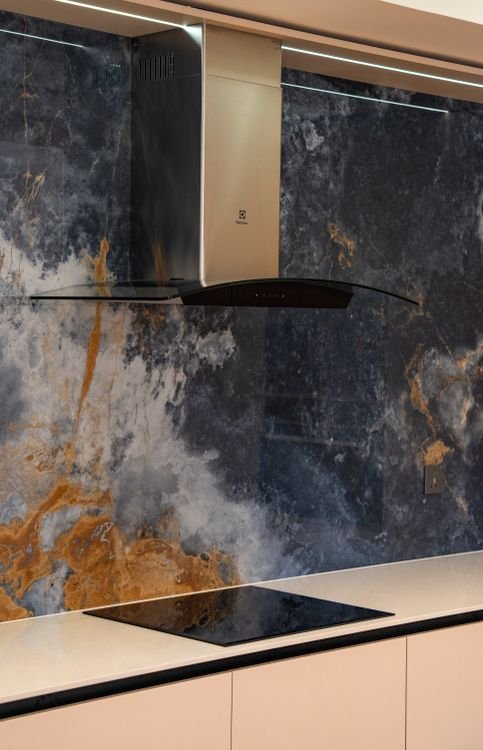
CFM (cubic feet per minute) measures how much air a range hood can move. Bigger burners and higher total BTU output call for a higher CFM rating. A common rule of thumb: divide your range’s total BTU output by 100 to get a baseline CFM target. A 40,000 BTU range, for example, points to roughly 400 CFM.
Two other factors matter alongside the raw number:
- Hood coverage. A hood should extend a few inches beyond the cooktop on each side. It should cover the back burners at minimum, ideally the front ones too.
- Make-up air. Once a range hood exceeds roughly 400 CFM, many local codes require a make-up air system. This brings replacement air into the home to prevent negative pressure and potential backdrafting of combustion gases from other appliances like furnaces or water heaters.
If you’re weighing which gas range fits your kitchen before you get to hood sizing, our guide to choosing a gas range covers BTU output and other specs that feed directly into your hood decision. Our roundup of top-rated gas ranges is also worth a look. For more on ventilation benefits generally, see what an exhaust fan does in your kitchen.
Tips for Better Kitchen Ventilation, Vented or Not
- Run the hood every time you cook, not just for smoky or greasy meals. Even routine boiling and simmering releases moisture and combustion byproducts.
- Cook on the back burners when possible. They sit closer to the hood’s capture zone, which improves how much pollution actually gets pulled in.
- Use the highest fan speed your cooking calls for. A hood that’s barely running won’t move enough air to matter.
- Open a window if you don’t have a vented hood. It’s not as effective as proper ducted ventilation, but it’s meaningfully better than nothing.
- Clean or replace filters regularly. A clogged grease filter cuts a hood’s real-world CFM well below its rated capacity.
Watch: Vented vs. Recirculating Range Hoods Explained
For a closer look at how ducted and ductless hoods compare in real kitchens, this video walks through the pros, cons, and a recommendation.
Cost of Adding Ventilation to a Gas Range
If your kitchen doesn’t currently have a vented range hood, budgeting for one is worth doing before you assume gas ranges need to be vented in your specific case but skip the upgrade anyway. Costs vary widely depending on whether ductwork already exists.
- Ductless range hood only: Often the least expensive option, with unit prices commonly in the low hundreds of dollars and a straightforward DIY-friendly installation in many cases.
- Ducted range hood with existing ductwork: Mid-range cost, since you’re mainly paying for the hood itself and a licensed installer’s labor to connect it.
- Ducted range hood requiring new ductwork: The most expensive route, since cutting through walls, ceilings, or a roof to route new ducting adds significant labor. This is a job for a licensed HVAC contractor, not a DIY project.
Get quotes from a couple of local contractors before committing, since ductwork routing costs can vary a lot depending on your kitchen’s layout and how far the range sits from an exterior wall.
Frequently Asked Questions
Do gas ranges need to be vented by law everywhere in the U.S.?
No. Requirements vary by state and city. California is among the strictest, with a specific CFM and air-exchange requirement written into its building code. Many other states leave the decision to local code officials. Venting is still widely recommended regardless of whether it’s legally mandated.
Can I use a microwave with a built-in fan instead of a range hood?
An over-the-range microwave with a built-in exhaust fan can work, but check its CFM rating against your range’s BTU output. Many built-in microwave fans are rated lower than a dedicated range hood. They may not move enough air for a high-output gas range.
Is a ductless range hood good enough for a gas range?
It’s better than nothing, but a ductless hood only filters grease and some odors. It can’t remove combustion gases like carbon monoxide or nitrogen dioxide from the kitchen, since those pass straight through a recirculating filter. This is exactly why gas ranges need to be vented outdoors through a ducted hood whenever that option is available, rather than relying on a recirculating model alone.
What happens if I don’t vent my gas range at all?
Pollutant levels, including nitrogen dioxide and carbon monoxide, can build up in the kitchen and surrounding rooms, especially during longer cooking sessions. Opening a window helps somewhat, but it’s not a substitute for mechanical ventilation. The EPA specifically warns against ever using a gas range to heat a room, since that combines the ventilation problem with a much larger carbon monoxide risk.
Does a gas range need to be vented in an apartment without ductwork?
If your building has no exterior venting option, a ductless recirculating hood is typically the fallback, paired with an open window whenever possible. It won’t clear combustion gases as well as a ducted system, but it’s still worth running every time you cook, since it captures grease and some odors even without true venting.
Final Thoughts
Do gas ranges need to be vented? In the vast majority of cases, yes. That’s true both for legal compliance in states like California and for the genuine air quality benefits backed by EPA guidance and peer-reviewed research. Even where your local code doesn’t require it, a properly sized, ducted range hood is one of the more meaningful upgrades you can make to a kitchen that gets regular gas-range use. Check your state and local codes for the specific numbers that apply to you. Size your hood to your range’s BTU output, and run it every time you cook.

Hey, My name is MAMON. I am a SEO content creator and affiliate marketer with over 8 years of experience. I create honest product reviews, in-depth buying guides, and practical how-to articles to help readers make informed decisions. My mission is to provide trustworthy, research-backed content that delivers real value.
Leave a Reply