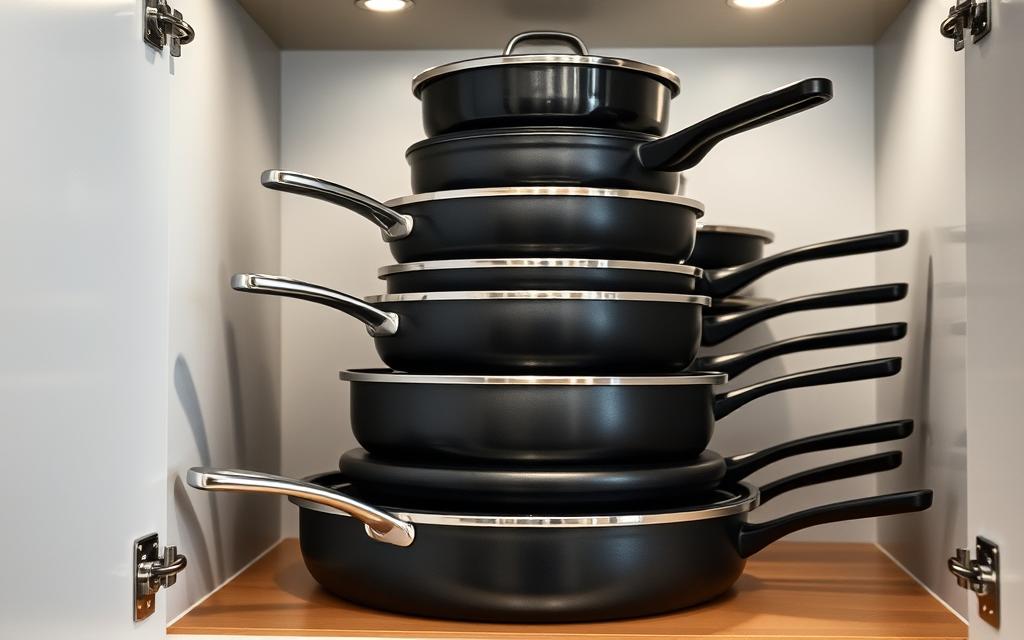
Knowing how to store nonstick cookware properly is key to keeping it in top shape. Stacking pans without care can cause scratches and harm the nonstick surface. To keep your cookware in great condition, use storage methods that avoid scratches and scuffs.
Pot racks are a great way to store your cookware. They add extra storage and help keep things organized. To set up pot racks, you need to attach them to the ceiling studs or use wall anchors because they’re heavy.
Wall-mounted pegboards are another smart choice. They save space and let you store pots, pans, lids, and utensils on unused wall areas.
Pan protectors are also a good idea. They act as a shield between stacked cookware to prevent damage. You can make these protectors from items you already have in your kitchen, helping to keep your nonstick pans in good shape.
Key Takeaways
- Proper storage is essential for maintaining the quality and longevity of nonstick cookware.
- Pot racks, wall-mounted pegboards, and pan protectors are effective storage solutions to prevent scratches and damage.
- Avoiding stacking pans directly on top of each other is crucial to extend the lifespan of nonstick cookware.
- Utilizing kitchen storage accessories like hooks, organizers, and open shelving can help keep nonstick cookware well-organized and accessible.
- Cleaning nonstick cookware by hand with warm, soapy water and a soft sponge can also help preserve its performance over time.
Understanding Nonstick Cookware Materials
Understanding how to store nonstick cookware properly starts with knowing what you’re actually protecting. Nonstick cookware has a special coating that makes it different from regular pots and pans. This coating is what gives nonstick cookware its special properties, and it’s why many home cooks and professional chefs choose it.
What Makes Nonstick Cookware Unique
The main feature of nonstick cookware is that food doesn’t stick to it. This is thanks to a thin, strong coating that makes the surface smooth and slick. This coating can be made from different materials, each with its own benefits. For a closer look at the most common coating, see our guide on Teflon-coated nonstick pans.
Benefits of Nonstick Cookware
- Easy food release: The nonstick coating lets food slide off easily, making cooking and cleaning simple.
- Reduced need for cooking oils: Since food doesn’t stick, you can use less oil or butter, making meals healthier.
- Effortless cleaning: Nonstick pans can be cleaned with a damp cloth, so you don’t need to scrub hard.
Common Nonstick Coating Types
| Coating Type | Description |
|---|---|
| PTFE (Teflon) | A synthetic polymer that provides a smooth, durable, and highly effective nonstick surface. |
| Ceramic | A natural, nontoxic coating that is resistant to scratches and high temperatures. |
Both the coating material and how well you care for it affect how long your cookware works and lasts. Knowing about these coating types can help you choose and care for your nonstick pots and pans better.
The Importance of Proper Storage
Storing your nonstick cookware right is key to keeping it in good shape. If you store it wrong, it can get scratched, chipped, or damaged. This damage can wear away the nonstick coating faster and make your pans cook less evenly.
It’s a good idea to check your cookware often. This way, you can make sure it’s still in top condition.
Extending the Lifespan of Cookware
According to America’s Test Kitchen, a nonstick pan with a quality coating can be expected to last five to seven years with proper care. Some makers suggest putting a thin layer of vegetable oil on the surface before the first use. Using the right storage methods can help your nonstick pans reach that full lifespan, so you can enjoy them for years to come.
Preventing Scratches and Damage
- Avoid using metal utensils on a nonstick cooking surface to prevent scratching or nicking.
- Refrain from stacking nonstick cookware to prevent scratching or chipping of the cooking surface.
- Use low or medium heat on nonstick cookware. PTFE coatings can begin releasing fumes at around 500°F, according to a peer-reviewed medical reference on polymer fume fever, so avoid preheating an empty nonstick pan on high.
- Wash nonstick cookware by hand, as harsh detergents in dishwashers can corrode the nonstick surface.
By following these simple storage and care practices, you can extend the lifespan of your nonstick cookware. This way, you can keep it working well for years to come.
Cleaning Nonstick Cookware Before Storage
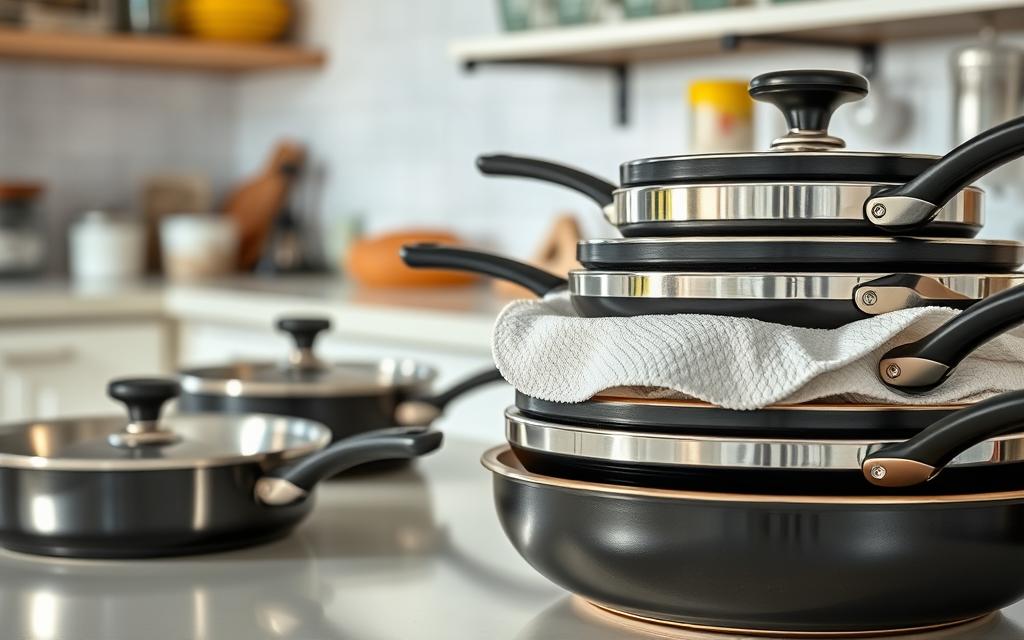
Proper nonstick cookware maintenance starts with thorough cleaning after each use. By caring for the nonstick coating, you can extend the lifespan of your valuable kitchen tools. Follow these safe cleaning techniques to keep your nonstick pans in top condition:
Safe Cleaning Techniques
- Hand-wash nonstick cookware using a gentle dish soap and a soft sponge or cloth. Avoid abrasive scrubbers like steel wool, which can damage the delicate coating.
- For stubborn food residue, try a baking soda and vinegar mixture. Bring the pan to a boil with this solution, then let it simmer for a few minutes before scrubbing.
- Nonstick cookware is generally not dishwasher-safe. The high heat and harsh detergents can deteriorate the nonstick surface over time.
Recommended Cleaning Products
When cleaning nonstick pans, stick to mild, non-abrasive products. Harsh chemicals and scrubbing pads can wear down the coating, compromising the pan’s nonstick performance. Instead, opt for:
- Gentle dish soap
- Baking soda
- Vinegar
- Soft sponges or microfiber cloths
By following these cleaning steps before you put anything away, you can ensure your pans remain in excellent condition for years to come. They will provide a smooth and efficient cooking experience every time.
How to Store Nonstick Cookware Properly: Choosing the Right Storage Location
Storing your nonstick cookware right is key to keeping it in top shape. Look for a cool, dry spot away from big temperature swings and high humidity. Both cabinets and shelves work well for this, but make sure they’re not too crowded.
Cabinets vs. Shelves
Both cabinets and shelves can provide effective storage for nonstick cookware. Cabinets offer better protection from dust, sunlight, and accidental damage, while shelves provide convenient, quick access. However, shelves should be arranged carefully to prevent scratches, dents, and other damage to your cookware.
Avoiding Extreme Temperatures
Keep your nonstick cookware away from heat, sunlight, and big temperature changes. Heat can damage the nonstick coating, and sudden changes can warp your cookware. Store it in a cool, dry place like a cabinet or drawer.
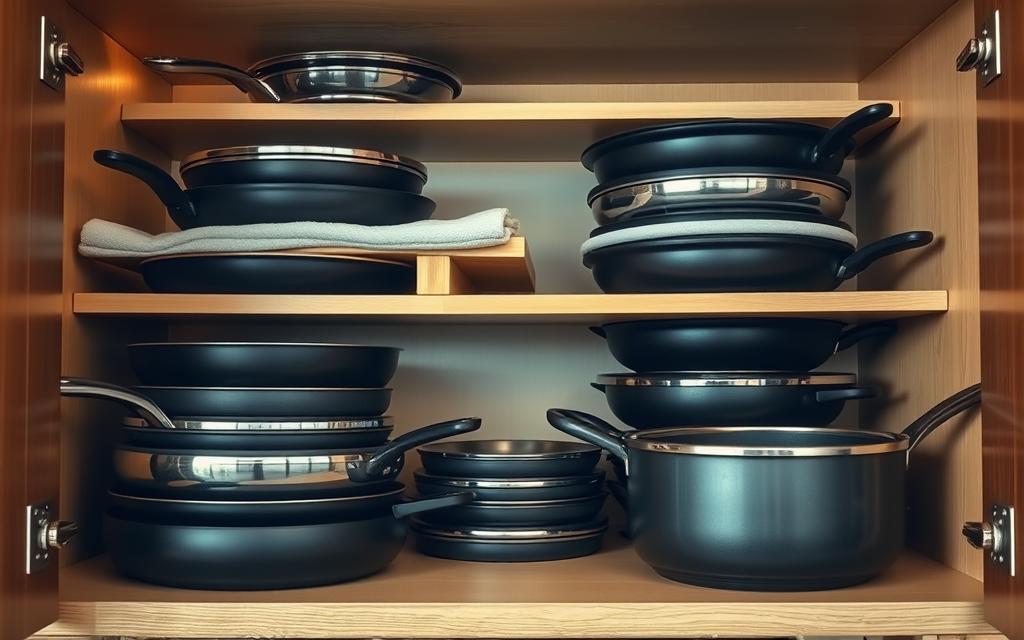
Choosing the right spot and following care tips will keep your nonstick cookware in great shape. Remember, taking good care of your cookware means it will last longer and work better. If you’re also weighing whether a different pan material is a better fit for your kitchen, our guide on the safest cookware for your health is worth a look.
Best Practices for Stacking Nonstick Cookware
Proper stacking is a big part of how to store nonstick cookware properly, and it’s key to keeping your pots and pans in great shape for many years.
Using Protective Liners
It’s vital to use protective liners when stacking nonstick cookware. This prevents scratches and dents. Good options include:
- Pan protectors or separators
- Paper towels or dish towels
- Cloth napkins or kitchen towels
These liners act as a shield between your cookware, reducing the chance of damage. They make storing your cookware smooth and safe.
How to Stack Different Sizes
Stacking nonstick cookware of different sizes requires a smart approach. Start with the biggest, heaviest pan at the bottom. Then, nest the smaller pans and lids inside, using protective liners between each layer.
This method saves space and evenly spreads the weight. It protects your nonstick coatings from harm, and it’s one of the easiest ways to avoid the scratches that come from careless stacking.
Utilizing Drawer Organizers
Nonstick cookware can be stored and organized well with drawer organizers. These solutions help save space, prevent scratches, and make it easy to find pans when needed.
Different Types of Organizers
There are many drawer organizers for nonstick cookware, including:
- Vertical pan racks that allow you to store pans upright
- Adjustable dividers that can be customized to fit different pan sizes
- Tiered organizers that create multiple levels for stacking pots and pans
Advantages of Using Storage Solutions
Drawer organizers for your cookware have many benefits, such as:
- Maximizing space: Organizers let you store more pans in one drawer, using space wisely.
- Preventing damage: Designs like vertical and tiered protect pans from scratches and dents.
- Easy accessibility: Organizers help you find and grab the pan you need quickly, making cooking prep easier.
Drawer organizers are great for deep drawers or corner cabinets. They turn awkward spaces into useful storage for your nonstick cookware.

By choosing the right storage solutions for your situation, you can keep your nonstick pans organized, easy to find, and in great shape for years.
Avoiding Common Storage Mistakes
Storing your nonstick cookware right is key to keeping it in top shape. Many people make simple errors that can harm their cookware. To keep your nonstick pans and pots in great condition, avoid a few common mistakes.
Storing with Other Cookware
One big mistake is storing nonstick cookware with metal pots and pans. The hard surfaces can scratch and damage the nonstick coating. This makes it less effective over time. Always store your nonstick pieces by themselves, in a dedicated drawer or cabinet.
Ignoring the Cookware Manufacturer’s Guidelines
Every nonstick cookware brand has its own care and storage tips. Not following these can cause problems. For example, some brands say not to hang nonstick pans by their handles. This can stress the connection point and cause damage. Always check the manufacturer’s instructions to store your nonstick cookware right.
By avoiding these common storage mistakes, you can make your nonstick cookware last longer. Proper care and storage keep the nonstick coating in good shape. This ensures your cooking experience stays great for years.
Frequently Asked Questions About Storage
Keeping your nonstick cookware in top shape is key for great cooking. You might wonder about the best ways to store it. Let’s explore the answers to help you take better care of your nonstick pans and pots.
How Often Should Cookware Be Inspected?
Check your nonstick cookware before each use. Look for scratches, peeling, or color changes on the nonstick surface. Early detection helps avoid damage and keeps your cookware working well. Regular checks also tell you when it’s time for a new nonstick piece.
Can Nonstick Cookware Be Hung?
Light nonstick pans can be hung for storage, but do it right. Use strong hooks that hold the cookware’s weight. Spread the weight to avoid stress on handles or warping. But, don’t hang heavy pots and pans with weak handles, as they might get damaged.
By being careful with your nonstick cookware and storing it well, you can use it for many years. Always check the manufacturer’s advice for your specific cookware set.
Innovative Storage Solutions
Organizing your nonstick cookware doesn’t have to be hard. The right storage solutions can make your kitchen more organized. Here are some creative ways to store your cookware:
Wall-Mounted Racks and Pegboards
Wall-mounted racks and pegboards save space for your cookware. They let you hang pans, pots, and lids, keeping them easy to access. This way, you free up cabinet and counter space for other kitchen items.
Magnetic Storage Options
Magnetic strips or holders can be a big help for storing nonstick pans. If your cookware has a metal base, these solutions keep it in place. They help make your kitchen more organized and functional.
With a bit of creativity, you can make your kitchen clutter-free and efficient.
When to Replace Nonstick Cookware
Keeping your nonstick cookware in good shape is key for great cooking. Nonstick pans are loved for their ease, but even a quality coating wears out after five to seven years. It’s vital to check your pans and swap them out when needed.
Signs of Wear and Tear
Spotting wear on your nonstick pans is the first step to knowing when to replace them. Look for dark spots from burning, deep scratches, peeling, flaking, or chipping. These signs mean the pan’s coating is gone, and it’s not cooking well.
The Impact of Damage on Cooking Performance
Damage to the nonstick coating can really mess up your cooking. Food sticks to a worn pan, leading to uneven heat and poor cooking results. Also, a damaged pan might release harmful chemicals. So, it’s important to replace it for safety and better cooking.
Conclusion
Getting a handle on how to store nonstick cookware properly comes down to a handful of habits: keep pans away from metal utensils and stacked cookware, choose a cool and dry spot, use liners or a rack instead of stacking pans bare, and hand-wash rather than run them through the dishwasher. None of these steps take much extra time, but together they’re the difference between a pan that lasts five to seven years and one that needs replacing much sooner.
If you take one thing away from this guide: the biggest threat to nonstick cookware usually isn’t the cooking, it’s how the pan gets stored once it’s clean.

Hey, My name is MAMON. I am a SEO content creator and affiliate marketer with over 8 years of experience. I create honest product reviews, in-depth buying guides, and practical how-to articles to help readers make informed decisions. My mission is to provide trustworthy, research-backed content that delivers real value.
Leave a Reply