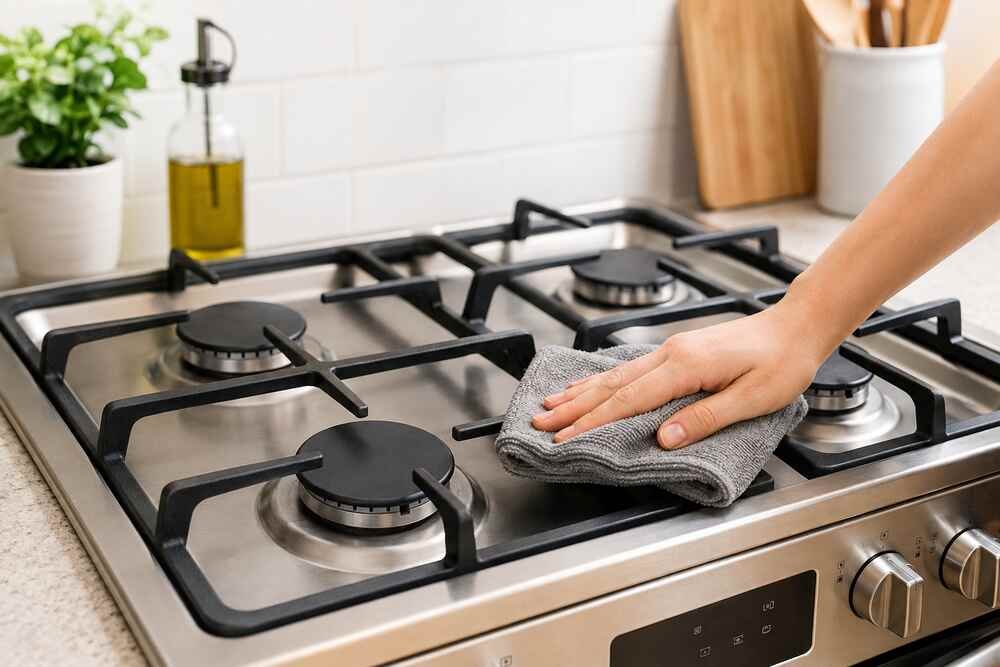
The fastest way to protect your gas stove top is to wipe up spills the moment they cool, use a heat-rated protector mat under the grates, and clean burner caps weekly before grease turns into baked-on residue. Do those three things consistently and most gas cooktops in U.S. kitchens will look and perform like new for well past a decade.
Stovetops take more daily abuse than almost anything else in the kitchen: open flame, boiling grease splatter, acidic sauces, and metal grates dragged on and off several times a day. Skip the routine and you’re looking at stained porcelain, clogged burner ports, and uneven flames within a year or two. This guide walks through exactly how to protect gas stove top surfaces, which products actually work, and which popular “hacks” can do more harm than good.
Key Takeaways
- Wipe spills within a few minutes; food debris left overnight is 3x harder to remove and can permanently etch porcelain-enamel surfaces.
- A heat-resistant stove top protector mat (silicone or fiberglass, rated 480°F+) is the single most effective barrier against grease and scratches.
- Never place a stove top cover over an active or still-warm burner. It’s a fire hazard, not a cooking surface.
- Soak coated cast-iron grates no more than 10-20 minutes; uncoated cast iron should never be soaked (Whirlpool ProductHelp).
- A quick weekly clean beats an occasional deep scrub. Grease that sits for weeks needs harsher chemicals and more elbow grease to remove.
Why Gas Stove Tops Wear Out Faster Than You’d Expect
Most gas ranges are rated to last 13 to 15 years with normal use, but the stovetop surface itself is usually the first part to look worn, long before the burners or ignition system fail. Three things drive that: repeated heat cycling around the burner heads, acidic spills (tomato sauce, vinegar, citrus) that etch porcelain and steel finishes, and metal-on-metal contact from grates being lifted, dragged, and set back down.
None of that is unusual. It’s just what stovetops do. The difference between a stove that looks new at year 10 and one that looks tired at year 2 almost always comes down to habits, not the appliance itself.
How to Protect Gas Stove Top Surfaces: 8 Methods That Actually Work
1. Use a Heat-Rated Stove Top Protector Mat
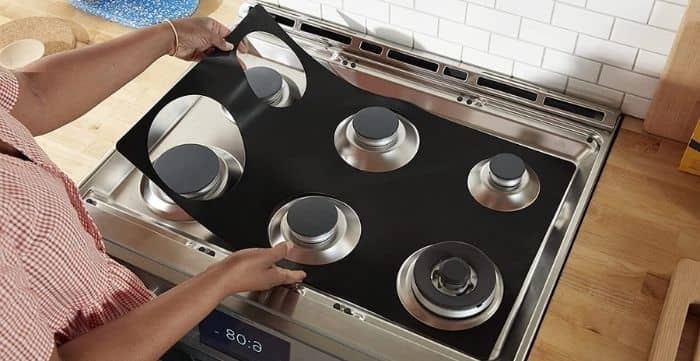
A stove top protector mat sits under or around the grates and catches grease, boil-overs, and food splatter before it reaches the porcelain or steel underneath. This is the single biggest lever for how to protect gas stove top finishes long-term, because it keeps spills off the surface entirely instead of relying on you to clean them off later.
Look for mats rated to at least 480°F, since burner heads and grates run far hotter than a stovetop’s ambient surface temperature. Skip mats that only list a vague “heat resistant” claim with no number attached. For material options, see the comparison below.
2. Read the Manufacturer’s Care Instructions First
Every gas range ships with an owner’s manual that specifies exactly what the grates, burner caps, and control knobs are made of, and what they can tolerate. This matters more than it sounds: some grates are dishwasher-safe cast iron, others are uncoated and will rust if you soak or dishwasher them (Whirlpool ProductHelp). Following the wrong general-purpose advice online is one of the most common ways people accidentally damage a stovetop while trying to protect it.
3. Match Your Cleaning Products to the Surface
Porcelain-enamel stovetops, stainless steel, and cast-iron grates each respond differently to cleaners:
- Porcelain enamel: mild dish soap and a soft sponge; avoid ammonia-based cleaners, which can cause discoloration on burner caps (GE Appliances)
- Stainless steel: a stainless-specific cleaner or a vinegar-water mix, wiped with the grain
- Cast iron grates: hot soapy water; coated grates can soak 10-20 minutes, uncoated grates should never soak (Whirlpool ProductHelp)
Skip steel wool, oven cleaner, and abrasive powders on any coated finish. They’re the fastest way to strip a protective coating that took the manufacturer years to engineer.
4. Wipe Spills the Moment the Surface Cools
This is the cheapest, highest-impact habit on this list. Acidic spills like tomato sauce or citrus juice can etch porcelain enamel if left to sit, and any food residue left on a hot surface will carbonize into a bonded layer that needs scraping or chemical cleaner to remove later. Keep a damp cloth within reach while cooking and do a 30-second wipe-down as soon as the burner is off and the surface is safe to touch.
5. Deep-Clean the Burner Caps and Grates Weekly
Beyond daily wipe-downs, pull the grates and burner caps for a proper soak-and-scrub once a week. Soak in warm, soapy water, use a nonabrasive plastic scrubbing pad on caked-on residue, and make sure every piece is completely dry before reassembly (Whirlpool ProductHelp). Reinstalling wet caps traps moisture against the metal and accelerates rust and discoloration.
For the exact step-by-step, our guide to cleaning gas range burners safely covers the full disassembly and reassembly process.
6. Keep Burner Ports Clear
Clogged burner ports cause uneven flames, which means more time cooking, more heat exposure to the stovetop finish, and more soot buildup around the burner head. Clear blocked ports with a straight pin, sewing needle, or fine wire, never a wooden toothpick, since a broken tip can permanently block gas flow (Whirlpool ProductHelp).
7. Never Use a Stove Top Cover as an Active Cooking Surface
This is worth repeating because it’s a genuine safety issue, not just a maintenance tip. Stove top covers and protector boards are strictly for when the stove is off and cool. Placing anything over a lit burner, or even a burner that’s still warm, is a fire risk. Cooking is the leading cause of home fires in the U.S. (NFPA), and stovetop misuse is a recurring factor. For a full breakdown of cover types and the safety rules around them, see what stove top covers are actually used for.
8. Choose Cookware That Won’t Scratch the Surface
Rough or warped cookware bottoms can scratch porcelain and glass-adjacent finishes every time you slide a pan across the grates. Flat-bottomed stainless steel, cast iron, and carbon steel pans are the safest bet for gas. Our guide to the best cookware for gas stoves breaks down which materials perform well and which to avoid.
Best Materials for Gas Stove Top Protectors
| Material | Heat Rating | Best For | Watch Out For |
|---|---|---|---|
| Silicone | Up to ~480°F | Everyday splatter, easy to wash | Can slide if not sized correctly |
| Fiberglass mesh | 500°F+ | Direct grease contact near burners | Frays at the edges over time |
| Aluminum foil liners | Varies by gauge | Budget, disposable option | Can melt or discolor if too close to flame; never cover burner ports |
Whatever material you choose, confirm the manufacturer’s stated heat rating and keep the mat clear of the burner ports themselves. A mat that blocks airflow to the burner can cause incomplete combustion and a yellow, sooty flame instead of a clean blue one, which is itself a warning sign worth acting on.
Common Mistakes That Undo Your Protection Efforts
- Soaking uncoated cast iron. It rusts. Coated grates tolerate a short soak; uncoated ones should be wiped, not submerged (Whirlpool ProductHelp).
- Reassembling wet parts. Trapped moisture under a burner cap accelerates corrosion.
- Using ammonia on burner caps. It’s fine on grates for some finishes but can discolor burner cap coatings (GE Appliances).
- Letting a mat block burner ports. This causes uneven, yellow flames and soot buildup.
- Banging grates together to loosen debris. This chips porcelain-coated cast iron; use a soft brush instead (Whirlpool ProductHelp).
Daily and Weekly Maintenance Checklist
After every use:
- Wipe the surface once it’s cool enough to touch
- Check for spills that need immediate attention (acidic ones especially)
Weekly:
- Remove and soak grates and burner caps
- Clear burner ports with a pin or fine wire
- Fully dry all parts before reassembly
Monthly:
- Deep-clean with a baking-soda paste on stubborn residue
- Inspect the stove top protector mat for wear and replace if cracked or thinning
Every 3-6 months:
- Full disassembly and inspection of grates, caps, and igniters
- Check flame color; a consistently yellow or orange flame (instead of blue) may signal a clogged port or ventilation issue worth a technician visit
When to Call a Professional
Most stove top maintenance is a DIY job, but call a certified appliance technician if you notice a persistent gas smell, a flame that won’t stay lit, scorch marks appearing near the control knobs, or corrosion that’s spread past the surface into the burner base itself. These usually point to a mechanical or gas-line issue that goes beyond cleaning and protecting the surface. If you’re still deciding on a range in the first place, our guide to choosing a gas range for your kitchen covers what to look for in build quality that holds up long-term.
Video: Protecting Your Gas Stove Top From Splashes
FAQ
How often should I deep-clean my gas stove top? Wipe it after every use and do a full grate-and-burner-cap soak weekly. A monthly deep clean with baking soda handles anything the weekly routine misses.
Are stove top protector mats safe to leave on while cooking? Only if the mat is rated for direct high heat and placed away from burner ports, and even then, check the manufacturer’s instructions. Full stove top covers or boards are a different product and should never be used while a burner is on.
Will a stove top protector void my warranty? It depends on the manufacturer and the type of protector. Check your owner’s manual or manufacturer’s site before installing one, since some warranties exclude damage caused by aftermarket accessories that block ventilation or trap moisture.
Why does my gas stove top look stained even though I clean it regularly? Acidic spills (tomato, citrus, vinegar) can etch porcelain enamel if not wiped up quickly, and etching isn’t reversible with cleaning products. Prevention (wiping spills fast) matters more than any cleaner once staining has set in.
What’s the biggest mistake people make trying to protect a gas stove top? Soaking uncoated cast-iron grates. It looks like a deep clean but it strips the seasoning and invites rust, which is harder to fix than the residue it was meant to remove.
Conclusion
Knowing how to protect gas stove top surfaces really comes down to a handful of consistent habits: wipe spills fast, use a properly rated protector mat, match your cleaning products to the material, and never treat a stove top cover as a cooking surface. None of it is complicated, and the payoff is a stove top that still looks and performs like new well past the decade mark.

Hey, My name is MAMON. I am a SEO content creator and affiliate marketer with over 8 years of experience. I create honest product reviews, in-depth buying guides, and practical how-to articles to help readers make informed decisions. My mission is to provide trustworthy, research-backed content that delivers real value.
Leave a Reply