
Knowing how to make wavy potato slices at home turns an ordinary bag of potatoes into something that looks like it came from a diner counter. The rippled surface isn’t just for show, either. Those ridges hold more seasoning, and they crisp up in more places than a flat slice does.
This guide covers how to make wavy potato slices at home with a mandoline or a crinkle cutter. It walks through which potatoes work best, plus the baking, frying, and air-frying methods that get you a genuinely crunchy result.
Most people who try this for the first time reach for a regular knife and end up disappointed. The wavy shape comes from the tool, not the technique, so picking the right one matters more than any trick with a blade you already own.
Key Takeaways
- A mandoline with a wavy blade or a dedicated crinkle cutter produces the rippled shape; a regular knife can’t
- Russet, Yukon Gold, and Dutch Cream potatoes all hold their shape and crisp up well
- Soaking sliced potatoes for 15-20 minutes removes surface starch for a crispier finish
- Frying at 325°F, baking at 425°F, and air-frying at 380°F each produce a different but genuinely crisp texture
- Season right after cooking, while the ridges are still hot, so the seasoning actually sticks
What Are Wavy Potato Slices?
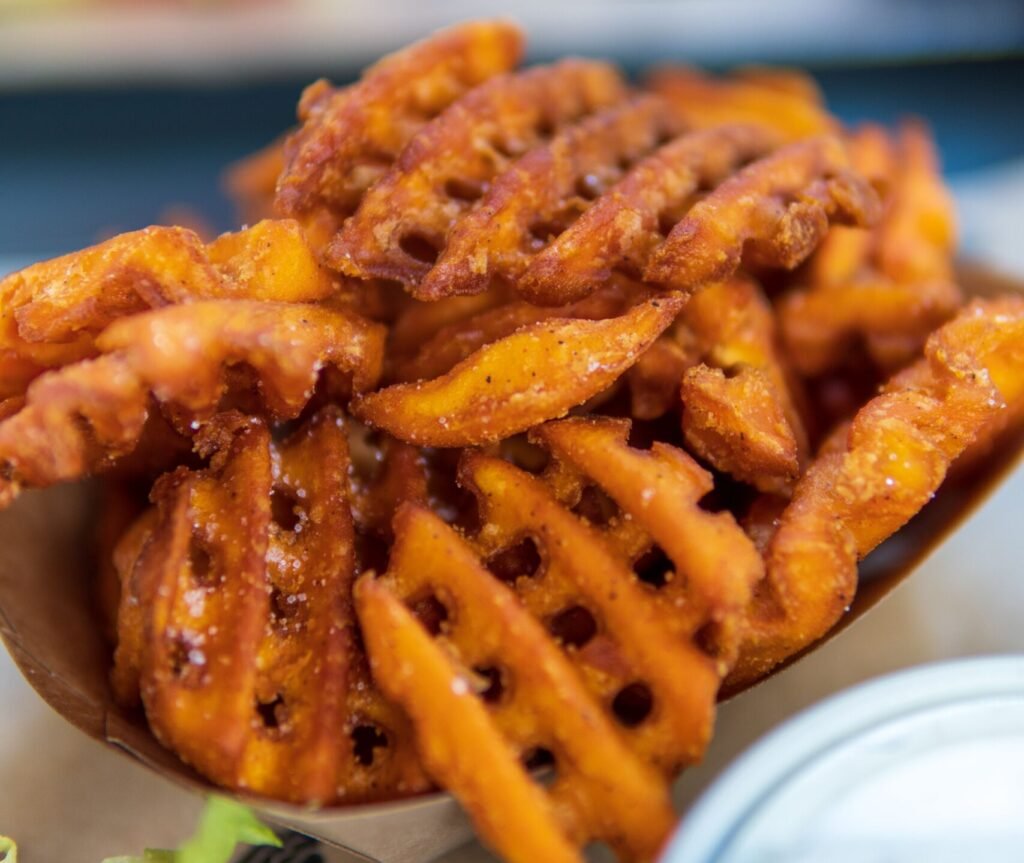
Wavy potato slices, sometimes called crinkle-cut or waffle-style slices, are potatoes cut with a rippled or corrugated edge instead of a flat one. That wavy edge is what separates them from a plain potato chip or a straight-cut fry. If you’re after tight spiral curls instead, our guide to making curly fries with a potato slicer covers that different shape. For straight cuts, see our guides to using a french fry cutter or cutting fries by hand.
Why the Ridges Matter
The corrugated surface gives each slice more edge area than a flat cut of the same thickness. More edge area means more of the slice gets that crisp, browned texture. The ridges also help a dry seasoning blend cling to the surface instead of sliding off.
Selecting the Right Potatoes
Russet potatoes are the standard choice for wavy slices. According to the Idaho Potato Commission, russets carry more starch and less moisture than waxy varieties. That’s exactly the combination that crisps up on the outside while staying fluffy inside.
Yukon Gold and Dutch Cream potatoes are solid alternatives. Both have a bit more moisture than a russet, giving a creamier interior once cooked. They still hold their shape well through slicing and frying, though. Waxy, low-starch potatoes like Red Bliss are worth skipping here, since they tend to turn gummy instead of crisp.
What to Look For
- Pick large, firm potatoes with smooth skin and no green spots or sprouts
- Longer potatoes give a mandoline or crinkle cutter more room to work with
- Choose potatoes that are roughly the same size so slices cook at the same rate
Essential Tools for Wavy Potato Slices
The tool you use is what actually creates the wavy shape. This isn’t a step to skip or improvise with a regular knife, and it’s the single most important decision in how to make wavy potato slices at home.
Mandoline with a Wavy Blade
A mandoline slicer with a wavy or crinkle blade attachment, like a Benriner-style Japanese mandoline, gives the most consistent ripple from slice to slice. Look for one with an adjustable thickness dial and a hand guard. Our potato slicer buying guide covers current mandoline options if you need to pick one.
Crinkle Cutters
A dedicated crinkle cutter looks like a rocking knife with a wavy blade edge. It’s slower than a mandoline for large batches. It’s also easier to control for a beginner, since there’s no exposed flat blade to slide your hand into.
Safety Equipment
Wear cut-resistant gloves any time you’re working with an exposed mandoline blade. Always use the hand guard that comes with it, too. A deep-fry thermometer earns its keep here as well, since guessing at oil temperature is one of the most common causes of soggy or greasy fries.
Mandoline or Crinkle Cutter: Which Should You Buy?
If you’re only making wavy slices occasionally, a crinkle cutter is the cheaper and simpler starting point, and it takes up almost no drawer space. A mandoline is the better investment if you’re slicing larger batches regularly, since it cuts faster and gives you an adjustable thickness dial that a fixed crinkle cutter blade can’t match.
Preparing Your Potatoes for Slicing
Scrub the potatoes clean under running water first. Peeling is optional; the skin holds up fine through slicing and adds a bit of texture if you leave it on.
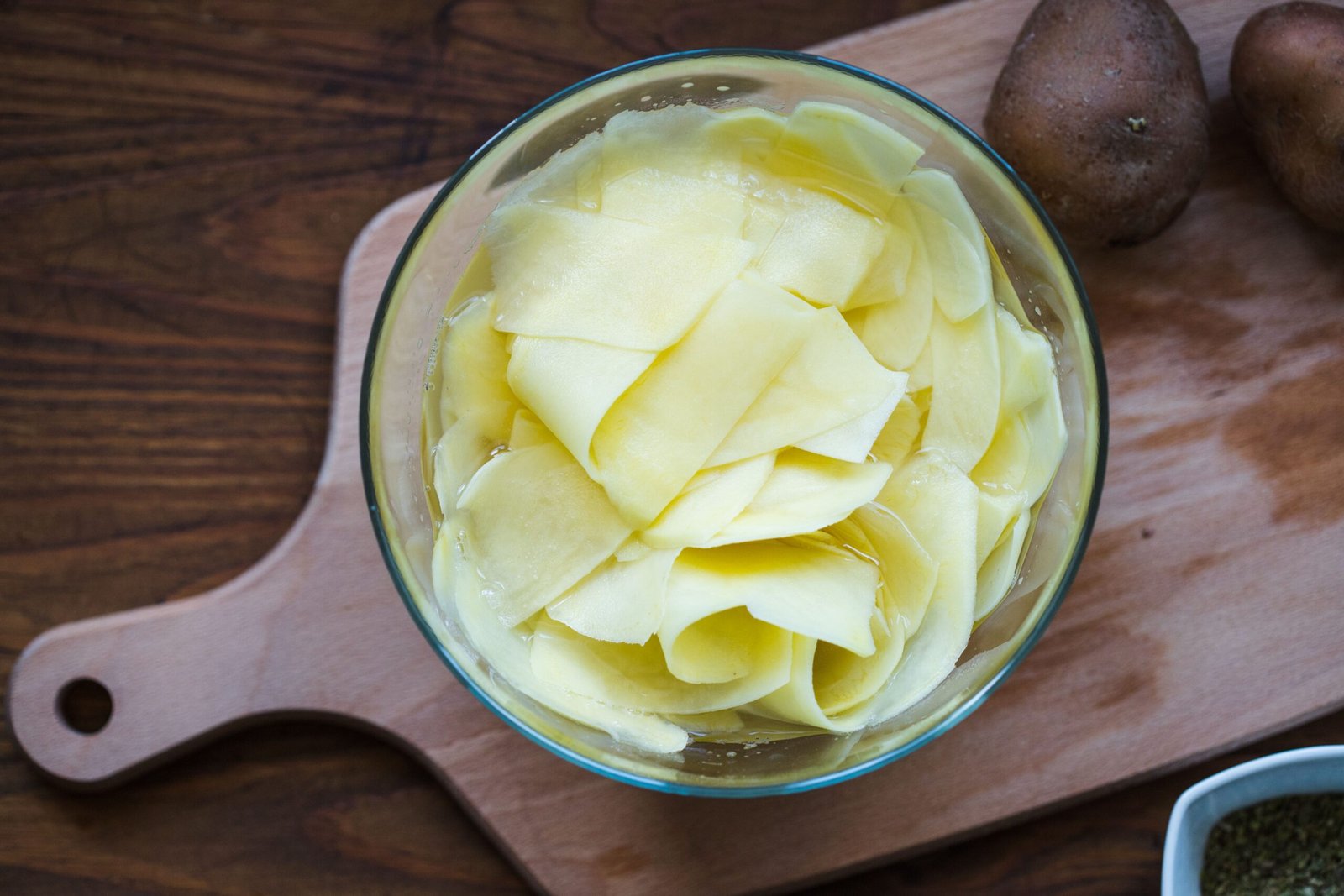
Once sliced, soak the wavy slices in cold water for 15-20 minutes before cooking. This rinses off surface starch that would otherwise make the slices gummy instead of crisp. Drain and pat them thoroughly dry. Wet potatoes cause dangerous oil splattering during frying, so don’t skip this part.
A quick side note on knowing how to make wavy potato slices at home consistently: batch size matters as much as technique. Slicing a whole five-pound bag at once means the first slices sit around oxidizing while you finish the rest, so work in smaller batches and get each one into its soaking water right away.
How to Make Wavy Potato Slices at Home: Step-by-Step Technique
Once your potatoes are prepped, the technique itself only takes a few minutes to get comfortable with.
Using a Mandoline Slicer
Set the wavy blade to about 1/4 inch for classic crinkle-cut thickness. Hold the potato against the guard at a slight angle and slide it across the blade in one smooth motion. Keep the pressure even so each slice comes out the same thickness.
Using a Crinkle Cutter
Position the crinkle cutter’s blade over the potato and rock it down through in one motion, similar to using a chef’s knife. Rotate the potato a quarter turn between cuts if you want slices from more than one side.
The Accordion Cut
For a different look, make a series of vertical cuts partway through the potato. Then rotate it and make diagonal cuts across those first cuts. This creates an open, latticed shape rather than individual slices, closer to a waffle fry than a chip. It takes a bit more patience than a straight mandoline pass, but the result looks far more dramatic on a plate.
Cooking Methods for Wavy Potato Slices
Baking
Toss the slices in a thin coat of oil, then spread them in a single layer on a parchment-lined baking sheet. Bake at 425°F for about 30 minutes, flipping halfway through, until they’re golden and crisp. Leave space between slices rather than letting them overlap, since crowded slices steam instead of crisping.
Deep Frying
Frying at 325°F gives the crispiest, most classic result. Fry in small batches so the oil temperature doesn’t drop. Use a thermometer to keep it in range throughout. Choosing the right oil matters here too. According to WebstaurantStore’s cooking oil guide, refined peanut and sunflower oil both have smoke points around 450°F. That’s comfortably clear of the 325°F frying target, which makes them stable choices for this kind of frying.
Air-Frying
Set the air fryer to 380°F and cook the slices in a single layer. Shake the basket halfway through so they crisp evenly on both sides. This method uses a fraction of the oil that deep frying does. See our guide on cooking french fries in an air fryer for timing that applies to wavy slices too.
Seasoning Your Wavy Potato Slices
A Classic Blend
Salt, black pepper, garlic powder, and a little paprika cover the basics well. The ridges on a wavy slice hold onto a dry seasoning far better than a flat surface does. That means this is one shape where a heavier hand with spices actually pays off.
Building Your Own Blend
- Smoked paprika, cayenne, and dried oregano for a Cajun-leaning mix
- Dried dill, garlic powder, and onion powder for a sour-cream-and-onion flavor without the dairy
- Brown sugar, chili powder, and cumin for a barbecue-style blend
Season immediately after cooking, while the slices are still hot and a little oily. Seasoning added even a few minutes later won’t stick nearly as well.

Serving Suggestions
Ranch, garlic aioli, and spicy ketchup are the reliable dipping sauce defaults. For something different, try a honey goat cheese spread or a cool dill dip.
Wavy slices work well as a side for burgers and sandwiches. Their sturdier shape also holds up to a heavier dip better than a delicate chip would, so they’re a good match for something thick like queso or a loaded cheese sauce.
Storing and Reheating Leftovers
Store cooled, cooked slices in an airtight container at room temperature for up to a day. For longer storage, keep them in the fridge for up to 3 days instead. Keep raw, sliced potatoes submerged in cold water in the fridge. That keeps them from browning for up to 24 hours.
Skip the microwave when reheating; it turns crisp slices soft almost instantly. Reheat in a 350°F oven or an air fryer for 5-10 minutes instead, until they crisp back up. Spread them out in a single layer rather than piling them up, so the heat can actually reach every ridge.
Common Mistakes to Avoid
- Slicing too thick. Anything much thicker than 1/4 inch tends to stay soft in the middle instead of cooking through evenly.
- Skipping the soak. Surface starch left on the slices is the main reason homemade fries turn out gummy instead of crisp.
- Guessing at oil temperature. Oil that’s too cool makes fries absorb grease instead of frying; too hot and the outside burns before the inside cooks.
- Overcrowding the pan, basket, or fryer. Crowded slices steam each other instead of crisping, no matter which cooking method you use.
Frequently Asked Questions
Do I need a special tool to make wavy potato slices?
Yes. A regular knife can’t produce the ripple; you need a mandoline with a wavy blade or a dedicated crinkle cutter.
What’s the best potato for wavy slices?
Russet potatoes, thanks to their high starch and low moisture content. Yukon Gold and Dutch Cream both work well too, if you want a creamier bite.
Is soaking the slices necessary?
It’s not required, but it noticeably improves crispness by rinsing off surface starch that would otherwise make the slices gummy.
Can I make wavy potato slices without deep frying?
Yes. Baking at 425°F or air-frying at 380°F both produce a genuinely crisp result with far less oil than deep frying.
Why did my slices turn out soggy?
This usually comes down to one of three things: overcrowding the pan or fryer, oil that wasn’t hot enough, or skipping the soaking step before cooking.
What’s the difference between wavy slices and curly fries?
Wavy or crinkle-cut slices have a rippled edge from a wavy-blade mandoline or crinkle cutter. Curly fries, on the other hand, are cut into continuous spirals with a spiralizer. They’re different tools and different shapes, even though both start with the same kind of potato.
Can I use a crinkle cutter on sweet potatoes too?
Yes. The same crinkle cutter or wavy mandoline blade works on sweet potatoes, though they cook a bit faster than russets because of their lower starch content, so keep an eye on them a few minutes early.
Do I need to season before or after cooking?
After. Dry seasoning added before frying or baking tends to burn or fall off in the oil, while seasoning applied right after cooking sticks to the hot, slightly oily surface much better.
Final Thoughts
Once you’ve got a mandoline with a wavy blade or a crinkle cutter, knowing how to make wavy potato slices at home comes down to three things: picking a starchy potato, soaking the slices, and choosing a cooking method that fits how much oil you want to use. Start with deep frying if crispness is the priority. Lean on the oven or air fryer instead for an easier weeknight version that still turns out crisp.

Hey, My name is MAMON. I am a SEO content creator and affiliate marketer with over 8 years of experience. I create honest product reviews, in-depth buying guides, and practical how-to articles to help readers make informed decisions. My mission is to provide trustworthy, research-backed content that delivers real value.
Leave a Reply