Key Takeaways
- Stainless steel is the best all-around choice for most home kitchens: rust-resistant, low-maintenance, and affordable.
- Carbon steel and high-carbon stainless steel hold a sharper edge longer, but carbon steel needs to be dried immediately after every wash to avoid rust.
- Blade hardness is measured on the Rockwell C scale (HRC). Most kitchen knives fall between 52 and 66 HRC, and every two extra points roughly doubles how long an edge stays sharp.
- Damascus and ceramic knives look and perform differently from standard steel, but both come with real trade-offs in cost or fragility.
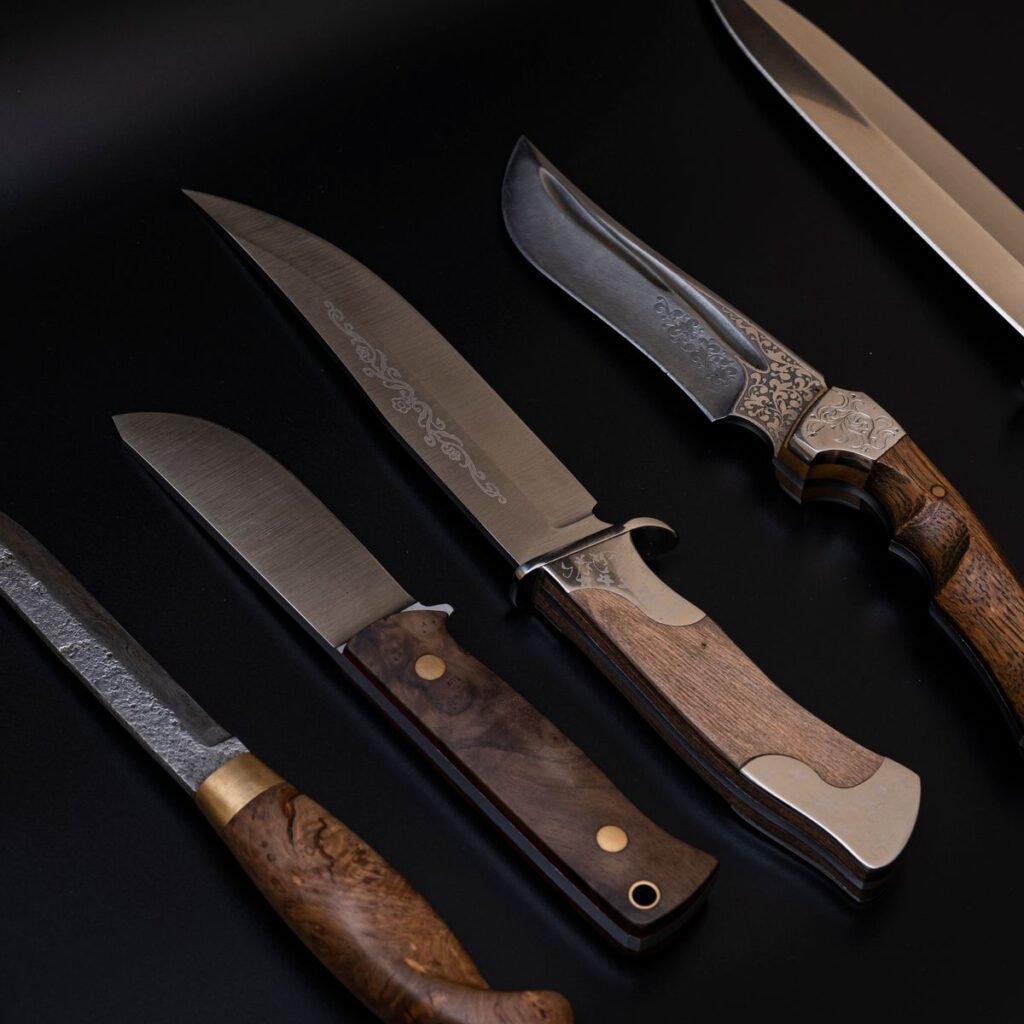
A chef’s knife is one of the most-used tools in any kitchen, and what material are best for kitchen knife really comes down to one trade-off: edge performance versus upkeep. A harder blade holds its edge longer but usually needs more careful maintenance and costs more. A softer, more forgiving blade is easier to live with day to day but needs sharpening more often. Below is a breakdown of the five materials you’ll actually encounter when shopping for a kitchen knife, plus the Rockwell hardness numbers that explain why each one behaves the way it does.
1. Carbon Steel
Carbon steel has been used to make knives for centuries. It’s iron with carbon added in, and that addition is what makes the blade harder and lets it hold an extremely sharp edge for longer than most stainless alloys. Carbon steel knives tend to be cheaper than high-end stainless or Damascus options while still performing at a professional level once properly seasoned.
The catch is corrosion. Carbon steel will rust if it’s left wet, and it reacts with acidic ingredients like tomatoes, onions, and citrus, sometimes discoloring the blade or transferring a metallic taste to food. None of that is a dealbreaker, but it does mean drying the blade immediately after every wash, and re-oiling it if it won’t be used for a while.
Carbon Steel Pros:
- Holds an extremely sharp edge
- Strong, durable, and relatively affordable
- Develops a unique patina over time
Carbon Steel Cons:
- Prone to rust and corrosion if not dried immediately
- Discolors and can react with acidic foods
2. Stainless Steel
Stainless steel is essentially carbon steel with chromium added, and that single change is why it became the dominant kitchen knife material after its invention in the 20th century. The chromium forms a thin protective layer that resists rust, staining, and corrosion, which is why the vast majority of household knives, including most sets from Wüsthof, Henckels, and Global, are made from it.
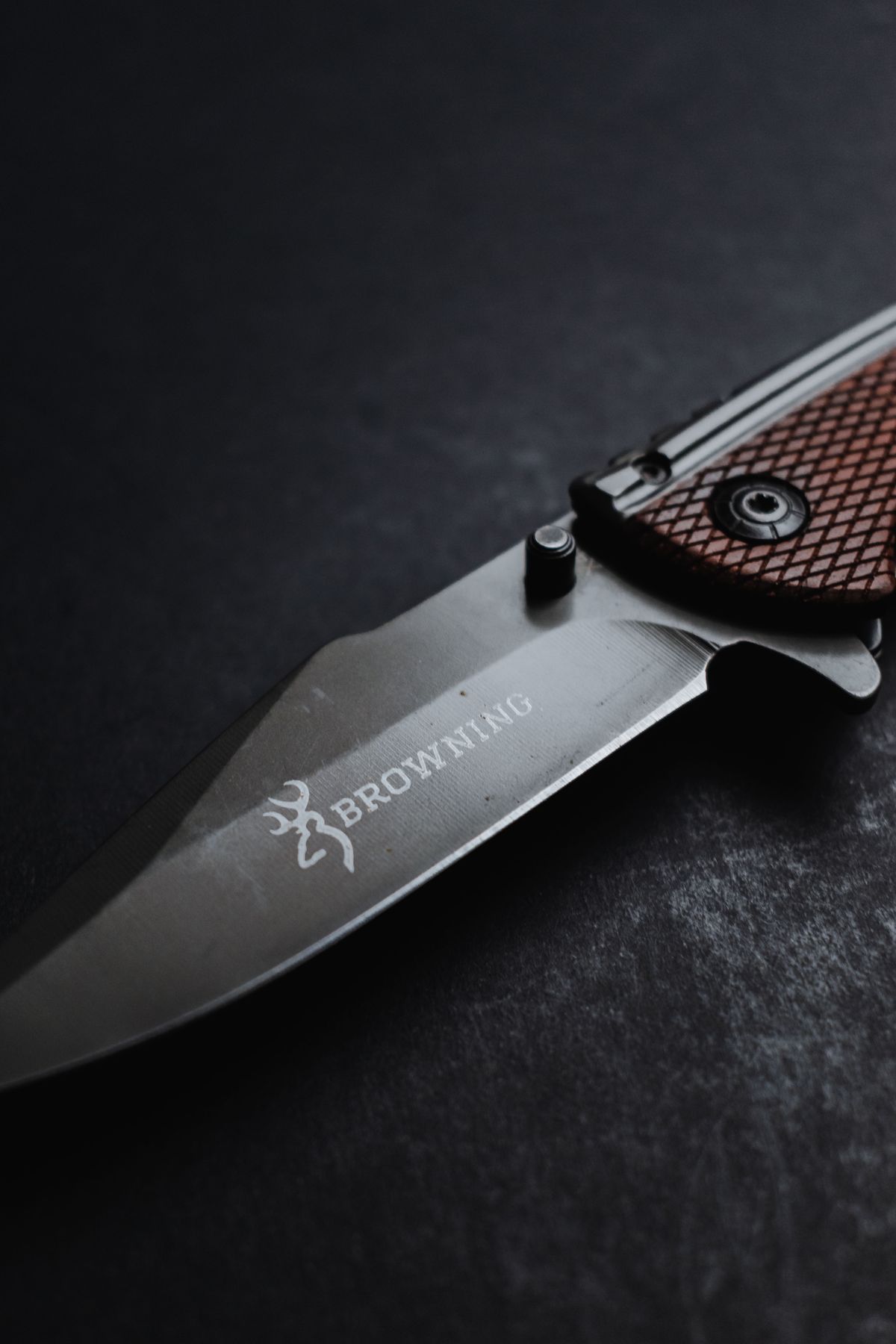
Stainless steel isn’t quite as hard as carbon steel, so it won’t hold a razor edge for quite as long between sharpenings, but it more than makes up for that in convenience. It still needs to be dried after washing to prevent spotting, just less urgently than carbon steel does.
Stainless Steel Pros:
- Highly resistant to rust and corrosion
- Sturdy, long-lasting, and affordable
- Low maintenance compared to carbon steel
Stainless Steel Cons:
- Doesn’t hold a razor edge as long as harder steels
- Can still spot if left wet for extended periods
3. High Carbon Stainless Steel
High carbon stainless steel splits the difference between the first two materials. It combines a higher carbon content, for hardness and edge retention, with enough chromium to resist rust and discoloration nearly as well as standard stainless. This is the steel behind most premium chef’s knives, including many of the Japanese-style blades favored by professional cooks, and it’s a natural next step if you’ve outgrown a basic starter knife.
High Carbon Stainless Steel Pros:
- Resistant to rust, corrosion, and discoloration
- Holds an edge longer than standard stainless
- Doesn’t react with acidic foods
High Carbon Stainless Steel Cons:
- Noticeably more expensive than standard stainless
4. Ceramic Material
Ceramic blades are the newest material on this list, and they behave nothing like metal. Made from zirconium oxide, they hold an edge for a very long time, weigh almost nothing, and never react with acid, rust, or stain. That makes them popular for slicing fruit and vegetables where a metallic taste or discoloration would be noticeable.
The trade-off is brittleness. A ceramic blade can chip or shatter if it’s twisted, dropped, or used on anything harder than a cutting board, which is why most kitchens use ceramic knives as a specialty tool rather than a primary chef’s knife. If a ceramic blade does eventually crack or wear out, it needs to be handled differently than a metal one, since it can’t go through standard scrap recycling; our guide on how to dispose of kitchen knives safely covers what to do with a ceramic blade at the end of its life.
Ceramic Pros:
- Holds an edge for a very long time
- Extremely lightweight
- Doesn’t react with acid, rust, or stain
Ceramic Cons:
- Brittle and prone to chipping or shattering
- Expensive relative to basic stainless
5. Damascus Steel
Damascus isn’t technically a single type of steel, it’s a forging process. Different steels, usually a harder core and a softer outer layer, are folded and layered together repeatedly, then etched to reveal the wavy, rippled pattern the style is known for. That process is also what makes Damascus knives functional rather than purely decorative: the softer outer layers add flexibility and shock resistance, while the harder core holds the edge.
Because of the labor involved, Damascus knives are almost always priced at a premium, and the performance you get depends entirely on what steels were actually folded together, not just how the finished blade looks. A cheap “Damascus-pattern” knife with a soft core will still underperform a well-made high-carbon stainless blade, pattern or no pattern.
Damascus Steel Pros:
- Unique, one-of-a-kind blade pattern
- Combines hardness and flexibility well when made properly
- Durable if the underlying steels are good quality
Damascus Steel Cons:
- Expensive, and quality varies significantly by maker
Understanding Blade Hardness: The Rockwell Scale
Every claim above about “holds an edge longer” or “easier to sharpen” comes down to one number: the blade’s hardness on the Rockwell C scale, written as HRC. Most kitchen knives fall somewhere between 52 and 66 HRC, and as a rough rule, every two additional points on the scale roughly doubles how long the edge stays sharp under normal use.
German-style stainless knives from brands like Wüsthof and Henckels typically sit around 56 to 58 HRC, which is soft enough to touch up on a honing steel in seconds but means more frequent sharpening. Harder Japanese-style blades often run from 60 to 63 HRC or higher, holding an edge far longer but chipping more easily if twisted or used on a hard surface. This is also why a knife’s steel type affects how you should care for it as much as its price does. Understanding where a knife falls on this scale explains almost every trade-off in this guide better than the marketing term on the box does.
What Material Are Best for Kitchen Knife: How to Choose
There’s no single “best” material, only the best fit for how you cook and how much upkeep you’re willing to do.
- If you want low maintenance: stainless steel is the easy, forgiving choice for most home cooks.
- If you want the sharpest possible edge and don’t mind extra care: carbon steel or high carbon stainless steel will reward the effort.
- If you want a specialty blade for produce prep: a ceramic knife is lightweight and stain-free, as a second knife rather than your only one.
- If you want a showpiece that still performs: Damascus steel delivers both, provided you buy from a maker who’s transparent about the actual steels used.
Whatever you choose, the material only pays off if the knife is maintained correctly. A dull or neglected blade is also a safety issue: our guide on how to prevent cuts in the kitchen covers grip, storage, and sharpening habits that apply no matter which steel you settle on.
Other Materials Worth Knowing
A handful of kitchen knives use other metals in smaller amounts. Manganese is sometimes added to improve wear resistance, nickel is occasionally used for extra corrosion resistance, and cobalt shows up in a few premium alloys to boost hardness. None of these appear as the sole material of a mainstream kitchen knife, but they’re common additions in the steel formulas behind the five main types above.
Frequently Asked Questions
What material are best for kitchen knife if I want low maintenance?
Stainless steel. It resists rust and corrosion well enough to handle typical home kitchen use without special care, beyond drying it after washing.
Why do carbon steel knives rust so easily?
Carbon steel lacks the chromium that gives stainless steel its protective layer, so moisture left on the blade oxidizes the iron directly. Drying the blade immediately after use prevents most of it.
Is a higher Rockwell hardness always better?
Not necessarily. Higher HRC means longer edge retention but also more brittleness and a higher chance of chipping. Most kitchen knives are deliberately kept in the 56-62 HRC range to balance sharpness with durability.
Are Damascus knives actually better, or just prettier?
It depends entirely on the steels used to make them. A well-made Damascus blade with a quality core steel performs as well as any single-steel knife of the same hardness; a cheap one with the pattern etched on for looks does not.
Conclusion
What material are best for kitchen knife comes down to how you cook and how much maintenance you’re willing to do. Stainless steel covers most home kitchens well. Carbon steel and high carbon stainless steel reward cooks who sharpen often and don’t mind a little extra care. Ceramic and Damascus both serve more specific roles, one for lightweight precision work, the other for cooks who want a showpiece that still performs. Whatever you pick, understanding where it sits on the Rockwell scale tells you more about how it will actually behave than the name on the box.

Hey, My name is MAMON. I am a SEO content creator and affiliate marketer with over 8 years of experience. I create honest product reviews, in-depth buying guides, and practical how-to articles to help readers make informed decisions. My mission is to provide trustworthy, research-backed content that delivers real value.
Leave a Reply