You step into the kitchen, fruit bowl in hand, and wonder what is a masticating juicer and which tool will give you the best results. A slow, cold-press option gently extracts liquid while a blender chops and mixes everything at once. The slow extractor often yields higher nutrient retention and less foam. That difference matters when you want clean, smooth juice for daily routines.
Many people compare two main types: the slow-style machine and the high-speed centrifugal model. Learning the types helps you pick the right device for your taste and health goals.
By understanding the extraction process and how each unit treats fruits and vegetables, you can make an informed choice. This guide breaks down the key differences so you can add more fresh juice to your day with confidence.
Key Takeaways
- Slow extraction keeps more nutrients and reduces foam.
- Centrifugal units run faster but may lower juice quality.
- Knowing the main types helps match the tool to your needs.
- Think about daily use, cleanup, and the flavors you prefer.
- Choose the option that supports your goals for fresh juice.
Understanding What Is a Masticating Juicer
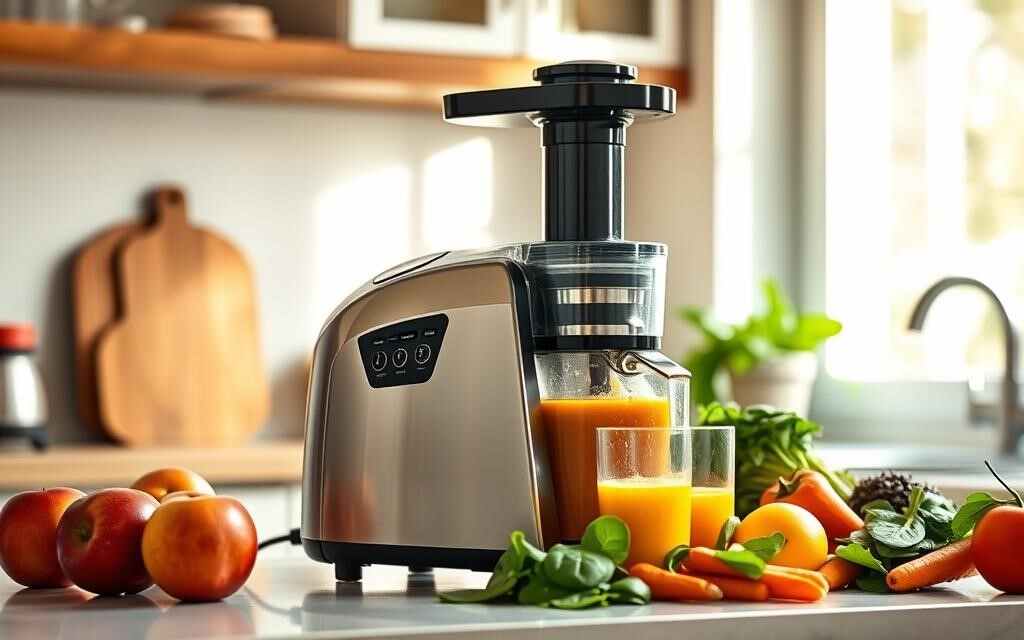
D. A low-speed auger grinds and compresses fruits and vegetables, turning them into vibrant, fresh juice.
Defining the cold press method
The cold press method uses a slow-turning screw to crush produce. This press squeezes liquid out without high heat. That low-heat extraction helps protect delicate enzymes and vitamins.
These machines handle leafy greens and soft fruits better than many high-speed units. You get clearer juices with less foam and longer shelf life.
Why this type runs slowly
Low RPMs reduce friction and heat during extraction. Slow operation means the auger can press more juice from fibers and leaves. That method boosts nutrient yield and gives smoother textures.
- Efficient for greens: better yields from leafy produce.
- Gentle extraction: less oxidation preserves flavor.
- Proven design: companies like Hurom refined models over 40 years for consistent results.
Key Differences Between Masticating Juicers and Blenders
Side-by-side testing reveals that one tool blends whole food while the other extracts concentrated liquid.
Blenders keep fiber, so your drink has bulk and thickness. That makes smoothies filling and fast to prepare.
Masticating machines separate fiber and yield clearer, nutrient-dense juice. The slow press reduces foam and often improves shelf life.
“If you want pure extraction and better nutrient retention, choose the slow press option.”
- Blender: keeps all parts of the produce for smoothies and blended meals.
- Slow press: separates pulp for a lighter, concentrated juice experience.
- Centrifugal juicer offers speed and ease for beginners but lacks the press mechanism of higher-end units.
Your final choice depends on whether you prefer smoothies or pure juice for daily nutrition. Match the device to your cooking habits and health needs.
Analyzing the Extraction Process and Nutrient Retention
How the machine handles produce determines how long flavors and enzymes last after pressing. The cold press extraction method limits heat buildup and preserves fragile nutrients in your fruits and vegetables. This helps maintain vitamins and beneficial enzymes that break down under high temperature.
Preserving Enzymes and Vitamins
Low-speed operation keeps the temperature down, protecting enzymes and vitamins. You get higher nutrient content, especially from leafy greens and soft fruits.
The Role of Oxidation
Slower rotation reduces air exposure. That means less oxidation and fresher color and flavor. Proper refrigeration lets juice stay good up to 72 hours.
Impact on Juice Texture
Slow pressing minimizes pulp and foam. The result is cleaner texture and clearer juices that many people prefer.

- Better yield from greens and soft produce.
- Less heat, less nutrient loss.
- Longer shelf life due to reduced oxidation.
| Factor | Effect on Nutrients | Practical Benefit |
|---|---|---|
| Low RPM press | Preserves enzymes and vitamins | Higher nutrient content per glass |
| Reduced oxidation | Slower breakdown of nutrients | Store juices up to 72 hours |
| Minimal pulp and foam | Cleaner texture and less bitterness | Smoother, more palatable juices |
Comparing Speed and Operational Efficiency
Busy mornings push many people toward rapid extraction, but quick output can mean trade-offs in quality and yield.
RPM matters: slow press units run at about 80 to 100 RPM, while centrifugal models spin between 3,000 and 16,000 RPM.
The centrifugal juicer delivers a glass in seconds, so it suits tight schedules. High speeds separate pulp fast, which saves you time when juicing before work.
In contrast, the masticating press works slowly. That process takes more time but often produces higher nutrient content and better yield from tough fruits and vegetables like carrots and beets.

- Fast option: centrifugal units for speed and convenience.
- Slow option: masticating models for maximum extraction and cleaner juice.
- Choice: balance your time against the quality you want.
“If you value nutrient density over minutes, the slow press method usually wins.”
| Factor | Fast (Centrifugal) | Slow Press |
|---|---|---|
| Speeds (RPM) | 3,000–16,000 | 80–100 |
| Best for | Quick juice, soft fruits | Tough produce, higher yield |
| Trade-off | Less nutrient retention | More time, better quality |
Noise Levels and Ease of Use
If you value calm before sunrise, the noise level of your kitchen gear matters. Quiet operation makes early routines simpler and kinder to housemates.
Considering Your Morning Routine
Slow machines run quietly. Because they work at lower speeds, the hum is soft. That makes early juicing less likely to wake the household.
High-speed centrifugal units spin loudly. Their motors and vibration create a noticeable sound. If you wake before others, that noise can disrupt your morning style.
- Quiet option: low-RPM models improve the morning experience.
- Fast option: centrifugal juicer gives speed but more sound.
- Ease of use: both types aim to be user-friendly, yet quiet models feel gentler to operate early.
“Choose the machine that fits your noise tolerance and daily routine.”
| Feature | Quiet (Low RPM) | Fast (High RPM) |
|---|---|---|
| Typical noise | Low | High |
| Best for | Early mornings | Busy schedules |
| Overall experience | Calm, pleasant | Quick, louder |
Maintenance and Cleaning Requirements
A small bit of time after each use protects your investment and keeps juice tasting bright.
Masticating juicers usually have more parts that touch produce. That means you should rinse and scrub components after every session to avoid residue and mold.
Many modern models include quick-rinse features or dishwasher-safe pieces. These features cut cleanup time and make regular care easier.
- Centrifugal juicer designs often have fewer parts and clean faster, but they struggle with leafy greens.
- Expect to spend a little extra time with slow-press machines for best results and longevity.
- Regular maintenance helps you get the most from produce and keeps machines running smoothly for years.
| Task | Slow-press Models | Fast (Centrifugal) |
|---|---|---|
| Number of parts | More components | Fewer components |
| Cleaning time | Moderate to longer | Shorter |
| Best for greens | High yield | Less efficient |
| Maintenance benefit | Longer lifespan | Faster daily use |
Keep small brushes handy, rinse quickly, and follow manufacturer care steps to ensure every glass you make stays fresh for use.
Conclusion: Choosing the Right Juicer for Your Lifestyle
Deciding which unit fits your daily routine comes down to balancing time, taste, and nutrient goals.
If speed matters, a centrifugal juicer gives quick output and fits busy mornings. It sacrifices some nutrient retention and may raise heat and oxidation during extraction.
If quality tops your list, a masticating model or other slow press option preserves enzymes and yields clearer, nutrient-rich juice for longer storage.
Pick the model that matches your lifestyle and needs. Invest in a reliable press if you want better long-term benefits, or choose a fast unit if convenience keeps you consistent.
Either way, the best choice supports your routine and helps you enjoy fresh juice every day.
Leave a Reply